
 By Titik Puspa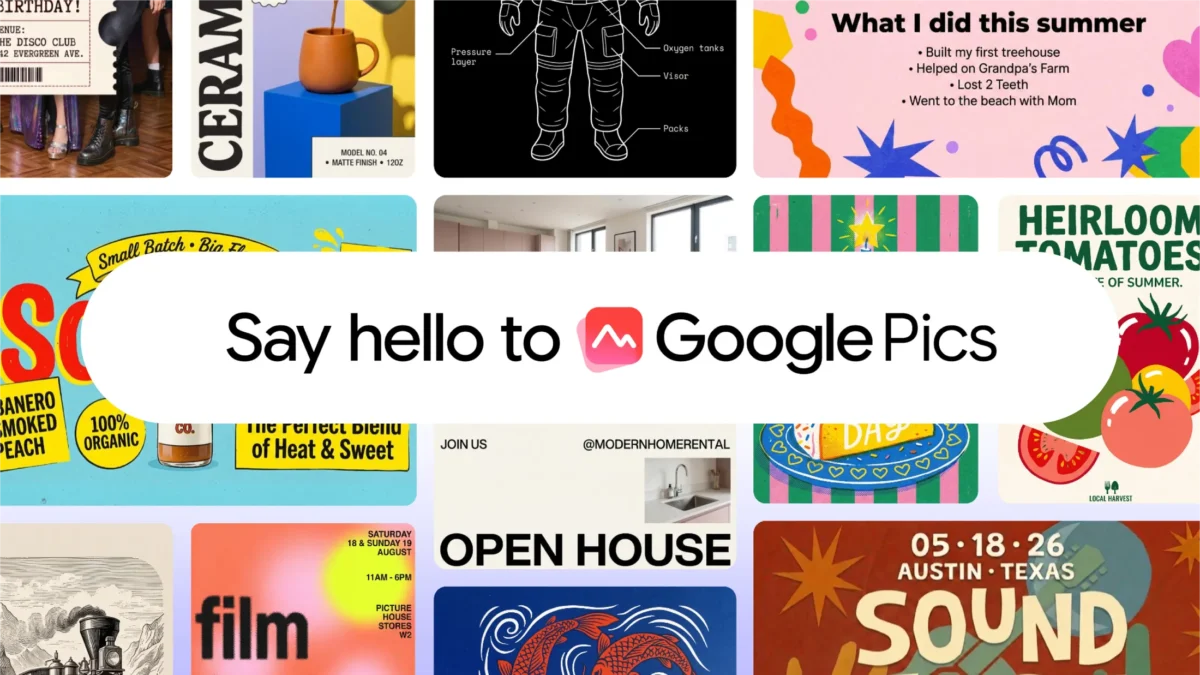
In a significant move to capture a burgeoning segment of the digital creation market, Google has officially announced the launch of Google Pics, a sophisticated new image generation and editing tool. This innovative platform is poised to become an integral part of the expansive Google Workspace suite, specifically targeting business customers and individuals who subscribe to premium Google AI services. The introduction of Google Pics signals Google’s ambition to democratize creative design, making powerful AI-driven tools accessible for a wide range of everyday professional and personal projects.
At the core of Google Pics lies its advanced AI engine, powered by the company’s proprietary Nano Banana image generation model. This cutting-edge technology allows users to create compelling visuals from simple text prompts, transforming conceptual ideas into tangible images. Google has indicated that the rollout of Google Pics will commence over the coming weeks, gradually becoming available to the majority of Workspace customers. Furthermore, users who subscribe to the higher tiers of Google’s AI offerings, namely Google AI Pro and Google AI Ultra, will also gain access to this powerful new tool. This tiered access strategy suggests a focus on delivering advanced creative capabilities to those who require them most, while gradually expanding accessibility.
The strategic positioning of Google Pics places it in direct competition with established players in the user-friendly design space, most notably Adobe Express and Canva. These platforms have gained widespread popularity for empowering individuals and small businesses to create professional-looking graphics without requiring extensive design expertise. Google Pics aims to fulfill a similar need, catering to the everyday design tasks that frequently arise in both professional and personal contexts. Imagine needing to quickly generate a striking poster for a company event, design eye-catching social media posts to promote a new product, or create unique illustrations for a presentation. Google Pics is designed to streamline these processes, enabling users to produce a variety of visual content with unprecedented ease.
However, Google Pics differentiates itself from its competitors in key aspects, particularly when compared to Canva. While Canva has fostered a vibrant ecosystem where artists, illustrators, and photographers can contribute and monetize their work through a marketplace of templates, graphics, and photos, Google Pics takes a fundamentally different approach. Its primary focus is on AI-driven creation. Users interact with the tool by articulating their vision through prompts, and the AI then generates the imagery. This distinction is crucial: whereas Canva emphasizes the curation and sharing of human-created assets, Google Pics champions the direct generation of unique visuals through artificial intelligence. This also means that while Canva’s marketplace is built on royalties for creators, Google Pics’ output is based on AI models that have been trained on vast datasets of existing artistic works. This raises important considerations regarding intellectual property and the future of creative compensation models in the AI era.
The divergence from Adobe Express is also noteworthy. Adobe Express, while also a user-friendly design tool, often serves as a platform for creators to refine and build upon existing design elements or create new ones from scratch using more traditional design software. In contrast, Google Pics is primarily a prompt-to-create engine. The emphasis is on the generative power of AI, where the user acts as a director, guiding the AI to produce the desired output, rather than a hands-on designer meticulously crafting every element from the ground up. This distinction highlights a shift in the design paradigm, moving from manual construction to AI-assisted ideation and realization.
The integration of Google Pics into the Google Workspace ecosystem is a strategic masterstroke. The software will be seamlessly embedded within familiar applications, beginning with Google Docs and Google Slides, with an initial rollout commencing today. Future integrations are planned for Google Drive, further cementing its place as a central tool for content creation and management within the Google suite. This deep integration means that users can access and utilize Google Pics directly within their workflow, eliminating the need to switch between multiple applications and reducing friction in the creative process. For instance, a user drafting a document in Google Docs could instantly generate an accompanying graphic or illustration without ever leaving the document editor. Similarly, presentations created in Google Slides can be enhanced with AI-generated visuals, making them more engaging and impactful.
Beyond its core image generation capabilities, Google Pics is equipped with a robust suite of editing tools designed to refine and enhance the generated visuals. These tools offer a significant degree of control and customization, allowing users to move beyond raw AI output and achieve a polished final product. Key editing features include the ability to isolate and transform specific objects within an image, providing granular control over composition and layout. Users can also modify or translate text embedded within images, a valuable feature for global teams or for adapting content across different linguistic contexts. Furthermore, the platform supports collaborative editing, enabling multiple users to work on a design project simultaneously, fostering teamwork and accelerating the iterative design process.
A particularly user-friendly aspect of Google Pics is its capacity to generate multiple variations of a requested image. This feature addresses a common challenge in AI generation, where initial outputs may not perfectly align with the user’s vision. By providing several distinct generations based on the same prompt, Google Pics empowers users to select the option that best fits their needs or to use the variations as a springboard for further refinement. This iterative generation process, combined with the editing tools, creates a flexible and powerful workflow for visual content creation.
The launch of Google Pics is not just about a new tool; it represents Google’s evolving strategy in the AI and creative technology landscape. The company has been investing heavily in AI research and development, with models like Nano Banana being the fruits of these endeavors. By integrating these powerful AI capabilities into its widely used Workspace suite, Google is aiming to solidify its position as a leader in enterprise productivity and digital transformation. The move also reflects a broader industry trend towards the democratization of complex technologies, making advanced capabilities accessible to a wider audience.
The implications of Google Pics for the creative industry are multifaceted. On one hand, it promises to lower the barrier to entry for individuals and businesses seeking to create professional-quality visuals. This could lead to an explosion of new content and innovative visual communication. On the other hand, the reliance on AI-generated imagery raises questions about the future of traditional creative roles, such as graphic designers, illustrators, and photographers. As AI tools become more sophisticated, the nature of creative work may shift, with a greater emphasis on prompt engineering, AI art direction, and the curation and refinement of AI-generated assets.
Industry analysts are closely watching Google’s entry into this space. Many believe that the integration with Workspace will be a significant differentiator, offering a more seamless and integrated experience than standalone AI image generators. The success of Google Pics will likely depend on its ability to balance the power of AI with user control and creative flexibility, as well as its capacity to address ethical considerations surrounding AI-generated art.
The video embedded within the original article, titled "Say hello to Google Pics from Google Workspace," offers a visual introduction to the tool’s capabilities and user interface. While the specific details of the video are not provided here, such a resource typically demonstrates the ease of use, the prompt-to-creation process, and the integration with other Workspace applications. These visual demonstrations are crucial for users to grasp the practical application and potential of the new technology.
The inclusion of the author’s biographical information and affiliation with TechCrunch underscores the journalistic context of this announcement. Sarah Perez, the reporter, has a long-standing tenure at TechCrunch and a background in IT, suggesting a well-informed perspective on technology trends and their business implications. Her contact information and verification methods are standard journalistic practice for transparency and credibility. The affiliate disclosure also highlights the commercial aspects of tech reporting, where editorial content may be linked to potential revenue streams, though it is stated that this does not affect editorial independence.
In conclusion, Google Pics represents a significant advancement in AI-powered design tools, offering a potent blend of generative capabilities and practical editing features. Its integration into Google Workspace positions it to become a ubiquitous tool for businesses and individuals alike, potentially reshaping how visual content is created and consumed. As the technology continues to evolve, the impact of Google Pics on the creative landscape and the broader digital economy will be a subject of ongoing observation and analysis. The democratization of creative power is accelerating, and Google Pics is poised to be a major catalyst in this ongoing transformation.
