
 By admin
The resolution of Tallal’s case highlights a critical disconnect between traveler expectations and the operational realities of airline customer service. Upon review, it was clear that American Airlines did indeed owe the refund; in fact, Department of Transportation (DOT) regulations mandate such reimbursements. The failure of Tallal’s initial attempts stemmed from a "gaggle of gripes"—a common mistake where travelers overcomplicate their complaints. In an attempt to illustrate the magnitude of his inconvenience, Tallal had submitted a sprawling narrative encompassing unrelated flight delays, partner airline issues, and extraneous details. This created a "maze" that customer service agents, who are often working under strict quotas and utilizing automated filtering tools, could not navigate. When a complaint is buried under a mountain of context, the core issue becomes obscured, leading to the "case closed" responses that plague many legitimate claimants.

To understand why valid complaints fail, one must analyze the structural shift in how travel companies handle disputes in the mid-2020s. Today’s customer service landscape is increasingly defined by a reliance on Artificial Intelligence (AI) and outsourced triage centers. When a traveler submits an eight-page manifesto, as one United Airlines customer recently did regarding an EU 261 claim, they are essentially ensuring their message will never be fully read. EU 261/2004 is a robust piece of European legislation that provides significant protections and fixed compensation for passengers facing long delays or cancellations, but it requires precise, factual filings. Submitting a "magnum opus" filled with legal jargon and labeled exhibits often triggers a defensive or dismissive posture from airline legal departments. In the digital age, brevity is not just a courtesy; it is a tactical necessity. Corporate representatives typically scan for key identifiers: confirmation numbers, specific flight segments, and the exact nature of the service failure. If these are missing or obscured, the probability of a favorable outcome drops precipitously.

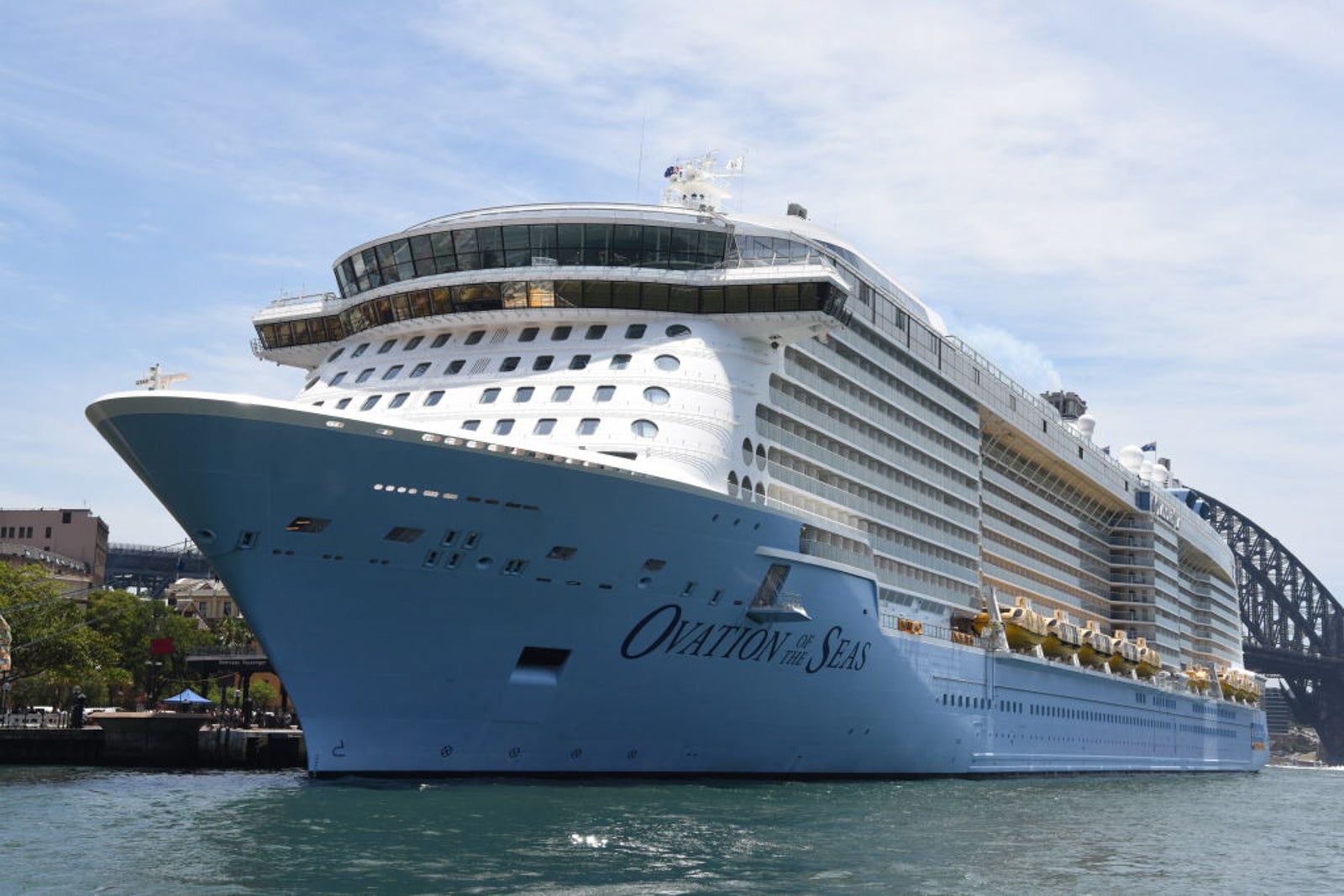
Another escalating threat to successful resolution is the proliferation of sophisticated scams targeting distressed travelers. The case of Shane McCormick illustrates this danger perfectly. McCormick believed he was engaging with Costco Travel to resolve a $6,000 booking error involving Royal Caribbean’s Ovation of the Seas. Instead of assigned cabins for his family, he received an itinerary with only one. His repeated complaints were met with silence or deflection because he was not communicating with Costco at all. He had been misdirected by a fraudulent search engine result to a scam call center. These "bad actors" capitalize on traveler urgency, posing as major brands to harvest sensitive data and payments. Data from the Federal Trade Commission (FTC) suggests that travel-related fraud is on the rise, often facilitated by "sponsored" search results that mimic official sites. Travelers must verify every point of contact by visiting official URLs directly or using verified mobile applications, as relying on a quick Google search can lead to a total loss of funds with no legal recourse against the actual travel provider.
The emergence of Generative AI has further complicated the complaint process. While tools like ChatGPT or Google Gemini can help draft professional-sounding letters, they are prone to "hallucinations"—the fabrication of facts, laws, or regulations. Cherie Johnson’s experience with Celebrity Cruises serves as a cautionary tale. After being denied boarding on a transatlantic cruise due to a missing Brazilian eVisa, Johnson used AI to build her defense. The AI bot cited "Brazilian Decree 86715/1981," claiming it allowed cruise passengers to stay onboard without a visa. This was entirely false. Armed with this "hallucinated" legal backing, Johnson demanded $16,000 in reimbursements, leading the cruise line to ignore her claims as frivolous. In the travel industry, the "Contract of Carriage" is the governing document, and it almost universally places the burden of documentation—visas, passports, and health certifications—squarely on the passenger. When travelers use AI to manufacture legal threats based on non-existent statutes, they destroy their credibility and make it impossible for consumer advocates to negotiate on their behalf.
Strategic timing is also essential when pursuing a grievance, particularly regarding the use of credit card disputes. The Fair Credit Billing Act (FCBA) provides a powerful mechanism for consumers to challenge unauthorized charges or billing errors. However, filing a chargeback should be a last resort, not an opening move. Many travelers mistakenly believe that a credit card dispute is a standard way to get an airline’s attention. In reality, once a chargeback is initiated, most companies will immediately cease all direct negotiations and allow the formal bank process to take its course. If the traveler loses the dispute—which often happens in cases involving "service dissatisfaction" rather than "non-delivery of service"—the company has zero incentive to reopen the conversation. Furthermore, some travel providers have begun "blacklisting" customers who file what they deem to be "friendly fraud" or unmerited chargebacks, effectively banning them from future bookings.

The psychology of the complaint letter also plays a significant role in its success. Insulting the company or making grand declarations like "I will never be your customer again" is a self-defeating strategy. From a corporate perspective, if a customer has already declared their departure, there is no "lifetime value" left to protect, and therefore no reason to offer a goodwill gesture or expensive compensation. A cordial tone that emphasizes a desire to remain a loyal customer provided the current issue is resolved is far more effective. It positions the resolution as an investment in a future relationship rather than a loss-mitigation exercise. Similarly, empty threats of legal action often backfire. Once a traveler mentions a lawyer or a lawsuit, frontline agents are typically required to forward the file to the legal department, where the atmosphere becomes adversarial and the chances of a quick, friendly settlement evaporate.

For a complaint to be effective, it must adhere to the "Three Cs": it must be Concise, Cordial, and Clear. A concise letter never exceeds one page and uses bullet points to outline the chronology of events. A cordial letter avoids hyperbole and personal attacks on staff. A clear letter includes all necessary evidence—receipts, screenshots of promises made by agents, and specific confirmation numbers—without burying them in a "backstory" that predates the actual problem. Before hitting send, travelers should have a third party read the draft. If a neutral observer cannot identify the problem and the requested solution within thirty seconds, the letter needs a rewrite.

The ultimate goal of any travel complaint is to be made "whole," not to secure a financial windfall. Demanding a full refund for a minor delay or asking for 100,000 loyalty points for a broken reading light is perceived as unreasonable and often leads to the entire claim being dismissed. By focusing on documented losses and specific service failures, travelers present themselves as rational actors worthy of professional attention. As the travel industry continues to grapple with labor shortages and high demand, the ability to navigate the bureaucracy with precision and poise has become a vital skill for the modern passenger. Whether dealing with a missing refund for an involuntary downgrade or a complex international delay, the path to resolution is paved with facts, not frustration. For those who find themselves at a dead end, organizations like Consumer Rescue and ombudsman services provide a vital safety net, but their success depends on the traveler providing a clean, honest, and simplified account of the journey gone wrong.
