
 By Rifan Muazin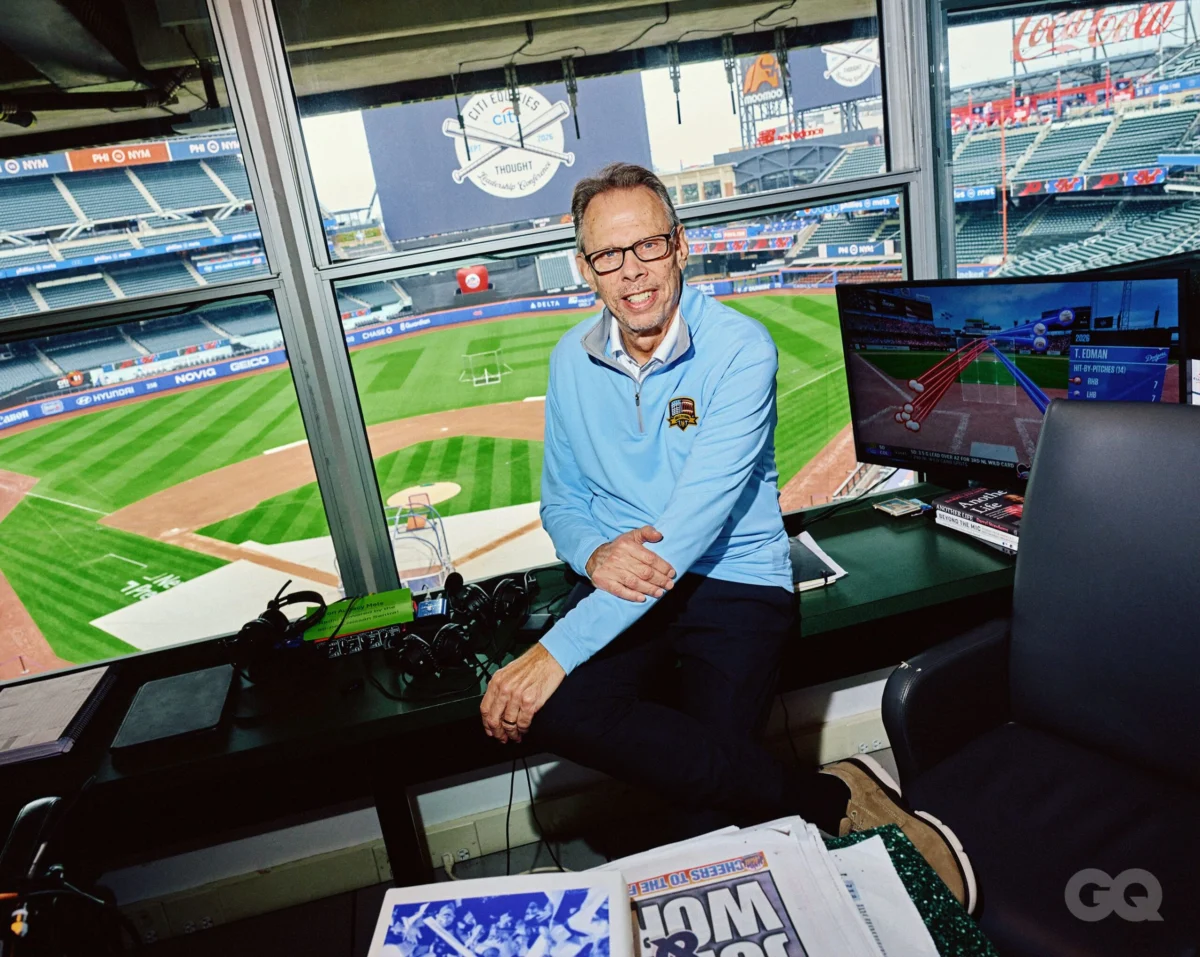
Shortly before the opening pitch of the 2026 Major League Baseball season, a season already fraught with the usual anxieties of the Flushing faithful, Howie Rose delivered the news that many had long feared but few were truly prepared to hear: he was retiring. After 22 years as the definitive radio voice of the New York Mets and a staggering 40-year association with the franchise, Rose decided the grueling schedule of a 162-game season had finally become too taxing. The man whose voice served as the nightly soundtrack for millions of New Yorkers was ready to trade the cramped confines of the broadcast booth for the sun-drenched fairways of South Florida. He spoke of a future filled with golf and quality time with his wife, Barbara—joking with his signature dry wit that he would spend more time with her "whether she likes it or not!"
For a fanbase still reeling from a humiliating conclusion to the previous season and the departure of several core players who had come to define the modern Mets identity, Rose’s announcement felt like a final, crushing blow. To many, the Queens-accented play-by-play delivered by Rose was more than just a commentary; it was a primary antidote to the inherent affliction of rooting for the Mets. In a city where the New York Yankees represent corporate efficiency and a relentless pursuit of silverware, the Mets have often represented the scrappy, sometimes tragic, but always colorful alternative. Rose was the shepherd of that experience, a narrator who understood the specific brand of suffering and occasional ecstasy that comes with wearing blue and orange.

To rewatch his retirement announcement now is to witness a masterclass in the New York temperament. It came on the heels of one of the most gruesome stretches of Mets baseball in recent memory—a week that saw the team’s playoff hopes extinguished by their former hero, Pete Alonso, now wearing an Orioles uniform. Yet, even in that moment of professional transition, Rose exuded a "genial gravitas," bouncing between sincere positivity and a patent New York sarcasm that has endeared him to generations. "You know, I’m always honored to start the season by emceeing at Citi Field," Rose remarked during the ceremony. "But this year in particular, I would like nothing better than to bookend that by serving as master of ceremonies on the steps of City Hall after a trip down the Canyon of Heroes immediately following the season. That would make this dream I’ve lived complete."
The 2025 season had been particularly difficult to stomach. Despite entering the year with the highest payroll in the history of the sport under the ownership of Steve Cohen, the Mets had plummeted toward the bottom of the standings with the alarming speed of a sinking ship. During that "Titanic" descent, Rose was the lifeboat. He was the one who kept the listeners engaged when the bullpen imploded or the bats went silent. Fans wondered how much disappointment one man could take, and more importantly, how they would survive the long summer nights without his familiar cadence to guide them through the wreckage.
In a candid interview conducted in the Bob Murphy Broadcast Booth at Citi Field, Rose reflected on the unique philosophy of Mets fandom. When asked why a publication like GQ would want to interview a radio announcer rather than a fashion icon, Rose was initially skeptical. However, the conversation quickly shifted from style to the soul of New York sports. "You have a choice in this town," Rose declared with the authority of a man who has lived every inning. "To root for the Mets, to root for the Yankees… And because you have that choice here in New York, if you choose to stay a Mets fan through down years, when the Yankees are playing in October every year—well, that’s loyalty. And that loyalty is tested by the refusal to jump ship. I mean, any idiot could root for a team that is playing for championships most years."

Rose’s own journey into this specific brand of loyalty began at the age of seven, a full year before the New York Mets even played their first game. His father, Robert, a traditionalist, had tried to indoctrinate young Howie into the pinstriped world of the Yankees, but the connection never took hold. When news broke that a new National League team was coming to Flushing, Queens—conveniently located near the Bayside neighborhood where his family was moving—Rose felt a cosmic connection. He believed the team had been created specifically for him.
The Mets, born in 1962 from the ashes of the departed Brooklyn Dodgers and New York Giants, were a deliberate counter-programming to the "grayscale" severity of the Yankees. They were the "New Breed," marketed with a technicolor vibrancy that appealed to the baby-boomer generation. Rose recalls being immediately drawn to the aesthetic. "First of all, blue and orange are kind of my colors anyway," he noted, referencing the team’s colors which were chosen to honor the Dodgers (blue) and the Giants (orange).
What sustained Rose and the "New Breed" through the early years of historic losing was the artistry of the broadcasters. Sitting in the booth named after his mentor, Bob Murphy, Rose explained how the legendary announcer could turn a cellar-dwelling team into a storied franchise through sheer narrative force. Murphy had a gift for making fans feel good about the team regardless of the standings. "Maybe it wasn’t good tonight," Rose said, echoing Murphy’s optimism, "but man, there’s a chance it’s going to be great tomorrow."

Rose’s epiphany regarding his career path occurred on a hot summer day in 1966. The San Francisco Giants, a powerhouse of the era, held a 5-0 lead over the lowly Mets. Against all odds, the Mets clawed back, eventually winning on a walk-off home run by Ron Swoboda. As Rose rode the Q27 bus home to Bayside, he wasn’t just thinking about the game; he was thinking about the call. "I was thinking, ‘Man, I’m sure it was great to hit the game-winning home run, but it must have been almost as great just making that call,’" he remembered. That afternoon, he realized the broadcaster’s voice is the "fanbase’s collective spirit," the lens through which the sport becomes visible and endowed with meaning.
Rose’s rise through the ranks of New York sports media was a testament to his versatility and his "Albertine" mix of partisanship and objectivity—a style influenced by his other great mentor, Marv Albert. After years of hosting the popular "Mets Extra" postgame show, Rose became a household name beyond baseball. In 1994, while filling in for Albert during the New York Rangers’ Stanley Cup run, he delivered the iconic "MATTEAU! MATTEAU! MATTEAU!" call that remains etched in the city’s sports history. He later served as the lead voice for the New York Islanders before finally landing his dream job: succeeding Bob Murphy as the radio voice of the Mets in 2004.
Despite a career filled with legendary calls and accolades, Rose admits to one profound regret. "Unfortunately, I’ll not have gotten a chance to call a world championship for the Mets," he sighed. Unlike Murphy, who called the 1969 and 1986 titles, Rose’s tenure saw the Mets reach the World Series in 2015 only to fall short. On the wall of the booth, the words "HE DID IT!" remain spelled out in thumbtacks—a tribute to his call of Pete Alonso’s 2024 Wild Card-clinching home run. It was a moment of pure "Metsian" magic, a brief flash of the "Miracle Mets" spirit that Rose has spent his life documenting.

As the Mets’ 2024 season ended in the National League Championship Series at Dodger Stadium, Rose urged the fans not to succumb to despair. He told his audience that the team’s improbable run had "made this 70-year-old feel 15 all over again," drawing a direct line to the 1969 season when a young, rebellious team shocked the world. Rose has often viewed the Mets as a piece of the 1960s counterculture, famously comparing their arc to the Bob Dylan classic The Times They Are A-Changin’. "The loser now will be later to win," Dylan sang, a lyric that Rose feels defines the Mets’ DNA.
However, Rose is also a realist. He acknowledges that the "circle of life" means younger fans may not share the same reverence for the 1969 legends as he does. He has observed that younger crowds don’t always offer the same thunderous ovations for the "Old Timers" that previous generations did. Yet, his commitment to the narrative remains. Even as he prepares for his final game on September 20th, he leaves the door open for the future. He has promised to return for ceremonies and hinted that he might even fill in for his successor, Keith Raad, should the opportunity arise in a high-stakes October.
"I’d be honored to come back," Rose said, though he cautioned he wouldn’t want to "muscle" his way into someone else’s moment. It was a characteristically humble end to a conversation with a man who has become a monument in his own right. As the sun sets on his broadcasting career, the "Voice of Queens" leaves behind a legacy of loyalty, sarcasm, and hope. For the fans who have spent decades listening to him through the static of car radios or the clarity of digital streams, Howie Rose wasn’t just calling a game; he was writing the book on what it means to be a New Yorker. And as he often said at the end of a victory, he has finally put his own storied career "in the books," leaving the door open for one more miracle.
