
 By Titik Puspa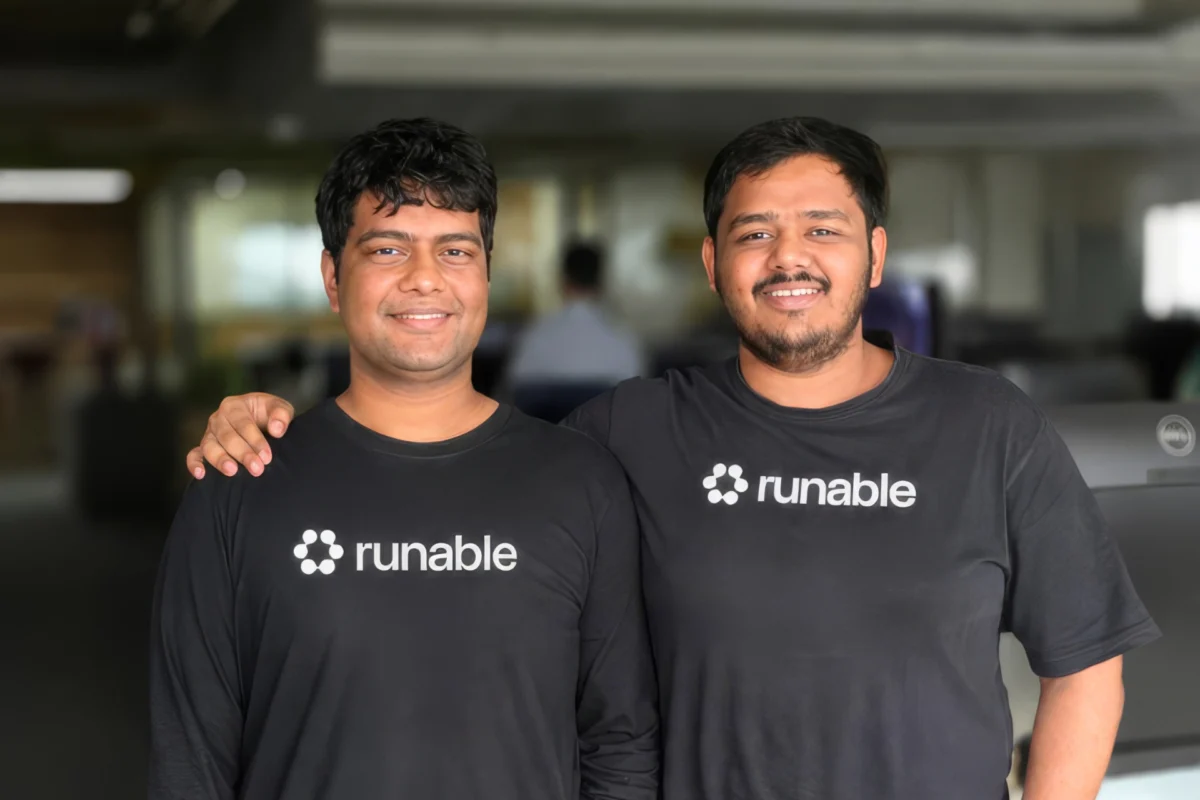
In an era where artificial intelligence is democratizing the creation of digital assets, from sophisticated websites to cutting-edge applications, Indian startup Runable is charting a bold new course. Recognizing that the true frontier for businesses lies not just in building but in thriving, Runable has successfully raised $21 million in a Series A funding round, signaling a significant investment in its vision to empower businesses to find customers and accelerate their growth. This substantial capital injection is earmarked for expanding its operations and further developing its innovative AI-driven solutions.
The funding round was a testament to strong investor confidence, co-led by prominent venture capital firms Susquehanna Venture Capital and Nexus Venture Partners. Existing investors, including Together Fund and Array VC, also participated, underscoring their continued belief in Runable’s potential. This all-equity, primary funding round has propelled Runable to a post-investment valuation of $65 million, according to an exclusive interview with co-founder and CEO Umesh Kumar. The strategic infusion of capital positions Runable to aggressively pursue its mission in an increasingly dynamic and competitive technological landscape.
Founded in 2025, Runable is keenly focused on the often-overlooked needs of small businesses, a sector brimming with potential but frequently underserved by complex technological solutions. The company is navigating a market that is rapidly being reshaped by AI giants like Anthropic and OpenAI, as well as sophisticated coding platforms such as Cursor, Lovable, and Replit. However, Runable’s distinct approach, spearheaded by its lean, 15-person team based in Bengaluru, transcends mere software creation. Their core offering is an advanced AI agent meticulously designed to address the critical challenge of customer acquisition. This agent is engineered to autonomously manage and execute a suite of growth-oriented tasks, including the strategic planning and deployment of advertising campaigns, the creation of compelling business presentations, and the comprehensive promotion of businesses across a diverse range of channels, from search engines and social media platforms to interactive AI chatbots.
"In the end, a business doesn’t require Codex or Claude Code or anything like that," Kumar articulated in his conversation with TechCrunch, emphasizing the practical realities faced by entrepreneurs. "They require real outcomes. If I am paying an agency $10,000 to run my Google Ads, can someone come in and do it for me for a lower price? That’s where Runable comes in." This statement encapsulates Runable’s fundamental value proposition: delivering tangible business results at a more accessible price point, directly addressing the pain points of small business owners who are often budget-conscious and time-poor.
The genesis of Runable can be traced back to its initial ambition as an AI infrastructure startup. Co-founders Umesh Kumar and Saksham Sarda (pictured above, left) initially focused on developing browser technology capable of large-scale data scraping. However, a significant observation emerged from their interactions with users: a consistent and growing demand for their browser-based agent to assist with creative tasks, such as generating slide decks and building websites. This user-driven insight prompted a strategic pivot, steering the startup towards the development of a more versatile, general-purpose AI agent. This adaptive strategy proved to be a catalyst for rapid growth. Kumar reported that within a mere three weeks of launching its payment system in March, Runable transitioned from a nascent concept to achieving an annualized revenue run rate of $2 million, a remarkable feat that underscores the market’s immediate embrace of their evolved offering.
Today, Runable’s flagship AI agent empowers users to effortlessly create a wide array of digital assets, including websites, applications, and presentations, through intuitive natural language prompts. Beyond content creation, the agent proactively manages crucial underlying infrastructure, encompassing seamless deployment and insightful analytics. The company’s strategic expansion now extends into what it terms the "grow" dimension of business operations. In this domain, Runable’s AI agent is being enhanced to undertake sophisticated tasks such as managing advertising campaigns across various platforms, curating and executing social media strategies, optimizing search engine optimization (SEO) efforts, and strategically enhancing a business’s visibility within AI chatbot search results, among a growing list of growth-focused functionalities.
Kumar articulated a clear and ambitious long-term vision: to liberate small business owners from the intricate and often fragmented process of setting up websites, analytics tools, advertising accounts, and marketing campaigns. Instead, they should be able to simply instruct Runable to achieve a specific customer acquisition target. This vision represents a paradigm shift, moving from a focus on the tools of creation to a direct emphasis on achieving concrete business objectives.
The traction Runable has achieved thus far is considerable. The platform currently boasts approximately 1.7 million registered users, with the United States, the United Kingdom, and Japan emerging as its most significant markets. While the platform also serves users in Brazil, the startup is strategically intensifying its focus on the top three markets. Runable anticipates that Japan, in particular, will ascend to become one of its leading markets, potentially rivaling the United States in market share as early as the next month, a testament to the global appeal of their solutions.
The Challenge of Going Beyond Building
While Runable’s rapid ascent is undeniable, the company, like many in the AI space, faces its own set of challenges, particularly as it ventures beyond the foundational aspect of building digital assets into the more complex realm of customer acquisition and business growth. Kumar, though declining to disclose specific current revenue figures or the exact number of paying customers, did offer insights into usage patterns. He revealed that over the past 90 days, users have consumed more than 1 trillion tokens, with a substantial 60% to 70% of this usage originating from paying customers. This high volume of usage, while indicative of strong engagement, also comes with significant costs.
Kumar candidly acknowledged that Runable is currently operating with negative gross margins. This financial reality is partly attributed to the startup’s strategy of subsidizing AI usage for its customers, a move designed to foster adoption and provide immediate value. Runable employs a mixed strategy for its AI models, incorporating third-party solutions while also actively developing its own proprietary models. The company is optimistic that the anticipated decline in inference costs, a trend driven by ongoing advancements in AI hardware and software optimization, will significantly improve its economic efficiency over time. "We are seeing this path where you can provide the same quality of inference at almost 10x less cost," Kumar remarked, highlighting the potential for future cost reductions.
Perhaps the most significant strategic challenge Runable faces is standing out in an increasingly crowded field, especially as the very AI model companies upon which it relies are themselves developing their own AI agents. However, Kumar contends that Runable’s distinct advantage lies in its ability to holistically manage the entire workflow required to achieve a specific outcome for a small business. This includes not only the initial creation but also the critical post-creation phases involving infrastructure management, analytics, and distribution. Runable aims to deliver this comprehensive service without requiring users to individually integrate and manage multiple disparate services, a common pain point for small business owners.
In a hands-on test conducted by TechCrunch, the Runable agent was tasked with building and deploying a website for a fictional coffee subscription business, establishing analytics, and then attracting the first 100 visitors with a modest advertising budget of $25. Runable successfully constructed the website and prepared a targeted ad campaign. However, the process halted before the campaign could be launched, citing the prerequisite of connecting an existing advertising account. This limitation mirrors experiences with other AI coding assistants. A similar test with Cursor revealed comparable hurdles, where the platform prepared an ad campaign but necessitated access to a Meta Ads account, a payment method, and a third-party service for permanent website deployment. While Runable demonstrated superior capability in handling website infrastructure within its platform, the requirement for an external advertising account remained a bottleneck before ad spend could be initiated.
Addressing this specific limitation, Runable clarified that its ability to run ads without customers directly connecting their own advertising accounts is currently available for advertisements placed on ChatGPT. The startup indicated that it has established partnerships that facilitate these types of integrated ad placements, though it declined to name the specific partners, describing these relationships as a "soft wedge" into broader advertising capabilities.
Kumar reiterated that Runable is not attempting to compete directly with coding agents that cater to developers working with local files or primarily focused on code writing. For such users, he suggested that tools like OpenAI’s Codex or Anthropic’s Claude Code might be a more suitable choice. Runable’s strategic focus is firmly on non-technical small business owners who may lack the inclination or the technical expertise to configure the complex array of tools and services necessary to transform an AI-generated product into a fully operational and revenue-generating business.
In terms of direct competition, Kumar identified general-purpose agents such as Manus and Genspark as Runable’s closest rivals. These platforms target a similar user base and market segment. Nevertheless, Runable aims to carve out a unique market position by emphasizing its capability to help businesses actively find customers through AI, distinguishing itself from competitors who may focus predominantly on the building aspect of AI utilization. This strategic emphasis on customer acquisition and business growth, rather than solely on content generation, positions Runable as a distinct and potentially more impactful solution for the small business ecosystem.
