
 By admin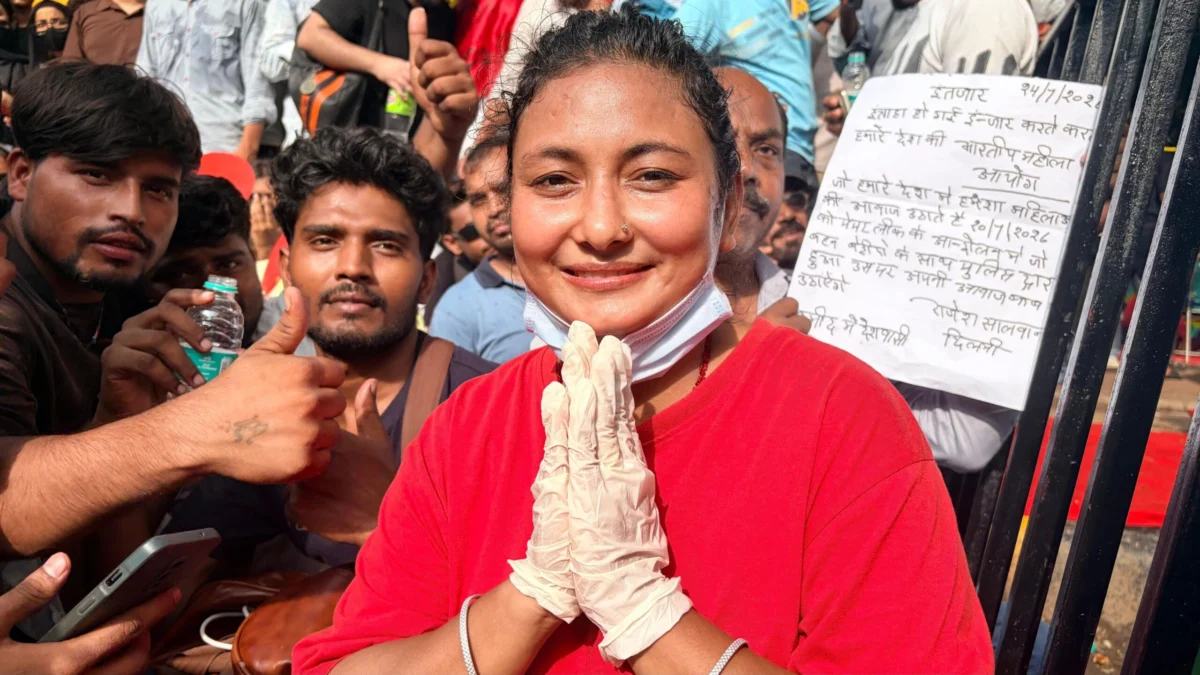
In a significant political development that has sent ripples across the nation, India’s burgeoning youth movement, the Cockroach Janta Party (CJP), has officially called off its five-week-long protest. This momentous decision came just hours after Education Minister Dharmendra Pradhan tendered his resignation, a move that the CJP is hailing as a decisive victory for democracy. Jubilant supporters of the movement continue to throng Jantar Mantar, the iconic protest venue in Delhi, celebrating what they perceive as a triumph of popular dissent against the ruling government.
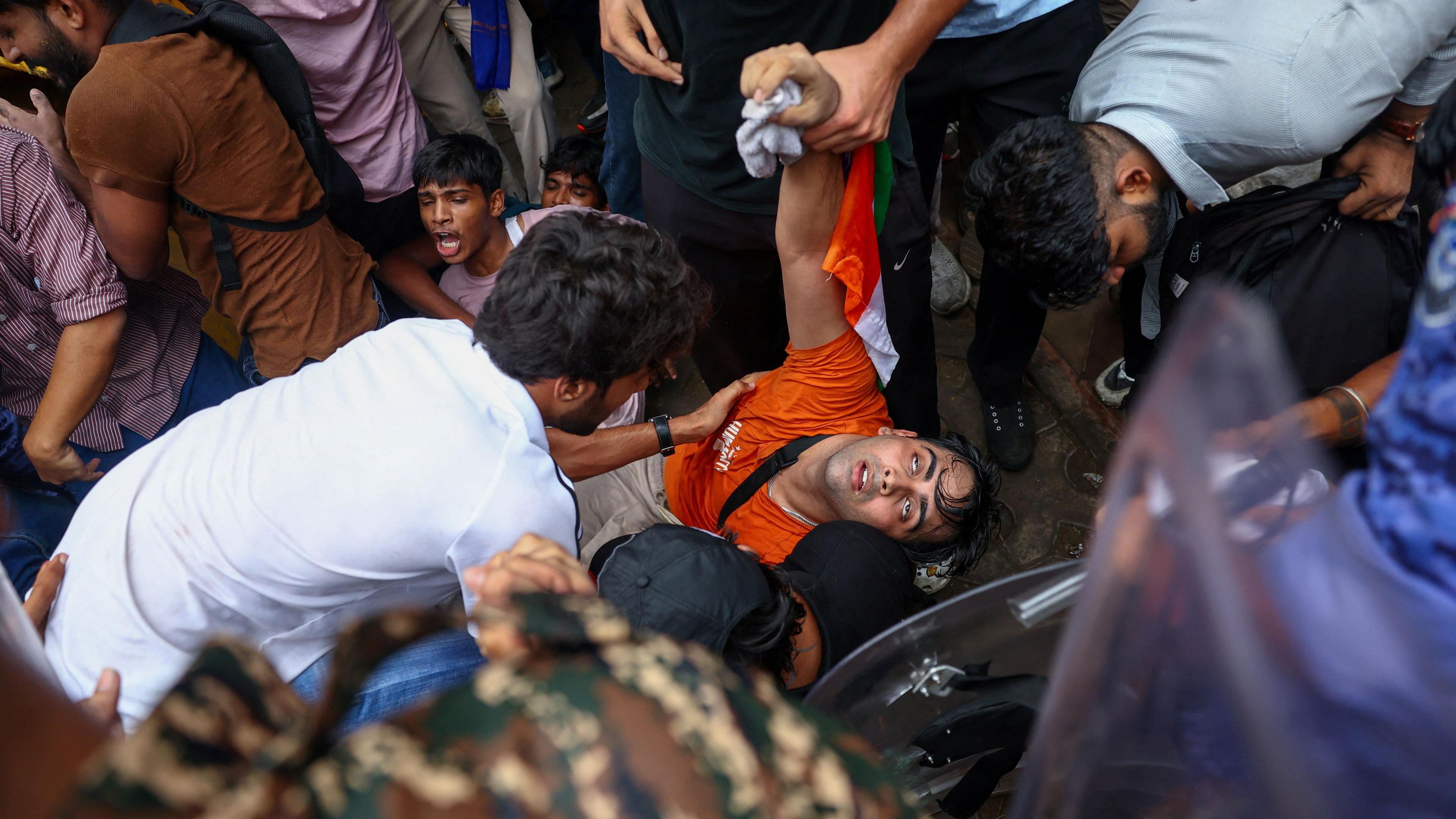
The Cockroach Janta Party, though not a traditional political entity, has rapidly evolved into a potent symbol of the anxieties and aspirations of India’s young population. Its unconventional mascot, an AI-generated cockroach, has become a rallying point, representing resilience and the ability to thrive in adversity. The CJP’s protest has been the most visible and sustained expression of public discontent against Prime Minister Narendra Modi’s government in recent years. The movement gained significant momentum following a police crackdown on protesters marching towards Parliament on Monday, an event that left dozens injured and highlighted the growing chasm between the government and a segment of its citizenry.
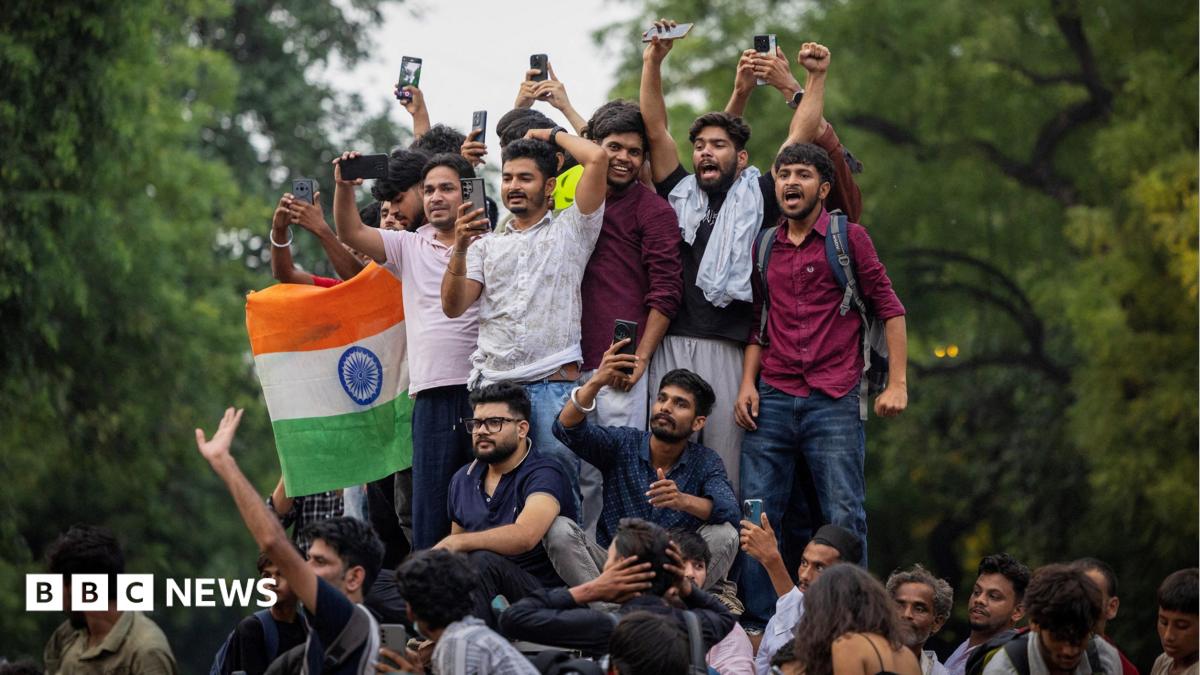
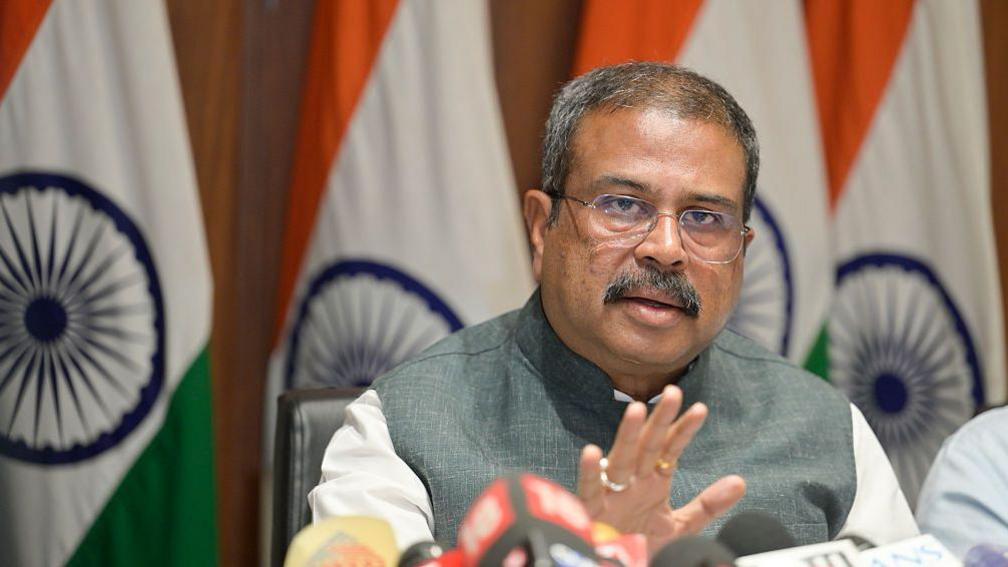
Education Minister Dharmendra Pradhan announced his resignation via a post on X (formerly Twitter) in Hindi. In his statement, he expressed deep respect for the aspirations and expectations of the youth, stating that he was "pained by the events" of the preceding days. He articulated his decision as a measure to "prevent anti-national forces from exploiting the situation," preserve national unity, and ensure that the futures of Indian students are not compromised by legal complexities. Pradhan emphasized his desire for students to focus on their studies and career building, thus justifying his submission of resignation to the Prime Minister.
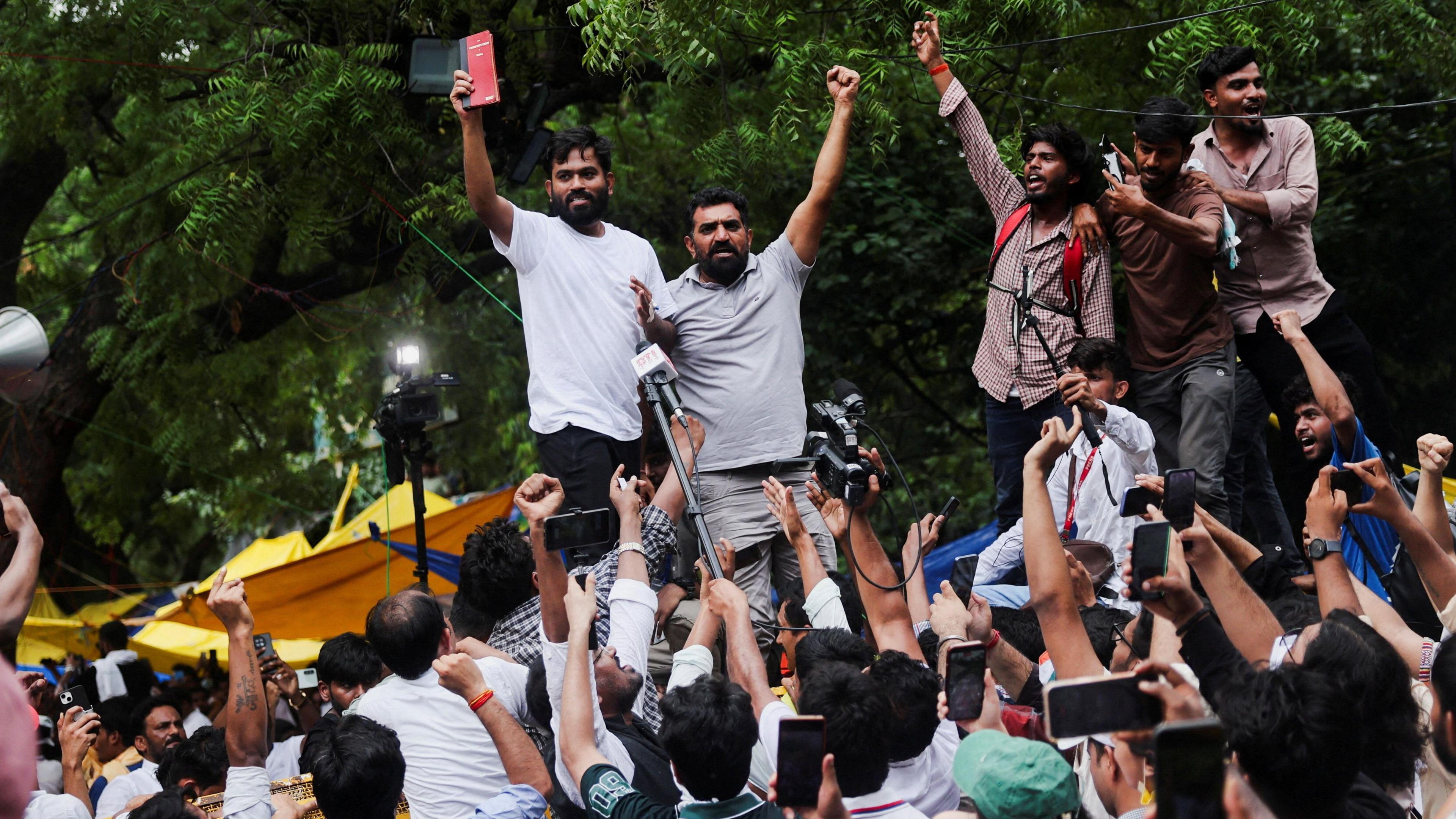
Upon the news of Pradhan’s resignation breaking, Abhijeet Dipke, the founder of the CJP, appeared visibly emotional on the makeshift stage at Jantar Mantar. His declaration, "We have done it," was met with thunderous cheers and widespread celebrations. Protesters erupted in song, dance, and slogans, distributing sweets to mark the occasion. Even hours after the CJP officially announced the end of their protest and its leaders departed the site, crowds remained at Jantar Mantar, their spirits high and their resolve to celebrate palpable. Many attendees shared with the BBC their weeks-long anticipation for this moment, expressing an unwillingness to leave without a proper celebration. The protest site transformed into a scene of festivity, with volunteers working diligently to manage the enthusiastic crowds. A significant police presence was noted around the area, with authorities indicating their intention to intervene only in cases of legal breaches.
The genesis of the CJP lies in a controversial remark made by the Chief Justice of India, who reportedly described some unemployed young people turning to journalism and activism as "cockroaches." Although the Chief Justice later clarified that his comment was directed specifically at individuals with "fake and bogus degrees," the term had already been adopted by the youth as a badge of honor, transforming a derogatory label into a symbol of defiance. Leading this charge is Abhijeet Dipke, a 30-year-old political communications strategist and a former student of Boston University. The CJP’s innovative use of social media, particularly its AI-generated cockroach mascot, resonated widely, amassing a staggering 26 million followers on Instagram and turning a reviled insect into an emblem of resilience and resistance. The movement’s core demands centered on comprehensive reforms to India’s education system, greater accountability regarding exam paper leaks, and, crucially, the resignation of the Education Minister.
The protest garnered significant national and international attention when renowned activist and educationist Sonam Wangchuk joined the demonstration on June 28th, initiating an indefinite hunger strike in solidarity with the CJP’s demands. As Wangchuk’s health deteriorated, the crowds at Jantar Mantar swelled. The activist was forcibly removed from the protest site by police on Saturday and taken to the hospital, where he continued his fast. He ultimately called off his hunger strike early Friday morning after receiving assurances from the government that his demands would be addressed. Throughout the protest, a broad spectrum of India’s major opposition political parties, various activists, and numerous celebrities lent their support, visiting the protest sites to express solidarity.
On the ground, many of the posters and slogans displayed by protesters were directly aimed at Prime Minister Modi. The BBC spoke with several individuals who revealed their former support for the Prime Minister, expressing a newfound disillusionment. One such individual, Radhika, shared, "I used to support him when he used to do good things, but slowly I am realized that he is only dividing people on the basis of religion, and he’s not doing anything else." On Saturday, opposition leaders lauded Pradhan’s resignation, with many characterizing it as a significant victory for the youth-led movement.
While the immediate demand was for the Education Minister’s resignation, it is widely acknowledged that the protests have inflicted a considerable blow to Prime Minister Modi’s personal brand and his perceived aura of invincibility. Since assuming power in 2014, Modi’s government has been characterized by its intolerance of dissent, often resorting to heavy-handed tactics to suppress protests. Therefore, Pradhan’s resignation is being interpreted as a rare and significant concession by the government. This is not the first instance of the government facing substantial public opposition and subsequently making concessions; the repeal of controversial farm laws in 2021, following a year-long farmer’s protest, serves as a precedent.
The students’ protest has struck a chord with a substantial segment of middle-class India, transcending religious, caste, and sectoral divides. Participants have voiced widespread anger and frustration over the lack of educational opportunities and employment prospects in the country. Pressure on the government intensified following the violent crackdown on Monday, where police and paramilitary forces reportedly used batons and wooden sticks to disperse young men and women, deploying tear gas. Approximately 300 people were admitted to hospitals, with police claiming that at least half of the injured were security personnel. Around 70 protesters were arrested, though most have since been released on bail.
After largely ignoring the protesters for nearly five weeks, Prime Minister Modi finally broke his silence on Thursday, announcing the government’s decision to "set up fast-track courts to ensure swift and stringent punishment for those involved in paper leaks." Later that same night, Modi released a video message detailing plans for a stringent new law targeting examination paper leaks, indicating that a draft of the legislation had been received and was intended for expedited introduction in Parliament. The Prime Minister’s attempts to quell the anger appear to have backfired, with thousands of posts mocking Modi flooding social media platforms, transforming his videos into jokes and memes.
Following Dharmendra Pradhan’s resignation, CJP founder Abhijeet Dipke issued a statement on X, asserting that the fight was far from over. He pledged to continue advocating for the families of students who died by suicide after a crucial medical exam was cancelled, demanding that they receive due compensation. Dipke also reiterated his calls for accountability against police officers whom he accused of using excessive force against protesters on July 20th, when CJP supporters attempted to march towards Parliament. He concluded his statement with a defiant message, "Remember, do not mess with [the] cockroach."
The protests have undoubtedly exposed deep-seated grievances within Indian society, particularly among the youth, concerning the integrity of educational systems and the scarcity of economic opportunities. The government’s initial response of heavy-handed suppression, followed by a swift resignation under sustained pressure, highlights the growing power of organized civil dissent in India. The CJP’s unconventional approach and its ability to mobilize millions online and on the streets have demonstrated a new paradigm of activism. The movement’s success in forcing the resignation of a Union Minister is a significant event, challenging the perceived invincibility of the current administration and setting a precedent for future youth-led movements in India. The government’s acknowledgment of the problem of exam paper leaks and its promise of legislative action, while a positive step, will be closely watched by the public to gauge the extent of genuine reform. The "cockroach" symbol, once a derogatory term, has been powerfully reappropriated, signifying a tenacious and resilient force that the establishment can no longer afford to ignore.
