
 By Lina Irawan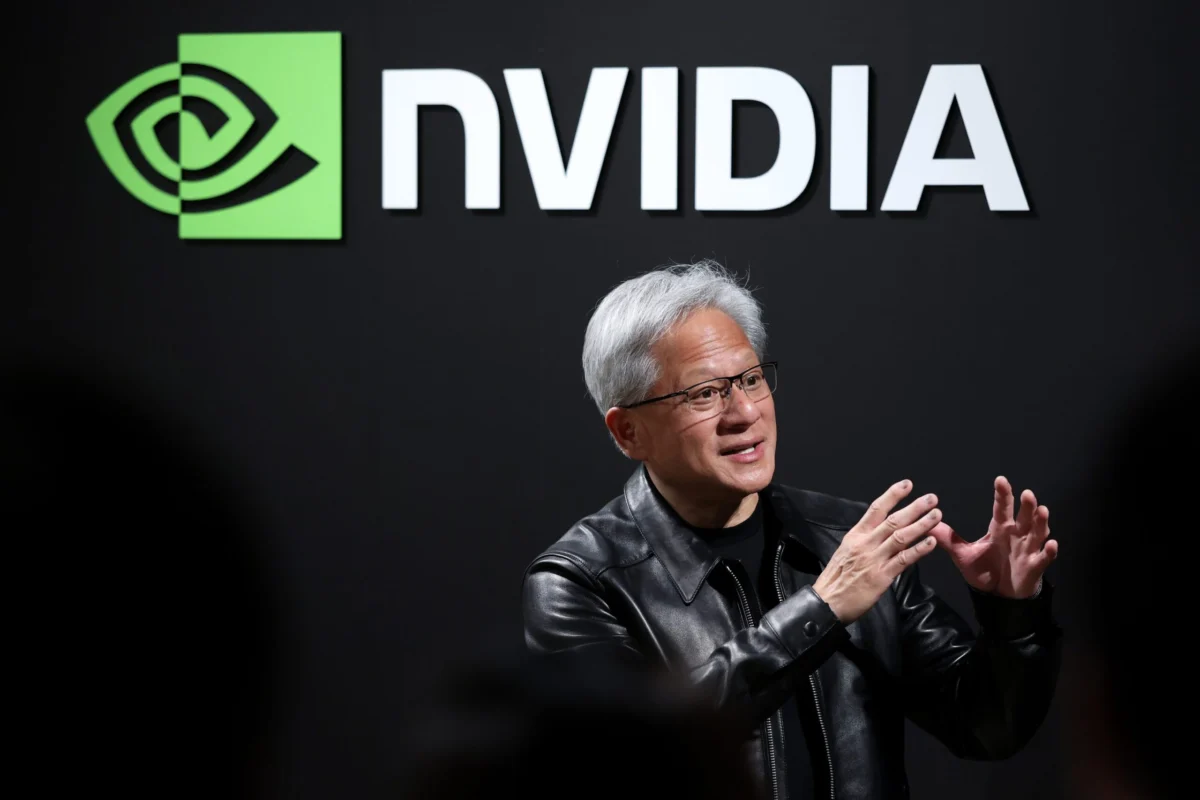
The semiconductor industry, a notoriously cyclical sector characterized by dramatic boom-and-bust cycles, finds itself once again at the epicenter of unprecedented technological fervor, driven by the transformative promise of artificial intelligence. Yet, as chip stocks have soared to dizzying heights on the back of this AI frenzy, recent weeks have seen a sharp sell-off, rekindling age-old fears about the sustainability of massive capital expenditures and the potential for an impending market correction. This volatility persists despite robust earnings reports and optimistic guidance from leading chipmakers, coupled with persistent supply shortages that underscore an insatiable, almost frantic, demand for AI-enabling hardware. It is against this backdrop of both exhilarating growth and simmering anxiety that Jensen Huang, the visionary CEO of Nvidia, the undisputed titan in AI acceleration, has offered a strikingly optimistic, though historically resonant, prognosis: he doesn’t believe a downturn is imminent, even as his reasoning echoes a phrase that has notoriously justified past speculative bubbles.
In a candid interview with Axios cofounder Mike Allen, Huang was directly confronted with the specter of a sector-wide bust, to which he unequivocally replied, "no, not for a while." Allen, keenly aware of the historical precedents, pressed further with the loaded question, "so this time is different?" Huang’s response, "This time is different because this is not demand driven. This time is different because it’s not seasonal. It’s not demand driven means seasonal-demand driven. This is industrially driven, meaning the fundamental technology of computers is changing," immediately captured attention. He elaborated that the global economy requires an entirely new layer of infrastructure — specifically, AI — a monumental undertaking that necessitates a vast expansion of chip production. Huang boldly estimated that the semiconductor industry, as a whole, must become five to ten times larger over the next decade to meet this burgeoning need.
While such unbridled optimism from the head of the world’s leading AI chip supplier is, to some extent, expected and perhaps even part of his role in driving market confidence, what makes his declaration particularly notable, and indeed, a point of significant discussion among financial historians and market strategists, is his explicit endorsement of the "this time is different" mantra. This phrase has achieved an infamous status in economic parlance, often serving as a harbinger of irrational exuberance preceding significant market corrections or outright collapses. It was invoked with fervent conviction during the dot-com bubble of the late 1990s, when proponents argued that the internet’s revolutionary potential rendered traditional valuation metrics obsolete, only for the bubble to spectacularly burst, wiping out trillions in market value. The phrase is now so widely recognized as a red flag that its mere hint creeping into buoyant forecasts is enough to trigger caution among seasoned investors, much like the now-rueful declaration of "mission accomplished" has become synonymous with premature celebration.
The financial underpinnings of this AI-driven expansion are equally compelling and, for some, concerning. Hyperscalers – the cloud computing behemoths like Amazon (AWS), Microsoft (Azure), Google (Google Cloud), and Meta – are committing hundreds of billions of dollars annually to capital expenditures (capex) in a frantic race to build out AI infrastructure as rapidly as possible. This aggressive spending, fueled by the imperative to acquire and deploy the latest AI chips and data center capabilities, is straining even their prodigious financial resources. Historically, these tech giants have largely funded their capex through their enormous cash-generating operations. However, the scale and speed of the current AI buildout are so immense that internal cash flows are increasingly proving insufficient. This has led to an unprecedented shift, with some of the most cash-rich companies in the world turning to external financing. Notably, Alphabet, Google’s parent company, recently recorded negative cash flow, a rare occurrence that underscores the sheer magnitude of their AI-related investments. As a direct consequence, these tech titans are increasingly tapping the bond market, issuing significant amounts of debt to finance their AI ambitions. For instance, in 2024 alone, several hyperscalers have announced or completed multi-billion dollar debt offerings, a move that signals both their conviction in AI’s future and the unprecedented capital intensity of this transformation.
Huang, however, remains unfazed by the growing reliance on debt financing by his primary customers. When pressed on whether he harbors concerns about Nvidia’s customers tapping the bond market to acquire his company’s cutting-edge chips, he responded with unwavering confidence. His rationale circles back to the core argument of a fundamental paradigm shift in computing. "So this future is a whole new way of doing computing that’s fundamentally different than the past, and we need a lot more computers," he explained. This perspective suggests that the current investment cycle is not merely an upgrade or an incremental improvement, but rather a foundational re-architecture of global computing infrastructure, akin to the invention of the internet or the personal computer. From this viewpoint, the debt being incurred is not for speculative ventures but for essential, long-term infrastructure necessary for the next era of technological advancement.
Moreover, Huang points to the tangible profitability and utility already being demonstrated by AI applications and services. Companies like Anthropic, a prominent AI startup, are already generating substantial revenue as customers discover the profound usefulness of AI agents and models. This immediate return on investment, Huang contends, provides a solid justification for the massive capital outlays. He posits that AI is currently at a critical "inflection point," where the technology’s proven ability to generate profits and significantly boost productivity necessitates further, aggressive investment in its foundational infrastructure. The more AI is built and deployed, the more value it creates, fueling a virtuous cycle of investment and innovation.
Another intriguing element of Huang’s argument for a delayed bust centers on the very constraints currently limiting even faster growth. He highlighted that the industry is "constrained in every single direction, in every single way," citing limitations in the supply of chips themselves, available land for data centers, adequate power infrastructure, and even skilled construction workers. Paradoxically, Huang views these bottlenecks not as hindrances, but as beneficial mechanisms that stretch out the investment timeline. "That constraint is good. That constraint is what holds the system back. So that gives us plenty of time to go build out these infrastructure," he asserted. His logic is that these supply-side limitations prevent an immediate oversupply scenario, which is often the precursor to a bust in cyclical industries. By pacing the buildout, the industry can avoid a rapid saturation of demand relative to supply, thus pushing out the timeline when an inevitable correction might occur. This perspective suggests a more controlled, albeit still rapid, expansion rather than an uncontrolled surge followed by a sudden collapse.
However, many market analysts and economic historians remain cautious. While acknowledging the transformative potential of AI, they point out that even truly revolutionary technologies have historically experienced periods of irrational exuberance and subsequent corrections. The "this time is different" fallacy, as detailed by renowned financial author Charles P. Kindleberger in his seminal work Manias, Panics, and Crashes, often arises during periods of genuine innovation, where the excitement about new possibilities blinds investors to fundamental economic principles and historical patterns. The sheer speed of AI adoption, the speculative nature of some investments, and the rising debt levels, particularly among companies that traditionally avoided it, are all factors that warrant a degree of circumspection. The long-term profitability of these massive AI investments is yet to be fully proven, and a slowdown in enterprise spending or a shift in regulatory landscape could quickly alter the financial calculus for hyperscalers and, by extension, their chip suppliers like Nvidia.
Moreover, while Huang’s point about supply constraints acting as a buffer has merit, it also highlights potential vulnerabilities. Persistent shortages could stifle innovation in certain areas, raise costs further, and potentially lead to consolidation among those who can afford the escalating price of entry. The delicate balance between constrained supply prolonging the boom and critical shortages hindering the buildout remains a fine line. Geopolitical factors, such as export controls and ongoing trade tensions, also continue to cast a shadow over the global semiconductor supply chain, adding another layer of complexity and potential disruption.
Ultimately, even Huang concedes that the AI bubble will burst someday. "It won’t happen anytime soon as the AI buildout is still in the early stages," he maintains. The precise timing and catalyst for such an event are impossible to predict, but history teaches that no boom, however fundamentally driven, lasts forever. Whether it will be triggered by an eventual oversupply, a plateau in technological advancements, a global economic recession, or simply a shift in investor sentiment from exuberance to realism, remains to be seen. For now, the semiconductor industry, with Nvidia at its vanguard, is navigating an unprecedented era of growth, with its charismatic leader confidently steering the ship through potentially turbulent waters, convinced that the currents of technological evolution have fundamentally altered the journey this time around. The verdict, however, will ultimately be delivered by the relentless cycles of the market itself.
