
 By Titik Puspa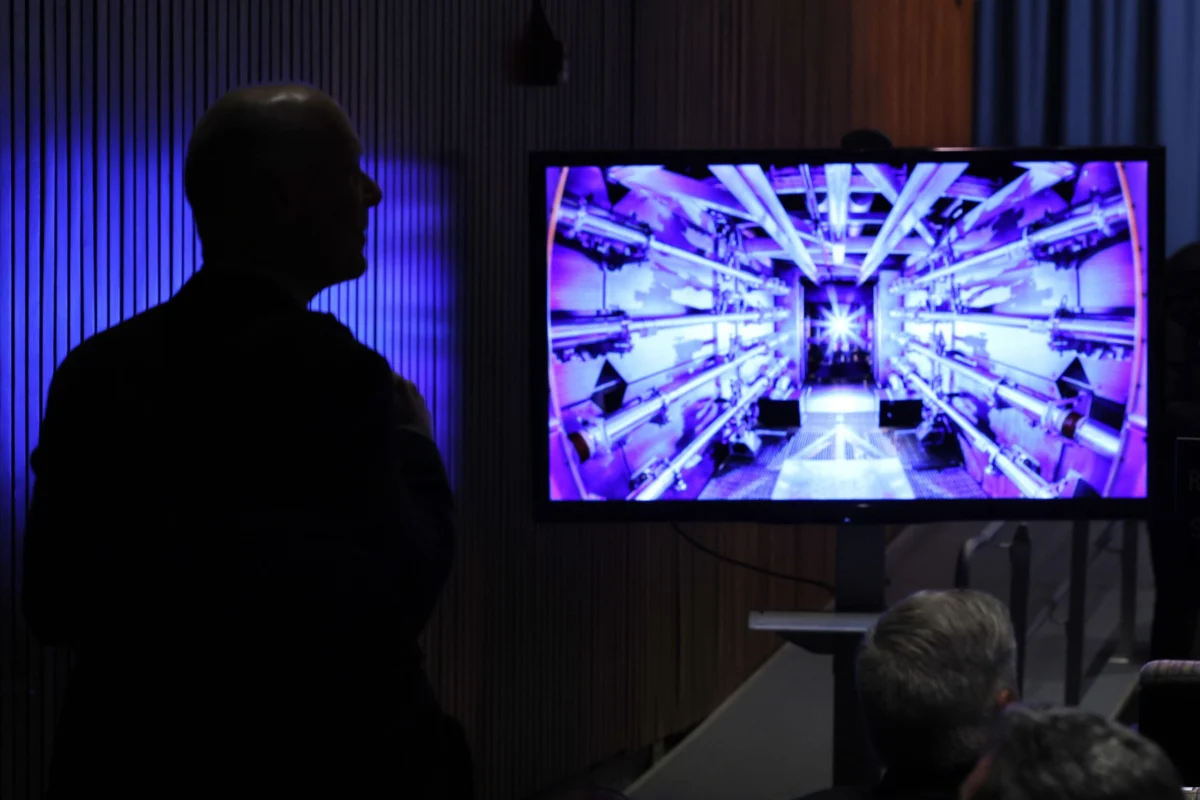
In a pivotal development poised to significantly propel the nascent fusion energy sector, Inertia Enterprises, a prominent fusion power startup, announced on Tuesday the signing of three comprehensive agreements with the esteemed Lawrence Livermore National Laboratory (LLNL). These landmark accords are meticulously designed to facilitate the transition of the revolutionary laser-based fusion reactor, pioneered at the renowned Californian institution, from the laboratory benchtop to market viability. The implications of these collaborations are far-reaching, potentially granting Inertia a substantial competitive edge over its burgeoning rivals in the race to harness the ultimate clean energy source.
The National Ignition Facility (NIF) at LLNL stands as a singular beacon in the scientific community, having achieved the unprecedented feat of demonstrating that controlled fusion reactions can, indeed, generate more energy than is consumed to initiate them. This monumental scientific breakthrough, often referred to as "scientific breakeven," was a critical validation of decades of research and development. Inertia Enterprises, having burst onto the scene in February with a colossal $450 million Series A funding round, immediately positioned itself as one of the most heavily capitalized entities within the fusion industry. This substantial financial backing, sourced from esteemed investors including Bessemer Venture Partners and Alphabet’s GV, underscores the immense confidence placed in Inertia’s potential to deliver on the promise of fusion power.
At the heart of Inertia’s technological approach, and central to these new agreements, lies the principle of inertial confinement fusion (ICF). This method stands in contrast to other leading fusion strategies, such as magnetic confinement fusion (MCF), which employ powerful magnetic fields to contain superheated plasma. Instead, ICF achieves fusion conditions by rapidly compressing a small pellet of fusion fuel using an intense external force. The process, as meticulously executed at the NIF, is a marvel of modern engineering and physics. It involves firing 192 precisely aimed laser beams into a vast vacuum chamber. These beams converge with incredible accuracy onto a tiny gold cylinder, known as a hohlraum. Within this hohlraum resides a minuscule fuel pellet, often coated with diamond.
Upon impact with the hohlraum, the intense laser energy vaporizes the gold, generating a burst of X-rays. These X-rays then envelop and compress the BB-sized fuel pellet. The diamond coating on the pellet plays a crucial role, transforming into a plasma that expands outward, exerting immense pressure on the deuterium-tritium fuel contained within. This extreme compression, coupled with the resulting high temperatures, forces the atomic nuclei of the fuel to fuse, releasing a significant amount of energy in the process.
The sheer complexity and exotic nature of this process cannot be overstated. For inertial confinement fusion to become a viable source of commercial power, these fusion reactions must occur not just once, but repeatedly, at a rate of several times per second. This rapid firing cadence is essential to generate a continuous and substantial energy output capable of powering our grids.
The theoretical underpinnings of the laser-driven reactor design trace back to the 1960s. Initially conceived as a safer avenue for researching thermonuclear weapons, scientists soon recognized its profound potential for peaceful energy production. The construction of the NIF, a testament to this long-term vision, commenced in 1997. It represented a monumental undertaking, requiring 25 years of dedicated effort before finally achieving the critical breakeven point in 2022, where a fusion reaction yielded more energy than was expended to initiate it. This milestone was not merely a scientific curiosity; it was a crucial proof of concept, validating the fundamental physics and engineering principles involved.
The journey from scientific demonstration to commercial reality is fraught with challenges, and several ambitious startups, including Inertia, Xcimer, Focused Energy, and First Light, are actively pursuing various pathways to translate the ICF concept into commercial-scale power plants. A significant hurdle for early ICF research, including at the NIF, has been the reliance on laser technology that, while effective, is not optimized for efficiency and repetition rate. The prevailing hope within the industry is that advancements in laser technology will be the key to unlocking profitability. By developing more efficient lasers, the energy input required to ignite each fusion reaction can be significantly reduced. This, in turn, will make it easier for each reaction to release a net energy gain substantial enough to underpin the economic viability of a commercial-scale power plant.
The agreements signed between Inertia Enterprises and LLNL are strategically structured to address these critical areas of advancement. They encompass two distinct strategic partnership projects and one comprehensive cooperative research and development agreement (CRADA). The collaborative spirit of these accords is evident in their stated objectives: to jointly develop more advanced and efficient laser systems, and to refine and optimize the design and manufacturing of the fuel targets. The overarching goal is to achieve enhanced performance and greater manufacturability, crucial factors for scaling up the technology. Furthermore, in a significant boost to Inertia’s intellectual property portfolio and technological capabilities, the company is licensing nearly 200 patents from LLNL, covering a broad spectrum of ICF-related innovations.
The natural synergy between Inertia and LLNL is further underscored by the personal trajectory of Annie Kritcher, a co-founder and the chief scientist of Inertia. Kritcher was a key figure in the design and execution of the groundbreaking experiment at NIF that achieved scientific breakeven. Her continued involvement with Inertia, while potentially retaining her affiliation with LLNL, was facilitated by the passage of the 2022 CHIPS and Science Act. This legislation provided a framework that allows for such collaborations between national laboratories and private enterprises, fostering a more dynamic ecosystem for technological innovation and commercialization.
The implications of these agreements extend beyond Inertia and LLNL, resonating throughout the global quest for clean and sustainable energy. Fusion power, once a distant dream, is steadily moving towards the realm of tangible possibility. The successful commercialization of ICF technology, bolstered by this strategic alliance, could herald a new era of energy abundance, significantly reducing reliance on fossil fuels and mitigating the impacts of climate change. The challenges remain considerable, requiring continued innovation, substantial investment, and unwavering scientific dedication. However, the recent advancements and the strategic collaborations being forged, such as this one between Inertia Enterprises and LLNL, paint a promising picture for the future of fusion energy.
The history of fusion research is a long and complex tapestry, woven with threads of scientific curiosity, technological perseverance, and significant governmental investment. The concept of harnessing the energy that powers the stars has captivated scientists for generations. Early theoretical work in the mid-20th century laid the groundwork for understanding the immense power locked within atomic nuclei. The development of nuclear weapons, while a dark chapter in human history, inadvertently provided a powerful impetus for fusion research, particularly in understanding the conditions required for thermonuclear reactions.
The establishment of facilities like LLNL and its flagship National Ignition Facility was a direct consequence of this pursuit. NIF, a facility of unparalleled scale and sophistication, was designed to conduct experiments in inertial confinement fusion at unprecedented levels of energy and precision. Its construction was a multi-decade endeavor, reflecting the immense scientific and engineering challenges involved. The achievement of ignition, the point where the fusion reaction becomes self-sustaining and produces more energy than is consumed, has been the holy grail of fusion research for decades. NIF’s success in 2022 marked a monumental leap forward, validating the ICF approach and igniting renewed optimism within the scientific and industrial communities.
However, the path from scientific demonstration to a commercially viable power plant is arduous. The energy output from a single fusion shot at NIF, while exceeding the input, is not yet at a level required for continuous power generation. Furthermore, the lasers used at NIF, while instrumental in achieving ignition, are not designed for the high repetition rates and efficiencies needed for a power plant. This is where companies like Inertia Enterprises and their strategic partnerships become crucial.
Inertia’s focus on developing advanced laser technology is directly addressing this bottleneck. The goal is to create lasers that are not only more powerful but also significantly more efficient, capable of firing hundreds of times per minute. This would dramatically increase the energy gain per unit of input and enable a continuous stream of power. The selection of fuel targets is another critical area of development. The precise composition, geometry, and manufacturing of these pellets directly influence the efficiency of the compression and the resulting fusion yield. Inertia’s collaboration with LLNL on fuel targets aims to optimize these parameters for improved performance and, crucially, for cost-effective mass production.
The licensing of nearly 200 patents from LLNL provides Inertia with a robust foundation of intellectual property, encompassing decades of foundational research and development in ICF. This is a significant advantage, allowing Inertia to build upon existing knowledge and accelerate its own innovation efforts, rather than starting from scratch. The CRADA, a common mechanism for collaboration between government labs and private entities, allows for the sharing of resources, expertise, and data, fostering a more integrated and efficient development process.
The broader implications of successful fusion power are profound. It offers the promise of a virtually inexhaustible, carbon-free energy source. Unlike renewable sources like solar and wind, fusion power plants could provide baseload electricity, operating continuously regardless of weather conditions. The fuel for fusion, primarily isotopes of hydrogen like deuterium and tritium, can be extracted from seawater and lithium, making it an abundant resource. Furthermore, fusion reactions produce very little long-lived radioactive waste compared to nuclear fission, further enhancing its environmental appeal.
The economic impact of a successful fusion industry would also be transformative. It could lead to energy independence for nations, reduce energy costs for consumers and industries, and stimulate the creation of a new global sector with high-skilled jobs. The competition among startups is a healthy sign, driving innovation and accelerating progress. Each company brings a unique approach and perspective, pushing the boundaries of what is possible.
The involvement of organizations like TechCrunch in covering these developments is vital for raising public awareness and attracting further investment into the sector. Events like the TechCrunch event in San Francisco, scheduled for October 13-15, 2026, provide platforms for companies like Inertia to showcase their progress and connect with potential investors and partners.
In conclusion, the strategic alliance between Inertia Enterprises and Lawrence Livermore National Laboratory represents a significant step forward in the quest for practical fusion power. By leveraging LLNL’s pioneering research and NIF’s groundbreaking achievements, and combining it with Inertia’s entrepreneurial drive, advanced laser technology development, and substantial funding, the path towards a commercial fusion energy future appears more tangible than ever before. The coming years will undoubtedly be critical in translating this scientific and strategic promise into a world-changing energy reality.
