
 By Lina Irawan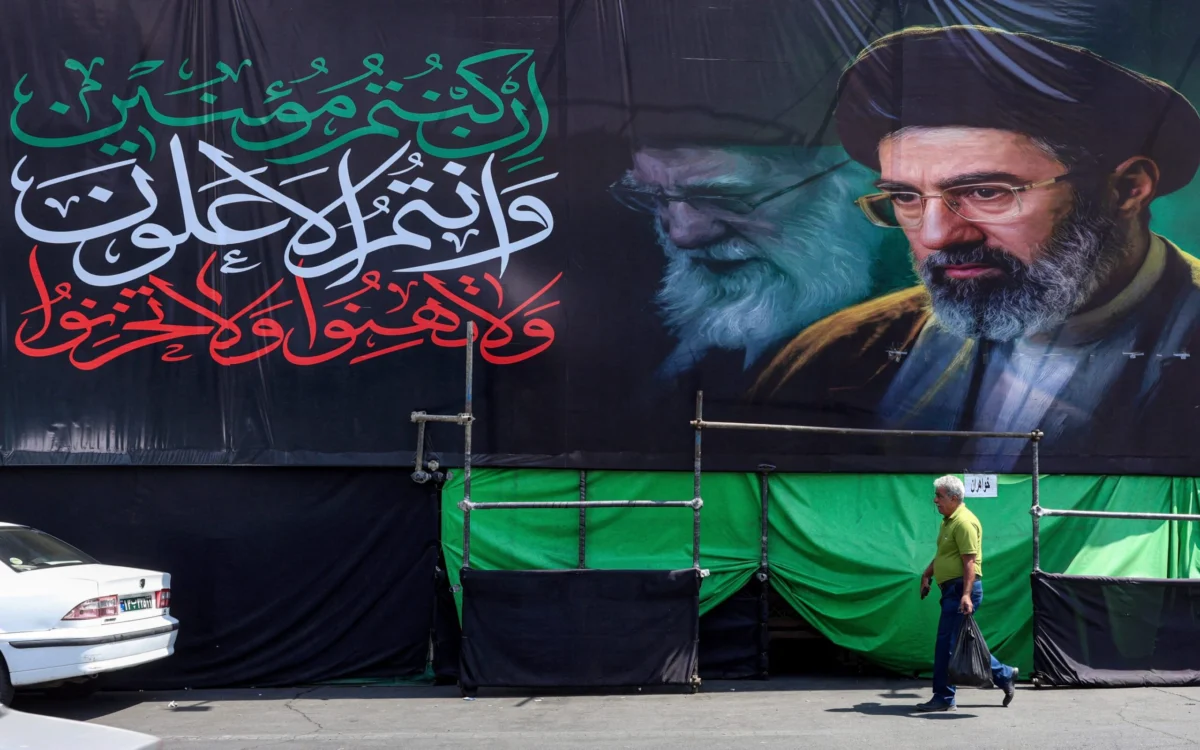
The Islamic Republic of Iran, a nation forged in revolution and steeped in ideological defiance, finds itself at a perilous crossroads in late 2026. While its clerical establishment and security apparatus maintain an undeniable grip on domestic power, the relentless escalation of U.S. economic warfare is exerting unprecedented pressure, threatening to fray the very fabric of society and test the regime’s legendary resilience. This intensifying economic siege, compounded by a recent, devastating geopolitical upheaval, has forced even the highest echelons of Iranian leadership to acknowledge the profound internal challenges.
This extends even to the newly ascendant Supreme Leader, Ayatollah Mojtaba Khamenei, whose public profile has been conspicuously absent since the seismic U.S.-Israeli strike on February 28 that claimed the life of his father, the revered former Supreme Leader. His sudden elevation to the nation’s ultimate authority, following such a dramatic and destabilizing event, has cast a long shadow over the regime’s immediate future. After weeks of uncharacteristic silence, a written statement issued late last month marked his first significant public utterance as the nation’s spiritual and political guide. In a move reflecting deep internal anxieties, he sternly banned Iranian officials from “committing anything that harms social cohesion” and urged them to avoid any “discouraging statements that weaken national and public motivation,” according to a Reuters report. This directive underscores a regime acutely aware of burgeoning internal discontent and the potential for official narratives to inadvertently fuel public disillusionment. The emphasis on "social cohesion" speaks volumes about the perceived fragility within the state, especially following the succession crisis and the ongoing economic hardship.
These pronouncements come against a backdrop of severe economic hardship that has already ignited fresh, albeit localized, protests across the country. Long queues at gas stations, a stark symbol of the nation’s energy woes despite its vast oil reserves, have become a common sight, fueling public frustration. While these recent demonstrations have not reached the monumental scale of the widespread unrest witnessed in January of last year, they serve as a potent reminder of the volatile undercurrents simmering beneath the surface of Iranian society. The memory of last year’s protests, sparked by a catastrophic currency collapse and soaring inflation, remains fresh. That period saw the Iranian rial plunge to unprecedented lows, triggering a wave of popular anger that was met with a brutal and deadly crackdown by the regime, resulting in the slaughter of thousands. Since then, economic conditions have only worsened dramatically, exacerbated by the U.S. "war" — a term used by Iranian officials to describe the comprehensive economic sanctions and naval blockade — which has further choked off the nation’s lifelines.
In his late-month statement, Ayatollah Khamenei, acknowledging the gravity of the situation, directly addressed the nation’s economic plight. He called upon the government to take immediate and decisive action, stating, “There is the need to seriously address the chain of economic and livelihood challenges, such as inflation, unemployment, management of prices and the market for goods and services.” This rare public admission of economic distress from the highest authority signals the depth of the crisis and the regime’s growing concern over its capacity to maintain stability and public trust amidst an escalating struggle for survival. His words, particularly for a leader whose legitimacy is still consolidating after a traumatic succession, represent a tacit acknowledgement of the deep public suffering and the potential for it to undermine the regime’s authority.
Around the same time as the Supreme Leader’s statement, Iranian President Masoud Pezeshkian, a figure often seen as the more pragmatic face of the Islamic Republic, similarly acknowledged his country’s deepening economic woes. In an interview with state media, Pezeshkian projected an image of defiance in the face of immense external pressure, crediting Iran’s enduring resilience to its national unity. However, he also candidly admitted, “we have many problems.” This delicate balancing act – projecting strength while conceding systemic issues – highlights the tightrope walked by Iranian officials as they attempt to manage public expectations and maintain morale.
President Pezeshkian offered stark figures to illustrate the economic contraction, estimating that Iranian trade has plummeted by a staggering 25% to 35%. He specified that imports have fallen significantly more than exports, indicating a severe disruption to the supply chain for essential goods and industrial components. The President also voiced palpable frustration with the internal narrative often propagated by hardliners, who deny or downplay the impact of U.S. sanctions. “Some people say that sanctions have no effect at all,” he added. “I really don’t know what to tell these people. I just want to say this: Saying that sanctions have no effect is not consistent with these facts.” This direct challenge to a pervasive ideological talking point within the regime underscores the growing internal divide on how to confront the economic reality and whether to maintain an illusion of invulnerability.
The U.S., for its part, is relentlessly tightening the screws. Treasury Secretary Scott Bessent recently announced what he termed an “economic D-Day,” signaling a comprehensive and aggressive campaign to systematically shut down every conceivable avenue that Iran uses to circumvent sanctions. This initiative aims to further degrade the regime’s already diminished capacity to earn vital revenue from oil exports and to procure essential imports, from spare parts for its aging infrastructure to basic foodstuffs and medical supplies. The "economic D-Day" signifies a new phase in financial warfare, moving beyond broad sanctions to a granular targeting of evasion networks, shell companies, and illicit financial flows that have historically allowed Iran to cushion the blow. This includes enhanced intelligence sharing with allies and aggressive enforcement actions against any entity found to be facilitating Iranian trade.
Senior Iranian sources, speaking to Reuters under anonymity, have confirmed that the combined impact of the U.S. naval blockade and the intensified crackdown on sanctions evasion is becoming increasingly difficult to withstand. The report emphasized that the effort to block Iran from accessing international financing networks in other countries represents an especially urgent and debilitating threat. Without access to global banking systems, even legitimate trade becomes a logistical nightmare, driving up costs and creating severe bottlenecks. One senior source painted a particularly grim picture regarding Iran’s energy security, revealing that the nation possesses only two months’ worth of gasoline supplies. This critical dependency on imports, a direct consequence of limited domestic refining capacity and years of underinvestment exacerbated by sanctions, leaves Iran profoundly vulnerable to the naval blockade and could trigger widespread social unrest if supplies dwindle further.
The currency crisis continues its freefall, with the Iranian rial now trading at an astonishing 2.2 million rials per U.S. dollar, a dramatic collapse from approximately 1 million just a year ago. This hyperinflationary environment has obliterated the purchasing power of ordinary Iranians, eroding savings and plunging millions into poverty. Inflation has soared above 80%, with prices for certain food staples, such as bread, rice, and cooking oil, experiencing an astounding 100% increase. This economic catastrophe translates directly into daily suffering for families struggling to put food on the table, access basic healthcare, and maintain a semblance of normal life. The disparity between the official exchange rate and the black market rate further complicates economic activity and fuels corruption.
To be sure, experts and analysts have consistently cautioned that Iran’s deeply entrenched and repressive regime is unlikely to be swayed by the suffering of its ordinary citizens. The clerical establishment, historically demonstrated, prioritizes its own survival and ideological objectives over public welfare, and is prepared to endure economic hardship for far longer than Western publics might tolerate high gas prices or other inconveniences. The regime’s long-standing strategy of economic autarky and reliance on black market networks, though severely strained, is designed for endurance. It has a proven track record of violently suppressing dissent and shifting blame for economic woes onto external enemies, effectively mobilizing a segment of its base through nationalist and anti-Western rhetoric.
The efficacy of the U.S. economic pressure campaign also hinges crucially on the U.S. Navy’s continued, robust presence in the Persian Gulf and the Strait of Hormuz. This formidable naval deployment is essential not only for maintaining the blockade on Iran’s maritime trade but also for safeguarding the passage of oil tankers from Gulf Arab producers through the strategic choke point of the Strait of Hormuz, a critical artery for global energy supplies. The strategic objective is to starve Iran of oil revenues while ensuring the stability of global oil markets, preventing the sanctions from backfiring due to supply shocks.
However, such an indefinite and expansive military mission comes with its own set of significant challenges for the United States. It risks straining U.S. military resources and readiness, potentially diverting assets and personnel from other critical global theaters. The financial cost of maintaining a continuous naval presence of this magnitude is enormous, and the human cost in terms of personnel fatigue and extended deployments is also substantial. Moreover, while the U.S. aims for a comprehensive blockade, Iran, with its asymmetric warfare capabilities, only needs to sustain limited, but impactful, strikes on commercial shipping to deter traffic and keep trade below pre-war levels. Even a few successful attacks could significantly raise insurance premiums and make the route economically unviable for many shipping companies, achieving a de facto partial blockade without a full-scale naval confrontation.
In an interview on Fox News Sunday, Energy Secretary Chris Wright acknowledged the complexities of the situation. He stated that the Navy is continually improving its defensive capabilities against Iranian attacks and noted that several other countries have expressed a desire to assist in the multinational effort to secure the Strait. “But there’s simply no other country on earth that has nearly the military capacity of the United States,” he added. “So in this conflict where it’s still a little bit hot, it’s dominated by the United States right now. The other military assets involved are our friends and allies in the region. But to get those from outside of the region, I hope that’s soon.” Wright’s comments highlight the indispensable, yet ultimately unsustainable, burden on U.S. forces, and the urgent need for broader international participation to share the load in a conflict that shows no signs of abating. The delicate balance between overwhelming military superiority and the limitations of sustained engagement defines the current geopolitical standoff, with Iran’s resilience and the economic suffering of its people hanging in the balance.
