
 By Lina Irawan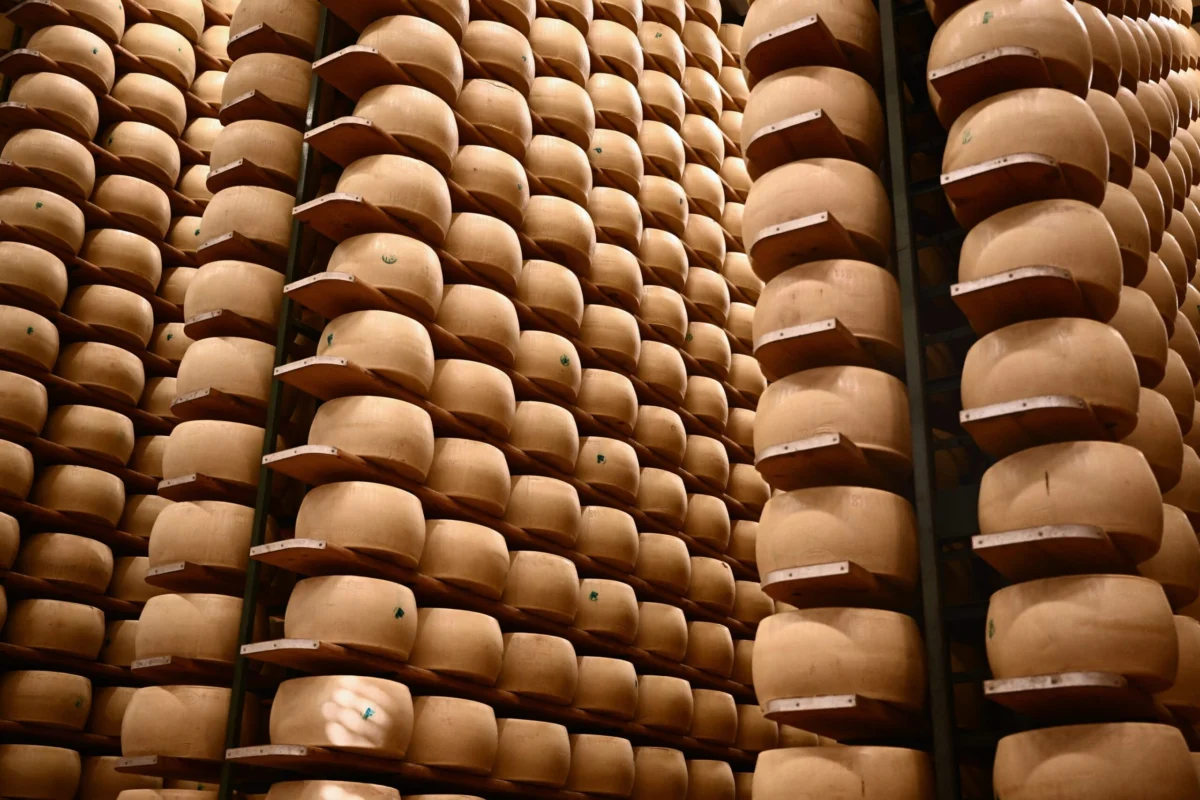
However, this deeply ingrained system, which intertwines ancient craft with modern finance, now faces an unprecedented threat: the escalating crisis of extreme heat. Economists and climate scientists are increasingly warning that the exposure runs far beyond a single, climate-controlled vault, permeating Italy’s iconic vineyards, its venerable olive groves, and indeed, its broader national economy. The rising temperatures are not just an inconvenience; they are actively disrupting production cycles, increasing operational costs, and challenging the very definitions of quality and tradition that underpin these beloved Italian exports.
The Intricate Mechanism of a Blockchain-Backed Cheese Loan Program
Parmigiano Reggiano, often hailed as the "King of Cheeses," is far more than a dairy product; it is a Protected Designation of Origin (PDO) marvel, steeped in history dating back to the Benedictine and Cistercian monks of the Middle Ages. Its production is meticulously regulated, requiring specific raw materials (milk from local cows, natural rennet), a precise crafting process, and a minimum aging period of 12 months, often extending to 24 or even 36 months for richer, more complex flavors. This extended aging is crucial for developing its distinctive granular texture and umami-rich taste, but it also creates a significant financial hurdle for producers: a substantial amount of capital tied up in inventory for extended periods.
This is precisely where Credem’s "cheese bank" model intervenes. Upon receiving the young, unaged wheels from dairy farmers, a Credem subsidiary, Magazzini Generali delle Tagliate, takes charge of the delicate aging process in its specialized warehouses located in Reggio Emilia and Modena. This warehousing and aging service is coupled with a vital financial lifeline: producers typically receive an upfront payment representing 60% to 80% of a wheel’s estimated future value. This immediate cash injection allows small family farms to cover operational costs, invest in their herds, and maintain solvency while their product slowly matures.
The process has undergone significant modernization since its inception in the 1950s. A groundbreaking innovation has been the integration of blockchain technology into the collateral program. This distributed ledger system allows farmers to pledge their wheels as collateral even while the cheese remains in their own facilities, significantly expanding Credem’s lending capacity and reach. The blockchain ensures immutable record-keeping, transparency, and secure verification of each wheel’s provenance, age, and location, mitigating risks for both the bank and the farmers. This technological leap addresses a critical challenge, enabling more producers to access capital without the logistical burden of physically transporting and storing all their cheese at Credem’s facilities.
The scale of this arrangement underscores its economic importance. Giancarlo Ravanetti, who oversees the bank’s cheese warehouse business, revealed that Italy produces approximately 4 million wheels of Parmigiano Reggiano annually. Of these, "cheese banks" collectively hold about 500,000 wheels, a testament to their integral role in the supply chain. His own warehouses, encompassing both Credem’s collateral and other commercial storage, manage a staggering 2.3 million wheels each year in total. The Parmigiano Reggiano industry itself is a colossal €4 billion ($4.7 billion) enterprise, sustained by roughly 300 certified dairies, each contributing to a product revered globally.
However, the very infrastructure supporting this industry is under siege. Keeping such vast quantities of cheese at the optimal temperature and humidity for years is inherently energy-intensive. Recent record heat waves across Europe have exacerbated this challenge, pushing daily energy consumption in aging warehouses up by an alarming 30%. This surge in demand has forced banks and dairies to undertake costly upgrades, including enhancing cooling systems, installing more efficient boilers, improving insulation, and expanding renewable power generation capacities to mitigate rising expenses and ensure the cheese’s quality is not compromised.
The ripple effect of climate change extends directly to the source of Parmigiano Reggiano: the dairy cows themselves. Elevated ambient temperatures lead to heat stress in cattle, causing them to lie down more frequently, reduce their feed intake, and experience physiological changes that diminish milk production. Farmers report reductions of up to 10% in annual milk yield. Beyond quantity, longer and more intense heat events also compromise milk quality, impacting crucial parameters like fat and protein content – factors critical for producing high-quality Parmigiano Reggiano that adheres to strict PDO standards. This dual assault on both the quantity and quality of raw milk ultimately drives up production costs for dairy farmers, squeezing already tight margins and threatening the viability of traditional practices.
Climate Change’s Grip on Italy’s Iconic Agricultural Landscapes
The vulnerability observed in the cheese industry is mirrored, often with even greater immediacy, across Italy’s other revered agricultural sectors. The nation’s vineyards, for instance, are experiencing similar climate pressures, albeit with different manifestations. In Lombardy’s Franciacorta region, famed for its sparkling wines, the 2026 harvest (as referenced in the source material, indicating a recent or near-future event at the time of original reporting) commenced on July 30th, marking the earliest start on record. This unprecedented timing was a direct consequence of budbreak occurring more than a week ahead of the historical average, accelerated by unseasonably warm temperatures. Similarly, in Sicily, the harvest has stretched into what growers describe as a "hundred-day picking season," a protracted period driven by the need for producers to carefully time the picking of each grape variety to stay ahead of rapid sugar accumulation caused by the heat, preserving vital acidity and phenolic ripeness.
Coldiretti, Italy’s largest farmers’ association, has consistently highlighted the challenges posed by these extreme conditions, characterizing recent years as among the earliest harvests ever recorded nationally. Their analysis points to a dangerous imbalance: record temperatures and persistent drought push sugar into the grapes at an accelerated pace, often outpacing the development of complex flavor compounds and essential acidity. This mismatch is particularly detrimental for late-ripening red varietals, such as the noble Nebbiolo grape, which forms the backbone of prestigious wines like Barolo. When grapes ripen too quickly, they can lose their characteristic balance, resulting in wines that are high in alcohol but lack aromatic complexity and freshness.
In response, some innovative producers have begun experimenting with adaptive measures, such as deploying shade netting over vineyards. Traditionally used to protect against devastating hail, these nets are now being repurposed to mitigate excessive sun exposure, which can otherwise strip grapes of their crucial acidity. However, these climate-driven challenges are compounded by external economic pressures. Coldiretti also noted that geopolitical conflicts, such as the conflict in Iran (as specified in the original article, likely impacting global energy and supply chains), have added an estimated €250 per hectare in energy, fertilizer, and materials costs for wine producers. This financial burden comes at a time when Italy’s wine export values have already experienced a downturn, with a reported 7% decrease in the first four months of 2026.
Perhaps the sharpest blow, however, has been dealt to Italy’s olive groves. Puglia and Calabria, the country’s two largest olive-oil-producing regions, have borne the brunt of consecutive challenging seasons. National production has fallen significantly below its historical average of over 350,000 tons, settling in the range of 270,000 to 300,000 tons for the 2025/26 season. In particularly severe drought years, Puglia’s output alone has plummeted by more than half in a single season. Olive trees, while resilient, are highly sensitive to drought and extreme heat during critical phases such as flowering and fruit set. These conditions lead to flower abortion, premature fruit drop, reduced oil yield, and even degradation of oil quality, jeopardizing an industry deeply embedded in Italy’s culinary identity and export economy.
The Hidden Economic Toll of a Warming World
R. Jisung Park, a labor economist at the University of Pennsylvania’s Wharton School and author of Slow Burn: The Hidden Costs of a Warming World, emphasizes that the patterns emerging across Italy’s cheese, wine, and olive oil industries are not isolated incidents. They fit within a wider, growing body of research that directly links heat to lost economic output. Park’s work highlights how extreme temperatures impact productivity, disrupt supply chains, and ultimately diminish economic growth across various sectors.
A European Central Bank working paper, for instance, found that the immediate GDP hit from extreme heat might appear smaller in Southern European countries like Spain and Italy compared to Germany. This is partly attributed to these nations having historically adapted to higher temperatures, possessing existing infrastructure and practices to cope. However, Park cautions against complacency, noting that a seemingly small top-line number can mask profound and widespread damage elsewhere in the economy. "Supply chain spillovers due to heat upstream actually lead to measurable downstream firm valuation impacts," Park explained, underscoring the interconnectedness of modern economies.
This phenomenon is vividly playing out in Italy. A heat shock experienced by dairy cows in Emilia-Romagna translates into a tangible cost problem for a bank months later, affecting its loan portfolio and operational expenses. Similarly, a hot, dry spring in Puglia leads to a dramatic collapse in olive oil production, impacting not just farmers but also processors, distributors, and exporters hundreds of miles away. Park argues that heat’s economic toll tends to manifest in these indirect, delayed effects rather than appearing as an immediate, catastrophic event. This delayed and diffuse nature makes the true costs of climate change harder to quantify and often leads companies and governments to significantly underprice its long-term impacts, leaving them ill-prepared for the escalating challenges.
Historical Parallels: Government Intervention and Cheese Reserves
The concept of external forces threatening dairy farmers and the need for protective measures is not unique to modern Italy. The United States offers a compelling historical parallel. During the Great Depression in the 1930s, milk prices collapsed, leading to desperate measures by dairy farmers who, in protest, dumped their own product in the streets. This crisis spurred President Franklin D. Roosevelt’s New Deal, which introduced a series of agricultural subsidies designed to stabilize prices and support farmers who reduced production. A key initiative was the creation of the Commodity Credit Corporation (CCC) in 1933, tasked with buying up surplus butter, cheese, and dried milk to prevent market gluts and maintain price stability.
This policy far outlived the Depression. For decades, the U.S. government continued to purchase surplus cheese, storing it in vast underground caves located in states like Missouri, Wisconsin, and Kansas. These natural or excavated warehouses provided the ideal cool and humid conditions to hold the cheese for years without spoilage, effectively acting as a national strategic food reserve. By the early 1980s, the federal stockpile reached an astonishing peak of over 500 million pounds, a testament to the scale of government intervention aimed at stabilizing the dairy sector.
Italy’s "cheese banks" address a similar fundamental problem: ensuring liquidity and stability for dairy farmers in an industry characterized by long production cycles. However, they employ a distinctly different mechanism. Instead of direct government intervention to buy surplus and prop up prices, Credem and similar institutions operate on a private-sector model. They lend against the tangible asset of the cheese itself, essentially making a calculated bet that the wheels aging in their vaults, or securely tracked via blockchain on farms, will retain or increase their value by the time they are ready for market. This sophisticated financial engineering provides a market-driven solution to a problem historically tackled through state subsidies, but it is one now profoundly tested by the unpredictable and costly realities of a rapidly warming world.
The fate of Parmigiano Reggiano, and indeed Italy’s broader agricultural patrimony, hinges on the ability of these innovative systems to adapt to an increasingly volatile climate. The challenge is not merely economic; it is a test of cultural resilience, demanding continuous innovation in farming practices, financial instruments, and infrastructure to safeguard traditions that have nourished Italy and the world for centuries.
