
 By admin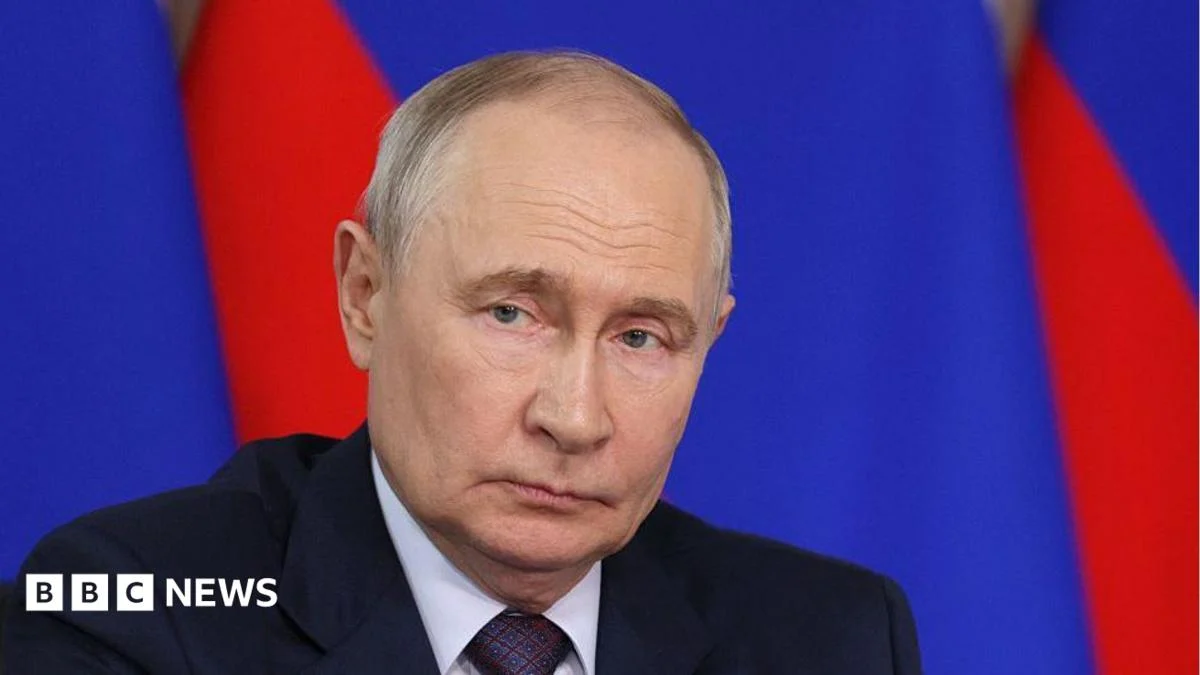
In a move that has reignited decades-old territorial tensions, Japan has vehemently protested Russian President Vladimir Putin’s recent visit to Iturup, one of the four southernmost islands in the Kuril chain. The islands, known as the Northern Territories in Japan and administered by Russia, have been the focal point of an intractable dispute between the two nations since the end of World War II. Russian state media reported that President Putin’s visit, which included sampling local delicacies and engaging with residents, underscores Moscow’s unwavering control and integration of the strategically vital archipelago. Japan’s Foreign Minister, Toshimitsu Motegi, immediately issued a strong condemnation, asserting that the islands are "inherently Japanese territory both historically and under international law," and that the Japanese government "strongly protests this visit."
The Kuril Islands, a volcanic archipelago stretching between Japan’s northernmost main island of Hokkaido and Russia’s Kamchatka Peninsula, have a complex and often tragic history. Following the Soviet Union’s declaration of war on Japan in the final days of World War II, Soviet forces swiftly occupied the islands. This occupation resulted in the forceful deportation of approximately 17,000 Japanese residents, shattering lives and severing deep cultural and familial ties. The unresolved territorial dispute over these islands has been the primary impediment preventing Russia and Japan from formally signing a peace treaty to officially end their World War II hostilities. This ongoing diplomatic stalemate has cast a long shadow over bilateral relations, impacting economic cooperation, security dialogues, and broader geopolitical maneuvering in the Asia-Pacific region.
The strategic importance of the Kuril Islands cannot be overstated. For Russia, they represent a crucial buffer zone and a vital component of its Pacific Fleet’s operational capabilities. Iturup, in particular, serves as a primary military air base for Russia in the region, providing significant power projection capabilities. The islands’ geographical position allows Russia to monitor and control access to key maritime routes, including those leading to the Sea of Okhotsk, a region of immense economic and strategic value. This military significance has been further highlighted by recent joint naval exercises conducted by China and Russia in the vicinity of the Kuril Islands. Last month, warships from both nations sailed through a strait within the archipelago during a coordinated patrol, a move that Japan viewed with alarm and condemned as a provocative display of burgeoning Sino-Russian military cooperation. Last year, Russia also conducted significant military drills near the islands, further escalating Japanese concerns about Moscow’s assertive posture in the region.
President Putin’s visit to Iturup, therefore, is not merely a symbolic gesture but a clear demonstration of Russia’s intent to solidify its presence and control over the disputed territories. His engagement with local residents, including sampling fish roe, is a carefully crafted public relations effort aimed at showcasing Russian sovereignty and the integration of the islands into the Russian Federation. This act of visiting a territory claimed by a neighboring nation is a calculated move in the ongoing geopolitical chess game, signaling to Japan and the international community that Russia views the Kurils as an indisputable part of its sovereign territory.
The historical context of the dispute is rooted in differing interpretations of international law and historical events. Japan bases its claims on historical occupation and treaties, particularly the Treaty of Shimoda of 1855, which recognized the islands as Japanese. Russia, on the other hand, relies on the post-World War II settlement, including the Yalta Agreement, which allocated territories to the Allied powers. The Soviet Union’s annexation of the islands in 1945, following its entry into the war against Japan, is viewed by Moscow as a legitimate outcome of that conflict. The failure to reach a consensus on these competing claims has perpetuated the "northern territories" issue, making it a deeply sensitive and emotionally charged topic for both nations.
For Japan, the return of the Northern Territories is not just a matter of territorial integrity but also of national pride and the rectification of historical injustices. The displaced residents and their descendants continue to yearn for the opportunity to return to their ancestral homes. The economic potential of these islands, rich in fishing grounds and natural resources, also plays a role in Japan’s claims. However, the substantial Russian military presence and infrastructure built on the islands over the decades present a formidable challenge to any Japanese aspirations for their return.
The international community largely recognizes the unresolved nature of the dispute, with many nations adopting a neutral stance or urging a peaceful resolution through dialogue. However, the geopolitical implications of Russia’s assertive actions in the Kurils are significant, particularly in the context of broader global security dynamics. The increasing military cooperation between Russia and China, exemplified by their joint naval patrols, raises concerns for Japan and its key ally, the United States. This regional security architecture is being reshaped by the intertwined territorial disputes and the growing strategic alignment between Moscow and Beijing.
Experts in international relations and East Asian security have offered varying perspectives on the implications of Putin’s visit. Dr. Kenji Tanaka, a professor of International Relations at Tokyo University, commented, "President Putin’s visit is a clear message to Japan and the international community that Russia is not wavering on its stance regarding the Kuril Islands. It’s a move designed to consolidate domestic support and project an image of strength on the international stage, especially amidst ongoing global geopolitical shifts. For Japan, it presents a significant diplomatic challenge, as any strong retaliatory measures could further inflame tensions and potentially isolate Tokyo."
Conversely, Ivan Petrov, a senior research fellow at the Moscow Institute of Strategic Studies, argued, "President Putin’s visit is a natural expression of Russian sovereignty over its territory. The islands have been administered by Russia for over seven decades, and their development and integration are vital for regional security and economic prosperity. The Japanese protest is a predictable, yet ultimately unproductive, reaction to a sovereign act. Russia remains open to dialogue, but not on the premise of relinquishing its established territorial control."
The economic dimension of the dispute also contributes to its complexity. While Russia has been investing in the development of the Kuril Islands, including infrastructure and resource extraction projects, Japan views these activities as occurring on its sovereign territory. The potential for joint economic ventures has been repeatedly discussed but has always been hampered by the unresolved territorial question. Japanese fishing fleets, for instance, have historically operated in the rich fishing grounds around the islands, and any disruption to these activities due to territorial disputes can have significant economic consequences for Japanese coastal communities.
The implications of this ongoing territorial dispute extend beyond the immediate bilateral relationship between Japan and Russia. It contributes to a broader pattern of territorial claims and counter-claims that characterize the East Asian region, including disputes in the South China Sea and the East China Sea. The strategic alignment between Russia and China, particularly in their naval activities in and around the Kuril Islands, is a significant development that cannot be ignored by regional powers and global actors. This increasing coordination between Moscow and Beijing suggests a potential for a more unified front against what they perceive as Western hegemonic influence.
In conclusion, President Putin’s visit to Iturup is a potent symbol of Russia’s unwavering assertion of sovereignty over the disputed Kuril Islands. It is a move that, while deeply concerning for Japan, is unlikely to alter Russia’s long-standing position. The visit underscores the enduring legacy of World War II and the unresolved territorial disputes that continue to shape the geopolitical landscape of Northeast Asia. The path towards a peaceful resolution remains arduous, requiring a delicate balance of historical grievances, international legal interpretations, and the pragmatic realities of strategic military and economic interests. Japan’s strong protest highlights the deep emotional and historical significance of these islands, while Russia’s actions underscore its determination to maintain its control, setting the stage for continued diplomatic friction and a complex regional security environment. The international community will continue to monitor this volatile situation, as the unresolved territorial dispute over the Kuril Islands remains a critical factor in the broader dynamics of global power and regional stability.
