
 By admin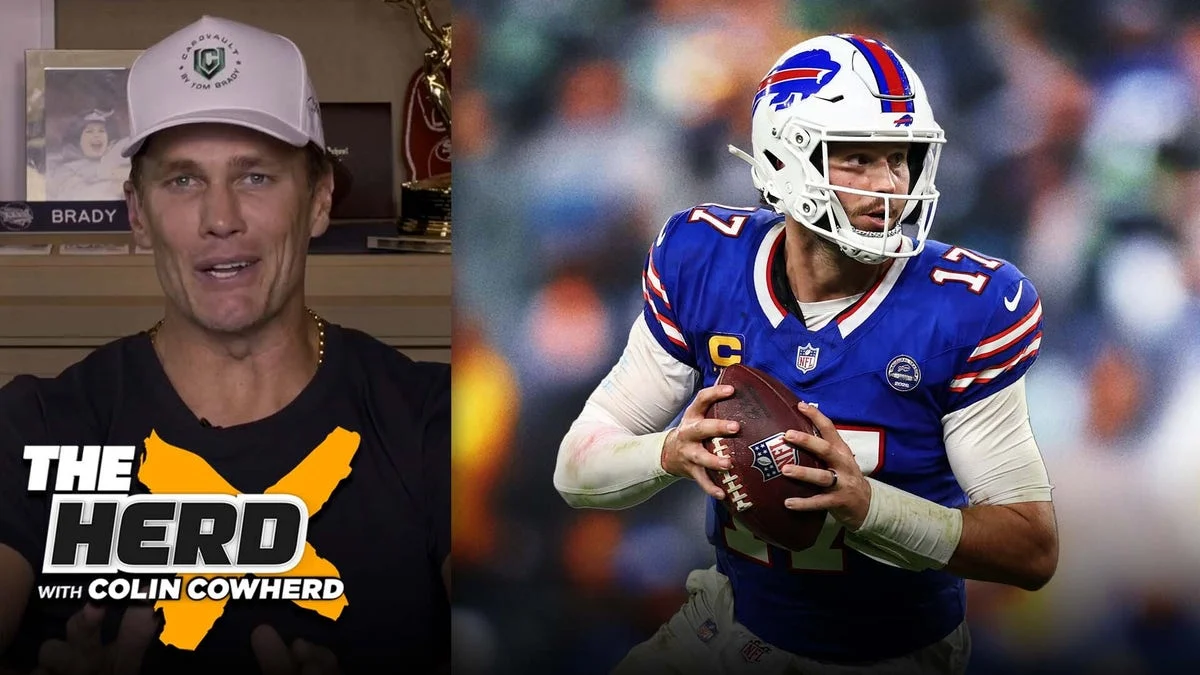
Buffalo Bills quarterback Josh Allen is off to a blistering start to the NFL season, showcasing a level of play that has many believing he’s a strong contender for another MVP trophy. In the initial two games, Allen has demonstrated remarkable efficiency and playmaking ability, propelling the Bills to an undefeated 2-0 record. His statistical output is among the best of his career, with a remarkable 582 passing yards and five touchdowns through the air. Complementing his aerial prowess, Allen has also been a force on the ground, amassing 92 rushing yards and an impressive four touchdowns. What further elevates his early-season performance is his immaculate record in ball security; Allen has yet to throw an interception, a testament to his improved decision-making.
This stellar opening has not gone unnoticed by NFL legends. Seven-time Super Bowl champion Tom Brady, speaking with Colin Cowherd on "The Herd," offered a detailed analysis of Allen’s development, highlighting key areas of growth that have transformed him into an elite quarterback. Brady immediately pinpointed the influence of former Bills offensive coordinator Brian Daboll, who has since taken the helm as head coach of the New York Giants. Brady believes Daboll played a crucial role in Allen’s maturation, stating, "I thought there was a lot of development that took place when he had Brian Daboll as his [offensive] coordinator. I think he learned the system. He’s got an awesome ability to improvise and we’ve seen that for a long time."
Beyond Allen’s undeniable physical gifts – his cannon arm and electrifying speed – Brady emphasized that the most significant leap in his game has been his newfound ability to avoid costly mistakes. In the earlier stages of his career, turnovers, including fumbles and interceptions, were a frequent criticism leveled against Allen. However, Brady observed a profound shift in Allen’s approach, noting a far more disciplined and strategic decision-maker on the field. "He’s got the big arm, the legs and can kind of run the big plays," Brady remarked. "It’s always been ‘how can he eliminate the negative plays?’ The bonehead fumbles, the bonehead sacks and those plays are the ones that put your team behind the eight ball."
This keen observation from Brady, a quarterback renowned for his meticulous ball protection and strategic acumen throughout his illustrious career, underscores the importance of minimizing errors in the modern NFL. The ability to consistently avoid "bonehead" plays – those that result in significant yardage loss, turnovers, or untimely penalties – is often the differentiator between good quarterbacks and truly great ones. For Allen, who possesses the physical tools to make spectacular plays, learning to temper that explosiveness with prudence has been a pivotal turning point.
Brady, speaking from the perspective of a quarterback who consistently prioritized protecting the football, recognized this evolution in Allen. He articulated that the elimination of negative plays represents the single most significant indicator of Allen’s growth and maturity as a signal-caller. This isn’t merely about avoiding turnovers; it’s about making smart, situational decisions that keep the offense on schedule and avoid putting the team in unfavorable down-and-distance situations.

"Sometimes the best play is throwing the ball away," Brady advised, drawing from his own experiences. "Playing for a second down and staying in those situations. Eliminating the negative plays. I think for him, that’s where I’ve seen his game mature the most." This philosophy is crucial for any quarterback, but it’s particularly impactful for a player with Allen’s dual-threat capabilities. The temptation to extend a play with his legs or force a throw into tight coverage can be immense. However, learning to recognize when to live to fight another down by throwing the ball away or taking a controlled sack is a sign of a quarterback who understands the game’s flow and prioritizes the team’s success over individual heroics.
The impact of this newfound discipline is evident not only in the stat sheet but also in the Bills’ overall offensive efficiency. By reducing turnovers and avoiding costly negative plays, Allen is consistently putting the Bills in manageable situations. This allows the rest of the offense, including a potent receiving corps and a solid offensive line, to operate more effectively. The ability to sustain drives, convert on third downs, and maintain possession of the ball is a hallmark of championship-caliber teams, and Allen’s maturation is a key ingredient in the Bills’ pursuit of such success.
Furthermore, Brady’s comments highlight the importance of coaching in a quarterback’s development. Brian Daboll’s tenure in Buffalo provided Allen with a structured environment where he could hone his skills and learn the nuances of NFL offenses. Daboll’s ability to scheme plays that highlighted Allen’s strengths while also teaching him to mitigate his weaknesses was instrumental. Now, with Daboll leading the Giants, Allen has continued to build upon that foundation, demonstrating that the lessons learned have been internalized and applied effectively. The transition to a new offensive coordinator or system can be challenging, but Allen’s continued success suggests a deep understanding of offensive principles and a remarkable adaptability.
The narrative surrounding Josh Allen has often revolved around his immense physical talent and his ability to make jaw-dropping plays. However, for him to ascend to the pantheon of NFL greats, as Brady has, requires more than just raw ability. It demands an evolution in mental processing, situational awareness, and a willingness to embrace a more disciplined approach. Brady’s analysis suggests that Allen has achieved this critical developmental milestone. His ability to avoid turnovers, a hallmark of his early career struggles, now appears to be a relic of the past. This transformation is not just a statistical anomaly; it represents a fundamental shift in his understanding and execution of the quarterback position.
The journey from a raw, albeit immensely talented, prospect to a seasoned, MVP-caliber quarterback is a testament to Allen’s work ethic and his commitment to improvement. The pressure on a franchise quarterback like Allen is immense, and the scrutiny he faced regarding his decision-making was significant. However, his ability to absorb criticism, learn from his mistakes, and actively work on his weaknesses is what separates him from many of his peers. Tom Brady’s endorsement, coming from someone who has experienced the pinnacle of success in the league, carries substantial weight and validates the significant strides Allen has made.
As the season progresses, all eyes will be on Josh Allen and the Buffalo Bills. If Allen can maintain this level of play – combining his electrifying big-play ability with the newfound discipline and ball security that Tom Brady has lauded – he will undoubtedly be a central figure in the MVP conversation. His early-season performance is not just a collection of impressive statistics; it’s a clear indication of a quarterback who has matured, refined his game, and is poised to lead his team on a deep playoff run. The development of a quarterback is a long and often arduous process, but Josh Allen appears to have navigated the critical stages, emerging as a more complete and formidable player, ready to add more accolades to his burgeoning career. The Bills’ aspirations for a Super Bowl hinge significantly on his continued excellence, and based on his current trajectory and the insights from an NFL icon, those aspirations appear brighter than ever.
