
 By admin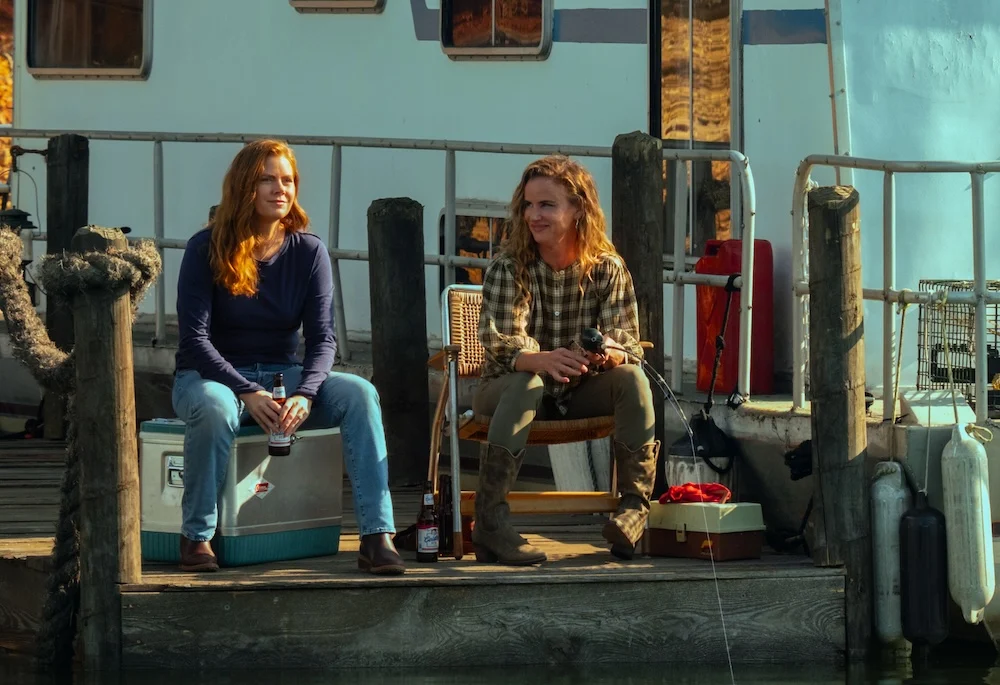
The echo of a sinister houseboat lingers in the cinematic history of "Cape Fear," a setting that has proven anything but serene for those caught in its terrifying currents. For Juliette Lewis, the iconic actress who earned an Academy Award nomination for her indelible performance in Martin Scorsese’s 1991 reimagining of the classic thriller, the specter of that waterborne terror resurfaces with a chillingly new twist in the Apple TV+ adaptation. In the gripping finale, titled "The Executioners," Lewis finds herself once again ensnared by the suffocating grip of the "Cape Fear" universe, but this time, she’s not the victim; she is the architect of terror.
In Scorsese’s seminal 1991 film, an 18-year-old Lewis portrayed Danielle Bowden, a young woman whose innocence was brutally shattered aboard her family’s houseboat. She became a pawn in the vengeful machinations of Max Cady, the charismatic and terrifying serial rapist brought to life by Robert De Niro. Cady, recently released from prison after serving a sentence for rape, targeted Danielle’s father, Sam Bowden (played by Nick Nolte), the lawyer he blamed for his incarceration. The houseboat sequence, a masterclass in suspense and psychological dread, saw Danielle subjected to a harrowing ordeal of seduction, assault, and terror. While Danielle ultimately survived the traumatic encounter, the experience left her deeply scarred, forever marked by the loss of her innocence and the visceral horror she endured on the titular North Carolina river.
Paradoxically, Lewis recalls her experience filming that pivotal scene with a surprising sense of exhilaration. "That was so fun, which is probably weird to say, but it was because I was with Jessica Lange and De Niro, and they’re doing push-ups between scenes," Lewis shared with Variety. "We all did jumping jacks to get our heart rate up to play that terror. That’s where I cut my teeth, and I learned the tricks of the trade. I take what I learned from that movie, and it’s fed me my whole career." This formative experience, steeped in the intense energy of acting legends, instilled in Lewis a profound understanding of character and performance, lessons that would resonate decades later.
This summer, those hard-won lessons have been put to a powerful new test in the Apple TV+ series adaptation of "Cape Fear," spearheaded by creator Nick Antosca. In this contemporary iteration, Lewis embodies a character far removed from the vulnerable Danielle. She plays Crystal, a villain of formidable and unsettling cruelty, whose presence injects a potent dose of unpredictability into the narrative. Yet, in a striking echo of the past, the opening scene of the season’s finale finds Crystal, too, on a houseboat, a location that now signifies a far more perilous fate for her.
Crystal was introduced as an enigmatic force, a masked and hooded figure stalking Max (Javier Bardem), a lawyer who orchestrated a meticulous and manipulative revenge plot against Anna (Amy Adams) and Tom Bowden (Patrick Wilson). The Bowdens, a married couple who met as opposing counsel, found themselves on Cady’s radar after securing his conviction. The true nature of Crystal’s connection to Max remained a chilling mystery until the penultimate episode, where Anna discovered the shocking truth: Crystal is Max’s sister. Their shared history is revealed to be fraught with a disturbing dynamic, marked by Crystal’s early cruelty towards Max and a seemingly incestuous relationship that Anna speculates led to the conception of a child. This grim revelation emerged during a brief, uneasy alliance between Anna and Crystal, a collaboration that Lewis found particularly compelling.
"It was fun to play two people that kind of are enjoying each other’s company, or are they?" Lewis mused about her scenes with Amy Adams. "They’re both out to get something. They both know Crystal’s hiding something. It was fun having that dance with her, because I just admire Amy so much." This complex interplay between Anna and Crystal, a delicate balance of shared goals and underlying suspicion, showcased Lewis’s ability to navigate nuanced character dynamics.
However, Crystal’s carefully constructed facade eventually crumbles. Her deep-seated family dysfunction and her unwavering loyalty to Max ultimately betray her. When Anna reveals to Crystal’s son, Luke (Max Mattern), the possibility of his paternity linking him to his "Uncle Max," it ignites a violent confrontation. The ensuing argument provides Anna with the crucial opportunity to escape into the river, but not before Crystal inflicts a brutal stab wound to her hand. The arrival of Max on Crystal’s houseboat marks a devastating turning point. He reveals Crystal’s expendability, her role as a mere tool in his grand design. In a desperate plea, Crystal acknowledges her past mistreatment of him, begging for absolution, "We’re even now, right?" Her plea falls on deaf ears as Max executes her with a gunshot to the stomach, followed by another to Luke.
Lewis vividly recalls the intensity of her final scene with Bardem. "In that scene with Javier, where our faces are so close, at one point the director wanted me to look in the camera," she recounted. "But I thought it was close enough. I like to keep some rules of cinema, and I like the way I am just looking at him. It was really special." This moment of intense confrontation, a culmination of their characters’ intertwined and destructive destinies, highlights the raw power of their performances.
Lewis has now had the rare distinction of confronting two formidable iterations of Max Cady. Her encounters with both Robert De Niro in 1991 and Javier Bardem in the recent series carry a significant weight, a testament to the enduring power of the "Cape Fear" narrative and the actors who embody its central antagonist. "They’re two greats of American cinema, and I very much felt that," Lewis stated. "When I was working with Javier, oh my gosh, he’s fully consumed by the thing he is playing, and I just love it. It’s really something to witness, especially on the boat." The palpable intensity brought by Bardem to the role of Max Cady amplified the stakes and the emotional resonance of Lewis’s performance.
The recurring motif of the houseboat in the finale serves as a poignant, and perhaps even intentional, callback to Lewis’s past. In Scorsese’s film, Danielle, after being trapped in the boat’s hold by Cady, eventually sets him ablaze. The Apple TV+ series mirrors this chilling act of fiery retribution: after fatally shooting Crystal and Luke, Max immolates the houseboat, with their father, Leo Bowden (Ron Perlman), left to perish in a cage on deck. Lewis recognizes these deliberate parallels, commending Antosca’s deft integration of nods to the original. Yet, she admits to a lingering sense of surrealism in reliving such a harrowing "Cape Fear" houseboat experience for a second time.
"I still do the push-ups and jumping jacks when I’m about to play a fearful scene, and that is because I saw Jessica and De Niro doing that," Lewis explained, referencing the preparatory rituals she witnessed on the 1991 set. "You know, doing the series, it was a bit nostalgic to be on the houseboat again and playing a different person. But with all these high stakes, she fights. Ultimately, Crystal has to be a powerhouse of a villain for Max Cady. Nick knew that to bring me back, it can’t just be a little wink. It had to be something impactful." Antosca’s vision for Lewis’s return was not merely a cameo; it was a deliberate re-engagement with the core themes and terror of "Cape Fear," reimagined through a new, formidable lens.
The erratic and fragmented nature of Crystal’s psyche was the primary allure for Lewis in returning to the "Cape Fear" franchise. This legacy of complex, morally ambiguous characters traces back to the 1962 original, starring Gregory Peck and Robert Mitchum, who themselves made brief appearances in the 1991 remake. The entire saga, from the 1957 John D. MacDonald novel "The Executioners" to its cinematic and television adaptations, has consistently explored the darker aspects of human nature and the cyclical nature of violence and revenge.
"I really wanted to play a fractured personality, and that’s the ingredients that Nick wrote for me," Lewis confessed. "This is somebody who’s been going in and out of institutions. That’s sort of the energy we’re bringing. This is someone who vacillates between different ways of being. You could call it personalities, you could call it energy, but she lives in extremes." Antosca provided Lewis with an extensive three-page backstory for Crystal, a depth of character that, while not entirely onscreen, informed her portrayal and fueled her desire for the character’s survival. The absence of definitive proof of Crystal’s demise – no charred bodies are recovered at the episode’s conclusion – leaves a sliver of ambiguity, a possibility Lewis actively champions. This hopeful outlook is further bolstered by the fact that the Bowdens ultimately choose to spare Max’s life, suggesting a narrative inclination towards allowing characters to persist beyond apparent annihilation.
"And we were surrounded by water!" Lewis exclaimed, her voice brimming with a hopeful suggestion of potential escape routes and survival. The very element that has historically served as a site of immense trauma in "Cape Fear" could, in this instance, offer a pathway to salvation.
Regardless of whether Crystal met her end in the inferno, Lewis remains steadfast in her belief in the character’s enduring impact. "She’s going to haunt him till the end of time," she declared with conviction, underscoring the indelible mark Crystal has left on Max Cady and the "Cape Fear" narrative itself. Lewis’s return to the "Cape Fear" universe is not merely a reprise of a past role but a profound evolution, demonstrating her remarkable capacity to inhabit new depths of darkness and complexity, cementing her place as an indispensable force within this enduringly terrifying saga.
