
 By admin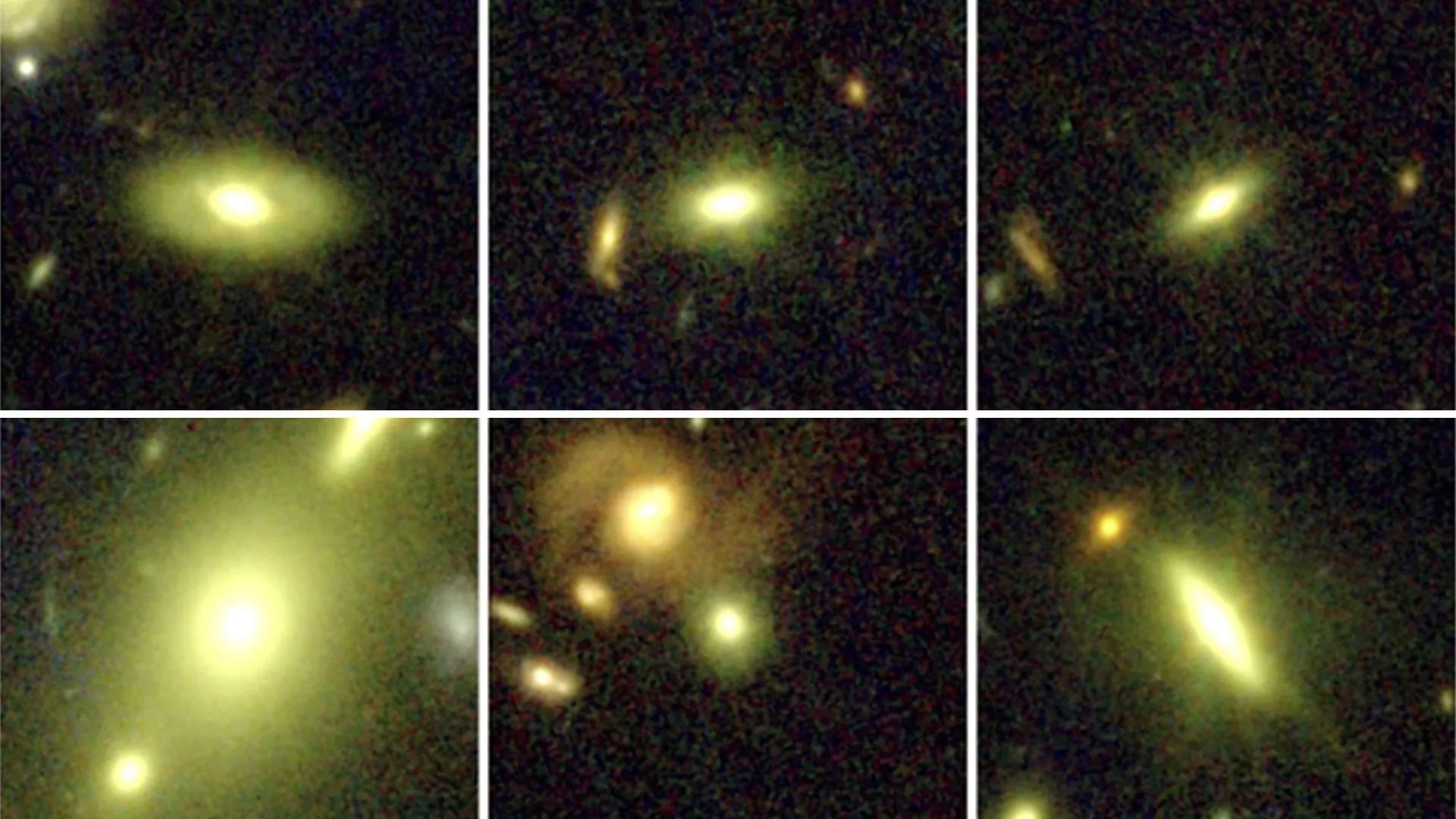
This groundbreaking discovery, made by an international team including researchers from Penn State and Leiden University, fundamentally reshapes our understanding of the universe’s infancy. Published in the prestigious journal Nature Astronomy, the findings represent a significant challenge to prevailing theories on how the first galaxies formed, evolved, and assembled their vast stellar populations. It suggests that the cosmic landscape shortly after the Big Bang was even more robust and teeming with stellar mass than previously imagined, further intensifying the "early universe puzzle" that has emerged since the launch of the James Webb Space Telescope (JWST).
For decades, astronomers have largely operated under the assumption that the distribution of stellar masses formed within a galaxy, known as the Initial Mass Function (IMF), was broadly consistent across different cosmic epochs and galactic environments. This long-standing assumption posits that stars, regardless of when or where they formed, generally follow a similar statistical distribution, with a certain proportion being massive and luminous, and a much larger proportion being smaller and fainter. The new research, however, reveals that this universality may not hold true for the most massive galaxies in the early universe, which appear to have been exceptionally efficient at producing a vast number of low-mass stars.
The international team leveraged the unprecedented capabilities of NASA’s James Webb Space Telescope, combining its exquisite infrared sensitivity with earlier ground-based data from the European Southern Observatory’s Very Large Telescope (VLT) in Chile. Their focus was on nine massive, mature galaxies that had already ceased forming new stars billions of years ago – often referred to as "quenched" galaxies. These galaxies, observed at immense cosmic distances, offer a direct glimpse into a period when the universe was only a fraction of its current age, providing crucial clues about the initial conditions of galaxy formation.
"These galaxies are different," explained Joel Leja, the Dr. Keiko Miwa Ross Mid-Career Associate Professor of Astronomy and Astrophysics at Penn State and a coauthor of the paper. "They’re different in a way that is really challenging to understand, because they are more massive than we expected — like a lot more massive, they have three or four times more mass than we expected." This significant upward revision of mass estimates for these ancient behemoths suggests that a substantial portion of their stellar content had remained invisible to previous observational techniques and theoretical models.
The methodology behind this revelation involved a sophisticated analysis of the galaxies’ light. Astronomers meticulously separated each galaxy’s integrated light into its constituent colors, creating a spectrum. While the brilliant glow of massive, short-lived stars typically dominates the observable light from distant galaxies, making it difficult to discern the dimmer contributions of smaller stars, the team employed advanced modeling techniques and the unique spectral quality provided by JWST to overcome this challenge. Penn State researchers, in particular, contributed their expertise in modeling the complex light signatures detected from these distant galaxy systems, allowing for the reliable disentanglement of contributions from different stellar populations.
"If a galaxy were a city, the brightest stars would be the skyscrapers that immediately catch your eye from afar," eloquently illustrated lead author Chloe Cheng, a recent doctoral graduate of Leiden University. "Our models demonstrate that a far more numerous population of low-mass stars is concealed by those rare, bright stars, like houses hidden between skyscrapers. As a result, this galaxy turns out to be much more massive than previous estimates suggested." This vivid analogy underscores the difficulty of the task: identifying the faint "houses" amidst the blinding light of the "skyscrapers" to accurately gauge the true size and population of the cosmic city.
Traditionally, astronomers have inferred the hidden mass contained within small, faint stars by assuming a universal IMF, meaning they expected a fixed ratio of small to large stars. This new research unequivocally challenges that fundamental assumption, indicating that the most massive galaxies in the early universe harbored a disproportionately greater share of low-mass stars compared to smaller, more common galaxies like our own Milky Way. This "bottom-heavy" IMF implies that the conditions for star formation in these ancient, colossal galaxies were significantly different from those observed in more recent cosmic epochs or in less massive systems.
One galaxy in particular stood out, according to coauthor Martje Slob, a doctoral candidate at Leiden University. This specific galaxy, estimated to have formed less than one and a half billion years after the Big Bang, could be as much as four times more massive than previous calculations indicated. "Until recently, measurements like these were simply impossible," Slob emphasized. "We needed not only a telescope capable of magnifying very distant galaxies, but also spectra of exceptional quality and new analysis techniques to reliably detect the subtle signatures of faint, low-mass stars hidden within these cosmic titans." The combination of JWST’s unparalleled infrared vision, its ability to capture extremely detailed spectra, and innovative analytical models proved to be the key to unlocking this hidden stellar universe.
The implications of this discovery are profound and far-reaching for scientists striving to comprehend how galaxies coalesced and matured in the nascent universe. Since JWST commenced its scientific operations, astronomers have been repeatedly surprised by the identification of unexpectedly massive and mature galaxies existing relatively soon after the Big Bang. These "over-massive" early galaxies have already placed considerable strain on existing cosmological models, which struggle to explain how such large structures could have assembled so quickly in the young universe.
"This discovery has crucial implications for our understanding of the early universe," reiterated Leja, who is also affiliated with The Penn State Institute for Computational and Data Sciences. "Since the launch of JWST, astronomers have found surprisingly massive and mature galaxies that already existed shortly after the Big Bang. These very early galaxies are thought to evolve into the type of galaxies studied in this work; adding up to four times more stars to these massive, early-forming galaxies sharpens these tensions further." If these early galaxies contained substantially more stars than previously estimated, the problem intensifies exponentially, demanding a serious re-evaluation of the mechanisms driving early galaxy formation, the role of dark matter halos, and even the fundamental physics governing star birth in extreme environments.
The concept of the Initial Mass Function (IMF) is central to understanding this challenge. The IMF describes the distribution of stellar masses that form in a given star-forming event. A "universal" IMF, like the widely accepted Kroupa or Chabrier IMFs, implies that for every massive star, there are many more low-mass stars, but always in the same proportion. This new research suggests that in the early universe’s most massive galaxies, the IMF was "bottom-heavy," meaning an even larger proportion of low-mass stars was formed compared to higher-mass stars. This deviation from universality could be explained by different physical conditions in the early universe, such as higher gas densities, different metallicities (elemental compositions), or higher temperatures, which might favor the formation of smaller stars.
The findings also compel cosmologists to reconsider the timelines for cosmic structure formation. If early galaxies were indeed far more massive, it means they contained significantly more baryonic matter (normal matter that makes up stars and planets) than accounted for. This could influence models of dark matter halos, which are believed to dictate where galaxies form, and potentially necessitate revisions to our understanding of the early universe’s energy budget and the processes of stellar feedback that regulate star formation.
Moreover, the implications may extend beyond the realm of galaxy formation, touching upon the exciting field of exoplanetary science. "This result shows that much more mass than previously thought is hidden in low-mass stars," stated Mariska Kriek, who led the research and serves as professor of extragalactic astronomy at Leiden Observatory. "That has consequences for many areas of astronomy. For example, as many planets orbit low-mass stars, this could even indicate that more planets formed in the early universe than we had previously assumed." Low-mass stars, particularly M-dwarfs, are the most common type of star in our Milky Way galaxy and are increasingly found to host exoplanets, including potentially habitable ones. If the early universe was teeming with galaxies disproportionately rich in these smaller stars, it suggests a potentially vast and ancient population of planetary systems awaiting discovery, pushing back the potential timeline for the emergence of life in the cosmos.
Looking ahead, the research team is not resting on its laurels. Over the next several years, they plan to apply the same sophisticated technique to study galaxies from even earlier periods in cosmic history. Their ambitious goal is to push observations closer to the epoch when the universe’s first generations of stars and galaxies began to emerge, potentially uncovering even more surprising insights into the very dawn of stellar and galactic evolution. As the James Webb Space Telescope continues to unveil the universe’s hidden secrets, it promises to keep astronomers on the edge of their seats, continually challenging established paradigms and rewriting the cosmic narrative.
