
 By admin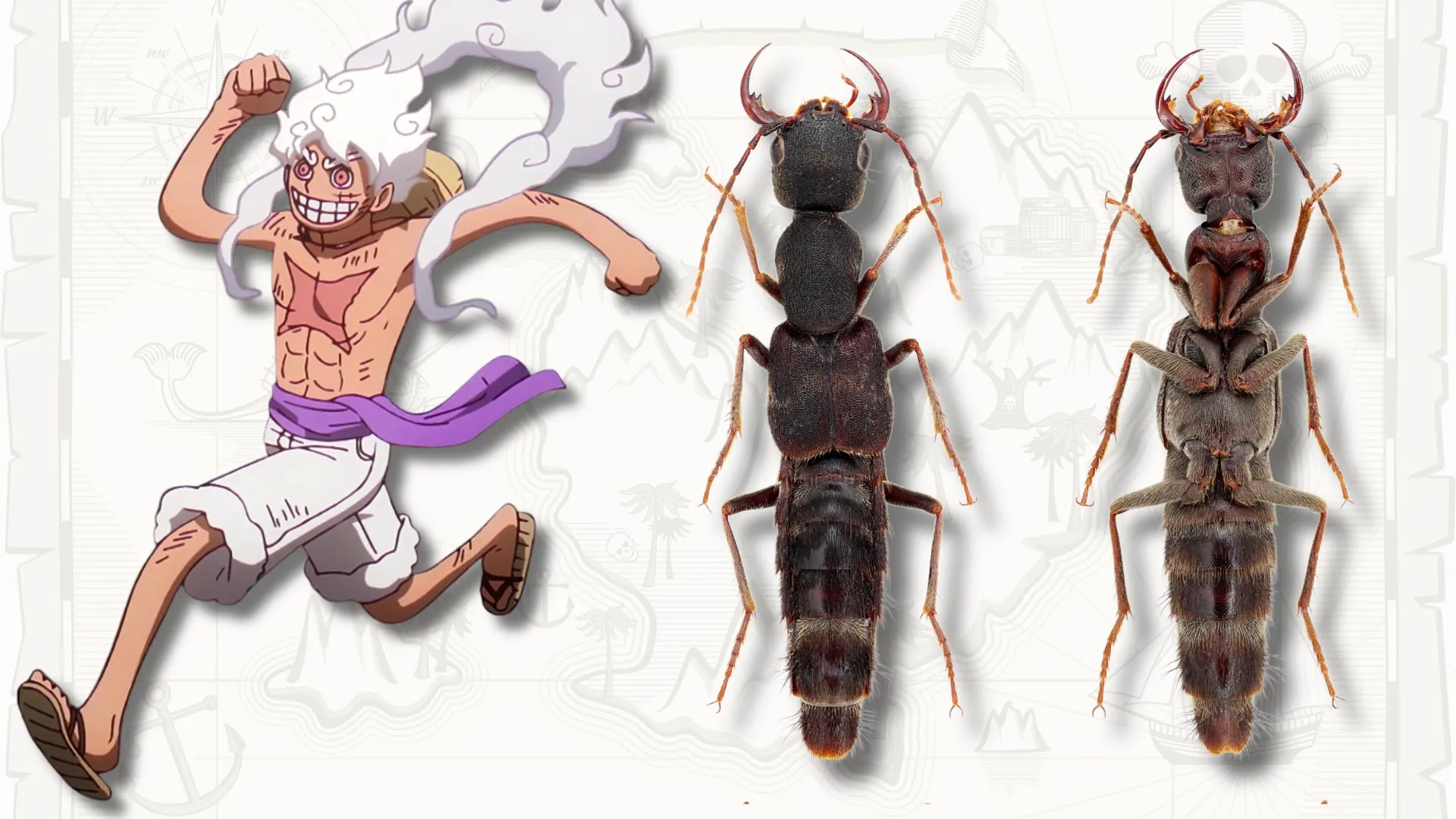
In a fascinating convergence of pop culture and scientific endeavor, a newly established beetle genus has been christened Luffy, a deliberate and scientifically justified homage to Monkey D. Luffy, the iconic protagonist of Eiichiro Oda’s globally acclaimed manga and anime series, One Piece. This nomenclature is far from a mere whimsical nod; researchers meticulously selected the name because these newly identified insects possess distinctive physical characteristics that strikingly mirror the extraordinary, elastic abilities of the Straw Hat Pirates’ captain. The discovery and subsequent naming underscore a growing trend in taxonomy to make scientific findings more accessible and engaging, while simultaneously highlighting the profound biological significance of these novel species.
Compared to their closely related counterparts within the vast and diverse world of rove beetles, members of this newly designated genus exhibit an array of unusually elongated and remarkably slender appendages. Their mandibles, critical for feeding and defense, are notably extended. Similarly, their antennae, vital sensory organs, and their maxillary palps, which assist in manipulating food, display exaggerated proportions. This suite of "stretched" features immediately brought to mind the visual spectacle of Luffy’s Gum-Gum Fruit (now revealed as the Hito Hito no Mi, Model: Nika) powers, which enable the fictional character to freely extend, contort, and enlarge his limbs and entire body, transforming into a rubber-like being with unparalleled flexibility and strength. The morphological parallels are not just superficial; they represent a fundamental departure from the typical robust structures found in many other rove beetle species, making the Luffy designation both memorable and scientifically apt.
The comprehensive taxonomic descriptions of this unique genus and its constituent species were rigorously peer-reviewed and subsequently published in ZooKeys, an open-access scientific journal renowned for its rapid dissemination of biodiversity research. This commitment to open access ensures that the findings are readily available to researchers, educators, and the public worldwide, fostering broader scientific discourse and engagement. The publication marks a significant milestone in entomology, not only for the vivid naming convention but, more importantly, for its contributions to understanding the intricate evolutionary relationships within one of the largest and most ecologically important insect families.
Two New Luffy Beetle Species Unveiled
To date, the scientific community has formally identified and described two distinct species belonging to the Luffy genus: Luffy schillhammeri and Luffy nika. Each species offers unique insights into the genus’s distribution and morphology, while their names further deepen the connection to the One Piece universe and honor significant contributions to entomology.
The first species, Luffy schillhammeri, was discovered amidst the rich biodiversity of broadleaf forests nestled within Yunnan Province, China. Yunnan, a global biodiversity hotspot, is celebrated for its incredibly diverse ecosystems, ranging from tropical to subtropical forests, and its mountainous terrain, which harbors a plethora of endemic species. The naming of Luffy schillhammeri is a distinguished tribute to Dr. Harald Schillhammer of the Natural History Museum Vienna. Dr. Schillhammer is widely recognized and revered within the entomological community for his extensive and outstanding contributions to rove beetle research, particularly his profound expertise in the taxonomy and systematics of the Staphylinidae family. His decades of meticulous work have significantly advanced our understanding of these complex insects, making the dedication of a new genus and species in his honor a fitting recognition of his legacy.
The second species, Luffy nika, was unearthed in the verdant landscapes of Louang Namtha, a province situated in northern Laos. This region, characterized by its lush forests and intricate river systems, is another vital area for biodiversity studies, often yielding new and exciting discoveries. The specific epithet "nika" carries a profound resonance for One Piece enthusiasts, as it directly references Luffy’s legendary Devil Fruit awakening. This pivotal transformation, known as "Hito Hito no Mi, Model: Nika," or more colloquially as "Gear 5," elevates Luffy’s rubber abilities to unprecedented levels, allowing him to embody the "Warrior of Liberation" with cartoonish yet immensely powerful physical manifestations.
The researchers drew a compelling visual parallel between this beetle and Luffy’s awakened form. Luffy nika possesses prominent white bands of hair strategically distributed across its elytra (the hardened forewings) and extending over much of its body. This striking white coloration and textured appearance reminded the scientists of Luffy’s iconic, smoke-covered, predominantly white form during his Nika transformation. In One Piece, Gear 5 is depicted with swirling white cloud-like elements emanating from Luffy’s body, symbolizing his newfound freedom and power, a visual echo that the beetle’s unique patterning remarkably replicates. This meticulous attention to detail in the naming convention not only injects a vibrant dose of cultural relevance into scientific nomenclature but also provides an unforgettable mnemonic for distinguishing the species.
A Missing Link in Rove Beetle Evolution: Unraveling the Staphylinina Subtribe
Beyond its captivating connection to popular manga, the discovery of the Luffy genus holds profound significance for the field of evolutionary biology and taxonomy. The research, spearheaded by PhD student Fang-Shuo Hu and Dr. Alexey Solodovnikov of the Natural History Museum of Denmark, involved an exhaustive and broad review of every known genus within the complex Ocypus group of rove beetles. Rove beetles (family Staphylinidae) represent one of the largest and most diverse insect families globally, with over 65,000 described species and countless more awaiting discovery. They play critical ecological roles as predators, decomposers, and detritivores in nearly every terrestrial habitat, making their accurate classification and understanding of their evolutionary history paramount.
Their rigorous analysis extended to several enigmatic groups whose phylogenetic positions within the sprawling beetle family tree have remained uncertain or even controversial for decades. Genera such as Acupronotes, Apostenolinus, and Staphylinus have long presented challenges to taxonomists due to their ambiguous morphological characteristics, leading to debates about their true relationships. By meticulously studying numerous specimens—often microscopic in their anatomical details—from extensive museum collections and carefully comparing subtle anatomical differences across a wide array of species, the researchers undertook a comprehensive reassessment of how these groups are interrelated. This process involved detailed morphological examinations, often utilizing advanced microscopy and imaging techniques to uncover minute yet critical diagnostic features.
The team’s efforts were directed towards identifying shared derived characteristics, or synapomorphies, which are unique traits inherited from a common ancestor and define specific evolutionary lineages. Through this process, they successfully delineated the defining features of the "Eucibdelus lineage," a distinct evolutionary branch within the broader Ocypus group. Key synapomorphies identified for this lineage include the presence of dorsal ridge teeth on the left mandible—specialized structures on the chewing apparatus—and a completely sclerotized labrum, which is the upper lip-like structure of the beetle’s mouthparts, indicating a hardened, rigid composition.
The Luffy beetles presented a fascinating and perplexing combination of traits. They unequivocally possess the dorsal ridge teeth, a hallmark feature found in the Eucibdelus lineage. However, their labrum is not completely sclerotized, exhibiting a more partially membranous or less rigid structure compared to the fully sclerotized state observed in the Eucibdelus group. Furthermore, Luffy beetles exhibit several other distinctive morphological features that are not observed in any of the other closely related groups, further complicating their immediate placement. This unique mosaic of ancestral and derived characters, coupled with novel traits, was the crucial clue.
Based on this singular combination of traits, the researchers meticulously constructed phylogenetic hypotheses, concluding that Luffy is most likely the sister group of the entire Eucibdelus lineage. In phylogenetic terms, a sister group is the closest relative of another group, sharing a common ancestor more recently than with any other group. This placement implies that Luffy represents an early diverging branch that shares ancestry with the Eucibdelus lineage but diverged before the complete sclerotization of the labrum became a fixed characteristic of the latter.
"This genus exhibits a unique combination of characters intermediate between the Eucibdelus lineage and other members of the Ocypus-group," the researchers highlighted in their published study. They emphasized that this discovery significantly refines our understanding of this insect lineage, underscoring that our knowledge of evolutionary relationships is continuously evolving and being refined with new discoveries. The presence of such an "intermediate" form is invaluable for constructing robust phylogenetic trees, as it provides critical data points that bridge gaps between previously disparate groups.
By occupying this unusual and pivotal phylogenetic position, the Luffy genus effectively fills an important gap in the existing classification system of rove beetles. It provides a crucial piece of the evolutionary puzzle, elucidating how certain morphological traits evolved and diversified within the subtribe Staphylinina. This discovery not only clarifies long-standing taxonomic ambiguities but also offers a fresh, more nuanced perspective on the evolutionary history, diversification patterns, and adaptive strategies of this complex and widespread group of beetles. Understanding these relationships is fundamental to comprehending the broader patterns of life on Earth, including speciation events, adaptation to different ecological niches, and the overall trajectory of insect evolution.
Bringing Taxonomy to a Wider Audience: Inspiring Future Generations
The remarkable journey of the Luffy genus—from its initial inspiration drawn from a popular manga series to its formal description and publication in an international scientific journal—serves as a compelling testament to the fact that serious scientific research can, and indeed should, be creative, memorable, and widely accessible. This unique narrative challenges the often-perceived stereotype of taxonomy as a dry, esoteric discipline, demonstrating its dynamic and often surprising nature.
The researchers behind this discovery harbor a profound hope that the captivating story of the Luffy beetles will play a significant role in bridging the gap between the scientific community and the general public. By connecting rigorous scientific inquiry with a globally recognized cultural phenomenon like One Piece, they aim to bring the fascinating world of science closer to everyday lives. This approach is particularly critical for increasing public awareness of the immense importance of biological taxonomy—a foundational science that is often underappreciated despite its critical role in understanding and conserving biodiversity.
In an era defined by rapid environmental change and an accelerating biodiversity crisis, the ability to accurately identify, classify, and understand species is more crucial than ever. Taxonomy provides the essential framework for conservation efforts, ecological studies, and even the discovery of new medicines. Without a comprehensive inventory of life on Earth, our efforts to protect it are severely hampered.
Furthermore, the researchers aspire for the Luffy narrative to inspire and encourage more young people to embark on careers in biodiversity and classification research. By showcasing the excitement of discovery, the intellectual rigor involved, and the potential for creative expression, they hope to ignite an adventurous spirit akin to that of Monkey D. Luffy himself. The field of taxonomy is in constant need of fresh talent and innovative approaches to tackle the monumental task of documenting Earth’s immense, yet increasingly threatened, biodiversity. The story of Luffy beetles thus transcends mere scientific novelty; it becomes a powerful symbol of how imagination, combined with meticulous observation and scientific discipline, can unlock new knowledge and inspire the next generation of explorers and conservationists. This fusion of scientific rigor with popular culture offers a compelling model for future endeavors in science communication, proving that the wonders of the natural world can resonate deeply when presented with creativity and passion.
