
 By admin
Chase Bank remains a dominant force in the financial services industry, particularly for its highly coveted suite of business credit cards that cater to everyone from solo freelancers to established small-business owners. These cards are frequently cited by financial experts as some of the most valuable tools in a business owner’s arsenal, primarily due to their robust reward-earning potential, versatile redemption options through the Chase Ultimate Rewards ecosystem, and substantial travel protections. However, the path to approval is governed by a specific set of internal bank policies and documentation requirements that can be daunting for the uninitiated. Understanding the nuances of Chase’s "5/24 rule," the definition of a "business" in the eyes of a lender, and the specific financial data required during the application process is essential for maximizing the chances of a successful outcome.

The most critical hurdle for any prospective Chase applicant is the infamous 5/24 rule. While Chase does not officially publish this policy in its terms and conditions, years of data from the credit card community have confirmed its existence: if an individual has opened five or more personal credit card accounts across any issuer within the previous 24 months, they are almost certain to be denied for a new Chase card. This rule is designed to curb "churning"—the practice of opening accounts solely for the introductory bonuses. However, business cards occupy a unique space within this framework. Most business credit cards, including those issued by Chase, American Express, and Citi, do not appear on an individual’s personal credit report because they are intended for commercial use. Consequently, while you must be under the 5/24 limit to be approved for a Chase business card, the business card itself usually does not add to your 5/24 count once opened. This "invisible" nature allows savvy entrepreneurs to expand their business credit capacity without hindering their ability to apply for personal cards in the future.
Eligibility for a Chase business card is significantly broader than many consumers realize. A common misconception is that one must have a brick-and-mortar storefront, a dozen employees, or six-figure profits to qualify. In reality, Chase recognizes "sole proprietorships," which include a vast array of modern work arrangements. If you engage in any activity with the intent to earn a profit, you may technically own a business. This includes freelance writing, graphic design, driving for ride-share platforms, selling items on eBay or Etsy, managing a rental property, or even occasional consulting. Even a "side hustle" that is only in its nascent stages can qualify for a business card. The primary requirement is that the activity generates—or has the potential to generate—revenue. For many individuals, applying as a sole proprietor using their Social Security number (SSN) as the business tax ID is the most straightforward path, as it does not require a formal Employer Identification Number (EIN) from the IRS.

The Chase business card portfolio is divided into two main categories: the "Ink" family of non-cobranded cards and the cobranded cards partnered with major travel brands. The Ink Business Preferred Credit Card is often considered the flagship, offering high-tier travel rewards and the ability to transfer points to airline and hotel partners like United Airlines, Southwest Airlines, and Hyatt. For those focused on cash back or avoiding annual fees, the Ink Business Cash Credit Card and Ink Business Unlimited Credit Card provide excellent value. The Ink Cash is particularly notable for its 5% back (on up to $25,000 in combined purchases each account anniversary year) at office supply stores and on internet, cable, and phone services—categories that are staples for almost any business. On the cobranded side, Chase offers powerful tools for loyalists of specific brands, such as the United Business Card, the Southwest Rapid Rewards Performance Business Credit Card, and the Marriott Bonvoy Business American Express (though Marriott cards are often a shared venture between Chase and Amex, Chase handles specific business versions).
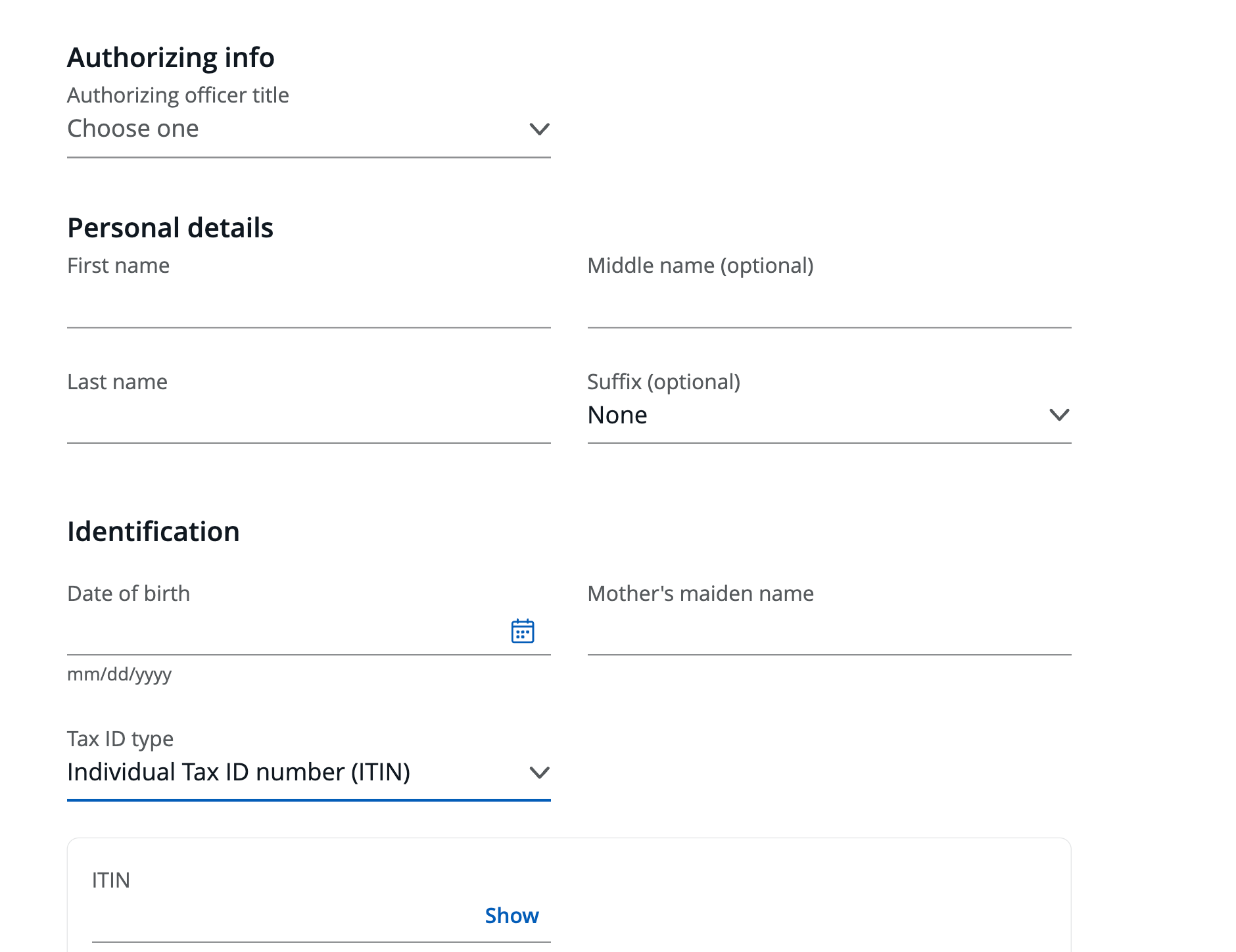
When beginning the application process, the initial phase focuses on personal identification and authorization. If you are a sole proprietor, your "Authorizing Officer" title is simply "Owner." In this section, you will provide your legal name, date of birth, and Social Security number. It is vital to ensure that your personal credit profile is frozen-free, as Chase will perform a "hard pull" on your credit report to assess your creditworthiness. While the business is the applicant, the bank relies on your personal credit history and a personal guarantee to mitigate the risk of lending to a small entity. Most successful applicants for Chase business cards possess a "Good" to "Excellent" credit score, typically 700 or higher, although other factors like your existing relationship with Chase can influence the decision.
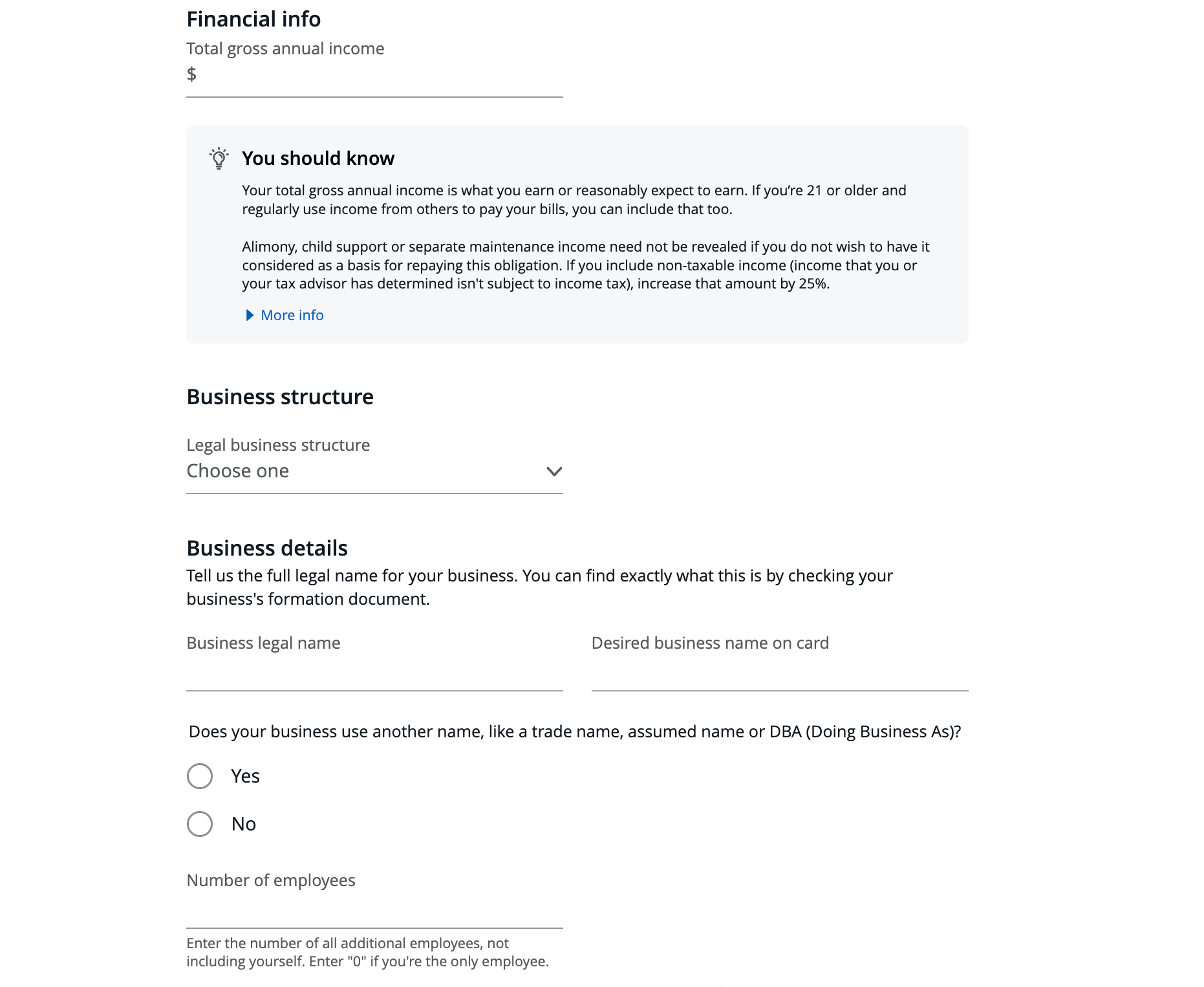
The second phase of the application requires a deep dive into the business’s financials and structure. This is where many applicants feel hesitant, but clarity is key. You will be asked for the "Legal Name of Business." For a sole proprietor, this is simply your own legal name. If you have registered a "Doing Business As" (DBA) name, you can include that, but if not, do not invent a business name, as Chase may request documentation such as a business license or utility bill in that name. Using your own name as the business name is a perfectly valid and common practice for freelancers. For the "Tax Identification Number," sole proprietors can use their SSN, while LLCs or Corporations must use their EIN.
The "Business Revenue" and "Total Gross Annual Income" fields are often confused but serve different purposes. Business revenue refers specifically to the money your business brings in before expenses. If your business is brand new, it is acceptable to provide a projected figure based on current contracts or market research. Total Gross Annual Income, on the other hand, is your total personal income from all sources. Chase allows you to include salary from a full-time job, investment income, and even income from a spouse or partner to which you have a reasonable expectation of access for debt repayment. Providing an accurate and comprehensive personal income figure is crucial because it demonstrates your overall ability to pay back the credit extended to the business.
Furthermore, the application will ask for the "Business Category," "Type," and "Subtype." You should select the options that most closely align with your primary business activity. For example, a freelance consultant would look under "Professional, Scientific, and Technical Services." You will also need to provide the "Years in Business." If you have just started your venture this year, you can enter "0" or "1" as applicable. Chase also asks for the "Number of Employees," which for a sole proprietor is "1" (yourself).
Strategic management of a business credit card extends beyond the application. One of the primary advantages of these cards is the separation of finances. Mixing personal and business expenses can create a "commingled" financial mess that makes tax season a nightmare and can potentially jeopardize the "corporate veil" protection of an LLC. By using a Chase business card exclusively for business-related purchases—such as software subscriptions, office supplies, or travel for client meetings—you create a clean, itemized paper trail. Additionally, Chase’s Business Online tool allows for easy integration with accounting software, further streamlining the administrative burden of running a company.
If an application is not immediately approved and instead results in a "pending" status or a "7 to 10-day" notice, it is not necessarily a rejection. Chase often requires manual review or additional verification of business details. In such cases, many experts recommend calling the Chase Business Reconsideration Line. Speaking with a representative allows you to clarify the nature of your business, explain your revenue figures, and demonstrate your professionalism. Often, a denial can be overturned by simply providing a more detailed explanation of your business model or by offering to shift credit lines from an existing Chase card to the new business account.
In conclusion, a Chase business credit card is a powerful asset that offers more than just a line of credit; it provides a gateway into one of the most valuable rewards ecosystems in the world. By carefully navigating the 5/24 rule, accurately representing your business structure, and maintaining a clear distinction between personal and professional expenses, you can leverage these tools to fuel your business growth and earn significant travel rewards. Whether you are a seasoned entrepreneur or a part-time freelancer, the strategic acquisition of a Chase business card is a sophisticated move in the pursuit of both financial organization and travel optimization.
