
 By Lina Irawan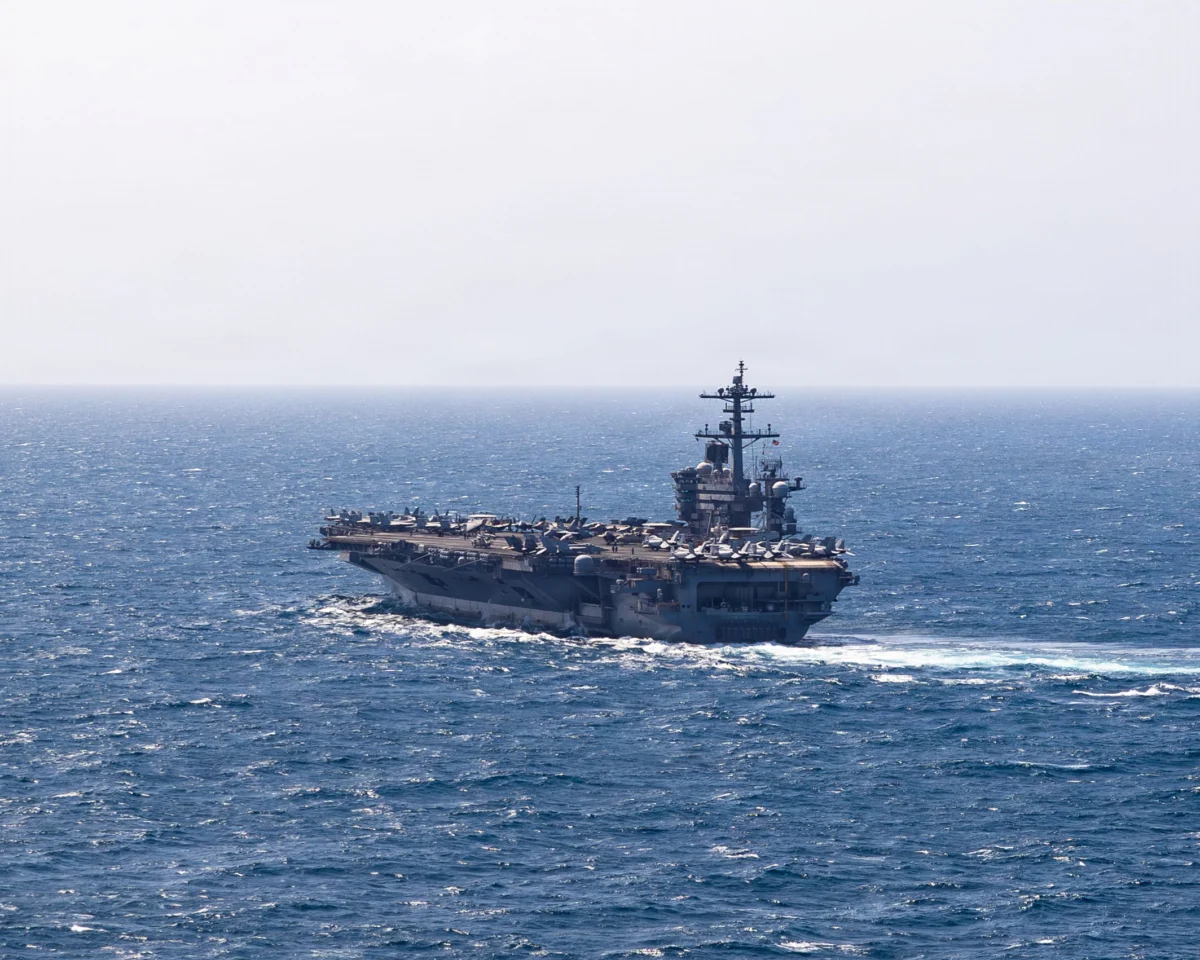
Saudi Arabia found itself on high alert overnight, issuing a series of emergency warnings across the kingdom, including a rare and significant alert in its capital, Riyadh, in response to a perceived "hostile aerial threat." This marks the first such alert in Riyadh since a recent escalation in fighting with Iran-backed Houthi rebels in neighboring Yemen, signaling a worrying intensification of regional hostilities that continues to reverberate across the Middle East.
The alerts, which prompted at least one audible explosion in Riyadh, underscore the persistent danger posed by the Houthi movement’s advanced drone and missile capabilities. While Saudi authorities did not immediately specify the nature of the threat or confirm any successful interceptions, past incidents have seen Houthi projectiles targeting critical Saudi infrastructure, including oil facilities and airports. The sound of an explosion in the capital, even without reported casualties or damage, inevitably raises anxieties about the porous nature of air defenses and the Houthis’ expanding reach. The conflict in Yemen, which began with the Houthi takeover of the capital Sanaa in 2014 and escalated with Saudi Arabia’s military intervention in 2015, has long been a proxy battleground between Riyadh and Tehran. Houthi forces, demonstrably supplied with Iranian technology and expertise, have repeatedly demonstrated their capacity to strike deep into Saudi territory, transforming the border conflict into a direct threat to the kingdom’s heartland. This latest incident serves as a stark reminder of the conflict’s ongoing volatility and its potential to destabilize the broader Gulf region, even as international efforts push for a more lasting peace in Yemen.
Meanwhile, the intricate web of regional rivalries saw another grim development with Iran’s state television announcing the execution of a man identified as Hossein Pedram. He was convicted on charges of spying for Israel’s intelligence agency, Mossad. The report alleged that Pedram had shared classified information concerning "sensitive military sites" within Iran’s strategically vital Isfahan province. Isfahan is a critical hub for Iran’s nuclear program and missile development, making any intelligence breach concerning its facilities a matter of grave national security. While the Iranian report did not detail how Pedram obtained this sensitive information, it sensationally claimed his arrest occurred after these sites, which reportedly included missile bases, were targeted in a "12-day air war by the U.S. and Israel" last year. This specific claim, however, does not align with widely reported open warfare between the U.S., Israel, and Iran, and likely refers to a series of covert operations, cyberattacks, or limited strikes that characterize the ongoing shadow war between Israel and Iran. This long-standing clandestine conflict involves assassinations of Iranian nuclear scientists, sabotage at Iranian facilities, and cyber warfare, with each side accusing the other of destabilizing actions. The execution of alleged spies is a common, though internationally condemned, practice in Iran, often serving as a strong deterrent and a demonstration of the regime’s resolve against perceived foreign interference. This execution comes amid a recent surge in capital punishments in Iran, which has drawn widespread condemnation from international human rights organizations, highlighting concerns over fair trial standards and the use of the death penalty for political purposes.
Further underscoring the delicate balance of power and economic interests in the region, the head of U.S. Central Command (CENTCOM), Adm. Brad Cooper, provided an update on shipping activity through the critical Strait of Hormuz. Cooper stated that the U.S. military had facilitated the transit of an astonishing 1 billion barrels of oil through the strait over the past two months, asserting that Iran had "exported zero barrels" due to a U.S. blockade. He also claimed that the strait’s primary transit lanes had been cleared of mines, leading to the highest volume of oil, natural gas, and cargo transit in six months, a period coinciding with the beginning of the Israel-Hamas war and associated U.S. and Israeli strikes. The Strait of Hormuz, a narrow chokepoint between the Persian Gulf and the Gulf of Oman, is globally recognized as the world’s most important oil transit choke point, through which roughly one-fifth of the world’s traded oil and a significant portion of its liquefied natural gas passed before the current regional conflicts. While CENTCOM’s assertion about Iran’s "zero exports" due to a blockade might be an overstatement given Iran’s established methods of circumventing sanctions through illicit oil sales, it highlights the intense pressure exerted by the U.S. on Iranian oil revenues. However, independent shipping monitors offer a more nuanced picture, indicating that despite these efforts, shipping traffic, while showing some recent uptick, remains well below pre-war levels. This discrepancy underscores the ongoing volatility and perceived risks in the waterway, where Iran has historically asserted control and continues to occasionally harass or attack commercial vessels, further complicating global energy security and supply chains.
The tragic human cost of the ongoing conflicts was starkly evident in Gaza, where Israeli strikes resulted in the deaths of three men. Gaza’s Health Ministry and officials at Shifa Hospital reported that one man was killed in the Shijaiyah neighborhood of Gaza City. Another victim was identified as the son of the Health Ministry’s director-general, killed while walking in the Jabaliya refugee camp in northern Gaza. Later, officials at Shifa Hospital confirmed a third fatality and at least four wounded after an Israeli strike targeted a civilian vehicle in Gaza City. Rami Mhanna, the managing director, described the body of the deceased as "completely charred," highlighting the devastating impact of such strikes. The Israeli military confirmed it had struck "several military operatives" and later specifically identified one target as a "Hamas military operative." These incidents occur despite a temporary ceasefire last October, which offered a brief respite from the most intense fighting. However, Israeli military operations have continued, leading to a grim toll: according to Gaza’s Health Ministry, more than 13,780 Palestinians have been killed in Gaza since then. This relentless violence underscores the profound humanitarian crisis gripping the besieged enclave, where civilian casualties continue to mount amidst ongoing hostilities, drawing widespread international condemnation and calls for a permanent cessation of hostilities and unhindered humanitarian aid access.
Across Israel’s northern border, tensions with Lebanon’s Hezbollah militant group also escalated. The Israeli military reported launching airstrikes against Hezbollah targets across several areas in southern Lebanon. These retaliatory strikes followed an incident in which two Israeli soldiers were wounded when their vehicle struck a Hezbollah explosive device in an area of southern Lebanon occupied by Israeli troops. This exchange highlights the precarious security situation along the Israel-Lebanon border, which has seen a significant uptick in cross-border skirmishes and hostilities since the October 7th attacks. Hezbollah, a powerful Shiite militant group and political party backed by Iran, possesses a formidable arsenal of rockets and missiles and maintains a strong presence in southern Lebanon. Lebanon’s state-run National News Agency reported three Israeli airstrikes on the southern town of Nabatiyeh al-Fawqa, noting that a third strike narrowly missed paramedics en route to the area, though no injuries were reported. The incident underscores the constant threat of wider escalation between the heavily armed adversaries, a conflict that could have devastating consequences for both Lebanon, already grappling with a severe economic crisis, and the broader region.
Amidst these multifaceted crises, diplomatic efforts, however limited, continue. Pakistan’s Foreign Minister Ishaq Dar engaged in a telephone conversation with Iranian Foreign Minister Abbas Araghchi, focusing on critical issues of uninterrupted energy supplies and ensuring safe passage for commercial ships. Pakistan’s Foreign Ministry statement revealed that Dar emphasized the potential adverse effects of disruptions on developing countries and global supply chains, reflecting growing concerns over maritime security in vital waterways like the Strait of Hormuz and the Red Sea. Pakistan, a developing nation heavily reliant on imported energy, is particularly vulnerable to rising energy prices and supply chain disruptions. The pressure on Prime Minister Shehbaz Sharif’s government is mounting, with an Islamist party reportedly threatening a march on the capital, Islamabad, unless fuel prices are lowered. This illustrates how regional conflicts and geopolitical tensions directly translate into domestic political and economic instability for nations like Pakistan, which are dependent on the stability of energy markets and shipping routes.
Internally, Iran continues to grapple with challenges to its social and religious strictures. The Tehran prosecutor’s office has filed charges against race organizers after women participated in a 10-kilometer (6-mile) race without adhering to the mandatory headscarf rule, violating "legal and Islamic Sharia." Iran’s ruling theocracy has enforced strict dress codes for women since the 1979 Islamic Revolution, requiring them to wear scarves that cover their hair and loose-fitting clothes that conceal their bodies. Footage circulating online depicting women running without head coverings quickly drew the attention of authorities. Habib Sotoudehnejad, head of Tehran’s sports department, acknowledged that approximately 5% of participants had violated race rules, despite the race being run separately for men and women. This incident highlights the ongoing defiance by some Iranian women against the compulsory hijab, a movement that gained significant international attention during the "Woman, Life, Freedom" protests following the death of Mahsa Amini in 2022. The filing of charges against organizers underscores the regime’s continued determination to enforce these laws, even in the face of widespread public dissent and international condemnation of its human rights record.
In war-torn Syria, a deadly explosion at an arms depot in the village of Ayash, located in the eastern province of Deir el-Zour, claimed the lives of 11 soldiers. Syria’s Defense Ministry held a funeral for the deceased, although it did not provide an immediate explanation for the blast, which also wounded several other military personnel. The Britain-based Syrian Observatory for Human Rights, a war monitor, corroborated the incident, stating that the explosion occurred within an arms depot at a military post. Deir el-Zour province is a strategically significant area, rich in oil fields and located near the Iraqi border. It is a complex battleground where Syrian government forces, supported by Iran-backed militias and Russian airpower, often contend with remnants of ISIS, as well as the presence of U.S.-backed Syrian Democratic Forces in some areas. Explosions at military installations in Syria are not uncommon, often resulting from accidental detonations due to improper storage, or sometimes from targeted strikes by adversaries, including Israel, which frequently conducts airstrikes against Iranian-linked targets and arms convoys in Syria. The incident further underscores the lingering instability and dangers prevalent in a country ravaged by over a decade of civil conflict.
Finally, the profound and enduring humanitarian crisis in Gaza continues to manifest in heartbreaking ways, particularly for its youngest residents. The U.N. agency for Palestinian refugees (UNRWA) reported that over 280,000 children in Gaza have returned to school, but under dire circumstances, attending classes in tents and heavily damaged classrooms. At a UNRWA-run school in Nuseirat, the devastation is palpable, with some classrooms lacking desks, forcing children to sit on blankets spread across the floor. Despite these immense challenges, the return to school, even in such rudimentary conditions, offers a semblance of routine and normalcy that was brutally upended by the ongoing war. Tawfiq al-Hourani, UNRWA’s education program chief, painted a grim picture of the agency’s operational capacity, revealing that three years prior, UNRWA operated 182 fully equipped schools, but a staggering 95% of them have since been lost or severely damaged. This catastrophic destruction of educational infrastructure represents not just a loss of buildings but a devastating blow to the future prospects of an entire generation of Palestinian children, highlighting the urgent need for massive reconstruction efforts and sustained international support to rebuild lives and provide hope in the shattered enclave.
