
 By admin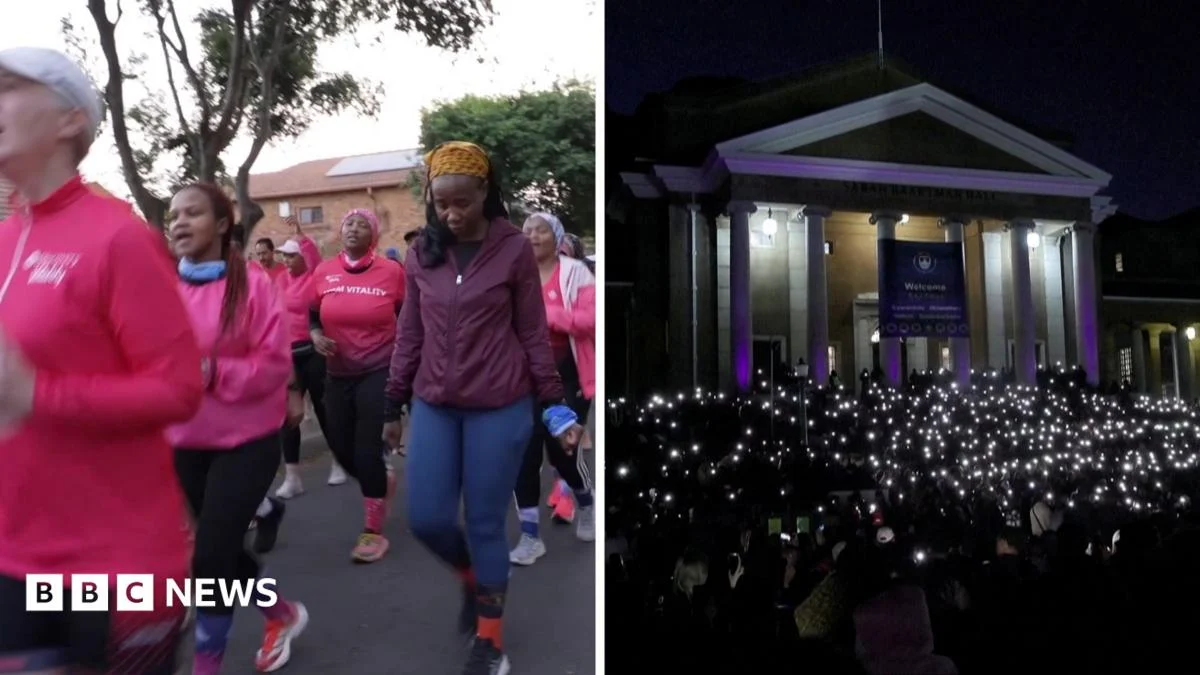
The chilling discovery of Elizabeth Moselakgomo’s body east of Johannesburg has sent waves of grief and outrage across South Africa, galvanizing a community of runners and women’s rights advocates to demand an immediate end to the escalating tide of gender-based violence. Moselakgomo, affectionately known as "Tsontso" by her fellow runners, is tragically the ninth woman to be found murdered in the Kempton Park area since July, a grim statistic that has ignited widespread fear and a fervent call for action. Her disappearance during a routine run, a seemingly innocuous act of personal well-being, has underscored the pervasive vulnerability faced by women in the country, transforming a solitary pursuit into a potentially life-threatening endeavor.
In the city of Centurion, a poignant gathering of runners organized an event not only to honor Moselakgomo’s memory but also to serve as a powerful declaration in defense of women’s fundamental right to move freely and safely within their communities. The air was thick with a somber solidarity as participants, clad in running gear, laced up their shoes in a silent protest against the violence that has claimed so many lives. The event, a testament to the interconnectedness of the running community, became a sanctuary for shared grief and a platform for collective empowerment.
"This is for her – we just want to live and go running and come back home without having to think that it may be one of us," articulated Nonhle Mpohlo, a fellow runner whose words resonated deeply with the assembled crowd. Her statement, raw and poignant, encapsulated the pervasive anxiety that has gripped women across South Africa. The simple act of going for a run, once a source of solace, exercise, and camaraderie, has become fraught with the terror of becoming another statistic. This sentiment was echoed throughout the gathering, as runners shared stories of their own near misses, their anxieties about venturing out alone, and their desperate hope for a future where their freedom of movement is not dictated by fear.
The reverberations of this tragic series of murders have not been confined to one city. In Cape Town, a parallel vigil was held, drawing a diverse group of individuals united by their grief and their demand for governmental accountability. Participants lit candles, their flickering flames mirroring the fragile hope for justice and safety. The vigil served as a solemn remembrance of all the victims, their lives cut short, and a stark reminder of the systemic failures that have allowed this violence to persist. The protesters, their voices amplified by the vastness of the ocean behind them, implored the government to move beyond pronouncements and implement concrete, effective measures to protect its citizens, particularly its women.
The scale of the crisis in Kempton Park, where nine women have been discovered deceased since July, paints a disturbing picture of a localized but deeply concerning pattern of violence. Each discovery has chipped away at the sense of security, transforming a once ordinary suburb into a zone of apprehension. The repeated nature of these crimes has led to widespread speculation and fear, with many questioning the effectiveness of current policing strategies and the overall commitment to combating gender-based violence. The victims, though their stories are often reported in fragmented accounts, represent individual lives, families shattered, and communities traumatized. Their names, their aspirations, and their right to exist without fear have been brutally extinguished.
In response to the escalating public outcry and the undeniable pattern of violence, the South African Police Service (SAPS) has announced the formation of a dedicated task team to meticulously investigate the murders. This development, while a step towards addressing the crisis, is met with a cautious optimism by a public weary of promises and eager for tangible results. The establishment of a specialized unit signals a recognition of the gravity of the situation, but the true measure of its success will lie in its ability to apprehend the perpetrators and bring them to justice, thereby restoring a semblance of safety and order.
Furthermore, the police have issued a stark advisory to women in the Kempton Park area, urging them to exercise extreme caution and to avoid walking or running alone, "particularly in isolated areas." This recommendation, while practical, highlights the uncomfortable reality that the onus of safety is often placed upon the victims rather than on the eradication of the threat. It underscores the societal challenge of creating an environment where women do not have to modify their behavior to avoid becoming targets. The advisory, intended to mitigate immediate risk, inadvertently reinforces the pervasive fear that has become an unwelcome companion for many women.
The broader context of gender-based violence in South Africa is a deeply entrenched and complex issue, with statistics that have consistently painted a grim picture. South Africa has one of the highest rates of reported sexual offenses in the world, and femicide rates are alarmingly high. These murders in Kempton Park are not isolated incidents but rather a stark manifestation of a societal epidemic that has been fueled by a confluence of factors, including deeply ingrained patriarchal norms, socioeconomic inequalities, inadequate enforcement of existing laws, and a pervasive culture of impunity for perpetrators.
Experts in criminology and gender studies have long pointed to the need for a multi-pronged approach to address this crisis. This includes not only robust law enforcement and judicial action but also comprehensive preventative strategies. These strategies often involve early childhood education that challenges gender stereotypes, public awareness campaigns that promote respect and equality, and support services for survivors of gender-based violence. The current situation demands a critical re-evaluation of these existing approaches and a commitment to innovative solutions.
The economic and social implications of this pervasive violence are also significant. Fear can stifle economic activity, particularly for women who may be hesitant to travel or participate in public life. The trauma experienced by survivors and their families can have long-lasting psychological and social consequences, impacting their ability to contribute fully to society. The loss of life represents not only a personal tragedy but also a drain on the nation’s human capital and potential.
The running community, by its very nature, is often characterized by a spirit of camaraderie and shared purpose. The fact that this community has been so profoundly impacted and has mobilized in such a vocal manner speaks volumes about the severity of the current situation. Their organized runs and vigils are not merely symbolic gestures; they are acts of defiance, reclaiming public spaces that have become tainted by fear, and asserting their right to participate in activities that enrich their lives without the constant threat of violence.
The demands from the Cape Town vigil for government action are not new. Activist groups have been tirelessly advocating for stronger legislation, more effective prosecution of perpetrators, and increased funding for victim support services for years. The current crisis, however, has brought these demands to the forefront of public consciousness with renewed urgency. The government faces immense pressure to demonstrate a genuine commitment to tackling gender-based violence, moving beyond rhetoric to implement tangible and sustainable solutions.
The Kempton Park murders have served as a stark and tragic reminder that the fight for women’s safety is far from over. The bravery of runners like Elizabeth Moselakgomo, who pursued her passion for running, and the courage of those who are now speaking out in her memory, are vital in the ongoing struggle for a more just and equitable society. The coming weeks and months will be critical in determining whether the current wave of outrage translates into meaningful and lasting change, or if it fades, leaving more women vulnerable to the shadows of violence. The world watches, hoping for a future where every woman in South Africa can run freely, unburdened by the specter of fear. The pursuit of justice for Elizabeth Moselakgomo and the eight other women whose lives were tragically cut short has become a national imperative.
