
 By admin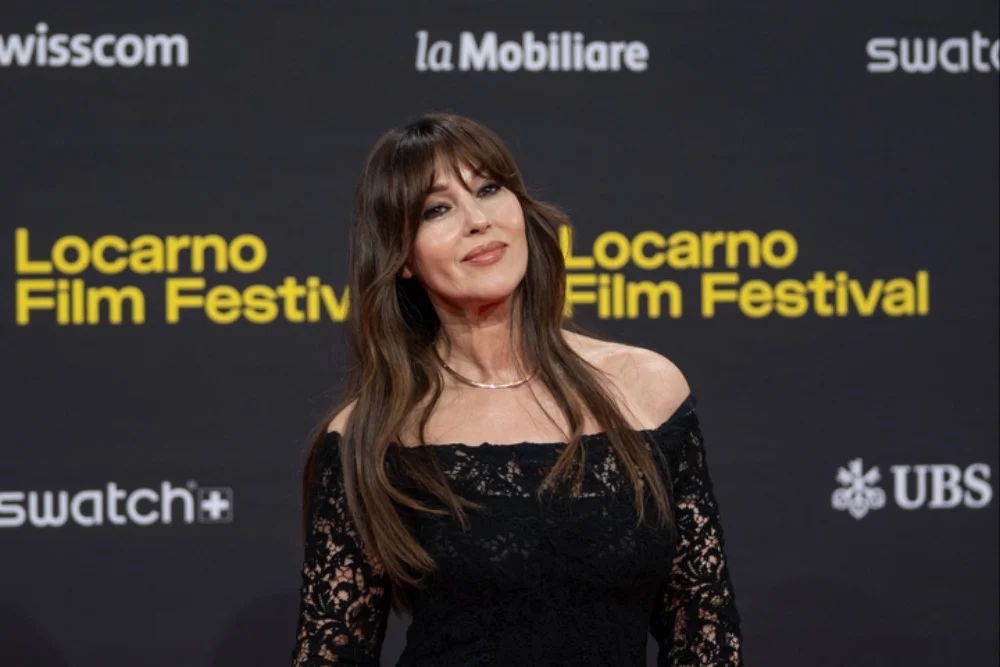
Monica Bellucci, a cinematic icon synonymous with alluring beauty and profound dramatic performances, is once again defying expectations, venturing into a role and a film that she herself describes as unlike anything she has ever undertaken. In an exclusive interview with Variety, Bellucci delves into her portrayal in Giovanni Tortorici’s "Ketticä," a film that premiered to critical attention at the Locarno Film Festival. "I’ve never done anything like that," Bellucci admits, her voice conveying a palpable sense of both surprise and exhilaration about this new artistic frontier. This sentiment is further amplified by her vivid description of her character: "I was on set in my pajamas with a knife in my hand and slippers on my feet. This woman has abandoned her femininity." This stark imagery immediately signals a departure from the polished, often glamorous roles that have defined much of her illustrious career, hinting at a raw and unvarnished exploration of a complex female psyche.
"Ketticä," set against the evocative backdrop of Palermo in 2012, centers on the adolescent Giulio, a young boy grappling with a growing sense of disorientation. His journey into this inner turmoil is further complicated by an encounter with Ketty, a spirited young woman, but his mother’s own struggles mirror and amplify his. Bellucci’s character embodies the suffocating anxieties and deep-seated frustrations simmering beneath the veneer of a decaying aristocratic society. "It was interesting to play this wife and mother who represents the angst and frustration behind the apparent perfection of decaying high society," Bellucci explains. "She’s an unhappy woman, bitter, with a kind of rage, but she has no outlet for it." This internal conflict, the chasm between outward appearances and inner turmoil, is a recurring theme in Bellucci’s more recent artistic choices, showcasing a matured artist keen on dissecting the nuances of human experience.
The film intricately portrays the mother’s desperate attempts to regain equilibrium, her relationship with her son becoming a battleground of unspoken tensions. Bellucci articulates the character’s maladaptive coping mechanisms: "She tries to counterbalance this frustration by eating little cakes and screaming constantly. Sometimes, the situation becomes almost comical. There is a real generational incomprehension between the two of them." This juxtaposition of dark humor and underlying tragedy, a hallmark of many compelling narratives, suggests that "Ketticä" will offer a darkly comedic yet poignant examination of familial discord and societal pressures.
While Bellucci’s filmography boasts a rich tapestry of dramatic and often intense roles, including unforgettable performances in "Malèna," "Irréversible," and "The Passion of the Christ," as well as memorable forays into genre films like "The Matrix" and the James Bond franchise, her ventures into pure comedy have been less frequent. However, she has demonstrated a keen aptitude for comedic timing in projects like the popular series "Call My Agent!" and the historical epic "Asterix & Obelix: Mission Cleopatra." In "Ketticä," she navigates a more nuanced territory, a "tragicomic" space where her character’s desperation manifests in often absurd, yet deeply unsettling ways.
Bellucci further elaborates on the tragicomic nature of her character’s actions: "She threatens her husband with a knife, but nobody’s scared of her. She screams, she’s aggressive, but everyone knows she won’t go anywhere. She wouldn’t have the courage to change her life. In the end, she’s their slave." This poignant observation underscores the character’s profound sense of entrapment, a victim of her circumstances and her own internal paralysis. The image of a woman wielding a weapon out of desperation, yet lacking the agency to truly enact change, paints a powerful portrait of suppressed rage and societal constraints.
Director Giovanni Tortorici himself lauded Bellucci’s contribution to the film, highlighting the authenticity she brought to a character that could easily have veered into caricature. "Tortorici told Variety that Bellucci delivered a ‘very intelligent, very realistic interpretation, even if the character is a bit eccentric. I have to say that when I showed the film to people who also know this aristocratic world, they told me that they found a lot of truth in her performance.’" This external validation from those familiar with the milieu depicted in "Ketticä" further solidifies the impact and credibility of Bellucci’s performance, suggesting a deep understanding and empathetic embodiment of the character’s plight.
Bellucci reciprocated the praise for the young director, emphasizing his precocious talent and vision. "Giovanni is young, but he’s completely in control of the set. He made a personal, unique movie," she stated, underscoring her appreciation for his directorial acumen. She also extended her accolades to her young co-stars, Salvatore Gallina and Rachele Testagrossa, acknowledging their pivotal role in bringing the film’s complex characters to life. "They brought these fully believable characters to life. When young people work like that, it means the director is talented." Bellucci’s observation that Tortorici, despite his youthful appearance, possessed an intense, focused energy on set – "Giovanni looks so calm and sweet, but on set, he was a tiger – in a good way!" – further illustrates the dynamic and collaborative atmosphere of the production. His clear vision and unwavering direction, she noted, ensured that "He knew where he was going."
This period marks a significant phase in Bellucci’s career, characterized by a deliberate engagement with emerging directorial voices. This year alone, she has collaborated with a diverse range of young filmmakers, including Maria Sole Tognazzi, Léa Mysius for the Cannes premiere of "The Birthday Party," and the directorial duo Adil El Arbi and Bilall Fallah for "Seven Dogs." This pattern suggests a conscious effort to seek out fresh perspectives and to imbue her work with the energy and innovation that these new talents bring.
Bellucci articulates the synergistic nature of these collaborations: "It’s interesting because there’s really an exchange, you know? They come with their own universe, point of view and excitement, and I come with my experience." This exchange is not merely transactional; it is a fertile ground for mutual artistic growth. Her experience working with Léa Mysius on "The Birthday Party" is a prime example. Bellucci describes Mysius as "a young director, but she’s already respected in France. She also gave me the opportunity to play a beautiful role unlike anything I’ve done before. It’s character far from my Mediterranean temperament. She wants to live in isolation, which is the opposite of who I am in life." This highlights Bellucci’s commitment to stepping outside her comfort zone and exploring characters that are diametrically opposed to her own lived experience, a testament to her artistic curiosity and courage.
The selection of her roles, Bellucci maintains, is guided by an unerring sense of instinct. This instinct has led her to embrace diverse projects, even those with limited screen time, as evidenced by her memorable appearance in David Lynch’s "Twin Peaks." "When I worked with David Lynch [on ‘Twin Peaks’], I had just one scene. But sometimes, it really doesn’t matter if it’s a smaller role. I just like to be free," she states. This philosophy underscores her dedication to artistic freedom and her belief that even a brief, impactful role can contribute significantly to a larger narrative.
The element of surprise remains a driving force in her career. "What I like about my work is the element of surprise. I like it when directors come to me with ideas I hadn’t thought of, even though I’ve been here for so many years. I still have the excitement and passion for my work," she confides. This enduring passion, coupled with an openness to the unexpected, ensures that her performances continue to resonate with freshness and vitality.
Furthermore, Bellucci acknowledges the profound impact of age and experience on her ability to portray complex emotional landscapes. "Our bodies change, of course, but we can express other aspects of life that we couldn’t before. I could never have done ‘The Birthday Party’ when I was 30 or 40. I needed more experience to portray these kinds of emotions," she observes. This reflection underscores a mature understanding of her craft and the evolving capabilities that come with lived experience, allowing her to delve into deeper, more nuanced emotional territories.
The contemporary landscape for actresses, Bellucci notes, offers a more encouraging environment for sustained careers. "Today, we actresses are so lucky to have the chance to keep working even as adult women. In the past, it was impossible to have a career after 40. It’s slow, but things are changing," she remarks, acknowledging the gradual but significant shifts in Hollywood and the broader film industry regarding ageism and the opportunities available to women in their later years.
Despite her deep commitment to her craft and the professional fulfillment it provides, Bellucci maintains a grounded perspective, emphasizing the primacy of life over art. "Still, it’s not all there is. I love what I do and I’m very grateful that I still have the chance to do interesting things. But life is more important," she asserts. This profound statement serves as a poignant reminder of her humanistic values and her understanding that art, while powerful and transformative, is ultimately a reflection of and a response to the larger, more fundamental experience of living. Her closing declaration, "Life is stronger than art," encapsulates a philosophy that informs her choices both on and off screen, suggesting a woman who, while a master of her artistic domain, remains deeply rooted in the essential truths of human existence.
