
 By admin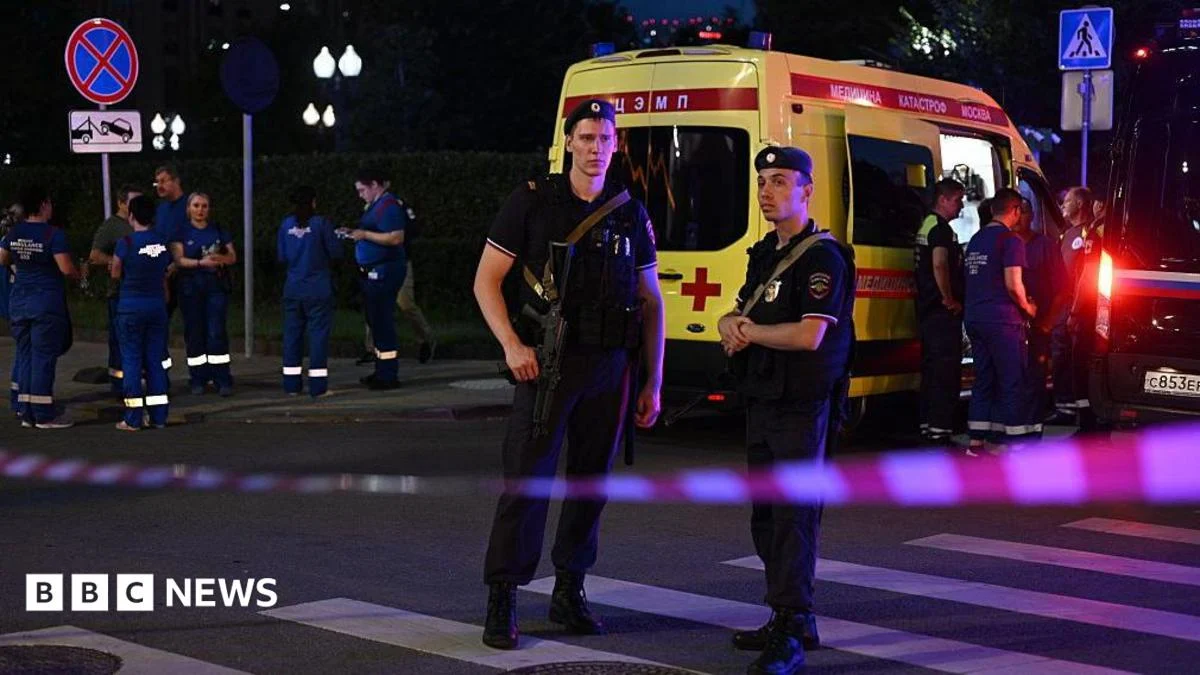
A devastating incident unfolded in the heart of Moscow last night, when a homemade explosive device detonated at a popular Italian restaurant, leaving a trail of tragedy and chaos. Official Russian state media, citing security officials, has confirmed that at least three individuals perished in the blast, with an additional 21 people sustaining injuries. The explosion ripped through the eatery, located on Kudrinskaya Square, a prominent location near the city center, at approximately 8:00 PM local time (5:00 PM GMT). The precise nature of the device and the motivations behind its use remain under intense investigation, but initial reports paint a grim picture of a deliberate act of violence.
The National Anti-Terrorist Committee (NAK) has provided preliminary details suggesting the incident was not a random occurrence but rather a targeted attack. According to their statement, a woman, believed to be carrying the explosive device, attempted to gain entry into the restaurant. Her access was reportedly challenged by a vigilant security guard. It was at this critical juncture, during the confrontation, that the device detonated. The NAK confirmed that the woman, the security guard, and an unsuspecting visitor to the restaurant were tragically killed in the immediate aftermath of the explosion. This sequence of events points towards a potential suicide attack or an explosive device that was prematurely detonated.
The restaurant itself, situated within the imposing architecture of one of Moscow’s iconic Stalin-era skyscrapers, was hosting a private function at the time of the blast. These grand, often ornate buildings, a hallmark of Soviet architectural ambition, typically house prestigious offices, residential apartments, and, in this case, upscale dining establishments. The juxtaposition of such a historic and imposing structure with the brutal violence of a modern explosive attack creates a stark and unsettling image. The fact that it was a private event may offer clues to investigators regarding potential targets or individuals who may have been present.
Eyewitness accounts, often the most visceral and immediate form of reporting in such emergencies, described scenes of utter pandomimic. Survivors and bystanders recounted seeing individuals being carried out of the damaged premises, their bodies covered in blood, a testament to the brutal force of the explosion. The initial confusion and shock among those present would have been palpable, with the sudden eruption of violence transforming a seemingly ordinary evening into a scene of horror. The scale of the injuries, with 21 people wounded, suggests that the blast had a significant radius and that shrapnel likely played a major role in the casualties.
Interestingly, initial reports regarding the exact location of the blast within the restaurant differed. Some early accounts suggested the explosion originated in the establishment’s kitchen. However, the restaurant management later issued a statement attempting to clarify the situation, asserting that "everything was ok inside" and that "there was a problem outside." This statement, while aiming to reassure, also raises questions. It could imply that the device was intended for detonation inside but was triggered prematurely outside, or it could be an attempt to downplay the severity of damage within the main dining areas. The discrepancy warrants further investigation by authorities to establish the precise point of detonation.
The immediate aftermath of the explosion saw a swift and significant response from law enforcement and emergency services. Roads surrounding Kudrinskaya Square were temporarily closed, a standard procedure to secure the area, facilitate rescue operations, and allow for forensic examination. The disruption to the city’s traffic, though temporary, underscored the severity of the incident. Adding a poignant layer to the events, dozens of cyclists had been gathered in the vicinity, preparing for an evening ride through the city. This planned recreational activity was abruptly cancelled due to the unfolding emergency, leaving many participants shaken and their plans in disarray.
Video footage subsequently released by Russian state news agency RIA Novosti provided a stark visual of the scene. The images depicted heavily armed law enforcement officers meticulously securing the perimeter, their presence a clear indication of the perceived threat. The area had been completely cordoned off to the public, a necessary measure to preserve evidence and prevent further risk. The professionalism and readiness of the security forces were evident, but the footage also conveyed the somber atmosphere of a city grappling with a violent act.
The investigation into this attack is undoubtedly complex and will involve multiple agencies. Security officials will be working to identify the perpetrator, ascertain their affiliations, and uncover any potential accomplices or broader networks. The nature of the "homemade explosive device" will be a critical area of focus, with forensic teams analyzing any remnants to determine its composition and construction, which can often provide clues about the origin of the materials and the technical expertise of those who built it.
Moscow, like many major global cities, has experienced periods of heightened security concerns. While the specific threat landscape is constantly evolving, the city has, in the past, been a target for various forms of unrest and, tragically, acts of terrorism. The Soviet era, while characterized by its monolithic architecture, also saw periods of political tension and social upheaval. The Stalin-era skyscrapers, while now often symbols of Moscow’s grandeur and history, were built during a time of intense political repression and state control, a stark contrast to the modern-day pursuit of life and leisure that was so brutally interrupted. Understanding the historical context of the location can sometimes offer a nuanced perspective on the broader socio-political environment in which such incidents occur, though it is crucial not to draw direct parallels without concrete evidence.
The impact of such an event extends far beyond the immediate casualties. The psychological toll on survivors, witnesses, and the wider community can be profound. Fear and anxiety can become pervasive, affecting daily life and a city’s sense of security. The restaurant, once a place of enjoyment and social gathering, will now be associated with this horrific event, its future uncertain.
Expert analysis of such incidents often focuses on the perpetrator’s profile, their potential motivations (ideological, personal, or a combination thereof), and the modus operandi. Security analysts will be examining the choice of target – an Italian restaurant hosting a private function – to see if it offers any specific meaning or if it was simply a convenient location for an attack. The involvement of a female perpetrator, if confirmed as the sole actor, could also be a point of particular interest, as while not unheard of, it can sometimes indicate specific recruitment or operational strategies.
The role of the security guard, who lost his life while attempting to prevent the detonation, highlights the bravery and dedication of those on the front lines of public safety. His actions, though ultimately unsuccessful in preventing loss of life, may have mitigated further casualties by confronting the individual outside the main body of the restaurant.
As the investigation progresses, the Russian authorities will be under considerable pressure to provide answers and ensure accountability. The swiftness of their response, the thoroughness of their investigation, and their communication with the public will be crucial in managing the aftermath of this tragedy. The international community will also be watching closely, offering support and potentially sharing intelligence if the investigation suggests broader international connections.
The incident serves as a grim reminder of the persistent threat posed by extremist ideologies and the devastating consequences of violence. The seemingly mundane act of dining at a restaurant was shattered by an act of terror, leaving behind grieving families, injured individuals, and a city grappling with loss. The coming days and weeks will be critical for investigators to piece together the puzzle, identify those responsible, and begin the long process of healing and recovery for those affected by this brutal attack. The story of this Italian restaurant will forever be marked by the night of terror that descended upon Kudrinskaya Square.
