
 By Titik Puspa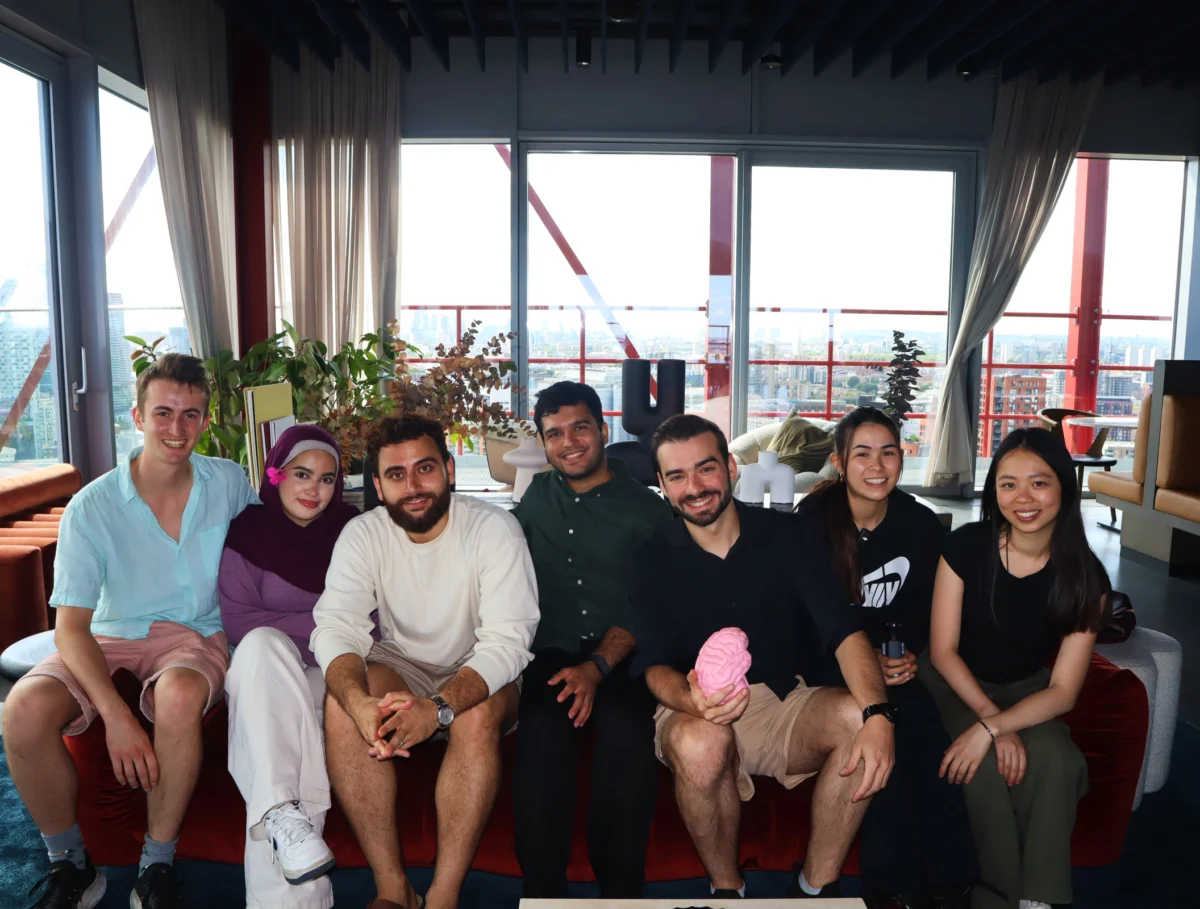
Six twentysomethings in East London have launched a revolutionary concept in the tech world, establishing what they describe as the antithesis to the high-octane, often unsustainable "hacker house" culture synonymous with San Francisco. The London Island Founder House, affectionately nicknamed "Lift House," is not driven by the frantic countdown to "Demo Day" but by a more profound objective: "holistic improvement in life," as explained by Rowan Aldean, 26, a successful tech entrepreneur. This initiative represents a significant departure from the prevailing Silicon Valley ethos, prioritizing well-being and sustainable growth alongside ambitious entrepreneurial pursuits.
My recent visit to the six-story building, majestically situated on the East London waterfront, offered a compelling glimpse into this burgeoning movement. Aldean, whose wife Zahraa, 22, is an aspiring pharmaceutical research PhD candidate, has been a resident since May, just months after the house officially opened its doors in March. Aldean’s own entrepreneurial journey includes the lucrative sale of his previous company, VeriFast, last year for millions. He now spearheads an "applied AI" startup focused on guiding companies in the deployment of AI agents. This background imbues him with a unique perspective on building successful ventures, one that seeks to balance ambition with a more grounded approach to life.
Lift House functions as a hybrid space, seamlessly blending a vibrant startup workspace with a co-living environment. The name itself is a clever double entendre, referencing the building’s elevator (lift) and its core mission to "lift up" tech founders. In a city like London, where co-living hacker houses are still a relatively novel concept, Lift House stands out. This starkly contrasts with San Francisco, where dozens, if not hundreds, of similar establishments are a common fixture. This scarcity in London highlights Lift House’s pioneering role in fostering a different kind of entrepreneurial community.

At its heart, Lift House is a bold experiment, testing the hypothesis that U.K. founders can achieve significant entrepreneurial success without succumbing to the relentless "hustle culture" that has become a hallmark of Silicon Valley. The narratives emerging from San Francisco’s hacker houses often paint a picture of audacious, and sometimes questionable, practices: illegal warehouse operations, extravagant galas, and the grueling "996" work culture (9 am to 9 pm, six days a week). In stark contrast, Aldean explicitly states, "I don’t expect the performative and over-the-top events will be a thing here." He draws a parallel to DeepMind, one of London’s most celebrated AI companies, which has achieved Nobel Prize-winning innovation and frontier breakthroughs with quiet determination and without ostentatious displays.
Lift House is an embodiment of the "Londonmaxxing" trend, a growing movement where founders actively seek to optimize their engagement with the rich and diverse offerings of the London tech scene. While the London ecosystem might appear less flashy and less dominated by the "startup bro" persona than its San Francisco counterpart, the underlying ambitions of its founders remain remarkably similar: achieving success, accumulating wealth, and securing market dominance. The figures underscore this ambition; London AI startups have already secured an impressive $12 billion in funding in 2026 alone, representing a significant portion of the $14.7 billion raised by all London startups in the same period, according to Dealroom data. Six companies have surpassed the $500 million funding mark: Wayve, Superintelligence, ElevenLabs, Recursive, Ineffable Intelligence, and Isomorphic Labs. Notably, the latter three were founded by alumni of DeepMind, underscoring the deep well of talent and innovation within the U.K. AI sector. This surge in AI investment is not only bolstering the U.K. tech scene but also igniting a new generation of founders, exemplified by the residents of Lift House, to pursue audacious goals.
The operational philosophy at Lift House prioritizes flexibility. There is no rigid timeline for residency; some founders stay for a month, while others plan for six months or more. The residents independently manage their grocery shopping, though communal cooking and ingredient sharing are common. Cleaning duties are distributed amongst the group, fostering a sense of shared responsibility. While specific rental costs remain undisclosed, the overall arrangement is designed to be accessible and supportive.
The residents of Lift House are actively pursuing a balanced approach to their entrepreneurial ambitions, a concept that often feels foreign in the hyper-competitive San Francisco startup landscape. Sundays are dedicated to a unique group practice: journaling. Introduced by David Amor, 28, who runs a brain coaching and training company specializing in optimizing business performance through understanding the brain, this practice encourages residents to track their engagement with nature, nutritional intake, and physical activity. "I’m eating healthier, working out more, and sleeping more," shares Luke, 27, founder of an AI-marketing company. "I always make sure to have lunch now, which is something that is simple, but I wasn’t doing before I lived here." (Luke requested his last name be withheld.) Tuesday evenings are reserved for camaraderie and friendly competition, with the founders participating in a local volleyball league as a team.

Beyond these structured activities, the house fosters a rich tapestry of personal pursuits. Wan Ying L., 25, who recently departed an AI startup and is now developing a new venture, might be found playing the piano in the living room after dinner. Other evenings might involve board games like Catan or shared excursions to art exhibitions. Presence Plumb, 25, a tech strategist, enjoys hosting rooftop dinner parties. These gatherings serve as vibrant hubs for cross-pollination of ideas, featuring a diverse culinary landscape that reflects the international backgrounds of the residents, from Iraqi to Spanish cuisine. Guests at these events often include founders, researchers, investors, and operators, creating an organic environment for discussing tech trends and potential investments. Plumb describes the London ecosystem as "calmer, balanced, authentic in a way," emphasizing a preference for substance over the "startup tech bro vibe."
The daily routines within Lift House are as varied as the individuals themselves. Amor, for instance, adheres to a disciplined morning schedule, rising by 8 a.m. and dedicating himself to focused work for the initial part of the day. He employs a cold shower ritual, citing its purported 250% dopamine boost, to enhance motivation and spark creativity. Luke, on the other hand, typically begins his day around 8:30 a.m. He and his co-founder, Varun, 27 (who also requested his last name be withheld), commence their work at approximately 9 a.m. with a team call, often joined by Varun who travels to the Lift House for co-working sessions. Aldean’s schedule is more fluid, rarely starting before 10 a.m. unless a significant event, such as a crucial investor call, demands an earlier start.
When questioned about what specifically distinguishes Lift House as "uniquely British" compared to a wellness-focused Silicon Valley counterpart, Aldean humorously points to the shared ritual of drinking tea, a stark contrast to what he perceives as the ubiquitous filtered coffee culture in San Francisco. More seriously, he elaborates on the distinct pressures faced by British founders. These include navigating a cultural aversion to risk, a predisposition towards humility, and a societal apprehension surrounding failure. Rather than embracing extreme work hours as a badge of honor, British entrepreneurs often contend with what is termed "tall poppy syndrome," a phenomenon where individuals who achieve significant success are sometimes subject to harsh criticism or scrutiny. This cultural nuance can lead some founders to be more reserved in showcasing their achievements.
Despite these cultural distinctions, Luke firmly believes London offers a compelling environment for early-stage founders. He highlights the robust network, ample early-stage capital opportunities, and the crucial benefit of a life that extends beyond the confines of the tech industry. He likens London’s cultural landscape for founders to New York, finding it more relatable than that of San Francisco. "London is so diverse that if you look properly enough, you’ll always find something fun to get involved with," adds Amor, pointing to the variety of social and professional activities available, from founder-run clubs and wellness events to jazz nights.

Luke and Varun’s entrepreneurial journey has notably involved navigating venture capital funding through the U.K. government’s SEIS/EIS schemes, designed to incentivize angel investment in local startups. "There’s people who will pay basically the same rate of tax if they give us the money versus if they pay income tax," Luke explains, underscoring another advantage of launching a startup in London. Aldean further contrasts the London ecosystem with Silicon Valley, describing his past experience in a Bay Area hacker house where intense focus and competitive dynamics prevailed. He felt that the San Francisco ecosystem could be prone to gossip, a behavior he observes as being handled differently in the U.K. "There’s nothing like ‘oh my god did you hear that the CTO just, like, did this,’" Aldean remarks, highlighting a perceived sense of constant anxiety in the Valley regarding the potential for negative stories to spread, often for personal gain.
Aldean also posits that London startups tend to target large, established corporations for their sales, rather than selling primarily to each other as is common in Silicon Valley. This strategic difference, he suggests, allows founders to build their businesses without the pressure of currying favor or posturing to gain peer approval. Varun and Luke further elaborate on this distinction, describing the U.S. market as "relatively fleeting," offering quick wins but lacking the long-term customer loyalty often found in the U.K. "Here, it’s hard to close a customer, but if they close, they stay with you longer," they note.
The trajectory for many U.K. startups eventually leads to the United States. While the U.K. offers access to affordable, high-caliber talent from prestigious universities like Oxbridge and a time zone conducive to working with Europe, the Middle East, Asia, and parts of North America, the U.S. presents the world’s largest economy and a vast pool of investors eager to deploy capital across all stages of growth. "It’s almost like a factory line in a way," observes Varun. "You start here, and then you expand there or vice versa."
American investors are also actively influencing the migration of British talent. Luke recounts an instance where an investor in Miami pressured him and Varun to relocate to the U.S., a situation he describes as "quite a common practice." Despite their deep appreciation for London, the duo acknowledges the possibility of moving to the U.S. to be closer to their customer base, as they have already initiated their U.S. expansion efforts. This dynamic underscores a broader challenge for European tech ecosystems: the persistent allure of the U.S. market and its deep pockets. "I work with a lot of people trying to support the European ecosystem more," says Plumb, acknowledging the ongoing efforts to bolster local growth.

Aldean candidly observes the prevailing sentiment: "The culture is to build something that lasts, not necessarily burn out chasing a flash." The lease for Lift House has approximately one year remaining, and there is a strong desire among its residents to continue the initiative. While London hosts numerous short-term gatherings like the Solana Hacker House meet-up series, dedicated, long-term co-living hacker houses remain relatively scarce. Global chains like The Residency, which expanded to London last year, and BaseJump, which is soon launching its own program, represent a growing trend. In 2024, a different model, "The London Founder House," emerged, described by Sifted as a place where "people don’t want work-life balance." Though this pioneering London hacker house concluded its operations last year, its influence persists through its conceptual framework, events, and the network it cultivated. Membership in that program required founders to have raised at least half a million dollars.
In contrast, Lift House has a more inclusive admission policy, seeking residents who demonstrate a hobby outside of their professional endeavors and a genuine interest in fitness. This approach aligns with the "Londonmaxxing" ethos, aiming to retain talent by offering a compelling proposition: the opportunity to achieve success without sacrificing a fulfilling personal life. As Aldean aptly summarizes, "The culture is to build something that lasts, not necessarily burn out chasing a flash." This fundamental principle sets Lift House apart, offering a sustainable and holistic pathway for the next generation of tech entrepreneurs.
