
 By admin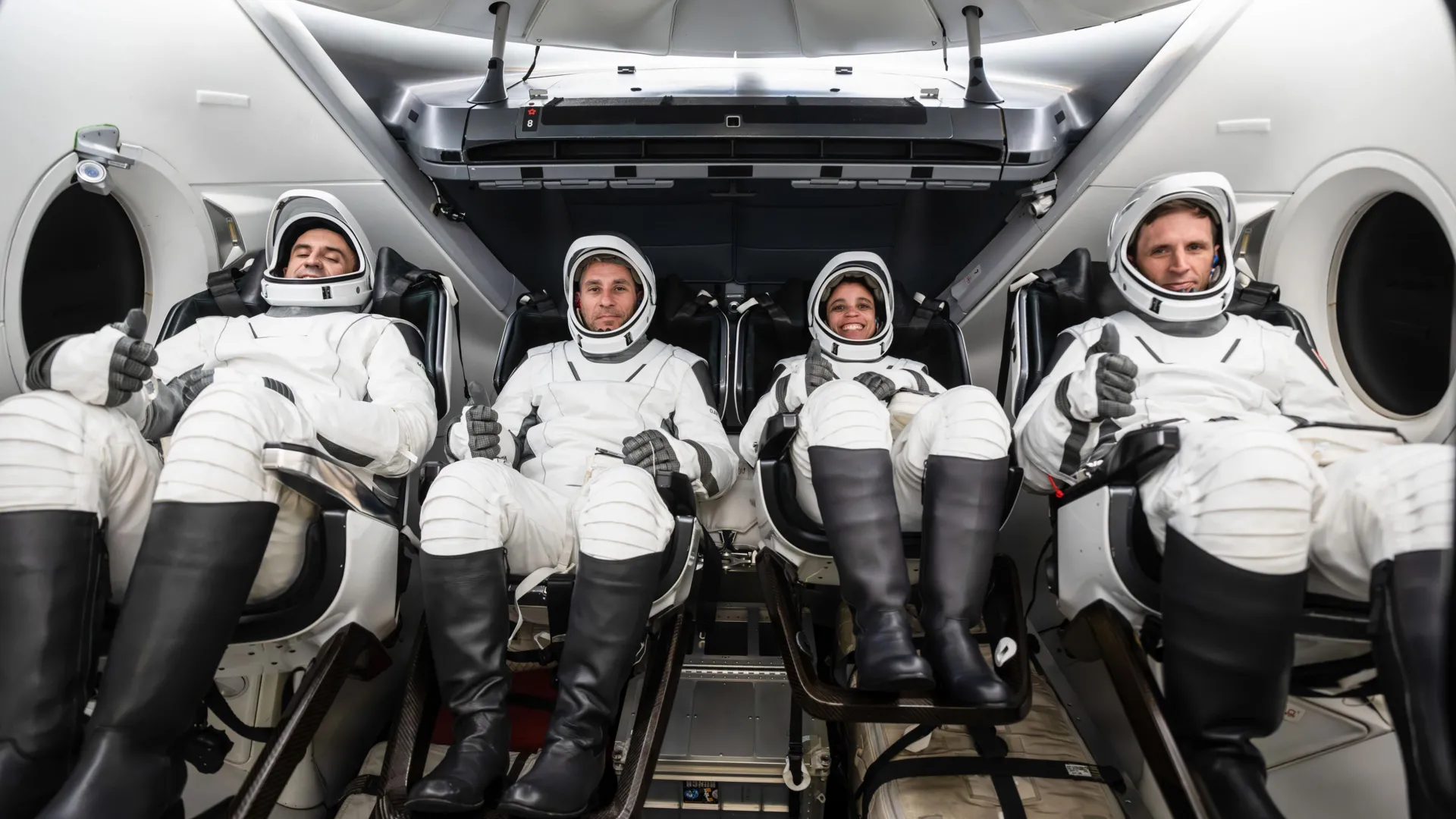
This upcoming launch represents another critical milestone in the ongoing collaboration between NASA and SpaceX under the Commercial Crew Program, aiming to reliably transport astronauts to and from the orbiting laboratory. The Crew-13 mission will see four astronauts embark on a long-duration expedition to the International Space Station (ISS), continuing vital scientific research, technological development, and maintenance of the unique microgravity outpost. The launch is scheduled to originate from Space Launch Complex 40 (SLC-40) at Cape Canaveral Space Force Station in Florida, a historic launchpad that has been instrumental in numerous spaceflight endeavors.
Intensive Pre-Launch Preparations and Readiness Reviews Underway
In the days and weeks leading up to the targeted liftoff, an intricate ballet of engineering, logistics, and human preparation will unfold. Teams from NASA and SpaceX are engaged in a rigorous series of final preparations and readiness reviews, meticulously scrutinizing every aspect of the mission to ensure the utmost safety and success. These comprehensive assessments are designed to confirm the readiness of all critical components: the astronauts, the International Space Station, SpaceX’s Crew Dragon spacecraft, and the Falcon 9 rocket.
Astronaut readiness involves not only extensive physical and psychological evaluations but also mission-specific training that covers every conceivable scenario, from routine operations to emergency procedures. This includes detailed simulations of launch aborts, in-orbit maneuvers, docking protocols, and spacewalk preparations. Medical teams continuously monitor the crew’s health, a process culminating in the flight-specific health stabilization protocol, commonly known as quarantine, which the Crew-13 astronauts are currently undergoing at NASA’s Johnson Space Center in Houston. This isolation period is a standard, yet critical, preflight precaution designed to minimize exposure to illnesses that could compromise crew health or mission objectives in the confined environment of space.
Concurrently, the International Space Station itself undergoes preparatory checks. The current Expedition crew ensures the designated docking port – the forward-facing port of the Harmony module – is ready for the Dragon’s arrival, including confirmation of power, data, and environmental control systems. The station’s life support systems, consumables, and scientific payloads are all reviewed to ensure they are prepared to accommodate the new arrivals and their mission objectives.
For the Crew Dragon spacecraft, technicians are completing final system checks across its complex array of avionics, propulsion, environmental control and life support systems, and thermal control. Cargo – ranging from scientific experiments to personal items for the crew – is carefully loaded, and leak checks are performed to ensure the integrity of the pressurized capsule. The Falcon 9 rocket, the workhorse of SpaceX’s launch fleet, also undergoes its own exhaustive checks. This includes the integration of its two stages, verification of its nine Merlin engines, and detailed analysis of its structural integrity and propellant loading systems. Weather conditions at the launch site, along recovery zones downrange and potential abort landing sites, are continuously monitored, as they play a crucial role in determining the final go-no-go decision.
These preparations culminate in several key decision-making forums, including the Flight Readiness Review (FRR) and the Launch Readiness Review (LRR). These multi-day meetings bring together senior leaders from NASA, SpaceX, and international partners to review all aspects of mission readiness, identify and resolve any outstanding issues, and ultimately provide official approval for the launch. The emphasis on redundancy, robust safety protocols, and contingency planning underscores the inherently challenging nature of human spaceflight and the unwavering commitment to crew safety.
A Swift Journey to Orbit and Docking with Harmony
If Crew-13 successfully launches on Oct. 1, the journey to the International Space Station is designed to be remarkably swift. The Crew Dragon spacecraft is anticipated to reach the orbiting laboratory in less than nine hours, with docking planned for approximately 8 p.m. EDT at the forward-facing port of the Harmony module. This rapid transit time is a testament to the advanced capabilities of the Falcon 9 rocket and the automated rendezvous and docking systems of the Crew Dragon.
The launch sequence itself is a precisely choreographed event. Following ignition of the Falcon 9’s nine Merlin engines, the rocket will ascend, quickly passing through Max-Q, the point of maximum aerodynamic pressure. Approximately two and a half minutes into flight, the Falcon 9’s first stage will separate and, assuming a successful landing profile, will execute a propulsive landing on a SpaceX droneship stationed in the Atlantic Ocean. This reusability of the first stage is a cornerstone of SpaceX’s strategy to reduce the cost and increase the cadence of space launches.
Meanwhile, the Falcon 9’s second stage, powered by a single Merlin Vacuum engine, will continue to propel the Crew Dragon into its preliminary orbit. Once orbital insertion is confirmed, the Crew Dragon will separate from the second stage, deploying its solar arrays to begin generating power. The spacecraft will then embark on a series of carefully calculated phasing burns. These maneuvers are critical for adjusting Dragon’s orbit to precisely match the ISS’s altitude, inclination, and velocity – a complex dance of orbital mechanics designed to bring the two spacecraft together safely.
The rendezvous and docking process is almost entirely automated, relying on sophisticated Guidance, Navigation, and Control (GNC) systems that use GPS, star trackers, and infrared cameras to navigate to the ISS. The Crew-13 astronauts, however, are extensively trained to monitor these systems and to take manual control if necessary, a critical safety backup. As Dragon approaches the ISS, it will slowly close the distance, aligning itself perfectly with the designated docking port on the Harmony module. The process involves a "soft capture" where the spacecraft makes initial contact, followed by a "hard capture" where a series of hooks and latches secure the Dragon firmly to the station, creating an airtight seal.
The Harmony module, also known as Node 2, is a pivotal component of the International Space Station. It serves as a connecting node for several other modules, including the U.S. Destiny laboratory and the European Columbus laboratory, and provides critical utilities such as power, data, and cooling. Its multiple common berthing mechanisms and pressurized mating adapters make it a vital docking location for visiting spacecraft, ensuring continuous access for crews and cargo.
Introducing the Crew-13 Astronauts: Expedition 75 Awaits
The Crew-13 mission brings together an experienced and diverse international crew, poised to become members of Expedition 75 upon their arrival at the International Space Station. This multinational composition underscores the enduring spirit of international cooperation that defines the ISS program, even amidst geopolitical complexities.
Serving as spacecraft commander for Crew-13 is NASA astronaut Jessica Watkins. A geologist by training, Watkins previously distinguished herself as the first African American woman to complete a long-duration mission on the ISS, having served on Expedition 67. Her background includes extensive research in planetary science, and she also boasts experience as a member of the U.S. women’s rugby sevens national team. As commander, Watkins will be responsible for the overall safety and success of the mission, leading the crew through launch, docking, and return operations, as well as overseeing crew activities during their tenure on the station. Her scientific acumen will be invaluable in guiding the diverse research efforts of Expedition 75.
Piloting the Crew Dragon spacecraft will be NASA astronaut Luke Delaney. With a distinguished career as a military test pilot, Delaney brings a wealth of aviation and engineering expertise to the mission. His responsibilities will include assisting Commander Watkins with spacecraft operations, monitoring Dragon’s systems during dynamic phases of flight, and ensuring the precise execution of rendezvous and docking procedures. His background in evaluating flight systems and managing complex airborne operations makes him an ideal choice for the critical role of pilot.
Joining them as a mission specialist is Joshua Kutryk of the Canadian Space Agency (CSA). A former Royal Canadian Air Force fighter pilot and test pilot, Kutryk’s technical prowess and operational experience will be key to the mission. Canada has been a continuous partner in the ISS program, contributing robotic arms like Canadarm2, and its astronauts play a crucial role in maintaining and operating the station. Kutryk’s presence highlights Canada’s commitment to human spaceflight and its contributions to global space exploration, including its involvement in the NASA-led Artemis program aimed at returning humans to the Moon.
Rounding out the international crew is Roscosmos cosmonaut Sergey Teteryatnikov, who will also serve as a mission specialist. A veteran of the Russian space program with a background in engineering and military aviation, Teteryatnikov’s inclusion emphasizes the continued operational integration between NASA and Roscosmos on the ISS. Despite Earth-bound geopolitical tensions, space agencies remain committed to the safe and effective operation of the ISS, relying on each other for crew transport and essential station functions. Teteryatnikov will be crucial for operations within the Russian Orbital Segment (ROS) of the station, working alongside his international counterparts on maintenance, scientific experiments, and supporting spacewalks.
Upon their arrival, these four astronauts will officially become members of Expedition 75, joining the existing crew already aboard the station. Space station expeditions are long-duration missions, typically lasting six months, during which crews conduct an astonishing array of scientific research across various disciplines, maintain the complex orbiting laboratory, and support technology demonstrations and other critical operations. The research conducted on the ISS spans human health in microgravity, materials science, fluid physics, Earth observation, and the development of new technologies vital for future deep-space exploration missions, such as those to the Moon and Mars.
The Crew-13 astronauts are currently undergoing their flight-specific health stabilization protocol at NASA’s Johnson Space Center in Houston. This period of pre-flight quarantine, a standard practice since the early days of human spaceflight, ensures the crew is healthy and free from contagious illnesses that could endanger the mission or the health of the entire station crew. Following this crucial health precaution, the crew is scheduled to travel to NASA’s Kennedy Space Center on Saturday, Sept. 26, marking their final journey to the launch site as preparations continue for the planned Oct. 1 liftoff. Their arrival at Kennedy often includes traditional greetings and media opportunities, symbolizing the final stages of their journey before launching into orbit.
Broader Implications: The Future of Human Spaceflight
The Crew-13 mission is more than just another crew rotation; it is a testament to the enduring success and evolving landscape of human spaceflight. The Commercial Crew Program, through its partnership with SpaceX, has revolutionized access to low-Earth orbit, making crew transportation safer, more reliable, and more cost-effective. The proven track record of the Falcon 9 and Crew Dragon systems has become a cornerstone of NASA’s strategy for maintaining a continuous human presence in space.
The International Space Station itself remains an unparalleled global laboratory, fostering international collaboration and pushing the boundaries of scientific discovery. The data and experience gained from long-duration missions on the ISS are directly applicable to future endeavors, serving as a critical testbed for technologies and human physiology studies required for lunar missions under the Artemis program and eventual crewed missions to Mars. The ability to routinely send diverse crews, including scientists, engineers, and pilots from multiple nations, enhances the breadth and depth of research that can be conducted, yielding benefits for humanity both in space and on Earth.
As NASA and its international partners look towards an ambitious future of lunar exploration and beyond, missions like Crew-13 underscore the fundamental importance of maintaining a robust and reliable presence in low-Earth orbit. The continued operation of the ISS, facilitated by commercial partners like SpaceX, provides the essential foundation for training future explorers, developing advanced technologies, and fostering the global partnerships that will define the next era of human space exploration. The launch of Crew-13 will not only send four dedicated individuals to space but will also carry forward the torch of human ingenuity and cooperation into the cosmos.
