
 By admin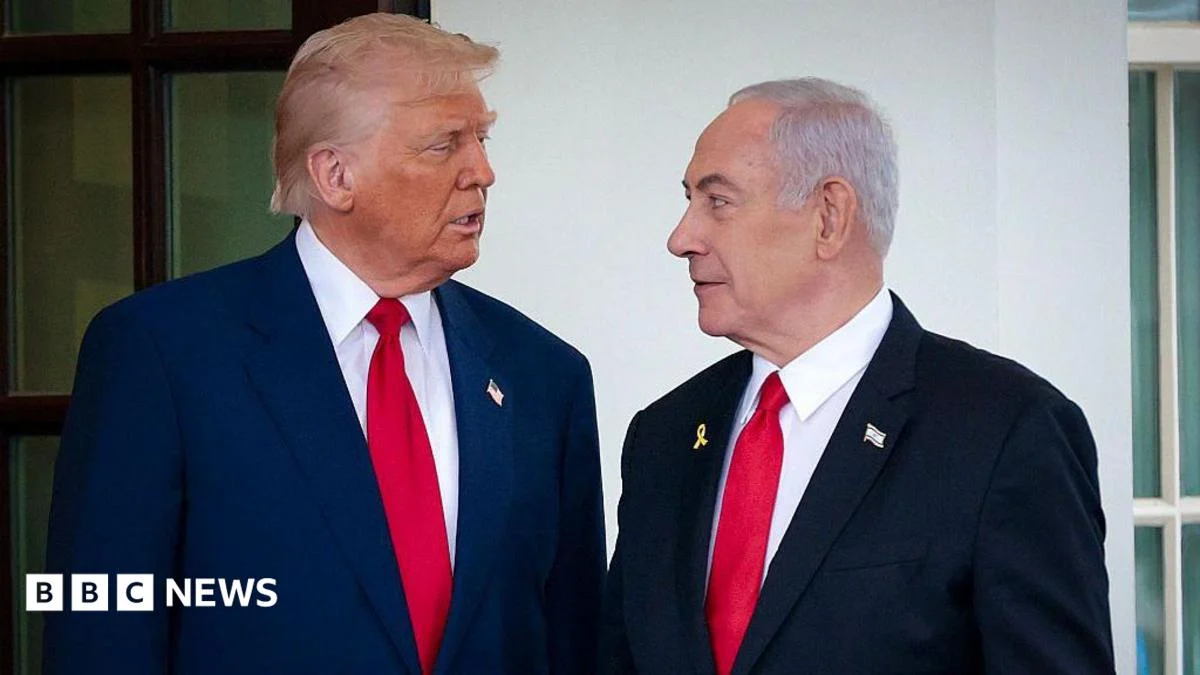
Israeli Prime Minister Benjamin Netanyahu has unequivocally rejected a 15-point peace proposal for the Gaza Strip, put forth by United States President Donald Trump’s administration. The cornerstone of Netanyahu’s refusal lies in his insistence that any Israeli military withdrawal from the besieged territory is contingent upon the "genuine" and complete disarmament of Hamas and other Palestinian armed factions. This firm stance directly challenges the claims made by Trump’s "Board of Peace" last month, which announced an agreement for the "complete disarmament" of militant groups operating in Gaza.
The narrative presented by the Trump administration, suggesting a breakthrough in achieving lasting peace, has been met with stark opposition from both key players involved. Hamas, while acknowledging the existence of discussions regarding disarmament, has stipulated its own non-negotiable conditions. According to Hamas officials, the handover of their heavy weaponry is intrinsically linked to Israel’s complete cessation of "all forms of aggression" and a full withdrawal of its forces from Gaza. This fundamental divergence in preconditions highlights the deep-seated mistrust and the vastly different strategic objectives of the involved parties.
Adding further complexity to the situation, Israel has continued to conduct military operations in Gaza, including targeted strikes, even after agreeing to an initial ceasefire in the territory last October. This ongoing military activity undermines any claims of a de-escalation and further fuels Hamas’s rationale for maintaining its armed posture. Netanyahu’s public declaration at a cabinet meeting on Sunday, stating that "Israel rejects the 15-point document," leaves little room for interpretation regarding his government’s position.
His pronouncement was amplified by a stark warning: "The Israeli military will not carry out any withdrawal until Hamas is genuinely disarmed and will continue to thwart threats against our forces and our citizens." This statement underscores a critical Israeli security imperative, emphasizing the perceived existential threat posed by Hamas’s military capabilities and its continued rocket fire and other attacks against Israeli civilians and military personnel.
The Trump administration, in an announcement last month, had characterized the supposed Hamas acceptance of a disarmament plan as "a monumental step toward lasting peace and security." This optimistic framing, however, appears to have been premature or at least a mischaracterization of the actual state of negotiations. Netanyahu’s rebuttal directly contradicts this narrative, asserting that Hamas must disarm before any Israeli withdrawal, and that such disarmament must be substantive, not a "fictitious disarmament." This implies a deep skepticism on Netanyahu’s part regarding the sincerity and effectiveness of any potential disarming process initiated by Hamas.
The Israeli Prime Minister indicated that he is currently engaged in discussions with US officials to chart a path forward, suggesting that while the current proposal is rejected, diplomatic channels remain open, albeit with significant hurdles. The timing of this diplomatic impasse is particularly sensitive, occurring just months before crucial Israeli elections. For Netanyahu, making significant concessions that could be perceived as weakening Israel’s security posture, especially in the face of ongoing threats from Gaza, would likely be politically untenable. This domestic political calculus undoubtedly plays a significant role in his hardline stance.
The rejection of Trump’s Gaza peace plan represents another significant setback for an initiative that was officially unveiled in September of the previous year. The Trump administration has invested considerable diplomatic capital in brokering a resolution to the Israeli-Palestinian conflict, and this latest development signals the formidable challenges that lie ahead. The administration’s approach, which has often been characterized by its unconventional methods and a departure from previous US diplomatic frameworks, has yielded mixed results, with some initiatives proving more effective than others.
To understand the ramifications of this rejection, it is crucial to delve into the historical context of the Israeli-Palestinian conflict and the specific dynamics at play in Gaza. The Gaza Strip, a densely populated Palestinian territory under blockade by Israel and Egypt, has been under the de facto control of Hamas since 2007, following a conflict with Fatah, the secular Fatah movement that dominates the Palestinian Authority in the West Bank. This internal Palestinian division has further complicated any attempts at unified governance and peacemaking.
Hamas, designated as a terrorist organization by the United States, the European Union, and several other countries, has a stated goal of destroying Israel and establishing an Islamic state in its place. Its armed wing, the Izz ad-Din al-Qassam Brigades, has been responsible for numerous attacks against Israeli targets, including rocket barrages into Israel and suicide bombings. Israel, in turn, cites these attacks as justification for its security measures, including the blockade and periodic military operations aimed at degrading Hamas’s capabilities.
The cycle of violence has been a persistent feature of the conflict, with each escalation leading to further recriminations and entrenching opposing positions. The October ceasefire, while offering a temporary respite, did not fundamentally alter the underlying issues that fuel the conflict. Israel’s continued strikes, even if framed as responses to ongoing threats, serve to reinforce Hamas’s narrative of Israeli aggression and the necessity of armed resistance.
President Trump’s peace plan, referred to as the "deal of the century," was reportedly developed over an extended period with significant input from his son-in-law and senior advisor, Jared Kushner. The plan’s specifics have not been fully disclosed to the public, leading to speculation about its contents. However, based on Netanyahu’s statements and Hamas’s reactions, key elements likely revolve around security arrangements, territorial issues, and the future governance of Gaza and the West Bank.
The 15-point proposal, as hinted at by the parties involved, appears to have envisioned a process where Hamas would disarm, paving the way for Israeli withdrawal and potentially a more stable political landscape in Gaza. However, the differing interpretations of "disarmament" and the sequencing of concessions are the critical stumbling blocks. For Hamas, disarmament without a complete end to the occupation and blockade would be seen as a capitulation, surrendering its primary leverage without achieving its core objectives. For Israel, any withdrawal without guaranteed security, meaning a fully disarmed Hamas, would be viewed as a dangerous gamble, potentially emboldening its adversaries.
Expert analysis of the situation suggests that the current impasse reflects a fundamental lack of trust between the parties, exacerbated by decades of conflict and failed peace initiatives. Dr. Sarah Cohen, a Middle East analyst at the International Peace Institute, commented, "The core issue here is the absence of a shared understanding of what constitutes security. Israel views security through the lens of eliminating threats, while Hamas views security through the lens of ending the occupation and achieving self-determination. Until these fundamentally different perspectives can be reconciled, any peace plan will face immense hurdles."
Furthermore, the involvement of external actors, while often aimed at facilitating peace, can also introduce their own agendas and complexities. The Trump administration’s distinct approach to Middle East diplomacy, which has included a strong pro-Israel tilt, has been a point of contention for some observers who argue that a more balanced approach is necessary for genuine progress. The administration’s close relationship with Netanyahu’s government may have led to an overestimation of the potential for agreement, particularly with Hamas.
The implications of this rejection extend beyond the immediate prospects for peace in Gaza. It signals a potential weakening of the Trump administration’s leverage in the region and raises questions about the future of its Middle East peace initiative. The failure to secure buy-in from both Hamas and the Israeli government on a significant peace proposal could embolden more hardline factions on both sides and further entrench existing grievances.
The upcoming Israeli elections add another layer of political pressure. Netanyahu’s government has consistently emphasized its commitment to national security, and any perception of weakness on this front could be detrimental to his electoral prospects. The current political climate in Israel, marked by a desire for decisive action against perceived threats, makes it difficult for any leader to advocate for significant concessions without demonstrable security gains.
Looking ahead, the path to resolving the Gaza crisis remains fraught with challenges. Without a mutually agreeable framework for disarmament and withdrawal, and without a significant shift in the underlying political dynamics, the cycle of conflict is likely to persist. Any renewed diplomatic efforts will need to address the deep-seated security concerns of Israel while also acknowledging the legitimate aspirations of the Palestinian people for self-determination and an end to the occupation. The rejection of Trump’s plan, while a setback, also underscores the need for a more realistic and comprehensive approach that takes into account the complex realities on the ground. The international community, including key regional and global powers, will need to play a more concerted role in fostering dialogue, building trust, and creating the conditions for a sustainable peace. The stakes are incredibly high, not just for Israelis and Palestinians, but for the broader stability of the Middle East.
