
 By admin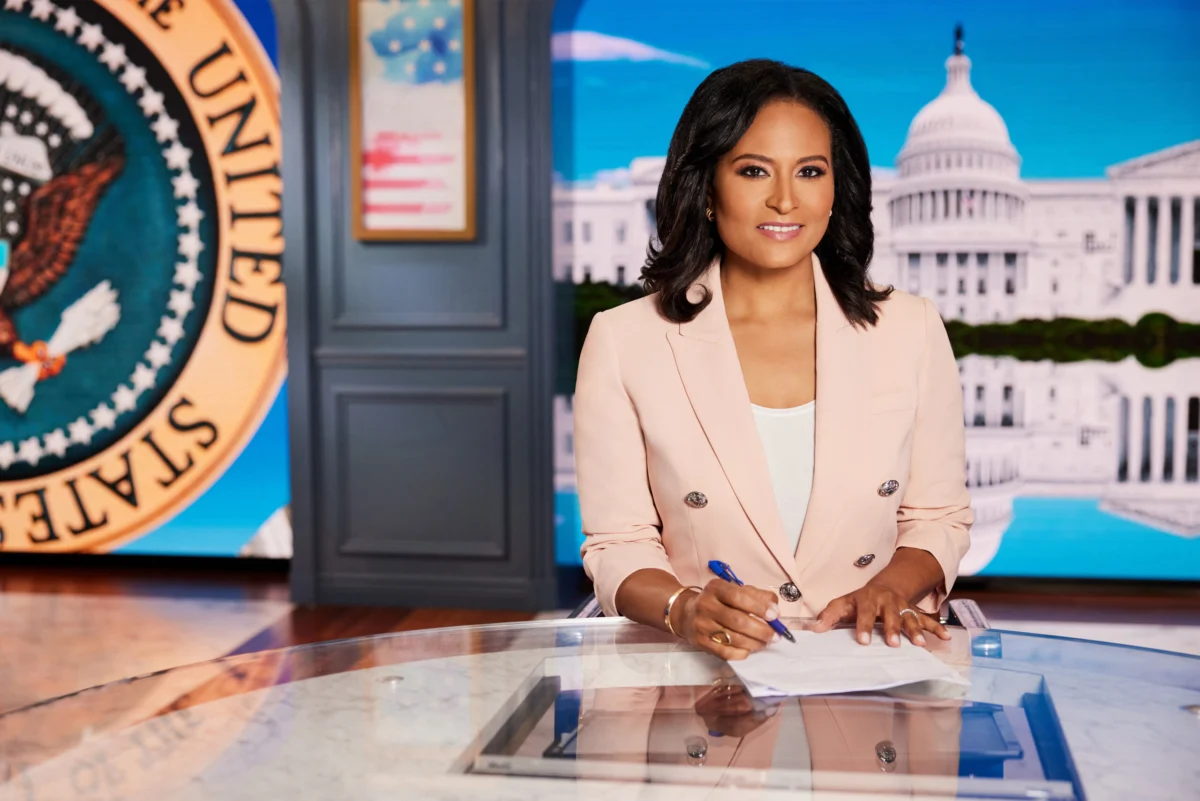
In a move that has ignited debate over free speech and the role of regulatory bodies in media, former President Donald Trump has called for the Federal Communications Commission (FCC) to investigate NBC News anchor Kristen Welker for remarks she made about the success of candidates he has endorsed. The controversy erupted after Trump, via his social media platform Truth Social, expressed outrage over comments Welker made during a local segment previewing her program, "Meet the Press," on NBC’s Washington D.C. affiliate, WRC.
The remarks that apparently drew Trump’s ire were part of a broader discussion about the upcoming midterm elections and Trump’s influence on the Republican party. Welker, in a preview segment with local anchors, described Trump’s endorsement record as yielding "mixed results." She elaborated by noting that while some Republican candidates backed by the former president had indeed lost in primary contests, she also acknowledged that Trump "is going to loom large over these midterms. There’s no doubt about that." These observations, presented as part of a journalistic preview of the political landscape, were interpreted by Trump as an unwarranted attack and a breach of journalistic impartiality.
Trump’s immediate reaction was to demand that Welker be "reported to the FCC for rebuke or punishment." This call for regulatory intervention raises significant questions about the boundaries of free expression and the potential for political pressure on media organizations. While the FCC, as a federal agency, does not have the direct authority to condemn individual journalists or impose penalties on them personally, it does possess the power to influence the companies that own broadcast stations and networks. In this instance, any FCC action would directly impact NBCUniversal, the parent company of NBC News and WRC, which is currently a unit of Comcast and slated for a future spin-off.
NBC News swiftly responded to Trump’s accusations, issuing a statement on Sunday afternoon that unequivocally stood by Welker. "Kristen is one of the best in the business and we stand by her," the statement read, asserting the network’s confidence in its anchor’s professionalism and integrity. It is crucial to note that Welker’s comments, which sparked Trump’s fury, were made during a local preview segment and did not appear in the actual broadcast of "Meet the Press" on Sunday. This distinction suggests a potential misinterpretation or selective outrage from the former president regarding the context of Welker’s remarks.
The FCC, particularly under the leadership of Chairman Brendan Carr during the Trump administration, has demonstrated a more assertive stance in recent years, engaging in regulatory actions that have been perceived by some as politically motivated. This current situation with Welker echoes previous instances where the FCC has found itself in legal and public relations battles with major media corporations.
One notable example is the ongoing entanglement with Walt Disney Co. and ABC. The FCC has ordered Disney to file renewal applications for ABC’s eight owned-and-operated stations significantly ahead of schedule. Disney, in its legal filings, has characterized these applications as being submitted "under protest in response to an unlawful, arbitrary, and unconstitutional order." This aggressive regulatory approach has led to accusations that the FCC is overstepping its mandate and potentially infringing upon the First Amendment rights of broadcasters.
Another program that has faced FCC scrutiny is ABC’s popular talk show "The View." The commission has launched investigations into whether the program has violated so-called "equal-time" election laws following the appearances of political figures. This probe was reportedly initiated after James Talarico, a Democratic Senate candidate from Texas, appeared on the show in February. Adding to the pressure, the FCC issued new guidance in January, stipulating that late-night and daytime hosts must provide equal airtime to political candidates from various parties, citing concerns that such programs might be operating along partisan lines. Disney and ABC have since filed a lawsuit in the U.S. District Court for the District of Columbia, alleging that the FCC’s actions are in violation of the First Amendment.
Trump’s relationship with Kristen Welker has historically been complex, characterized by a pattern of both engagement and public criticism. Many of the interviews Trump has granted to NBC News have been with Welker, and he has appeared on "Meet the Press" on multiple occasions to speak with her. This history of interaction suggests a degree of professional rapport, which makes his current public condemnation all the more striking. However, on Sunday, Trump not only called for FCC action but also publicly disparaged Welker, labeling her "the Unpopular ‘Hostess’ of the once great Meet the Press, now considered Meet the Fake Press." This personal attack further underscores the contentious nature of the exchange.
To assess the accuracy of Welker’s "mixed results" observation, it is pertinent to examine the electoral outcomes of some of the candidates Trump has backed. Her assessment, grounded in factual reporting, appears to be accurate. For instance, Randy Feenstra, a Republican candidate for the Iowa governor’s seat, and Mike Lindell, the MyPillow CEO who sought the Republican nomination for Minnesota’s gubernatorial race, both faltered in their respective primary contests. More recently, however, there have been instances where Trump-backed candidates have seen success. Senator Darline Graham, who has served as an interim replacement for her late brother, former South Carolina Senator Lindsey Graham, secured a primary victory for the Senate seat in her home state, demonstrating that Trump’s influence can still yield positive results for his chosen candidates in certain races.
The broader context of this incident involves the increasing politicization of media regulation and the use of regulatory bodies as tools for political leverage. The FCC, designed to oversee broadcast communications and ensure a diversity of voices, has found itself at the center of debates about media bias and the fairness of political coverage. Trump’s call for FCC action against Welker, while perhaps intended to pressure journalists perceived as critical, highlights a potential danger of weaponizing regulatory powers against the press.
The First Amendment to the U.S. Constitution guarantees freedom of speech and the press, principles that are fundamental to a democratic society. Any action by a government agency that could be construed as an attempt to stifle journalistic commentary, even if framed as regulatory oversight, raises concerns about the erosion of these vital freedoms. The legal challenges brought by Disney and ABC against the FCC underscore the ongoing tension between regulatory oversight and constitutional protections for media organizations.
Furthermore, the nature of Welker’s comments – a factual observation about electoral outcomes coupled with an assessment of Trump’s ongoing political relevance – falls squarely within the purview of legitimate political journalism. News organizations and their anchors routinely analyze the impact of political figures on elections, and such analysis is a cornerstone of informed public discourse. To suggest that such commentary warrants regulatory punishment is a significant departure from established norms of press freedom.
The "mixed results" that Welker mentioned are not a fringe opinion but a reflection of the complex and often unpredictable nature of electoral politics. While Trump remains a dominant figure in the Republican party, his endorsements do not automatically guarantee victory. Primary elections, in particular, often serve as testing grounds for party factions and can result in the defeat of candidates favored by a national party leader, even one as influential as Trump. His ability to mobilize voters and influence nominations is undeniable, but it is not absolute, and acknowledging this reality is a journalistic responsibility.
The FCC’s role, as defined by Congress, is to regulate interstate and international communications by radio, television, wire, satellite, and cable. Its mandate includes ensuring that broadcasters operate in the public interest, which encompasses a wide range of responsibilities, from spectrum allocation to content oversight in specific contexts, such as indecency or political broadcasting rules. However, the notion of the FCC punishing a news anchor for commentary on election results treads into a delicate area. The commission is not designed to be an arbiter of journalistic opinion or to police the accuracy of political analysis.
The potential consequences for NBCUniversal, should the FCC decide to pursue any form of action, could range from official warnings and fines to more severe sanctions that could impact the company’s broadcast licenses. Given the current legal climate and the ongoing First Amendment challenges, any punitive action by the FCC against a major network like NBC would likely face intense legal scrutiny and public backlash.
In conclusion, the controversy surrounding Kristen Welker’s remarks and Donald Trump’s call for FCC action serves as a stark reminder of the ongoing battles over media freedom, the interpretation of regulatory powers, and the influence of political figures on journalistic discourse. While Trump’s supporters may view Welker’s comments as biased, her observations appear to be grounded in factual electoral data. The potential for regulatory bodies to be used as instruments of political pressure remains a significant concern for those who champion a free and independent press. NBC News’ unequivocal support for Welker signals a commitment to journalistic integrity, even in the face of intense political pressure. The ultimate outcome of this situation, and any potential FCC involvement, will likely have far-reaching implications for the relationship between government, media, and the public’s right to information.
