
 By admin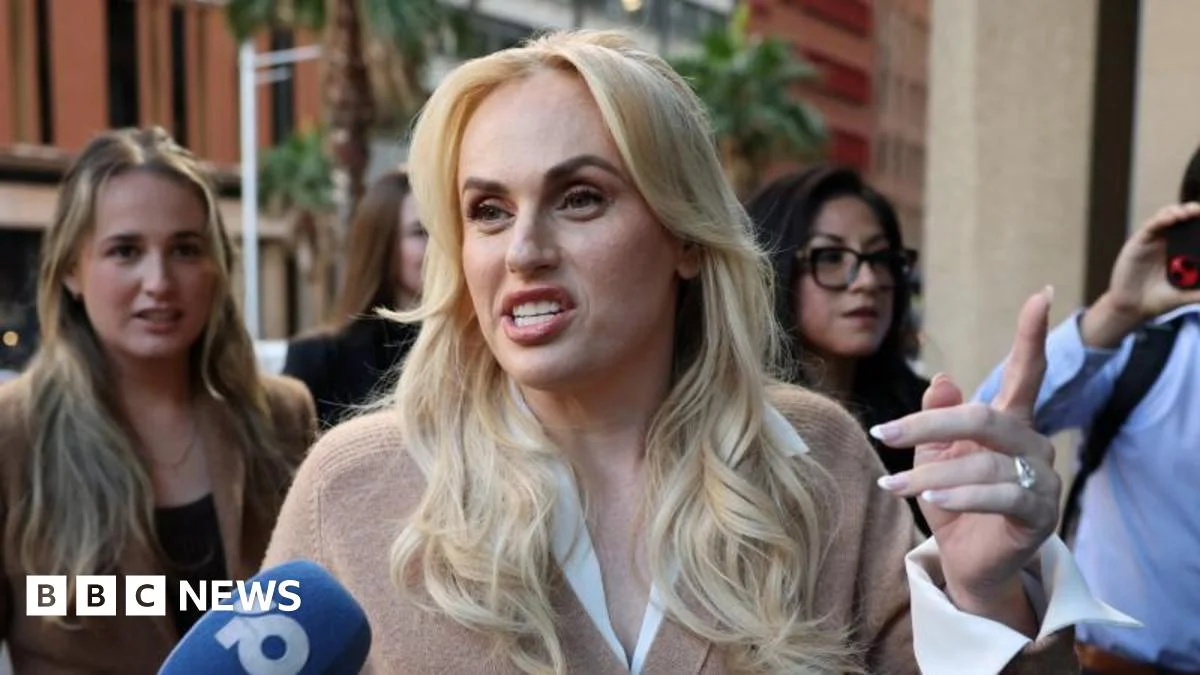
In a significant legal victory, acclaimed Australian actress Rebel Wilson has been definitively cleared of defamation accusations leveled against her by emerging talent Charlotte MacInnes. A Sydney court has found that Wilson’s Instagram posts did not unlawfully harm MacInnes’s reputation, bringing a complex and emotionally charged legal battle to a close. MacInnes, who had a role in Wilson’s directorial debut film "The Deb," had sued the "Bridesmaids" and "Pitch Perfect" star, alleging that public statements made on Instagram in 2024 and 2025 had severely damaged her professional standing and personal integrity.
The core of the dispute revolved around Wilson’s allegations that MacInnes had retracted a complaint of sexual harassment against a film producer, a decision Wilson suggested was motivated by a desire to advance her burgeoning career. MacInnes vehemently denied these accusations, framing them as baseless and damaging fabrications. On Wednesday, Justice Elizabeth Raper of the Sydney court delivered a comprehensive judgment, dismissing MacInnes’s case. The judge concluded that the implication within Wilson’s posts – that MacInnes had altered her account of a particular incident – did not meet the legal threshold for defamation. Consequently, Justice Raper ordered MacInnes to bear the legal costs incurred by Wilson in defending the lawsuit.
The legal proceedings, which spanned three weeks earlier this year, delved into the intricate details of an incident that occurred in September 2023. The genesis of the controversy can be traced back to a social gathering at Bondi Beach. MacInnes, alongside Amanda Ghost, one of the producers of Wilson’s film, embarked on a swim. The frigid waters of Bondi Beach triggered an unexpected allergic reaction in Ghost, prompting the pair to retreat to the producer’s rented luxury apartment. While Ghost took a shower, MacInnes prepared a bath for her. In a turn of events that would later become a focal point of the legal scrutiny, MacInnes herself entered the bath to warm up, with Ghost joining her shortly thereafter. Crucially, both women were clad in their swimsuits during this shared bathing experience.
In her ruling, Justice Raper offered a candid observation on the bath incident, acknowledging its unusual nature. "To say that the circumstance surrounding how they came to be in the bath are unusual would be an understatement," the judge remarked to the assembled court. Beyond this observation, Justice Raper’s legal assessment focused on the absence of evidence proving significant harm. She found that MacInnes had failed to establish that Wilson’s Instagram posts had caused, or were likely to cause, serious harm to her reputation, a critical element required for a successful defamation claim in Australia.
Moments after the court’s decision was announced, Rebel Wilson took to her own Instagram account to share her reaction. Her post conveyed a sense of profound personal growth and resilience forged through the arduous legal process. "The process has taught me a lot," Wilson stated, her words resonating with a mixture of relief and introspection. "It has tested me, but it has also reinforced something I’ve always believed. I want to live my life standing up for what I believe is right, while continuing to create work that brings people joy." Wilson extended her gratitude to her extensive network of supporters, expressing her profound relief that this "chapter has reached its conclusion." She also paid tribute to Justice Raper and the Australian legal system, articulating her "utmost respect" for its processes.
The BBC has reached out to Charlotte MacInnes for a statement regarding the court’s decision, but as of this report, no comment has been received.
During the intensive three-week trial, detailed accounts emerged regarding the initial interactions between Wilson and MacInnes following the Bondi Beach incident. Wilson testified that MacInnes had approached her the day after the bath, stating, "Amanda asked me to have a bath and shower with her and it made me feel uncomfortable." This initial conversation prompted Wilson to contact MacInnes again for further clarification, as she expressed concerns about the reported discomfort. Following this second conversation, Wilson sent a text message to Amanda Ghost, which was presented as evidence in court. The text read: "Charlotte says all good. She just meant ‘it was a bizarre situation’ not that she felt personally uncomfortable." This exchange suggested a potential misinterpretation or recalibration of MacInnes’s initial feelings, a point of contention that played a role in the unfolding legal narrative.
Lawyers representing Charlotte MacInnes had vehemently contested Wilson’s assertions throughout the trial, labeling them as "malicious concoctions." The defense team also presented claims that the Hollywood star had orchestrated the creation of a "smear website" intended to damage Ghost’s reputation, allegations that Wilson categorically denied. In contrast, Wilson’s legal counsel argued that MacInnes, who had graduated from acting school in Western Australia in 2021, had not suffered any demonstrable harm from Wilson’s Instagram posts. They pointed to MacInnes’s recent signing of a record deal as evidence of her continued career momentum, suggesting that her professional trajectory remained unaffected by the alleged defamation. This counter-argument aimed to undermine the central premise of MacInnes’s lawsuit – that her reputation had been irreparably damaged.
The legal proceedings also provided context on the broader industry landscape and the pressures faced by young actors. MacInnes, as a recent graduate, was in a crucial phase of establishing her career, making any perceived reputational damage potentially more impactful. Wilson, a seasoned and globally recognized figure, found herself in the unfamiliar position of being accused of leveraging her platform to harm a less established colleague. The case highlighted the complex interplay between personal relationships, professional ambitions, and the unforgiving nature of public scrutiny in the digital age.
The court’s decision to dismiss the defamation claim rests on a foundational legal principle: the burden of proof lies with the plaintiff to demonstrate that the allegedly defamatory statements caused serious harm. In this instance, Justice Raper found that MacInnes had not met this high evidentiary bar. The judge’s finding that the imputation of changing her story was not defamatory suggests that, while potentially unflattering or awkward, Wilson’s statements did not cross the legal line into actionable defamation. This distinction is crucial in defamation law, which seeks to balance the right to freedom of expression with the protection of individual reputations.
Rebel Wilson’s career has been marked by her distinctive comedic talent, her willingness to tackle challenging roles, and her outspoken advocacy for body positivity and inclusivity in Hollywood. Her involvement in "The Deb," a project that offered her a chance to direct and showcase new talent, underscores her commitment to nurturing emerging artists. The legal dispute, therefore, cast a shadow over this creative endeavor, drawing attention away from the film itself and onto the personal conflict between its star and a cast member.
Charlotte MacInnes, by pursuing this legal action, sought to protect her burgeoning career and clear her name. Her allegations of a fabricated smear campaign and malicious intent on Wilson’s part painted a picture of a powerful figure allegedly wielding her influence to suppress a younger actress. The court’s dismissal of these claims, however, suggests that the evidence presented did not substantiate these serious accusations.
The financial implications of the ruling are also noteworthy. The order for MacInnes to pay Wilson’s legal costs represents a significant financial burden, a common outcome in defamation cases where the plaintiff is unsuccessful. This financial penalty serves as a further deterrent against frivolous or unsubstantiated legal challenges.
The case serves as a stark reminder of the legal ramifications of public statements, particularly in the age of social media. While platforms like Instagram offer unparalleled reach, they also present a heightened risk of legal repercussions if statements are deemed defamatory. The nuances of defamation law, including the requirement to prove serious harm, are critical for individuals to understand before making public pronouncements that could impact others.
In conclusion, the Sydney court’s ruling in favor of Rebel Wilson marks the end of a contentious legal saga. The decision affirms the legal protections afforded to individuals against unsubstantiated defamation claims and underscores the high burden of proof required to succeed in such cases. For Rebel Wilson, it represents a vindication and an opportunity to refocus on her creative pursuits, while for Charlotte MacInnes, the outcome presents a significant setback and a costly legal defeat. The case, however, has shed light on the complexities of professional relationships within the entertainment industry and the enduring power of the legal system to adjudicate disputes.
