
 By admin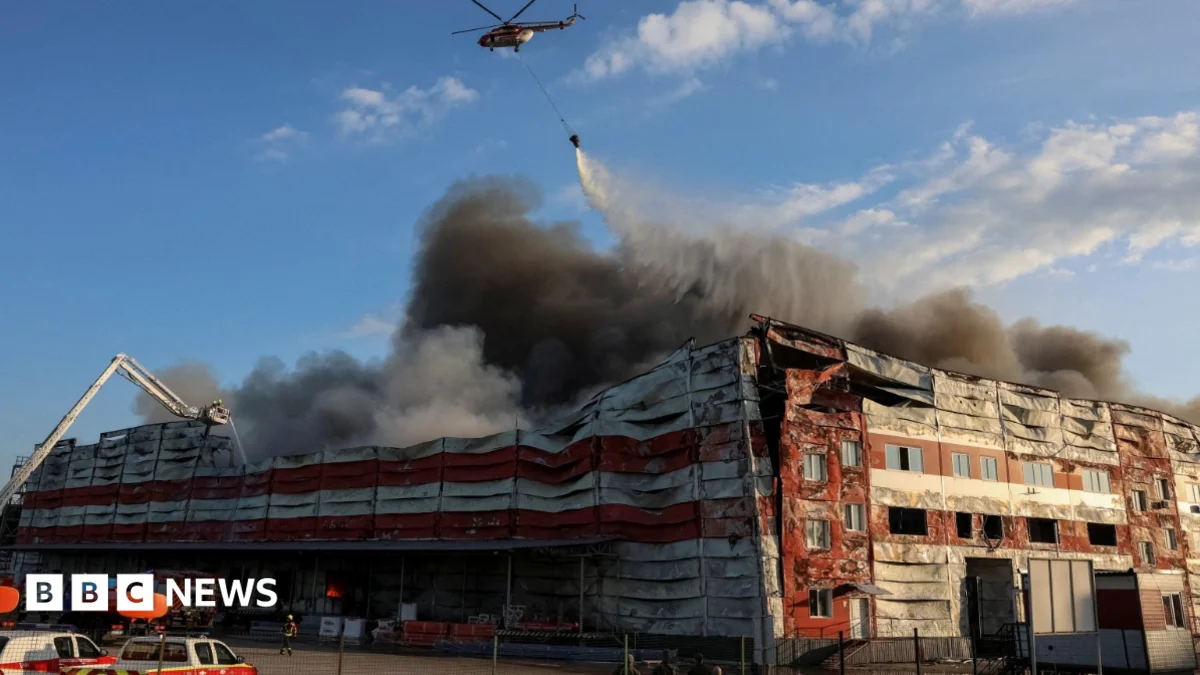
In a brutal escalation of the ongoing conflict, Russia unleashed a devastating wave of ballistic missile and drone attacks across Ukraine, leaving a trail of destruction and claiming the lives of at least eight civilians, with dozens more sustaining injuries. The relentless assault targeted critical infrastructure and populated areas, underscoring the increasingly indiscriminate nature of Moscow’s military operations. Ukrainian officials reported that the city of Kharkiv bore the brunt of the aerial onslaught, with four individuals perishing in the north-eastern hub. The capital, Kyiv, also reeled from the attacks, with an elderly woman among the fatalities. Further casualties were reported in the southern city of Zaporizhzhia, where two people lost their lives, and in Sumy, in the north-east, which recorded one fatality.
Ukrainian President Volodymyr Zelensky, visibly shaken by the scale of the violence, described the raid on Kyiv as "one of the most massive ballistic attacks" since Russia initiated its full-scale invasion of Ukraine in February 2022. This assertion highlights the strategic shift by Moscow to target Ukrainian urban centers with increasingly sophisticated and destructive weaponry. The sheer volume and type of munitions employed, including ballistic missiles capable of reaching their targets with alarming speed and precision, pose a significant challenge to Ukraine’s air defense capabilities.
In a strategic countermove, Ukraine announced it had successfully targeted Russian energy infrastructure, striking three oil tankers in the Black Sea and three oil depots in the southern Stavropol region. President Zelensky framed these operations as a direct response, stating they targeted assets that "finance Russian aggression." This demonstrates Ukraine’s determination to disrupt Russia’s economic war machine, particularly its reliance on oil and gas revenues to fund its military operations. The targeting of oil facilities is a calculated effort to inflict economic pain on Russia and limit its ability to sustain the protracted conflict.
The Ukrainian military reported that its air defense systems were put to the ultimate test, managing to intercept 18 out of 41 incoming missiles over Kyiv. Furthermore, an astonishing 108 drones were also neutralized, indicating the sheer scale of the coordinated Russian assault. The intensity of the drone attacks, often employed in swarms to overwhelm defenses, has become a hallmark of Russian tactics. The ability of Ukrainian air defenses to repel a significant portion of these threats is a testament to their resilience and the ongoing support from international partners providing advanced weaponry and training.
In Kharkiv, the regional head Oleh Syniehubov provided grim details of the attack on a postal terminal in the city’s suburbs. Four men, aged between 24 and 62, were killed in the explosion, with several others sustaining severe injuries, some in critical condition. The targeting of civilian logistics hubs suggests a deliberate attempt to disrupt supply chains and sow further fear and chaos among the civilian population. Such attacks not only result in immediate casualties but also have long-term economic and social consequences.
President Zelensky, in a message shared on Telegram, provided a stark overview of Russia’s recent offensive capabilities. He revealed that over the past week alone, Russia had deployed approximately 1,450 strike drones, more than 1,640 guided bombs, and 99 missiles of various types against Ukraine. This staggering figure underscores the relentless nature of Russia’s aggression and the immense pressure Ukraine faces in defending its territory and its people. The consistent use of a diverse array of weaponry, from cheap and readily available drones to sophisticated ballistic missiles, highlights Russia’s commitment to a protracted war of attrition.
Zelensky’s Telegram post also detailed Ukraine’s retaliatory strikes, emphasizing the precision and strategic importance of these operations. He announced that units of the Security Service of Ukraine (SBU) had simultaneously struck three oil depots in the Stavropol region, while units of the Armed Forces of Ukraine targeted another fuel-sector facility in the same region. Furthermore, he confirmed "precise hits on three Russian ‘shadow fleet’ tankers were recorded in the Black Sea." He expressed gratitude to all units involved, stating they are "helping to spread the realization within Russia that this war must be brought to an end." This statement reveals a dual objective: to degrade Russia’s military capacity and to influence public opinion within Russia by demonstrating the tangible costs of the war.
The Caspian Pipeline Consortium, a vital artery for transporting Kazakhstan’s Caspian oil to Russia’s Black Sea port of Novorossiysk, confirmed that its terminal had been hit. The consortium reported that two tankers were damaged, leading to the suspension of oil loading operations. Fortunately, there were no injuries or oil spills reported in this specific incident, but the disruption highlights the vulnerability of critical energy infrastructure in the region. The governor of Stavropol also confirmed that a drone attack had caused a fire in an industrial park, further underscoring the widespread impact of these cross-border strikes.
The recent strikes on Kyiv employed a formidable array of Russian weaponry, including Iskander ballistic missiles and hypersonic Zircon missiles, in addition to 125 drones, according to the Ukrainian air force. The deployment of hypersonic missiles, notoriously difficult to intercept, represents a significant escalation and a direct challenge to Western-supplied air defense systems. The sheer technological sophistication of these weapons underscores Russia’s efforts to maintain a strategic advantage and inflict maximum damage.
On Sunday, Kyiv Mayor Vitaliy Klitschko reported that both residential and non-residential buildings had sustained damage, including a supermarket and a dormitory. Firefighters were engaged in arduous efforts to combat blazes at two warehouses, indicating the widespread nature of the destruction. Ukraine’s emergencies ministry also reported that a logistics hub in the Bucha district, near Kyiv, had been hit, resulting in injuries to two people. The cumulative impact of these strikes on civilian infrastructure paints a grim picture of the daily reality for millions of Ukrainians.
These latest overnight strikes followed a significant Ukrainian drone operation that targeted and destroyed two warehouses belonging to Russia’s largest online retailer, Wildberries. This operation resulted in the deaths of eight people and caused major fires. Seven deaths and 25 injuries occurred at a facility in Tambov, a city located approximately 475 kilometers (295 miles) south-east of Moscow. Another Wildberries warehouse in Elektrostal, near the capital, experienced one death and 37 injuries. These Ukrainian strikes on Russian commercial infrastructure highlight a retaliatory strategy aimed at mirroring Russia’s attacks on Ukrainian civilian targets.
President Zelensky, speaking on Saturday, explicitly stated that Ukraine’s operations were a direct response to "Russian strikes on our civilian infrastructure and on our cities and communities." This acknowledgment of a tit-for-tat strategy suggests a dangerous cycle of escalation, where each side seeks to inflict damage on the other in response to previous attacks. Wildberries, often likened to the Russian equivalent of Amazon, is a significant commercial entity, and its disruption has economic implications for Russia. The RWB group, which includes Wildberries and an advertising company, was valued at approximately $12.6 billion (£9.3 billion) by Forbes Russia in 2026, indicating its substantial economic footprint.
In recent months, Ukraine has demonstrably intensified its long-range drone attacks targeting Russia’s critical energy infrastructure, leading to widespread fuel shortages and disruptions. Earlier in the month, Kyiv claimed that nearly 43% of Russia’s oil refining capacity had been "disabled" as a direct result of these attacks. While the BBC has not independently verified this specific figure, the consistent reporting of successful Ukrainian strikes on oil refineries suggests a significant impact on Russia’s energy sector.
Ukraine maintains that Russian oil and gas facilities are legitimate targets, arguing that Moscow heavily relies on fossil fuel exports to finance its full-scale invasion. This strategic rationale is based on the principle of economic warfare, aiming to cut off the financial resources that sustain Russia’s military machine. However, this has also prompted Russia to intensify its attacks on Ukrainian cities, leading to increased pleas from Kyiv for enhanced supplies of ballistic missile interceptors from its European allies.
"Protection against ballistic missiles is our constant and top priority right now," President Zelensky stated on Sunday. "Interceptors are needed every day." This urgent plea underscores the critical need for advanced air defense systems to counter the escalating threat posed by Russian ballistic missile attacks. The ongoing conflict highlights the urgent need for a sustained and coordinated international effort to provide Ukraine with the necessary defensive capabilities to protect its citizens and infrastructure from further aggression. The human cost of this conflict continues to mount, demanding a comprehensive and sustained response from the international community.
