
 By admin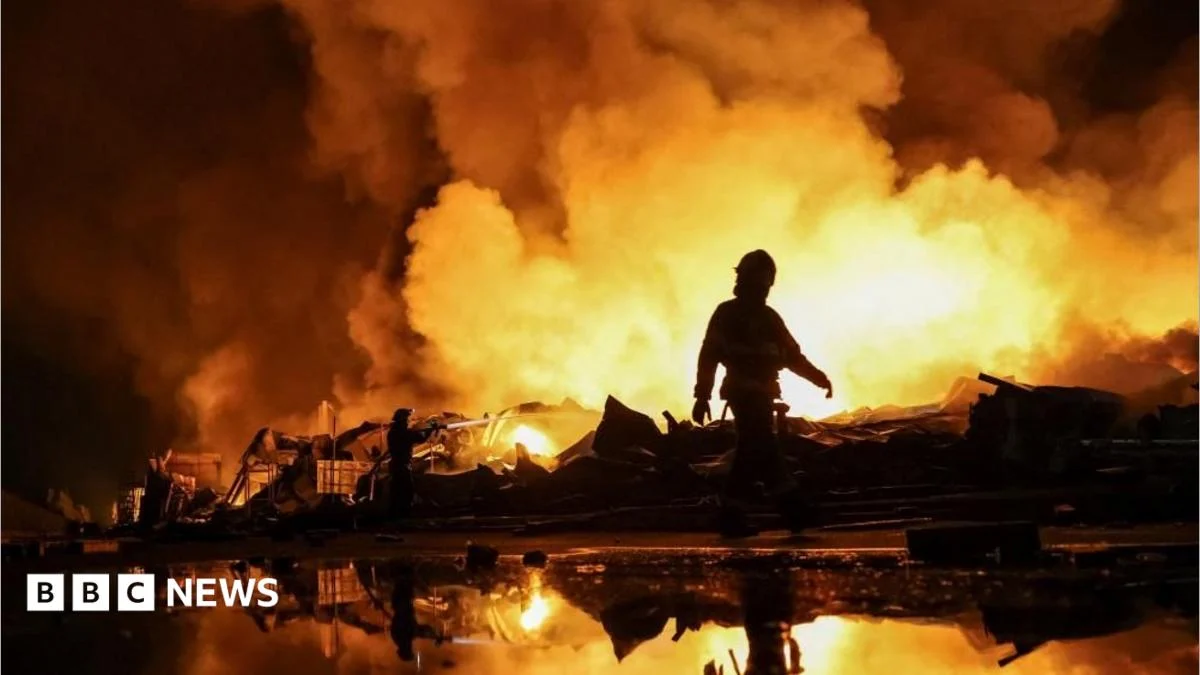
In a devastating overnight assault, Russia unleashed a torrent of ballistic missiles and drones upon Ukraine, resulting in one of the deadliest strikes to hit Kyiv this year. At least 14 civilians were confirmed dead and a further 22 sustained injuries in the coordinated attack that commenced after midnight on Wednesday, plunging the Ukrainian capital and its surrounding regions into a night of terror and destruction. The sheer scale and ferocity of the barrage underscored a marked escalation in Moscow’s aerial offensive against Ukrainian urban centers.
Timur Tkachenko, the head of Kyiv’s military administration, painted a grim picture of the ongoing assault, stating, "The enemy is once again massively attacking the Kyiv region." His pronouncement came as air raid sirens wailed for over an hour, a chilling soundtrack to the relentless waves of ballistic missiles that slammed into the city and its outskirts. The impact of these high-velocity projectiles was severe, with Kyiv’s military administration reporting significant damage to residential buildings and crucial warehouse facilities, exacerbating the humanitarian crisis and disrupting essential supply chains.
The human cost of this brutal attack was tragically evident in the distribution of casualties. Tkachenko detailed that nine individuals lost their lives in the Boryspil district, a significant suburban area of Kyiv. Further west, the Bucha district, a region still scarred by the atrocities of the early stages of the full-scale invasion, mourned the loss of four more civilians. The Fastiv district, located southwest of the capital, also reported one fatality, bringing the total death toll to a staggering 14. The injured, numbering at least 22, included four individuals in critical condition, raising fears that the final casualty count could rise further.
The relentless nature of these ballistic missile attacks has amplified Ukraine’s urgent calls for more advanced air defense systems. Kyiv has repeatedly appealed to its international allies, particularly the United States, for an increased supply of US-made Patriot missile interceptors. These sophisticated systems are considered crucial for defending against the high-speed, trajectory-altering ballistic missiles that Russia has increasingly employed, posing a significant challenge to existing Ukrainian air defense capabilities. The effectiveness of the Patriot system in intercepting such threats has been well-documented, making its deployment a strategic imperative for Ukraine.
In response to the Ukrainian claims and the international outcry, the Russian Ministry of Defence offered its own justification for the strikes. It asserted that its forces had successfully targeted "logistics hubs and supply centres" in Kyiv and the surrounding region. According to the Russian statement, these targeted facilities were allegedly involved in "the storage, delivery of various weapons and military supplies, as well as in the production and distribution of unmanned aerial vehicles." This narrative positions the strikes as military operations aimed at degrading Ukraine’s war-fighting capabilities, a claim that Kyiv vehemently disputes, pointing to the civilian casualties as evidence of deliberate targeting of non-military infrastructure.
The Russian military further elaborated on its actions, claiming to have also struck three cargo vessels near the Black Sea port of Odesa. Moscow stated that these vessels were "transporting weapons and military equipment," alleging they were being used to support the Ukrainian war effort. This assertion, if true, would indicate a further expansion of Russia’s operational scope, aiming to disrupt maritime supply lines that are vital for Ukraine’s continued resistance. The Black Sea has been a strategic theater of conflict since the initial invasion, with both sides vying for control of its vital shipping lanes.
The immediate aftermath of the strikes in Kyiv was marked by a desperate search for survivors. Kyiv Mayor Vitali Klitschko reported on Telegram that there were grave concerns that individuals could be trapped beneath the rubble of collapsed buildings in the city center. The scale of the destruction, particularly to residential areas, has compounded the trauma and grief experienced by the capital’s inhabitants. Klitschko’s updates, often delivered with a palpable sense of urgency and sorrow, provided a direct and personal account of the unfolding crisis for the city’s residents.
Adding to the grim assessment, Kyiv’s military administration issued a stark accusation: "The enemy is once again deliberately striking civilians and civilian infrastructure." This statement directly contradicts Russia’s assertions of targeting military assets and underscores the growing conviction within Ukraine and among its allies that Moscow is intentionally employing tactics that result in widespread civilian harm. The deliberate targeting of civilian populations or infrastructure is a war crime under international law, and such accusations carry significant weight in the ongoing geopolitical and legal ramifications of the conflict.
This latest deadly assault on Kyiv is part of a broader pattern of intensified Russian attacks on the Ukrainian capital in recent weeks. The frequency and intensity of these strikes suggest a strategic shift by Moscow, possibly aimed at demoralizing the Ukrainian population and overwhelming its air defenses. Concurrently, Ukraine has also escalated its own offensive operations, including an increase in attacks on Russian civilian infrastructure, such as power facilities and logistical centers. This tit-for-tat escalation highlights the increasingly attritional nature of the conflict, with both sides seeking to inflict damage on the other’s war-making capacity and domestic morale.
The targeting of warehouses has become a particularly notable aspect of this recent wave of attacks. On Tuesday morning, the Moscow region witnessed strikes that resulted in the deaths of five people and injured 10 others, in what was described as the most recent significant attack on warehouses. These incidents, though occurring on Russian territory, mirror the pattern of strikes observed in Ukraine, suggesting a reciprocal strategy of disrupting supply lines and logistical operations. The Russian e-commerce giant Wildberries was specifically mentioned as a target in one of these recent Ukrainian strikes, indicating a broader scope beyond purely military supply depots.
The day prior to the Kyiv missile barrage, Russian officials reported a separate deadly incident in the southern Krasnodar region. A drone attack on a busy beach resulted in the deaths of seven people and injured 58 others. While the attribution of this attack remains contested, it underscores the pervasive threat of aerial assaults across a wide geographical area within Russia.
In a separate but related development that has fueled outrage, Ukraine expressed deep consternation over a video that appeared to show a man being chased by a drone in Kherson. Kyiv officials condemned this incident as a deliberate "hunt" and "safari" targeting civilians, further emphasizing their allegations of Russia’s disregard for civilian life. Such acts, if verified, would represent a particularly egregious violation of humanitarian principles and could have significant implications for the legal accountability of those involved.
Despite the mounting evidence and accusations from both sides, Russia has consistently denied deliberately targeting civilians. Moscow maintains that its military operations are conducted with precision and are aimed exclusively at military objectives. However, the consistent reporting of civilian casualties and damage to civilian infrastructure by independent observers and international organizations often casts doubt on these official Russian pronouncements. The conflict remains a complex web of claims and counter-claims, with the human cost borne by the civilian populations caught in the crossfire. The devastating strikes on Kyiv serve as a stark reminder of the ongoing brutality of the war and the urgent need for a sustainable resolution to the conflict.
