
 By admin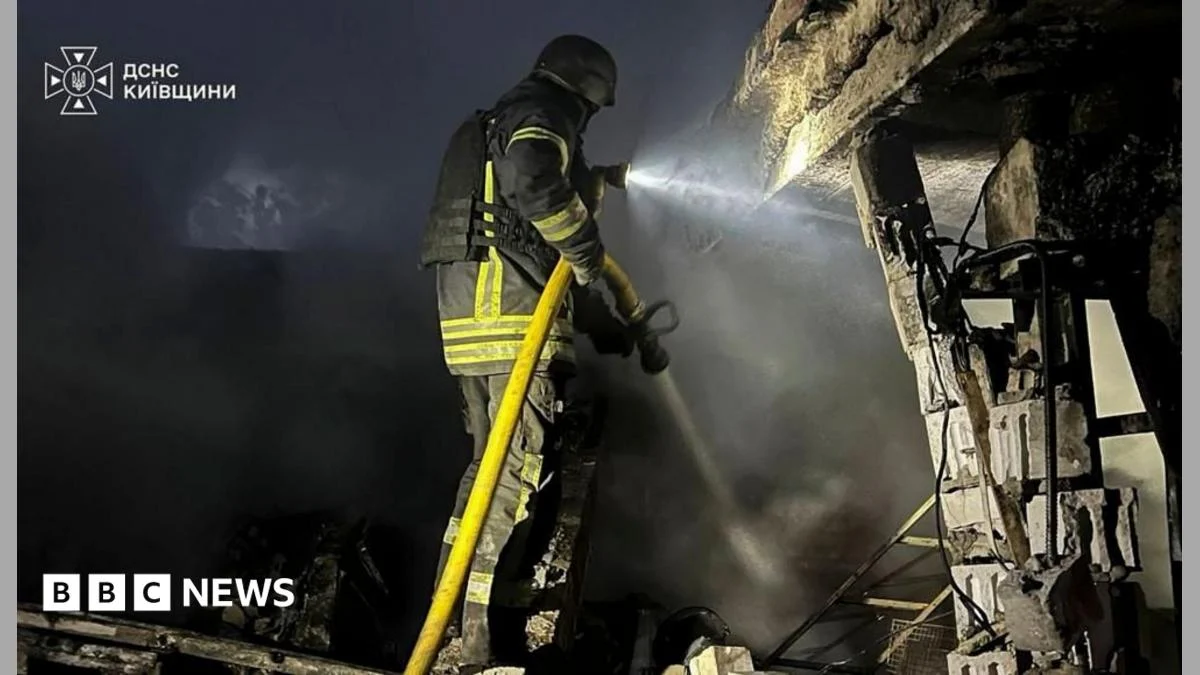
In a brutal escalation of its long-standing campaign against Ukraine, Russia launched its most significant and widespread attack on the nation’s energy infrastructure since the spring, with the capital Kyiv and its surrounding region bearing the brunt of the relentless assault. Ukrainian Prime Minister Serhiy Koretskyi confirmed the scale of the offensive, painting a grim picture of an overnight barrage that reverberated across multiple regions. The attacks, which commenced under the cloak of darkness, resulted in a tragic loss of life, with at least six individuals confirmed dead and an additional 33 injured nationwide, according to preliminary reports from local authorities. Among the fatalities was a young child in the Kyiv region, a stark reminder of the civilian toll exacted by this renewed wave of aggression.
The immediate and most tangible impact of the strikes was the disruption of power supplies, plunging thousands of homes into darkness. DTEK, Ukraine’s largest private energy firm, reported that power had been restored to approximately 8,000 households in the capital following what it described as "a difficult night" for Kyiv. This assertion of restoration, however, underscores the severity of the damage inflicted. The Russian Ministry of Defense, in a statement, claimed responsibility for targeting the Trypilska power station, a critical facility identified as the primary electricity supplier for Kyiv. However, Ukrainian officials have yet to officially confirm this specific claim, leaving a degree of ambiguity surrounding the precise extent of damage to this vital installation.
Prime Minister Koretskyi, in a somber address delivered via Telegram, articulated the ongoing nature of Russia’s campaign, stating, "Since the summer, there has effectively not been a single day without enemy attacks on our energy infrastructure. However, a mass and combined attack of this scale has occurred for the first time since the end of the last heating season." This declaration highlights a strategic shift in Russia’s tactics, moving from a sustained but perhaps less concentrated offensive to a coordinated, large-scale assault designed to cripple Ukraine’s energy resilience.
The specter of a protracted Russian assault on Ukraine’s energy grid has been a recurring and deeply unsettling reality for the nation. Each winter since Russia’s full-scale invasion in February 2022 has been marked by a deliberate and systematic campaign to degrade and destroy Ukraine’s power infrastructure, aiming to plunge the country into darkness and cold, thereby undermining civilian morale and hindering the war effort. This latest offensive appears to be the ominous realization of these chilling predictions for the current winter.
Beyond the energy sector, the ramifications of this multifaceted attack extended to other critical areas. Prime Minister Koretskyi revealed that a total of 11 regions across Ukraine were subjected to overnight strikes. The targets were not confined to power facilities; residential buildings, social infrastructure, civilian enterprises, and railway networks also fell victim to the onslaught. This broad-spectrum targeting suggests a deliberate attempt by Russia to inflict maximum damage and sow widespread disruption across Ukrainian society.
President Volodymyr Zelensky, in his own assessment of the situation, confirmed that critical infrastructure in the Zhytomyr, Mykolaiv, Kirovohrad, and Rivne regions had been directly impacted. This geographical spread of attacks indicates a nationwide scope, aiming to overwhelm Ukraine’s defenses and recovery efforts. As of Wednesday, the Ministry of Energy reported that households in several key regions, including Kyiv, Dnipropetrovsk, Donetsk, Sumy, and Kharkiv, were still grappling with power outages, underscoring the lingering effects of the strikes.
In response to the diminished electricity supplies, the state-owned grid operator Ukrenegro issued a directive advising residents to refrain from using high-power electrical appliances between the hours of 10:00 AM and 4:00 PM local time. This measure, while necessary to manage the strained grid, serves as a stark illustration of the severity of the energy deficit created by the Russian attacks. The recommendations for conservation and the visible impact on daily life paint a clear picture of the challenges Ukraine faces in maintaining its essential services under sustained bombardment.
In the capital itself, the dawn broke not with the usual sounds of urban life, but with a thick, acrid pall of smoke blanketing the city. The night had been a symphony of explosions, a terrifying soundtrack to the aerial assault. Even as daylight arrived, an air raid alert remained in effect, and the distant, sporadic crackle of air defense gunfire served as a constant, unsettling reminder of the ongoing threat. Residents in numerous districts were advised to keep their windows shut, a precautionary measure against the pervasive smoke that hung heavy in the atmosphere, obscuring the sky and adding a dystopian veil to the cityscape.
The human cost of this brutal offensive was tragically brought into sharp focus by the discovery of a child’s body beneath the rubble of a destroyed house in the Kyiv region, as confirmed by regional governor Timur Tkachenko. This heartbreaking detail underscores the indiscriminate nature of the attacks and the profound suffering inflicted upon innocent civilians. Kyiv Mayor Vitaly Klischko reported that three people had lost their lives in the capital alone, including a Ukrainian utility company worker who was tragically killed at a warehouse building. It remains unclear whether the child found in the region was included in the Mayor’s count for the capital.
The grim tally of casualties extended beyond Kyiv. In the northeastern Sumy region, governor Oleh Hryhorov confirmed the deaths of two individuals, while in the Mykolaiv region, acting governor Heorhiy Reshetilov reported another fatality. These figures, while tragic, represent only the confirmed deaths, and the full extent of the human tragedy may take time to fully ascertain as rescue and recovery efforts continue.
The current wave of attacks represents a significant escalation in Russia’s military strategy, which has been characterized by a sustained campaign to destabilize and weaken Ukraine since President Vladimir Putin launched a full-scale invasion in 2022. The ongoing conflict has resulted in Russia currently controlling approximately 20% of Ukrainian territory, a significant territorial gain that underscores the protracted and devastating nature of this war. The deliberate targeting of civilian infrastructure, particularly energy facilities, is a tactic designed to inflict maximum hardship on the Ukrainian population, potentially aiming to break their will to resist and to create conditions that could favor a Russian military advantage.
The international community has largely condemned Russia’s actions, with many nations providing substantial military, financial, and humanitarian aid to Ukraine. However, the effectiveness of these measures in deterring Russia’s aggressive posture remains a critical question. The current attacks on energy infrastructure raise concerns about Ukraine’s ability to withstand the winter months, a period that could be made significantly more challenging by widespread power outages and the potential for heating system failures.
The strategic implications of these attacks are manifold. By targeting energy infrastructure, Russia aims to cripple Ukraine’s industrial capacity, disrupt its economy, and create a humanitarian crisis that could further strain its resources and its international support. It also serves as a tactic to undermine Ukrainian morale and to create internal divisions, potentially exploiting any public frustration with the government’s inability to fully protect its citizens from such assaults.
Furthermore, the attacks on energy infrastructure have broader geopolitical implications. They highlight the interconnectedness of global energy markets and the potential for regional conflicts to have far-reaching consequences. The disruption of energy supplies can lead to price volatility, increased reliance on alternative energy sources, and a renewed focus on energy security for nations worldwide.
The resilience of the Ukrainian people and their determination to resist Russian aggression have been a defining feature of this conflict. However, the sustained and escalating attacks on their essential infrastructure pose a severe test of that resilience. The coming weeks and months will be crucial in determining Ukraine’s ability to repair and protect its energy grid, and to mitigate the devastating impact of Russia’s renewed offensive. The international community’s continued support and commitment to Ukraine will be vital in helping the nation weather this latest storm and emerge stronger from this brutal onslaught. The future of Ukraine’s energy security, and indeed its broader sovereignty, hangs precariously in the balance as Russia continues its campaign of destruction.
