
 By admin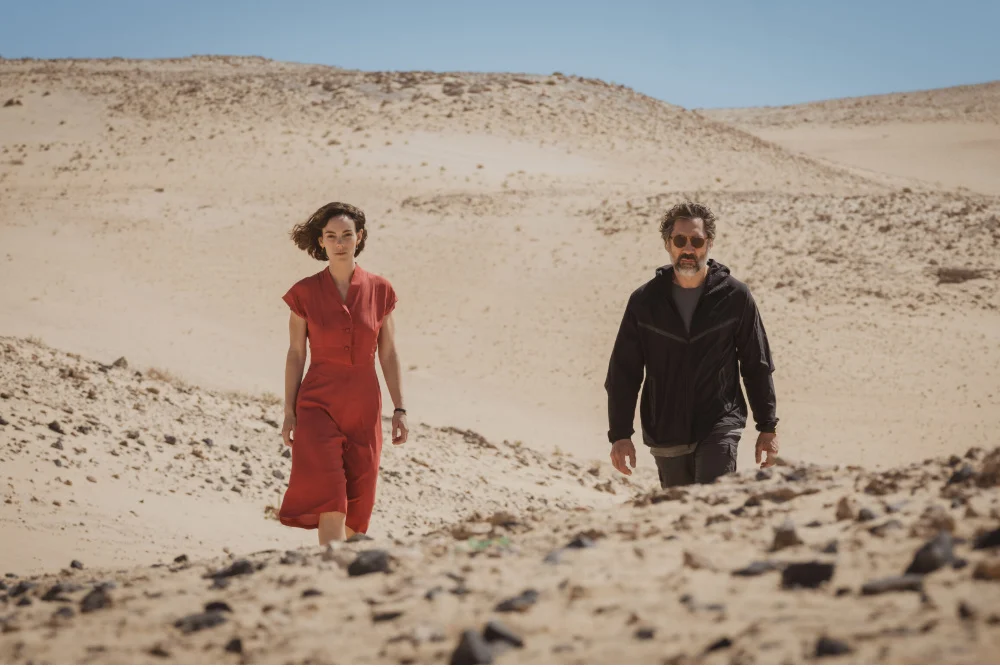
The esteemed Sarajevo Film Festival has officially announced the curated selection for its highly anticipated Open Air section, a cornerstone of the festival experience held within the expansive Coca-Cola Open Air Cinema. This year’s program promises a rich tapestry of cinematic artistry, featuring a compelling blend of established auteurs, emerging talents, and films that have garnered significant acclaim at major international festivals. The Open Air section, renowned for its immersive outdoor screenings and often serving as the festival’s largest venue, will showcase a diverse range of narratives that explore complex human experiences, historical contexts, and societal transformations.
Central to this year’s Open Air programming are films connected to the festival’s distinguished honorees. Audiences will have the opportunity to engage with works by or starring individuals being recognized for their significant contributions to cinema. Among these highlights is Paweł Pawlikowski’s highly anticipated film, "Fatherland." Pawlikowski, a celebrated director known for his poignant and visually arresting storytelling, brings to the Open Air section a deeply personal narrative that delves into familial dynamics against a backdrop of historical division. The film, set in the volatile summer of 1949 during the height of the Cold War, chronicles a road trip undertaken by Nobel Prize-winning writer Thomas Mann and his actor daughter, Erika. Their journey across a Germany fractured by the Iron Curtain, from the American-controlled Frankfurt to the Soviet-occupied Weimar, becomes a poignant exploration of a divided nation and a deeply fractured family. The cast features esteemed actors such as Hanns Zischler, Sandra Hüller, August Diehl, Devid Striesow, and Anna Madeley, promising a performance-driven cinematic experience. The film’s narrative, focusing on Mann’s return to Germany after sixteen years of exile in the United States, grapples with the complex legacies of war, ideology, and personal estrangement.
Adding to the directorial talent showcased is Diego Luna, an actor and filmmaker whose work consistently resonates with social and emotional depth. His film, "Ashes" (Ceniza En La Boca), is set to captivate audiences with its exploration of family ties and the harsh realities of seeking a better life. The film follows siblings Lucila and her younger brother as they leave Mexico for Madrid to reunite with their mother, who had previously emigrated in pursuit of greater opportunities. Upon their arrival, they are confronted with a reality far more challenging and unforgiving than Lucila had anticipated. Despite the bleak circumstances, Lucila remains determined to forge a meaningful existence in this fragile new environment. The film stars Anna Diaz, Adriana Paz, Luisa Huertas, Guillermo Rios, Sergio Bautista, Benny Emmanuel, Teresa Lozano, and Adriana Jacome, hinting at powerful ensemble performances.
The Open Air section also proudly features films that have made significant waves at prestigious international film festivals, underscoring Sarajevo’s commitment to presenting cutting-edge global cinema. Andrey Zvyagintsev’s "Minotaur," winner of the Grand Prix at Cannes, is a testament to the director’s masterful ability to craft visually stunning and thematically resonant films. Zvyagintsev, known for his incisive critiques of power structures and human fallibility, presents a narrative set in Russia in 2022. The film centers on Gleb, a successful company director whose meticulously ordered life begins to unravel under the immense pressure of corporate demands and an increasingly chaotic global landscape, leading him toward an inevitable confrontation with violence. The film’s cast includes Dmitriy Mazurov, Iris Lebedeva, Boris Kudrin, Yuriy Zavalnyouk, and Varvara Shmykova.
Rodrigo Sorogoyen’s "The Beloved" (El Ser Querido), a compelling entry in the Cannes competition, further enriches the Open Air lineup. Sorogoyen, a director whose work often delves into the darker aspects of human relationships and societal pressures, presents a story centered on acclaimed film director Esteban Martínez. A figure legendary for both his artistic achievements and a past marked by controversy and excess, Esteban offers his daughter Emilia a role in his new project, ostensibly to aid her struggling acting career. Their cohabitation on set fosters a renewed closeness, but also reopens old wounds that have never truly healed, exploring the complex dynamics between artistic ambition, paternal expectation, and the enduring power of family history. The film boasts a stellar cast including Javier Bardem, Victoria Luengo, Melina Matthews, Marina Foïs, and Malena Villa.
Shahrbanoo Sadat’s "No Good Men," which had the honor of opening the Berlinale, brings a vital and timely narrative to the Sarajevo screens. Sadat’s film offers a powerful glimpse into Afghanistan just prior to the Taliban’s return to power in 2021. The story follows Naru, the sole female camerawoman at Kabul’s primary television station, as she navigates the challenging fight for custody of her young son following her separation from a serial philanderer. Convinced of the absence of decent men in her country, Naru is taken by surprise when Qodrat, Kabul TV’s most respected journalist, offers her a significant career opportunity. As they traverse the city, documenting its final days of relative freedom, an undeniable spark ignites between them, leading Naru to question her own deeply held beliefs about the existence of good men. The film features Shahrbanoo Sadat herself in a prominent role, alongside Anwar Hashimi, Liam Hussaini, Yasin Negah, Torkan Omari, and Fatima Hassani.
The Open Air section will also feature Annemarie Jacir’s "Palestine ’36," a historical drama that transports viewers to 1936, a period of escalating tensions and resistance against British colonial rule in Palestine. The film follows Yusuf as he navigates between his rural home and the burgeoning energy of Jerusalem, yearning for a future unburdened by the growing unrest. However, the relentless march of history, marked by a surge in Jewish immigration fleeing European antisemitism and a united Palestinian population mounting the largest uprising against Britain’s thirty-year dominion, propels all sides toward an inevitable collision. This pivotal moment holds profound implications for the British Empire and the future of the entire region. The film’s impressive cast includes Hiam Abbass, Kamel El Basha, Yasmine Al Massri, Jalal Altawil, and Robert Aramayo.
The section will also screen Michael Winterbottom’s critically acclaimed "Welcome to Sarajevo," a powerful and harrowing depiction of the Bosnian War. Set during the siege of Sarajevo, the film centers on British foreign correspondent Michael Henderson. His discovery of an orphanage on the front lines, where children endure constant artillery fire, compels him to repeatedly report on their plight, urging the international community to intervene. Frustrated by the world’s inaction and unable to remain a mere observer, Henderson makes the courageous decision to smuggle one of the children to safety in England. The film stars Stephen Dillane, Woody Harrelson, Marisa Tomei, Emira Nušević, Kerry Fox, and Goran Višnjić, delivering a poignant and unforgettable narrative.
Concluding the Open Air section is Danis Tanović’s seminal "No Man’s Land" (Ničija Zemlja), a film that earned an Academy Award for Best Foreign Language Film. Set in 1993, amidst the brutal conflict in Bosnia and Herzegovina, the story follows Čiki, a soldier in the Army of Bosnia and Herzegovina, who finds himself trapped in the same trench as Nino, a Bosnian Serb soldier. Despite their status as mortal enemies, they are forced into an uneasy alliance to survive and prevent the detonation of a landmine planted beneath the body of Čiki’s wounded comrade, Cera. Their predicament quickly escalates, drawing the attention of international media and UN peacekeeping forces, highlighting the absurd and tragic nature of war. The film features Branko Đurić, Rene Bitorajac, Filip Šovagović, Georges Siatidis, and Serge-Henri Valcke.
In addition to the main Open Air section, the festival is also introducing the Open Air Premiere section, a new initiative dedicated to showcasing recent cinematic works from the countries of the former Yugoslavia. This section aims to highlight the vibrant and diverse filmmaking talent emerging from this region, offering a platform for compelling new stories and perspectives.
The Open Air Premiere section opens with Miroslav Terzić’s "3 Weeks After" (3 Nedelje Posle). What begins as a typical school trip, filled with the youthful exuberance of friends, professors, and a sense of freedom, gradually reveals an underlying disquiet. Subtle glances, teasing, and unspoken silences hint at something nobody wants to confront. Zoza is haunted by the suicide of his best friend, which occurred just three weeks prior to the trip. When he decides to break the silence surrounding his school friends’ complicity and their collective failure to speak up about the brutal mistreatment of his friend, all eyes turn to him. The film stars Jovan Ginić, Branislav Trifunović, Tihana Lazović, Klara Hrvanović, Anđela Alavirević, and Andrija Marković.
Miha Hočevar’s "Hidden People" (Skriti Ljudje) presents a darkly comedic and intriguing premise. Thirty-five-year-old Guti and fifty-year-old Sig awaken beaten, hungover, and handcuffed together on a riverbank near Ljubljana. Sig, clearly a tourist, suffers from amnesia, unable to recall his origins or why he believes he is "stuck in Slovakia." Together, they embark on a quest to retrieve Sig’s passport and identity, while simultaneously working on Guti’s ambitious dream project: a river raft intended to salvage Guti’s life, which has been derailed by a bitter divorce, failed loans, Kafkaesque bureaucracy, and a litany of difficult neighbors. The film features Blaž Šef, Ólafur Darri Ólafsson, Luka Marčetić, Barbara Ribnikar, Ana Urbanc, Igor Samobor, Gregor Gruden, Janez Hočevar, Maja Boh, and Oskar Perpar.
Marijana Janković’s "Home" (Hjem) offers a poignant look at displacement and adaptation. In 1991, as the Balkan region fractured, six-year-old Maja and her parents made the difficult decision to leave Yugoslavia for Denmark. However, their arrival in their perceived promised land proves to be a challenging ordeal, particularly for Maja. She observes with a mixture of wonder and concern as her parents struggle to assimilate into a new culture with its unfamiliar rules and traditions. The fairytale they envisioned quickly dissipates as they confront the harsh realities of their new environment. Maja, witnessing her parents’ difficulties, rapidly learns Danish and assumes an adult-like responsibility to support them. The film stars Tara Čubrilo, Dejan Čukić, Nada Šargin, Sergej Bulatović, Viktor Janković, Jesper Christensen, Dubravka Drakić, Zlatko Burić, Lene Maria Christensen, Claes Bang, Trine Dyrholm, and Olga Odanović.
Igor Jelinović’s "Honey Bunny" (Koke) explores familial tensions and financial disputes. Tonina, a diligent and confident accountant, manages her company alongside her husband and daughter, effectively orchestrating the family’s logistics. In addition to her professional and familial obligations, Tonina is the primary caregiver for her bedridden mother, who suffers from dementia. Her younger sister, Tajana, leads a more carefree and less ambitious life. The sisters’ relationship becomes strained when Tonina secretly purchases a portion of the family’s island house from a cousin, despite a prior agreement to buy it together. The film features Snježana Sinovčić Šiškov, Aleksandra Janković, Šimun Šitum, Stojan Matavulj, Leon Lučev, Ana Marija Veselić, Mare Rodin, and Dara Vukić.
Darko Štante’s "The Lost Son" (Izgubljeni Sin) delves into the complexities of familial trauma and redemption. Andrej, a seasoned criminal investigator, is confronted with a shocking revelation when he encounters his estranged brother, Kristian, as a perpetrator of domestic violence. As Andrej grapples with guilt and attempts to mend their fractured relationship, he begins to see disturbing parallels between Kristian’s behavior and that of their abusive father. This personal turmoil bleeds into Andrej’s professional life, leading to substance abuse and further strained relationships. A tragic turn of events compels Andrej to confront his past trauma, culminating in a heartbreaking confrontation with his father. As he seeks redemption and reconciliation, his life takes another devastating turn when Kristian commits a horrific act, forcing Andrej to confront the profound depths of familial dysfunction and his own personal responsibility. The film stars Jure Henigman, Nejc Cijan Garlatti, Lara Maria Vouk, Tamara Avguštin, Nika Rozman, Svit Šturbej, Liam Benjamin Štante, Igor Samobor, and Goran Bogdan.
Predrag Ličina’s "The Virus of Pathological Kindness" (Virus Patološke Dobrote) presents a thought-provoking narrative with a science fiction twist. On a snowy Zagreb night in 1983, a stranger inexplicably appears at Zorka Vasiljević’s flat, claiming to be a time traveler from the future. His astonishing predictions about the events of that night and his disturbing tales of what lies ahead force Zorka to confront a profound decision: whether to believe him or not. The film questions whether the future of humankind truly hinges on her choices. The film’s cast includes Hristina Popović, Nikola Đuričko, Gordan Kičić, Tihana Lazović Trifunović, Goran Bogdan, and Rade Šerbedžija.
The Open Air Premiere section concludes with Hari Šečić’s "The Widower" (Udovac). Mirsad, a 62-year-old electrician, lives within the confines of a patriarchal society. His routine is irrevocably altered by the sudden death of his wife, Enisa. Mirsad finds himself alone as his grown children lead their own lives. As he attempts to adjust to a life without his wife, he realizes with deep regret that he took her for granted and failed to provide her with the love and care she deserved. Mirsad’s relationship with his estranged son further deteriorates when he discovers that his son is living with a male partner. The film features Izudin Bajrović, Faketa Salihbegović – Avdagić, Lana Stanišić, Nermin Omić, Edin Koja Avdagić, Gordana Boban, Emina Muftić, Dino Bajrović, Emir Fejzić, Mediha Musliović, Alija Aljović, Damir Kustura, Emina Macić, and Ata Beširagić.
The 32nd edition of the Sarajevo Film Festival is scheduled to run from August 14th to August 21st, promising an immersive cinematic experience for filmmakers, industry professionals, and film enthusiasts alike. The festival continues to solidify its reputation as a vital cultural event, fostering dialogue, celebrating artistic achievement, and bringing the magic of cinema to the heart of Bosnia and Herzegovina.
