
 By admin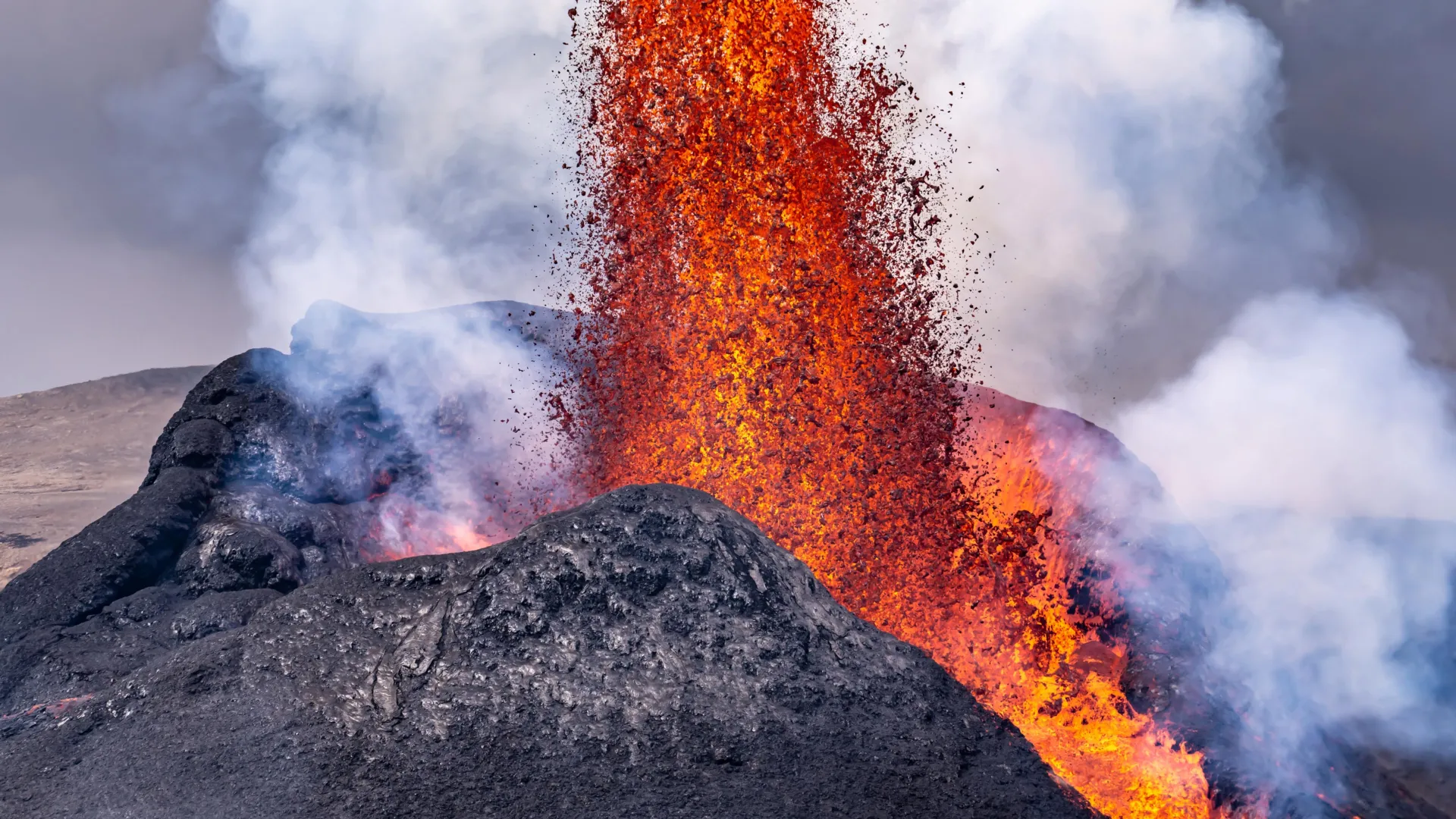
The international team, spearheaded by the University of Adelaide geochemist Dr. Eric Vandenburg, meticulously analyzed ancient volcanic rocks sourced from Western Australia’s Pilbara Craton. This geological treasure trove is renowned for preserving some of the most pristine remnants of the Archaean Eon, offering an unparalleled window into conditions that prevailed billions of years ago. Their sophisticated geochemical analysis revealed compelling signatures suggesting that significant quantities of water had permeated deep beneath the surface. This deeply recycled water then became a critical ingredient, contributing to the genesis of magma that fueled volcanoes remarkably similar in their underlying mechanism to those found ringing the Pacific "Ring of Fire" in the present day.
Published in the esteemed journal Nature Communications, these findings challenge long-held assumptions about the early Earth’s geodynamics. The prevailing scientific consensus had largely posited that the recycling of water between the planet’s surface and its interior – a process fundamental to global tectonics and volcanic activity – began much later in Earth’s history, primarily with the onset of modern plate tectonics. However, Dr. Vandenburg’s team’s research indicates that this vital hydrological cycling was already active more than three billion years ago, even though the young planet operated under vastly different thermal and mechanical regimes compared to the sophisticated plate tectonic system that defines Earth’s geology today.
A Rare Look at the Young Earth Through the Pilbara Craton
Dr. Vandenburg, affiliated with the University of Adelaide’s School of Physics, Chemistry and Earth Sciences, underscored the extraordinary value of the ancient rocks studied. "These rocks formed more than three billion years ago, a time when Earth was a very different place, almost alien compared to our modern world," he explained. The sheer age and exceptional preservation of the Pilbara Craton rocks provide an unusual and invaluable opportunity to investigate the fundamental conditions and processes that governed our planet’s earliest chapters.
To fully appreciate the significance of this discovery, it’s crucial to understand the mechanism of water recycling in the modern Earth. Today, plate tectonics is the master orchestrator, playing a central role in driving the movement of water throughout the planet’s interior. At subduction zones – convergent plate boundaries where one tectonic plate dives beneath another – vast quantities of ocean water, incorporated into the oceanic crust as hydrated minerals, are carried downwards towards the Earth’s mantle. As these subducting plates descend, the increasing pressure and temperature cause the hydrated minerals to break down, releasing their stored water. This liberated water then acts as a flux, lowering the melting point of the overlying mantle wedge, thereby generating magma. This buoyant magma subsequently rises towards the surface, feeding the explosive volcanoes that characterize volcanic arcs and contributing significantly to the growth of continents.
However, the early Earth presented a very different geological environment. With a much hotter interior, a thinner, and likely more ductile lithosphere (Earth’s rigid outer layer), it was generally believed that the conditions were not conducive for plates to behave in the rigid, brittle manner characteristic of modern plate tectonics. Consequently, until now, it remained largely unclear whether surface water could have undertaken such a profound journey into the deep interior more than three billion years ago, and if so, by what mechanism. "What truly surprised us," Dr. Vandenburg elaborated, "was finding clear evidence that substantial amounts of water had already made their way deep into the Earth’s interior and, crucially, had profoundly influenced the formation of these ancient volcanic rocks." This finding necessitates a re-evaluation of the early Earth’s thermal state and rheology (how materials deform and flow).
Unveiling "Dripduction": A Proto-Tectonic Mechanism
In light of their findings, the researchers propose an alternative geological mechanism – a "proto-tectonic" process – that may have been responsible for transporting water into the mantle before the full establishment of modern plate tectonics. They have termed this innovative process "dripduction." This scenario posits that dense, water-rich portions of Earth’s cooler outer crust periodically became gravitationally unstable. These denser segments would then sag downward and ultimately collapse or "drip" into the hotter, more buoyant mantle beneath, effectively transporting vast quantities of surface water along with them.
The process of dripduction can be visualized as a localized downwelling. As these cooler, water-laden crustal sections descended into the mantle, the increasing temperatures and pressures would cause the hydrated minerals within them to undergo dehydration reactions, releasing their contained water into the surrounding mantle. This released water, acting as a powerful flux, would then facilitate the generation of magma from the mantle rocks at lower temperatures than would be possible under dry conditions. This newly formed magma, being less dense than the surrounding solid rock, would then ascend, erupting through volcanoes, and eventually cooling to form the durable volcanic rocks that have remarkably endured for billions of years, preserving their ancient chemical signatures.
"While the early Earth certainly wasn’t operating exactly as it does now, with the intricate global network of modern plate tectonics, it appears some of the fundamental, key processes that underpin our planet’s dynamics were already firmly in place," Dr. Vandenburg remarked. This suggests a more gradual and complex evolution of Earth’s geodynamic engine than previously imagined, with transitional mechanisms bridging the gap between a primordial, largely stagnant lid regime and the modern era of fully developed plate tectonics.
Addressing a Major Question: When Did Earth Begin Recycling Its Surface?
The discovery of early water recycling through dripduction addresses one of the most significant and enduring questions in Earth sciences: precisely how early did materials begin their long journey between Earth’s surface and its deep interior? This question is not merely academic; pinpointing when water first started traveling deep underground is of paramount importance because this recycling process is intrinsically linked to a cascade of planetary-scale phenomena. It profoundly affects the vigor and style of volcanic activity, fundamentally influences the growth and stabilization of continents, and plays a crucial role in the movement and availability of essential ingredients that are important for the emergence and sustenance of life.
The continuous exchange of volatiles, particularly water and carbon, between the surface and the interior is a defining characteristic of Earth’s habitability. Without this deep recycling, our planet’s surface might resemble Mars or Venus – arid and geologically stagnant. The findings from the Pilbara Craton imply that the fundamental machinery for maintaining a dynamic, habitable surface was active far earlier than previously thought, potentially providing stable conditions for the early evolution of life. Furthermore, this research significantly contributes to our understanding of how Earth’s continents developed from smaller, protocontinental landmasses, and how the planet gradually evolved from its primordial, hotter state into its modern, temperate, and geologically active form.
Chemical Clues from 3.1 Billion Years Ago: Unlocking Ancient Secrets
Rocks from the Archaean Eon (roughly 4 to 2.5 billion years ago) are exceedingly rare, having largely been destroyed or heavily metamorphosed by subsequent geological activity over eons. This scarcity is precisely what elevates the Pilbara Craton to such an invaluable scientific resource. The region boasts some of the best-preserved and least-altered rocks from the early Earth, essentially providing researchers with an unparalleled, almost pristine geological record of processes that unfolded billions of years ago.
By meticulously studying the intricate chemical signatures locked within these ancient rocks, the international research team was able to reconstruct geological events dating back approximately 3.1 billion years. These "chemical fingerprints" include specific trace element ratios and isotopic compositions that are highly diagnostic of magmas generated in the presence of water, similar to those found in modern subduction zone settings. For example, elements like large ion lithophile elements (LILEs) and light rare earth elements (LREEs) are often enriched in arc magmas due to the fluid-fluxed melting, while high field strength elements (HFSEs) can be depleted. The researchers analyzed these subtle but critical variations to infer the presence and influence of water.
The compelling results strongly suggest that Earth’s surface and its deep interior were interacting in a dynamic and continuous manner much earlier than previously recognized. Rather than being a relatively static and undifferentiated body, the young planet appears to have been surprisingly dynamic, already engaged in the efficient recycling of one of its most essential substances: water. This early onset of water cycling would have had profound implications for the planet’s thermal evolution, crustal differentiation, and the creation of environments conducive to the earliest forms of life.
The comprehensive study involved a broad consortium of researchers from leading institutions around the globe, highlighting the collaborative nature of modern geoscientific inquiry. These included experts from the University of Adelaide, Monash University, the Geological Survey of Western Australia, Curtin University, the Australian National University, Cardiff University in the UK, and the GEOMAR Helmholtz Center for Ocean Research in Germany. Their combined expertise in geochemistry, petrology, and geodynamics was instrumental in piecing together this complex and ancient geological puzzle, offering a new narrative for the Earth’s formative years.
