
 By admin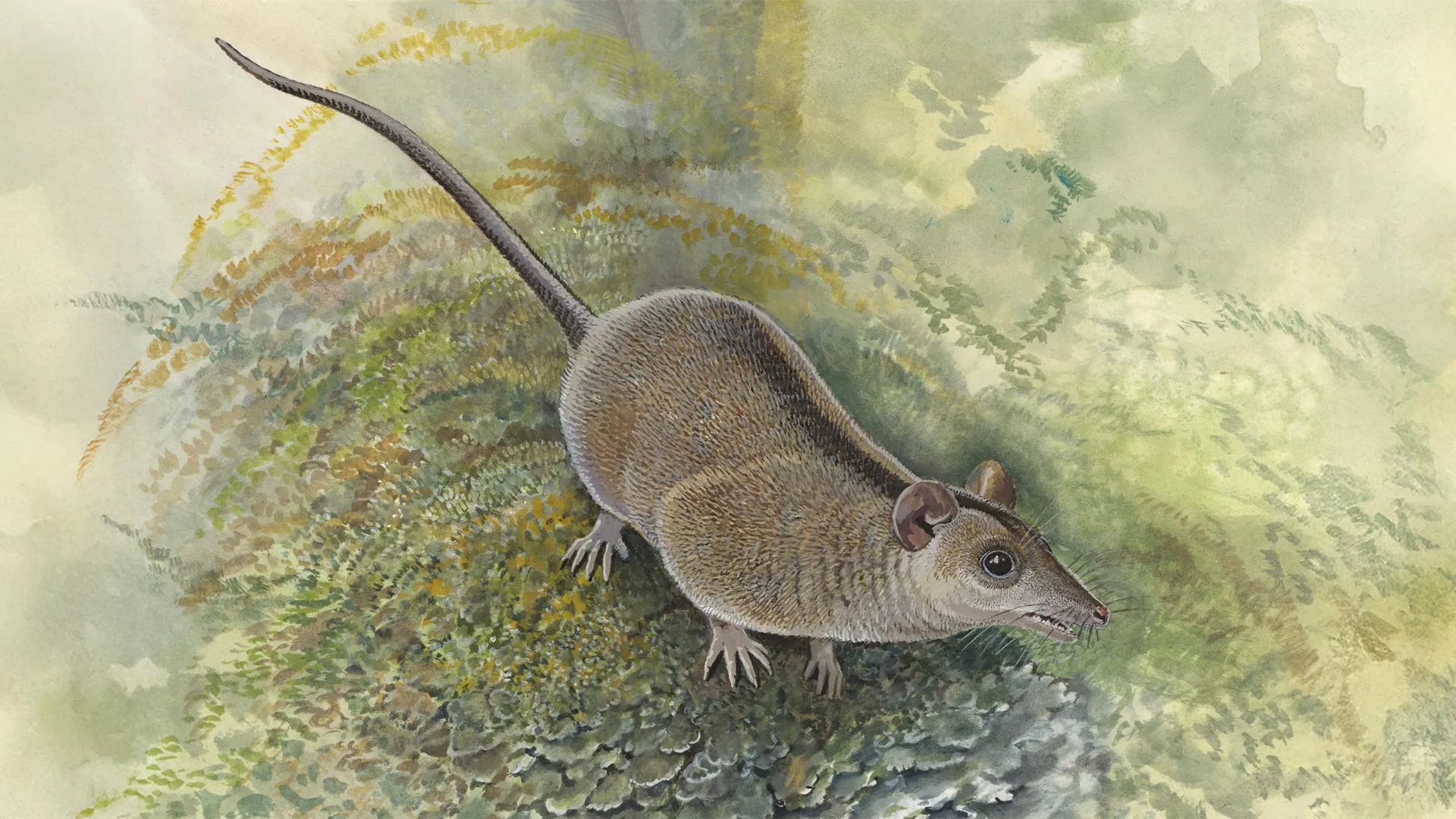
Australia’s marsupials are a testament to evolutionary ingenuity, having embarked on a remarkable journey that began more than 55 million years ago. Their ancestral pioneers arrived on the ancient landmass, then still connected to Antarctica, and over millennia, diversified into an astonishing array of forms, occupying nearly every conceivable ecological niche. Today, this unique lineage comprises approximately 160 species, each a marvel of adaptation. From the High Country’s thumb-sized pygmy possums (Burramys parvus), which famously enter a state of torpor to sleep through the harsh alpine winters, to the enigmatic desert specialists of the Red Centre, such as the tiny, pink-furred, sightless marsupial moles (Notoryctes typhlops) that navigate their subterranean world through an acute sense of touch and hearing, marsupials embody the spirit of Australian biodiversity. This incredible success story, however, has long been shrouded in significant paleontological mystery. Major gaps in the fossil record have left vast stretches of their early history almost invisible, posing a persistent challenge to scientists striving to reconstruct their evolutionary narrative.
Now, a groundbreaking discovery by researchers from the University of New South Wales (UNSW) promises to illuminate some of these darkest corners. In a new paper published in the prestigious Journal of Paleontology, the team reports the identification of three newly described species, which collectively may belong to an ancient and previously unknown order of marsupials. This monumental finding offers a rare and invaluable glimpse into some of the earliest stages of marsupial evolution on the continent, challenging long-held assumptions about their diversification.
"Not only is it a new order, it could also be the most ancient lineage of all Australian marsupials," explains UNSW paleontologist Dr. Tim Churchill, lead author of the study. His analysis points to a group that diverged remarkably early in the marsupial family tree, predating many of the established lineages. The implications of this are profound: "It may be the early ancestor of all our marsupial carnivores." This suggests that the predatory quolls, Tasmanian devils, and extinct thylacines—members of the order Dasyuromorphia—might trace their lineage back to these newly discovered, ancient insectivores, providing a foundational piece to the puzzle of Australia’s carnivorous marsupial evolution.
A New Branch of the Marsupial Family Tree: Re-evaluating Gondwanan Origins
The prevailing scientific consensus on the arrival of marsupials in Australia posits a grand migratory saga. The standard explanation suggests that marsupials first reached Australia after traveling from South America, across the land bridge that was once Antarctica, before the ancient supercontinent Gondwana began its final dramatic breakup. This colossal landmass, which included present-day South America, Africa, Antarctica, Australia, the Indian subcontinent, and Madagascar, offered a continuous pathway for terrestrial fauna. As the continents drifted apart, Australia became an isolated ark, carrying its unique cargo of marsupials into a separate evolutionary destiny.
While this broad outline of marsupial dispersal via Gondwana is widely accepted, the finer details have always remained uncertain. Fossil evidence dating back approximately 55 million years from Australia has historically been interpreted to suggest that all Australian marsupials may have originated from a single early lineage. This ancestral group, it was thought, subsequently diversified into the five distinct marsupial orders alive today, representing a classic example of adaptive radiation following geographic isolation.
These groups are currently classified into five orders within the superorder Australidelphia, which encompasses all living and extinct Australian marsupials, plus one South American representative (Dromiciops gliroides, the monito del monte, a fascinating relict species). The Australian orders include:
- Dasyuromorphia: Carnivorous and insectivorous marsupials (e.g., quolls, Tasmanian devils).
- Peramelemorphia: Bandicoots and bilbies.
- Notoryctemorphia: The marsupial moles.
- Diprotodontia: Herbivorous marsupials with two prominent lower incisors (e.g., kangaroos, wallabies, wombats, koalas, possums).
Dr. Churchill is now proposing a sixth order, a significant reclassification that would fundamentally alter the marsupial family tree. This new order, named Keeunamorphia, represents a distinct evolutionary trajectory. According to his meticulous analysis of fossil morphology and phylogenetic reconstructions, this group may have persisted for an extraordinary period of around 35 million years, making them one of the most enduring and enigmatic lineages in Australian marsupial history.
Members of Keeunamorphia were likely small insect eaters, with estimated weights ranging between 25 and 200 grams – roughly the size of a small mouse to a large rat. Their diminutive stature suggests they were probably secretive, scuttling through the undergrowth of their ancient habitat. They thrived in the lush, humid forests of what is now northern Queensland, a region that presented a vastly different landscape millions of years ago. Their long reign came to an end around 15 million years ago, a disappearance that coincides with significant environmental shifts across the continent.
That ancient landscape looked profoundly different from the arid, open country characteristic of much of northern Queensland today. At the time of Keeunamorphia’s flourishing, the region was likely dominated by wet, dense rainforest, teeming with biodiversity. This verdant ecosystem supported the ancestors of many animals still alive in Australia today, creating a rich tapestry of flora and fauna that is barely recognizable in the modern era. "Around 14 million years ago is when the region starts to cool again," Dr. Churchill explains, referring to a global climate transition that dramatically reshaped Australia. This cooling trend, coupled with increasing aridity, led to a profound ecological transformation. "The dense forest disappears and becomes more open woodland, with more lakes and more grasslands." This shift would have severely impacted forest-dwelling insectivores like Keeunamorphia, potentially leading to their eventual extinction as their specialized habitat vanished.
Fossils From Riversleigh: Windows to a Lost World
The three Keeunamorphia species described by Dr. Churchill lived around 18 million years ago, a period known as the Miocene. After their demise, their remains found their way into shallow cave pools, where the unique geochemical conditions facilitated exceptional preservation. These fossil-rich deposits now constitute the Riversleigh World Heritage Area, located in northwestern Queensland – an internationally renowned site considered one of the world’s most important fossil localities. Riversleigh is famed for its unparalleled record of Cenozoic mammalian evolution in Australia, providing a continuous snapshot of life over millions of years, largely thanks to the lime-rich sediments of its ancient cave systems.
Complete skeletons are exceedingly rare in the fossil record, a testament to the myriad geological and biological processes that conspire against preservation. Consequently, the researchers relied on much smaller, yet incredibly informative, clues: isolated teeth and fragments of jawbones. These seemingly insignificant pieces of anatomy hold a wealth of phylogenetic information, as the morphology of teeth is highly correlated with an animal’s diet and evolutionary relationships. From these minute fragments, the paleontologists painstakingly worked to determine where these enigmatic animals fit within the broader marsupial family tree.
To achieve this, the team employed a sophisticated methodology that combined robust fossil evidence with genetic information derived from living marsupial species. This integrated approach allowed them to construct a detailed phylogenetic tree – a scientific model that maps the evolutionary relationships between species and, critically, estimates when different branches separated over geological time. This blend of morphological and molecular data provides a powerful tool for resolving deep evolutionary divergences. "We’re essentially trying to create a tree that shows both the relationships of all the different species in the tree, while also calculating when those branches probably diverged," Dr. Churchill elaborates, highlighting the dual challenge of establishing kinship and chronology.
Teeth Reveal an Evolutionary Puzzle: A Link to Djarthia murgonensis
The meticulous analysis of the fossil teeth and jaw fragments yielded a surprising result. The phylogenetic tree indicated that these three newly described Keeunamorphia species lived alongside several other marsupials that scientists had already studied from the Riversleigh deposits. However, their dental morphology was distinctly unusual, and they did not appear to be closely related to the contemporaneous marsupials surrounding them. Their teeth possessed primitive characteristics that set them apart.
Intriguingly, these teeth bore a striking resemblance to those of Djarthia murgonensis, an extinct marsupial that lived approximately 35 million years earlier, in what is now southeastern Queensland. Djarthia is often viewed as a "prototype" or a very early, generalized ancestor for Australian marsupials, representing one of the earliest known forms on the continent. Its primitive features made it a crucial reference point for understanding the base of the Australian marsupial radiation. The discovery that Keeunamorphia, living tens of millions of years later, retained such ancient dental characteristics is a profound evolutionary puzzle.
Dr. Churchill explains that this strong resemblance points to a distinct marsupial lineage that had not been recognized before. It suggests that this group, the Keeunamorphia, may have split off extremely early in marsupial history—perhaps shortly after the initial colonization of Australia—and then persisted for millions of years, evolving relatively slowly while other marsupial groups diversified rapidly around it. This phenomenon, known as evolutionary stasis or relictualism, is rare but not unheard of, indicating a highly successful, albeit specialized, ecological strategy that allowed them to thrive for an extended period without significant morphological change.
"Whatever these things were, they seemed to be primitive compared to other marsupials at the time, and they seem to have been doing their own thing and surviving well enough alongside them," says Dr. Churchill. This implies that Keeunamorphia occupied a unique ecological niche, perhaps feeding on specific types of insects or living in microhabitats that allowed them to avoid direct competition with their more "advanced" relatives. While phylogenetic trees often tend to point towards a single, neat early group that later gave rise to the full panoply of modern Australian marsupials, the fossil evidence, particularly from sites like Riversleigh, appears to tell a far less tidy, and more compelling, story.
A More Complicated Origin Story: Rethinking Marsupial Radiation
The existence of Keeunamorphia, with its ancient features and protracted survival, significantly challenges the simpler, unilineal version of marsupial evolution in Australia. According to Dr. Churchill, early members of Keeunamorphia may have appeared not long after the first marsupials arrived in Australia from Antarctica, around 55 million years ago. This places them at the very dawn of Australian marsupial history, making them contemporaries of the earliest known Australian marsupials.
If this hypothesis is correct, Keeunamorphia could represent one of the earliest marsupial orders to branch off from the main lineage, potentially even before the major diversification events that led to the modern orders. This possibility fundamentally challenges the idea that a single ancestral group gave rise to the full diversity of Australian marsupials through a simple, linear progression. Instead, it paints a picture of multiple, early diverging lineages coexisting and evolving in parallel.
This scenario also raises a puzzling question for evolutionary biologists: If this primitive group split off so early in marsupial history, how did it manage to survive for such an extended period—tens of millions of years—while remaining relatively unchanged in its key morphological features, particularly its dentition? This speaks to a remarkable evolutionary stability, possibly driven by a highly specialized diet or a stable, consistent environment for which their ancient adaptations remained perfectly suited.
"Evolutionary history is a lot more complex than just one group leading to all of Australia’s marsupials after being left behind when the continent broke off from Antarctica," Dr. Churchill asserts. He proposes a richer, more dynamic early history. "It’s more likely that when Australia was part of Gondwana it was swarming with all sorts of bizarre, primitive marsupial-like things, and that several of them survived and led to our modern lineages." This vision suggests that Australia’s isolation didn’t just preserve a single lineage, but rather isolated a diverse assemblage of early marsupial forms, some of which thrived, others perished, and some, like Keeunamorphia, persisted as living relics for vast stretches of geological time.
Hidden Diversity in the Fossil Record: The Ongoing Quest
Much of that early diversity, hinted at by the Keeunamorphia discovery, may still be missing from the scientific record. A nearly 20-million-year gap in the fossil history of Australian marsupials, spanning the crucial period between the initial colonization and the subsequent Miocene radiations, leaves ample room for numerous lineages that have not yet been found. This "dark age" of Australian marsupial evolution is a major target for paleontologists. The scarcity of fossils from this period is often attributed to geological factors, such as unfavorable conditions for fossilization, intense erosion, or simply the lack of exposed fossil-bearing strata.
Some of these ancient animals may indeed have shared a common ancestor, representing different branches of a single early radiation. Others, however, may have come from entirely separate lineages that were left in Australia as the continents drifted apart, each carrying its own unique evolutionary baggage from the Gondwanan era. This implies a more complex series of colonization events or multiple founding populations, rather than a single ancestral stock.
Scientists may never be able to fully reconstruct the intricate routes that early marsupials took as they spread, diversified, and evolved across the Australian continent. However, each new fossil tooth, each fragment of jawbone painstakingly extracted from Australia’s ancient deposits, adds another crucial clue to this grand narrative. Discoveries like Keeunamorphia not only fill in gaps but also force a re-evaluation of established paradigms, making the story of marsupial evolution more complex, far richer, and endlessly fascinating. It is a testament to the enduring power of paleontological research to continually rewrite the history of life on Earth.
