
 By admin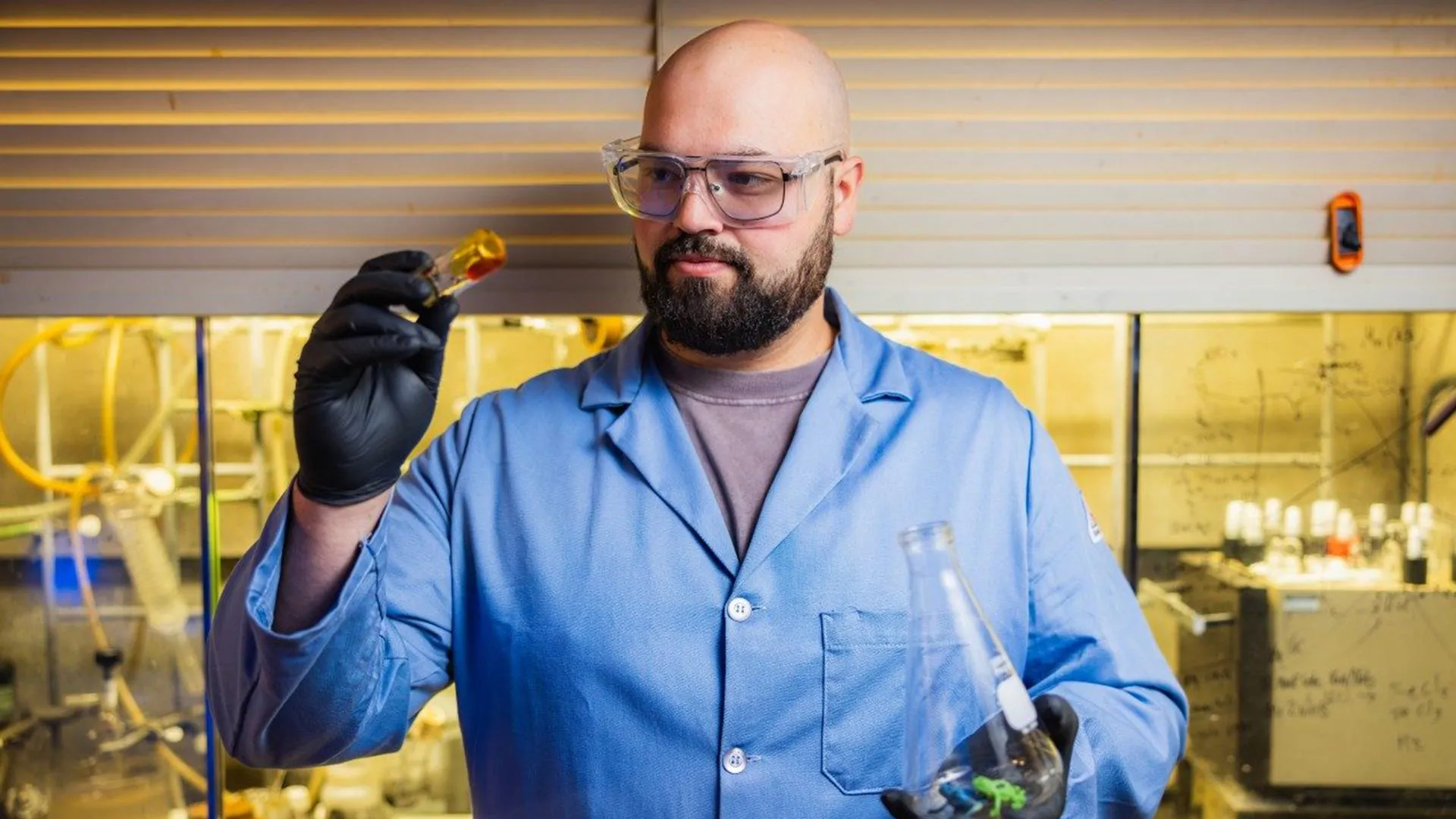
This groundbreaking research, published on August 5th in the prestigious journal Nature, presents a dual solution to pressing global environmental challenges. On one front, it offers an innovative pathway to address the persistent problem of polyvinyl chloride (PVC) waste, one of the most difficult plastics to recycle effectively. Simultaneously, it provides a more sustainable avenue for producing polyalphaolefins (PAOs), high-performance synthetic base oils crucial for lubricants like engine oil, which are traditionally derived from fossil fuels. This scientific breakthrough could significantly advance the circular economy by converting a problematic waste stream into a valuable industrial commodity, marking a pivotal step towards a more sustainable future for both waste management and industrial production.
The difficulty of recycling PVC has long plagued waste management systems worldwide. Unlike many other plastics, PVC contains a high percentage of chlorine, a chemical element that introduces substantial complications during conventional recycling processes. When heated, PVC can release hydrogen chloride gas, which is highly corrosive to recycling equipment and can pose health risks. Furthermore, the manufacturing of PVC products often involves a diverse array of additives—such as plasticizers, stabilizers, and flame retardants—whose specific compositions vary widely depending on the product’s intended use, from rigid pipes to flexible films. These additives make sorting and reprocessing incredibly complex, as different additives can react unpredictably or degrade during recycling, compromising the quality of the recycled material. Consequently, a vast majority of PVC waste, estimated to be in the tens of millions of tons globally each year, ultimately ends up in landfills or is incinerated, contributing to land pollution and, in some cases, the release of toxic substances like dioxins during combustion. The sheer volume of PVC waste, which is the third most widely produced plastic after polyethylene and polypropylene, underscores the urgency of finding viable recycling or upcycling solutions.
Concurrently, the demand for lubricants, particularly high-performance synthetic varieties like PAOs, continues its relentless upward trajectory. These essential fluids are the lifeblood of modern machinery, facilitating the smooth operation of everything from the smallest lawnmowers and passenger vehicles to the most complex industrial equipment, aerospace engines, and marine vessels. The global lubricant market, valued at hundreds of billions of dollars annually, is projected to grow steadily, driven by industrialization, increasing vehicle populations, and the need for more efficient and durable machinery. However, the production of conventional lubricants, which are predominantly petroleum-based, carries a significant environmental footprint. It relies heavily on the extraction and refining of crude oil, a process associated with substantial greenhouse gas emissions, habitat disruption, and the risk of spills. Moreover, the disposal of spent lubricants, if not handled properly, can lead to soil and water contamination. The environmental imperative to decouple lubricant production from virgin fossil resources is thus a critical challenge for industries striving for greater sustainability.
Turning PVC Waste Into High-Performance Lubricants: A Novel Approach
Lubricants, though often overlooked by the general public, are indispensable to the functioning of virtually every piece of mechanical equipment in the modern world. They reduce friction, minimize wear, dissipate heat, and protect components from corrosion, ensuring the longevity and efficiency of machinery across all sectors. The constant and reliable supply of high-quality lubricants is therefore paramount for global industrial operations. The development by Dr. Liu’s laboratory at Virginia Tech offers not only an alternative source for these critical materials but also a significant step towards mitigating the escalating problem of plastic pollution.
The innovative method developed by Liu’s team begins with readily available PVC, similar to the material commonly found in household plumbing pipes, window frames, vinyl siding, and even the ubiquitous credit cards in our wallets. This ubiquity highlights the enormous potential feedstock for the process. Researchers meticulously place the PVC material into a specialized solvent, which helps to dissolve and disperse the polymer chains. Crucially, they then introduce a catalyst—aluminum trichloride—along with specific organic compounds known as alpha olefins. Aluminum trichloride acts as a Lewis acid catalyst, playing a vital role in initiating the chemical transformation, specifically by facilitating the removal of chlorine atoms from the PVC backbone and promoting subsequent reactions. Alpha olefins, characterized by a double bond at the primary (alpha) position, serve as building blocks that are integrated into the newly forming polymer chains, effectively transforming the fragmented PVC into a desired product.
The entire mixture is then subjected to a relatively mild heating process, maintained at 158 degrees Fahrenheit (approximately 70 degrees Celsius) for a duration of three hours. The mild temperature and moderate reaction time are significant advantages, suggesting a potentially energy-efficient and scalable process compared to other plastic degradation methods that often require extreme heat or pressure. Following this carefully controlled reaction, the researchers employ standard chemical separation techniques to extract a relatively thick, viscous oil from the solvent. This extracted oil, through rigorous testing, has been confirmed to possess the desired properties of a high-performance lubricant, specifically a polyalphaolefin.
Dr. Liu emphasizes the dual significance of their findings: "Number one, we have proved that it is feasible to use plastic waste to make high-performance lubricants. This addresses the technical viability and the quality of the end product. Number two, these lubricants are green, and they can meet the emerging needs for sustainability by the market." His statement underscores not just the scientific achievement but also the commercial and environmental implications. The "green" aspect refers to the reduction in reliance on virgin fossil fuels and the diversion of waste from landfills, aligning with the principles of a circular economy. The market’s "emerging needs for sustainability" reflect a growing corporate and consumer demand for environmentally responsible products and processes across all industries.
Building on a Legacy of Plastic Upcycling Research
This recent success with PVC is not an isolated achievement but rather a testament to a concerted and strategic research program led by Dr. Liu’s team focused on plastic upcycling. The project organically evolved from earlier, highly impactful work published in leading scientific journals such as Science and Nature Sustainability. In those previous studies, Liu’s laboratory had successfully pioneered innovative approaches for converting other challenging types of plastic waste, notably polyethylene (PE)—the most widely used plastic—into valuable surfactants. Surfactants are critical components used in a vast array of products, including soaps, detergents, cosmetics, and industrial cleaners.
The consistent success of these prior efforts provided a strong foundation and a clear impetus for the team to expand their investigative scope. Having demonstrated the feasibility of transforming commodity plastics into higher-value chemical products, Liu and his colleagues naturally turned their attention to PVC, recognizing its unique challenges and the immense environmental benefits that could be reaped from an effective upcycling solution. "We want to help improve the recycling and upcycling of PVC," Liu stated, articulating the team’s overarching mission to tackle some of the most intractable problems in plastic waste management. This systematic approach, moving from one type of plastic waste to another, demonstrates a deep commitment to developing a comprehensive suite of technologies for transforming plastic pollution into economic opportunities.
To tackle the complexities of the PVC project, Dr. Liu assembled a dedicated and talented team of graduate researchers. Eric Munyaneza Nuwayo, a highly promising doctoral student in the final year of his program, was entrusted with the critical role of leading the research effort. His expertise and dedication were instrumental in navigating the experimental challenges. Connor S. Thompson, another bright graduate student from the chemistry department, initially engaged in a different research project, readily embraced the new challenge when Liu proposed the shift. This adaptability and willingness to pivot to pressing scientific questions are hallmarks of successful research environments. The team was further bolstered by the rapid contributions of Abby Civiello, a first-year graduate student who quickly made significant strides in the research. Dr. Liu affectionately referred to this dynamic trio as "the three musketeers," highlighting their collaborative spirit, mutual support, and collective pursuit of scientific discovery.
From Gooey Setbacks to a Transformative Idea
The path to discovery is rarely linear, and the PVC-to-lubricant project was no exception. Initially, the researchers explored conventional chemical strategies, experimenting with methods to chemically transform PVC molecules by replacing their chlorine atoms with other functional groups. The underlying hypothesis was elegantly simple: "PVC, as one of the most activated forms of polyethylene, ought to be easily converted into some other molecules by replacing the chlorine atoms with other groups," Liu explained, referring to PVC’s reactive nature due to the chlorine atoms.
However, the early results proved to be frustratingly unpromising. The modified materials, while chemically altered, remained soft, somewhat gooey, and crucially, failed to exhibit the high-performance characteristics the researchers were striving for. They simply weren’t yielding a product with significant industrial value or desirable material properties. This impasse forced a critical re-evaluation of the approach.
It was during this period of introspection that Dr. Liu experienced a pivotal "aha!" moment. "One day I realized – if this polymer is so gooey and so soft, why don’t I just keep breaking the polymer chains down to smaller segments?" This conceptual shift was revolutionary. Instead of trying to maintain the polymer’s original chain structure and simply modify its side groups, the new strategy focused on complete deconstruction—breaking the long PVC polymer chains into much smaller, manageable molecular units. This fundamental change in direction proved to be the crucial turning point.
As the team meticulously pursued this new avenue, systematically breaking down PVC, synthesizing novel molecules from these smaller fragments, and rigorously evaluating the resulting material, Dr. Liu began to discern that they had created something far more valuable and transformative than a conventional recycling product. They weren’t just reusing PVC; they were truly upcycling it into a higher-value material with fundamentally different and superior properties. This marked the transition from merely trying to modify PVC to actually creating a new, valuable chemical from its molecular components.
Rigorous Validation Through Interdisciplinary Collaboration
To definitively ascertain the precise capabilities and industrial potential of the newly synthesized oil, Dr. Liu recognized the necessity of leveraging specialized expertise beyond his immediate laboratory. He proactively reached out to esteemed researchers at other institutions and within Virginia Tech, fostering a collaborative network essential for comprehensive validation.
Samples of the meticulously produced lubricant oil were dispatched to Professor Ali Erdemir, a world-renowned expert in tribology and materials science, at Texas A&M University. Erdemir’s team conducted an exhaustive battery of tests on the final materials. These tests likely included crucial analyses of the oil’s tribological properties (its ability to reduce friction and wear), its viscosity at various temperatures (a key indicator for lubricant performance), thermal stability (resistance to degradation under heat), and oxidative stability (resistance to breakdown from oxygen). The results from these rigorous tests were vital in confirming that the PVC-derived polyalphaolefin could indeed function as a high-performance lubricant, comparable to or even exceeding the performance of commercially available alternatives.
Further bolstering the scientific rigor of the project, Dr. Liu collaborated with Professor William Goddard III at the California Institute of Technology (Caltech). Goddard, a pioneer in computational chemistry, brought his team’s expertise to bear on the chemical computations underlying the transformation process. These sophisticated computational models provided invaluable insights into the reaction mechanisms, predicting the most favorable pathways for dechlorination and subsequent olefin polymerization, and confirming the stability and structure of the resulting PAOs at a molecular level. This theoretical validation complemented the experimental findings, providing a deeper understanding of the chemical processes at play.
Within Virginia Tech, Dr. Liu also sought the expertise of his colleague, Professor Xi Chen, who contributed an essential economic and production analysis. Chen’s work involved developing sophisticated models to assess the potential for manufacturing the PVC-derived lubricant on a significantly larger, industrial scale. This analysis would have factored in the cost-effectiveness of the process, the availability of PVC feedstock, energy requirements, catalyst efficiency, and the overall market viability compared to existing petroleum-based PAOs. Such an economic feasibility study is critical for bridging the gap between laboratory discovery and real-world application, offering a roadmap for future commercialization.
A Sustainable Future for "Silent Heroes"
Looking ahead, the research team is now focused on refining the lubricant production process to make it even more sustainable, aiming for aspects like improved energy efficiency, catalyst recycling, and minimizing any potential byproducts. Concurrently, a major goal is to scale up the production to make the resulting polyalphaolefin more widely available and accessible to industries globally. The transition from lab-scale synthesis to industrial-scale manufacturing presents its own set of challenges, including optimizing reactor design, ensuring consistent feedstock quality, and achieving cost-competitiveness with established petroleum-based products.
Dr. Liu articulates a profound vision for the impact of their work: "Lubricants are the silent hero out there. We often don’t recognize they exist, but they are out there working quietly. We want to be able to produce the oil on a larger scale to reach more people in the world." This sentiment encapsulates the understated yet absolutely critical role lubricants play in the global economy and daily life. By transforming a pervasive environmental pollutant into these "silent heroes," Liu’s team is not only tackling plastic waste but also contributing to a more resilient and sustainable industrial ecosystem. The potential for this technology to significantly reduce landfill waste, decrease reliance on fossil fuels, and provide a greener source for essential industrial materials positions it as a truly transformative innovation with far-reaching implications for a circular economy. The journey from discarded PVC to high-performance engine oil signifies a powerful paradigm shift in how we perceive and manage waste, turning pollution into prosperity.
