
 By admin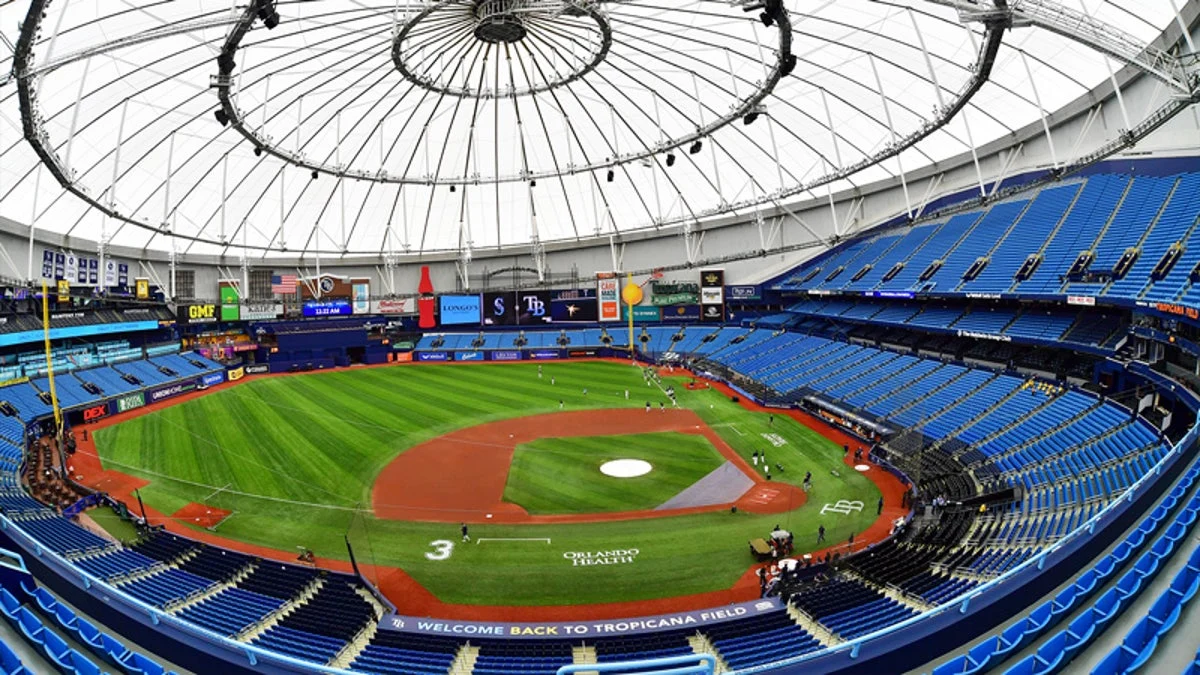
In a pivotal moment for the future of Major League Baseball in Florida, the Tampa Bay Rays have successfully garnered crucial county approval for their ambitious $2.3 billion ballpark project. This significant development follows closely on the heels of city officials granting their endorsement for the state-of-the-art facility, which is slated to replace the aging Tropicana Field. The Hillsborough County Commission, after considerable deliberation, cast a 5-2 vote on Friday, greenlighting their substantial $796 million contribution to the mixed-use entertainment district. This district will encompass a brand-new, 31,000-seat stadium, strategically positioned near Raymond James Stadium, the hallowed grounds of the NFL’s Tampa Bay Buccaneers. Projections indicate that the Rays’ new home will be ready to welcome fans by the 2029 season, marking the culmination of years of planning and negotiation. The preceding day saw the Tampa City Council approve their portion of the funding, with a narrower 4-3 vote endorsing $80 million towards the project.
The ramifications of these approvals are profound, as highlighted by Rays CEO Ken Babby. He articulated that the collaborative partnership forged between the team, Hillsborough County, and the City of Tampa is instrumental in securing the long-term viability of Major League Baseball within the Tampa Bay area. Babby’s impassioned statement underscored the significance of this achievement, stating, "We now look forward to celebrating before breaking ground with Hillsborough County and the City of Tampa on a future that has long been doubted, but will indeed happen. By making the Forever Home a reality, the Rays are now home forever in Tampa Bay." This declaration signals a definitive commitment from the ownership group, putting to rest lingering uncertainties that have shadowed the franchise’s future in the region for years.
The financial architecture of this monumental undertaking reveals a robust commitment from the Rays’ ownership. They have pledged a minimum contribution of $1.3 billion, with an additional commitment to cover any cost overruns that may arise during construction. Further bolstering the project’s funding, an allocation of $30 million has been earmarked from federal disaster recovery funds, demonstrating a multi-faceted approach to financing. This financial commitment from the Rays’ ownership, led by Patrick Zalupski, is a testament to their belief in the market and their dedication to establishing a premier baseball experience.
A key element in the realization of this new stadium was the strategic acquisition of land. Earlier this year, the Rays’ ownership reached a pivotal agreement with Hillsborough College to develop the stadium and surrounding entertainment district on the college’s campus. This innovative approach not only provides a prime location but also involves the renovation of some of the school’s existing buildings, fostering a synergistic relationship between the athletic facility and the educational institution. The chosen property boasts a strategic advantage, situated adjacent to the New York Yankees’ spring training facility, George M. Steinbrenner Field, and across a major highway from the NFL stadium. This proximity to established sporting venues could foster a vibrant sports hub within the region, attracting visitors and enhancing the overall entertainment landscape.
The history of the Tampa Bay Rays’ home games has been a narrative of transition and resilience. Since their inception in 1998, the team has been synonymous with Tropicana Field in St. Petersburg. However, the structural integrity of the domed stadium has been a persistent concern. Following hurricane damage sustained at the Trop, the Rays were compelled to temporarily relocate their home games to the Yankees’ George M. Steinbrenner Field in 2025, a move that underscored the urgent need for a new, modern facility. Their current lease at Tropicana Field extends through at least the 2028 season, providing a clear timeline for the transition to the new ballpark. Despite the challenges, the team returned to the Trop for the commencement of the current season, a testament to their dedication to playing baseball for their fans.
The path to this approval has been far from smooth, marked by setbacks and renewed determination. Last year, a highly anticipated $1.3 billion redevelopment deal for a new ballpark adjacent to the Trop ultimately fell through. This collapse cast a shadow of doubt over the team’s future in Tampa Bay, intensifying scrutiny on the franchise, which was acquired by Patrick Zalupski’s ownership group in September of the previous year. The subsequent efforts to secure a new stadium site and financing demonstrate the ownership’s unwavering resolve to overcome obstacles and secure a lasting presence for the Rays.
Patrick Zalupski, expressing his profound satisfaction with the outcome, acknowledged the arduous nature of the journey. "This has been a long and challenging process, and we know that transformational projects rarely come easily," Zalupski stated on Friday. He further elaborated on the significance of the commission’s vote, emphasizing its broader impact: "Today’s vote represents an extraordinary milestone, not simply for the Rays or for a ballpark, but for the future of Tampa and the entire Tampa Bay region." His words resonate with the understanding that this project is not merely about a baseball stadium, but about a catalyst for economic development, urban revitalization, and enhanced community pride.
The economic implications of a new ballpark and mixed-use development extend far beyond the immediate vicinity of the stadium. Such projects typically generate substantial economic activity, creating thousands of jobs during the construction phase and ongoing employment opportunities in hospitality, retail, and entertainment sectors. Furthermore, a state-of-the-art facility can serve as a significant draw for tourism, attracting visitors from across the country and internationally, who will patronize local businesses and contribute to the regional economy. The development of the surrounding entertainment district is also poised to create a vibrant hub for residents and visitors alike, offering dining, entertainment, and residential options that can revitalize the area and enhance the quality of life.
The comparison of this project to other recent MLB stadium developments provides valuable context. Cities across the nation have recognized the economic and civic benefits of investing in modern baseball facilities. For instance, the recent construction of Globe Life Field in Arlington, Texas, for the Texas Rangers, and the ongoing discussions and planning for new stadiums in various other MLB markets, highlight a trend towards significant capital investment in baseball infrastructure. The Rays’ project, with its $2.3 billion price tag, positions it among the more substantial stadium investments in recent years, reflecting the ambition and scope of the Tampa Bay initiative.
The demographic and economic landscape of the Tampa Bay region also plays a crucial role in the long-term success of this endeavor. The area has experienced significant population growth in recent decades, attracting a diverse and growing fanbase. This demographic shift, coupled with a robust economy, provides a fertile ground for a thriving Major League Baseball franchise. The new stadium, designed to enhance the fan experience with modern amenities and improved sightlines, is expected to appeal to a broader audience and foster a stronger connection between the team and the community.
The Rays’ history has been characterized by on-field success despite playing in one of baseball’s older and less fan-friendly venues. Their consistent competitiveness, often achieved with one of the league’s lowest payrolls, has earned them a dedicated following. The prospect of a new, state-of-the-art stadium is likely to energize this fanbase and attract new supporters, potentially leading to increased attendance and revenue for the team. The "Forever Home" moniker itself suggests a commitment to permanence and a vision of the Rays becoming an indispensable part of the Tampa Bay community for generations to come.
The financing model, which involves a significant contribution from the team, public funding from both the city and county, and federal disaster recovery funds, represents a complex but potentially sustainable approach. The public investment is often justified by the projected economic benefits and the intangible value of having a major league sports franchise as a civic asset. However, such public-private partnerships are always subject to public scrutiny and require careful oversight to ensure accountability and transparency. The success of this project will depend not only on the construction of a beautiful and functional stadium but also on the long-term economic viability and positive community impact it generates.
The relocation of home games to George M. Steinbrenner Field in 2025 due to hurricane damage at Tropicana Field serves as a stark reminder of the urgent need for a new facility. Tropicana Field, known for its artificial turf, unique catwalks, and often inconsistent playing conditions, has long been a point of contention for players and fans alike. The move to a modern, open-air or retractable-roof stadium will undoubtedly enhance the playing environment, improve the fan experience, and align the Rays with contemporary MLB standards. The cost of maintaining and operating an aging facility like Tropicana Field, coupled with the limitations it imposes on revenue generation, further underscores the economic rationale for investing in a new ballpark.
The approval process, involving both city and county entities, highlights the collaborative governance required for large-scale public projects. The differing voting margins in both the city council and county commission votes suggest that there were varying perspectives and concerns among elected officials regarding the financial implications and broader impact of the project. However, the ultimate approvals demonstrate a consensus among a majority of representatives that the benefits of the new stadium outweigh the potential drawbacks.
The future of the Tampa Bay Rays in their home region now appears secure, thanks to the unwavering commitment of their ownership and the crucial support of local government. The $2.3 billion ballpark project is not just an investment in a sports venue; it is an investment in the economic vitality, cultural landscape, and future prosperity of the entire Tampa Bay region. As construction looms and the 2029 opening date approaches, the anticipation within the community is palpable, signaling the dawn of a new and exciting chapter for Major League Baseball in Tampa Bay. The "Forever Home" is no longer a distant dream, but a tangible reality on the horizon.
