
 By admin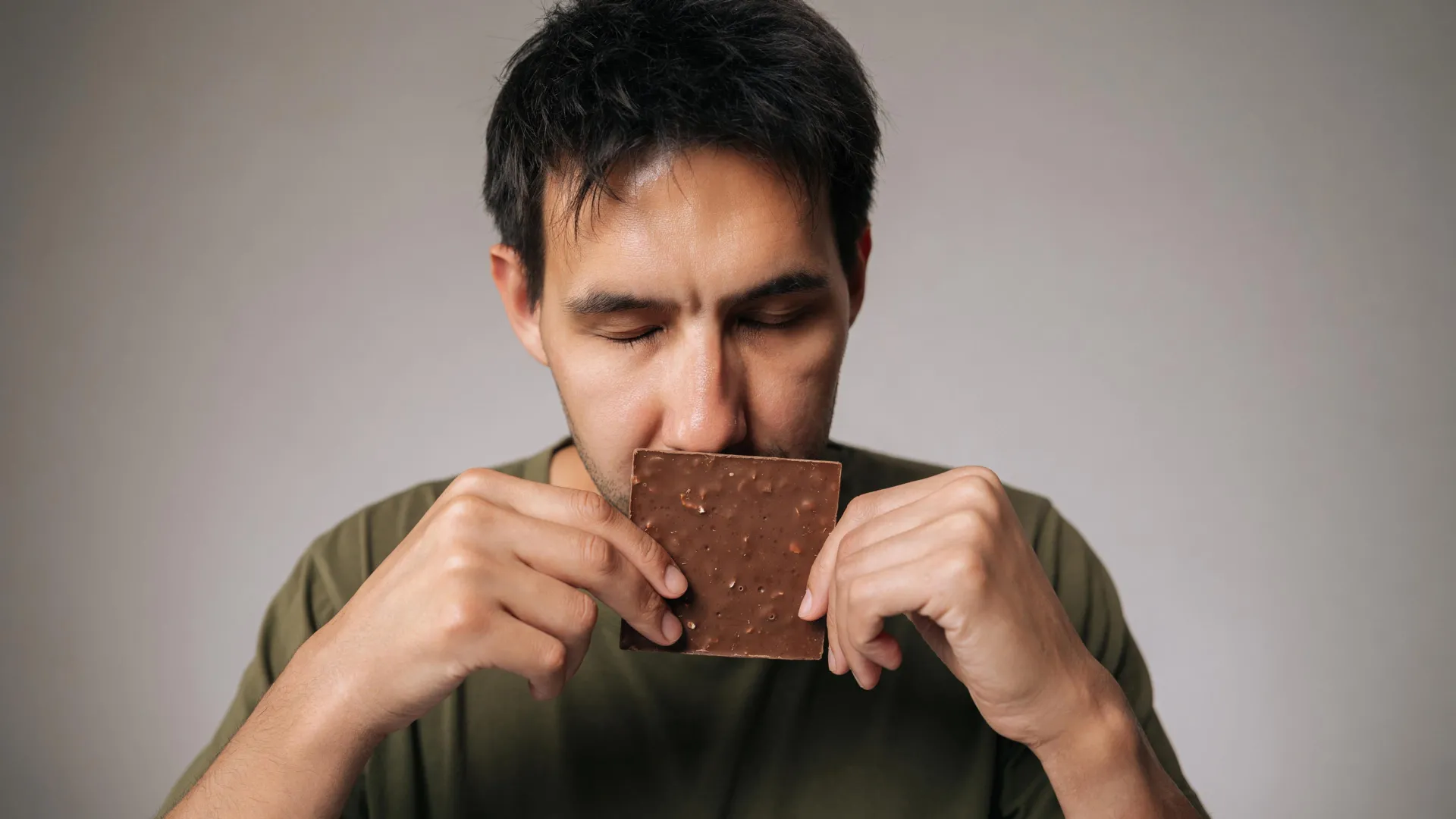
The study’s senior author, Dr. Mohamed Nashrudin bin Naharudin, an assistant professor at the Faculty of Sports and Exercise Science at the University of Malaya, emphasized the profound implications of these results. "Exposing moderately trained men to chocolate odors right before and between sets of resistance exercise significantly increased their overall training volume without increasing their perceived exertion," Dr. Naharudin stated. "Seeing a substantial increase in repetitions without the athletes feeling like they were exerting themselves any harder is a fascinating psychobiological outcome that warrants further exploration in sports science and beyond." This "psychobiological" outcome refers to the intricate interplay between psychological factors (like perception and expectation) and biological processes (like muscle fatigue and endurance), highlighting how sensory input can subtly yet powerfully modulate our physical capabilities.
Unpacking the Methodology: A Deep Dive into Olfactory Exercise Enhancement
To systematically investigate the potential impact of chocolate scents, researchers meticulously designed an experiment involving 23 healthy men in their early to mid-20s, all of whom were classified as moderately trained. This specific demographic was chosen to minimize confounding variables associated with novice exercisers (who might show rapid gains regardless of intervention) or elite athletes (whose performance might be harder to significantly shift). Participants were randomized into three distinct groups, each exposed to a different olfactory stimulus: liquified dark chocolate containing a high concentration of 90% cocoa, liquified milk chocolate with a 60% cocoa content, or plain water serving as an odorless control. The use of liquified samples ensured a consistent and controlled release of aroma, preventing any visual cues or textural influences that actual chocolate might introduce.
The rationale behind this experimental setup was rooted in a critical gap identified in existing scientific literature. As Dr. Nashrudin Naharudin pointed out, "We know olfaction is powerfully wired into the brain’s appetite and emotion networks, but surprisingly, no study has systematically looked at the three-way interaction between smell, appetite, and actual resistance exercise capacity." Indeed, the human olfactory system is unique among the senses, as signals from the nose travel directly to the brain’s limbic system, which is intimately involved in emotion, memory, and motivation, before being processed by the thalamus. This direct pathway suggests a potent capacity for smells to influence our mental and physiological states, far more so than other senses like sight or hearing, which are routed through the thalamus first. Previous research has hinted at the cognitive and mood-altering effects of various scents – from the calming influence of lavender to the invigorating properties of peppermint – but their direct impact on physical exercise performance, especially resistance training, remained largely unexplored.
The experimental protocol was rigorous. Before commencing their exercise regimen, participants observed a fasting period of at least 10 hours. This crucial step ensured that any observed changes in appetite or performance were attributable to the olfactory stimuli rather than the physiological effects of recent food intake. The chosen exercise was leg extensions, an isolation movement targeting the quadriceps muscles. This exercise was ideal for the study due to its standardized movement pattern, allowing for precise measurement of repetitions and consistent muscle recruitment across participants. Performance was measured both before and throughout the training session. Simultaneously, researchers meticulously tracked participants’ subjective experiences: prior to exercising, they rated their hunger, fullness, desire to eat, and intention to eat in the near future using validated scales. During their sets, these hunger and desire to eat ratings were re-evaluated after each 30-second exposure to one of the scent samples, capturing real-time changes in appetite perception.
Distinct Olfactory Signatures: Dark vs. Milk Chocolate Effects
The two chocolate aromas yielded remarkably distinct effects, particularly concerning appetite regulation. The scent of dark chocolate, with its higher cocoa content, consistently demonstrated a significant impact on participants’ pre-exercise appetite profiles. Compared with both the odorless water control and the milk chocolate conditions, smelling dark chocolate was associated with markedly lower reported hunger levels, a reduced desire and intention to eat, and a greater sense of fullness. This suggests that the dark chocolate aroma primarily acted as an appetite suppressant, effectively decreasing the sensation of hunger and boosting perceived satiety even before any food had been consumed.
In contrast, milk chocolate, while perceived as significantly more pleasant than either dark chocolate or water, did not produce any substantial changes in participants’ hunger or overall appetite ratings. This divergence hints at different underlying psychological and physiological mechanisms at play, distinguishing between a scent’s hedonic (pleasure-inducing) qualities and its ability to modulate primal hunger signals. The pleasantness of milk chocolate likely triggered a different set of neural responses compared to the more "serious" satiety signals evoked by dark chocolate.
Beyond appetite, the most compelling finding revolved around exercise performance. Both chocolate aromas positively influenced the participants’ capacity to complete resistance exercise. Dr. Nashrudin Naharudin quantified these gains: "Sniffing a 90% dark chocolate odor added about 18 more repetitions to participants’ leg extensions, while a 60% milk chocolate odor added about nine repetitions compared to the water control." To put this into perspective, for an individual performing three sets of leg extensions to muscular failure, adding 9 to 18 repetitions per session represents a substantial increase in total training volume. Over weeks and months, such a consistent boost could translate into significant improvements in muscle strength, hypertrophy (muscle growth), and overall athletic development. This magnitude of increase is comparable to, or even exceeds, the effects seen with some common ergogenic aids, underscoring the potential of olfactory stimuli as a performance enhancer.
The Brain’s Olfactory Blueprint: Decoding the Mechanism of Anticipation
The researchers propose that these fascinating results can be largely explained by the brain’s powerful mechanism of learned associations with food. From early childhood, individuals repeatedly experience specific smells in conjunction with eating. Over time, these aromas become potent sensory cues, signaling to the brain and body what is likely to follow – the consumption of food and its subsequent physiological effects. This process, akin to classical conditioning, establishes a strong link between a smell and the anticipated outcome of ingestion.
The implications of these learned associations are profound: these expectations can even shift a person’s perception from hunger toward fullness before any food has actually been consumed. In the context of the study, the dark chocolate scent, often associated with a rich, dense, and typically bitter-sweet, highly satiating food, appears to serve as a potent learned cue for satiety. As Dr. Naharudin explained, "The dark chocolate scent serves as a learned cue for a rich, bitter, and highly satiating food, which essentially tricks the system into an anticipatory state of fullness." This "trick" likely involves the activation of brain regions associated with reward and satiety, even in the absence of caloric intake. This anticipatory satiety, a phenomenon sometimes referred to as "cephalic phase responses," prepares the digestive system and the brain for an incoming meal, potentially modulating hunger-related hormones and neurotransmitters. By dampening hunger signals, the participants might have experienced less mental distraction or physiological discomfort, allowing them to focus more effectively on the exercise task and push through perceived fatigue.
Conversely, the sweeter milk chocolate scent, while not directly impacting hunger, appeared to function more as a hedonic reward cue. Its pleasant aroma likely created a more agreeable and motivating sensory environment, thereby enhancing training volume. "Conversely, the sweeter milk chocolate scent acts more like a hedonic reward cue, enhancing training volume by creating a highly pleasant sensory environment rather than by shifting basic metabolic hunger signals," Dr. Naharudin noted. This suggests that while dark chocolate worked by reducing negative sensations (hunger), milk chocolate worked by increasing positive ones (pleasure), both ultimately contributing to greater exercise output. This distinction highlights the multifaceted ways in which olfactory stimuli can influence psychobiological states.
The fact that these effects were observed in participants who had been fasting for an extended period makes the findings particularly intriguing. It strongly reinforces the idea that the power of anticipation, triggered by olfactory cues, can elicit psychological and physiological changes that resemble those caused by actual food consumption, independent of caloric intake. Food aromas, therefore, may play a much larger role than previously understood in preparing the digestive system for an upcoming meal or in producing changes in the body and mind as it anticipates eating.
Acknowledging the Boundaries: Study Limitations and Future Directions
While groundbreaking, the researchers prudently cautioned that the precise biological explanation for these observations remains largely speculative. A key limitation of the study was the absence of direct measurements of blood hormones (such as ghrelin, leptin, or cholecystokinin, which regulate hunger and satiety) or neural activity (via techniques like fMRI). Without these objective physiological markers, the study cannot definitively pinpoint the exact biological pathways responsible for the observed changes in appetite and exercise performance. Future research incorporating such measurements will be crucial to unraveling the neurochemical underpinnings of these effects.
Other methodological limitations were also acknowledged. The researchers noted that the intensity of the dark and milk chocolate aromas may not have been perfectly identical, potentially introducing a subtle bias. Moreover, because the control sample was simply odorless water, participants in that group might have consciously or subconsciously realized they were in the control condition, potentially influencing their perceived exertion or motivation. This highlights the inherent challenge of blinding participants in olfaction studies, where the absence of a stimulus can itself be a cue. Future studies could explore using a neutral, non-food-related aroma as an active control to mitigate this effect.
Furthermore, the study’s relatively small sample size and its focus exclusively on healthy, moderately trained young men limit the generalizability of the findings. It remains an open question whether similar effects would be observed in women, older adults, highly trained athletes, or individuals with different metabolic conditions or dietary habits. Research involving larger and more diverse demographic groups, across a broader spectrum of physical activities and training intensities, will be essential to determine how broadly these fascinating findings apply.
Beyond Chocolate: The Broader Horizon of Olfactory Enhancement
An exciting unanswered question emerging from this research is whether chocolate possesses a unique quality or if other familiar and appealing food aromas could produce similar psychobiological effects. Dr. Nashrudin Naharudin concluded that "We don’t think chocolate is entirely unique, though it is a food cue with incredibly strong, universally recognized reward associations." Indeed, chocolate holds a special place in many cultures as a symbol of indulgence, comfort, and reward, imbuing its scent with powerful emotional and associative properties.
However, the underlying principle of learned associations suggests that other foods strongly linked with feelings of satisfaction and satiety after eating might potentially yield comparable responses. Imagine the aroma of freshly baked bread, a savory roasted meal, or even a specific comfort food that elicits feelings of well-being and fullness. Researchers have yet to systematically test these ideas, but the possibilities are vast. The critical determinant, as Dr. Naharudin suggested, is that "A person likely needs to find the odor familiar and appealing – or at least not repulsive – to trigger the psychological shift in appetite that’s needed to see a performance boost." Individual preferences, cultural backgrounds, and personal experiences with food aromas would undoubtedly play a significant role in determining the efficacy of such interventions.
This pioneering study opens a captivating new avenue for research in sports science, nutritional psychology, and even clinical applications for appetite regulation. The potential to leverage our most primal sense – smell – to subtly influence physical performance and subjective experiences during exercise is immense. From enhancing training sessions and aiding recovery to potentially assisting with dietary adherence or managing cravings, the simple whiff of a familiar aroma could become an unexpectedly powerful tool in optimizing human well-being and performance. While the biological intricacies still need to be fully elucidated, the sweet smell of success, or perhaps chocolate, now carries a literal connotation in the realm of athletic achievement.
