
 By Lina Irawan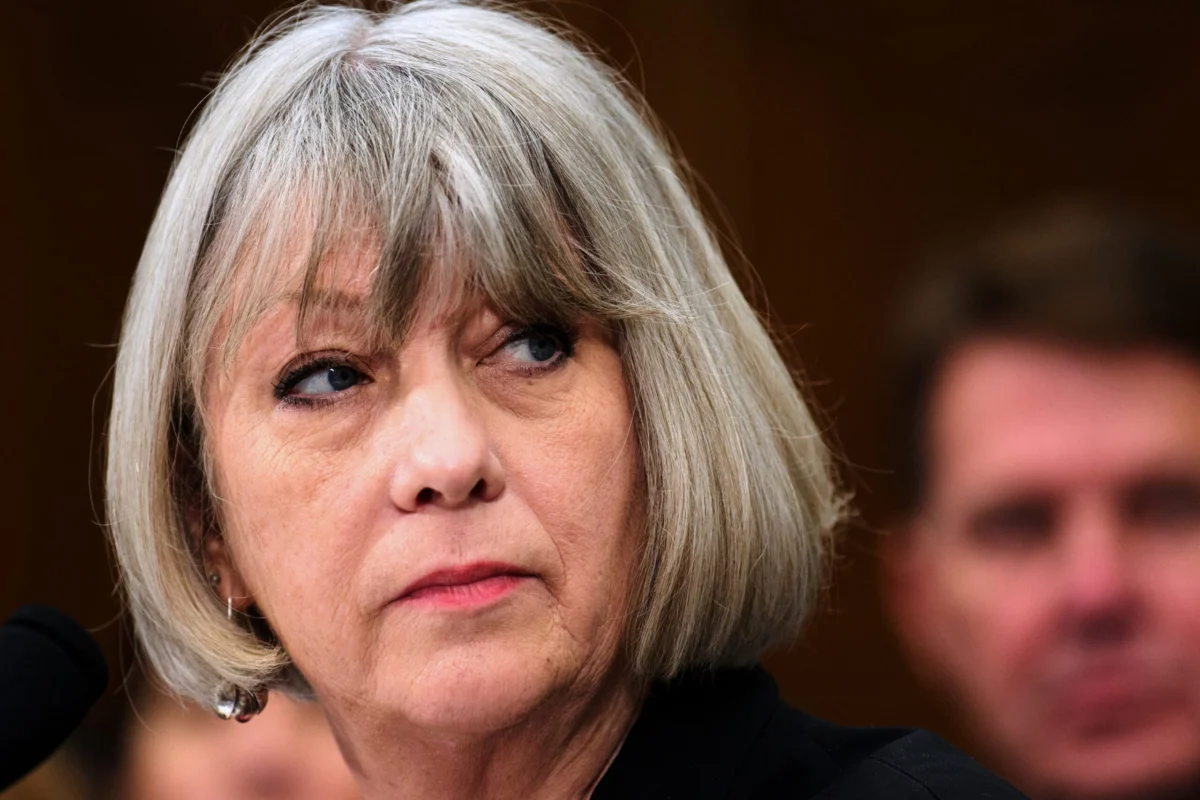
Hartig’s testimony before a House Oversight subcommittee was a direct challenge to the White House Domestic Policy Council’s report, which was released with pointed timing on July Fourth. The report accused the National Museum of American History, a cornerstone of the vast Smithsonian complex on the National Mall, of failing to present history "in a way that is inspiring, unifying, and worthy of our great republic." This accusation is not merely an administrative critique; it represents a deep ideological rift over who controls the telling of America’s story and what that story should emphasize.
"As we continue to fact check the report, we unwaveringly attest that it does not fairly or accurately characterize the full body of work at the museum," Hartig declared, her words reflecting a steadfast commitment to the museum’s mission and the integrity of its historical scholarship. While acknowledging that "there is always room for improvement," she passionately affirmed, "But I also know the beauty and the inspiration and the expertise that lies in our collections, our exhibits, and our programming." This statement highlighted the exhaustive work of curators, historians, and educators who meticulously craft the museum’s public face, often drawing on decades of academic research and artifact preservation.
The White House report, coinciding with the anticipation of America’s 250th anniversary of independence in 2026, laid out a stark vision for national commemorations. It argued that the museum had "refused to celebrate the Nation and its history," lamenting the perceived absence of exhibits solely dedicated to "a general narrative of American history or telling the story of any of our Founding Fathers, the Second Continental Congress, the Declaration of Independence, the American Revolutionary War, or the achievement of independence and the establishment of the constitutional rule of law." This critique echoes sentiments often expressed by conservative commentators and policymakers who advocate for a more triumphalist and less critical portrayal of American history, focusing on foundational myths and achievements without delving into complexities or uncomfortable truths.
Republicans on the House panel echoed these concerns with vigor. Rep. Tim Burchett, R-Tenn., articulated a common conservative grievance, stating, "In the museum’s current telling, history is just an ongoing power struggle between oppressors and the oppressed." He continued, asserting that "The report makes clear that the museum’s woke exhibits and materials reflect a broader vision held by the museum leadership." The term "woke," originally signifying an awareness of social injustice, has been weaponized in contemporary political discourse to describe anything perceived as overly progressive, identity-focused, or critical of traditional institutions, often serving as a catch-all for policies and narratives that challenge established power structures.
Hartig, making history herself as the first woman to serve as director of the National Museum of American History, countered these accusations by affirming the institution’s non-partisan stance. She stressed that the museum "does not take sides in America’s political debates," emphasizing its role as an impartial arbiter of historical evidence. Her explanation of the museum’s approach to national history centered on evolution and expansion, rather than erasure. "When historians talk about reframing a traditional narrative, we don’t mean erasing it," she clarified. "We mean adding the evidence, the voices, the objects, that earlier tellings left out, so that more Americans can see themselves reflected in the national story." This perspective aligns with modern historical scholarship, which increasingly seeks to incorporate diverse perspectives, including those of women, minorities, and marginalized groups, to create a more comprehensive and accurate picture of the past. Historians widely view this as enriching, not undermining, the national narrative.
A particular point of contention for Republicans was the exhibit entitled "Girlhood (It’s Complicated)," which ran from 2020 through 2023. This exhibit explored the complexities of girlhood through various lenses, including a diary from a 13-year-old that touched upon issues like gender identity. Critics seized upon this, portraying it as evidence of the museum pushing a "radical" agenda. Hartig defended the exhibit, noting that it was designed for a broad audience, and specifically highlighted that a label was included to clarify that it was not solely designed for young children, indicating the nuanced approach to potentially sensitive topics. The debate over this exhibit reflects broader cultural anxieties about gender, identity, and the role of public institutions in discussing these evolving social constructs.
However, the White House report’s claims regarding the museum’s alleged failure to celebrate foundational American history faced direct counter-evidence. Just months before the report’s release, in May, the museum unveiled a major new initiative perfectly aligned with the upcoming anniversary: "In Pursuit of Life, Liberty and Happiness." This exhibit, strategically spread throughout the building, proudly displays 250 objects chosen to commemorate America’s 250th anniversary. Among its prominent artifacts are Thomas Jefferson’s desk, famously used to draft the Declaration of Independence; a Revolutionary War-era gunboat, a tangible link to the nation’s struggle for sovereignty; and the Star-Spangled Banner, a powerful symbol of national resilience and identity. These iconic items directly refute the report’s assertion that the museum neglects the core narrative of America’s founding.
Despite the existence of such exhibits, some Republicans on the panel maintained their criticisms. Rep. Michael Cloud, R-Texas, acknowledged during his visit that important material related to the anniversary was present but argued it was "hard to find." "I’m not saying it’s not there, but it’s hard to find," he stated, suggesting an issue with prominence or accessibility rather than outright absence. This argument implies that the museum’s curatorial choices about emphasis and presentation are themselves political acts, favoring certain narratives over others.
The hearing was further shadowed by the specter of political interference in the leadership of Smithsonian institutions. Last year, the Trump administration had signaled its intent to remove the long-serving director of the National Portrait Gallery, Kim Sajet. While the Smithsonian Institution operates as a "trust instrumentality" of the United States, designed to be independent of direct executive branch control, Sajet ultimately stepped down from her position in the face of sustained White House pressure. This precedent undeniably created an atmosphere of uncertainty around Hartig’s own tenure. At one point, Rep. Burchett directly challenged Hartig, asking her why she believed she should continue in her role. Her response was succinct and powerful: overseeing the museum is "the honor of my career," a testament to her dedication and belief in the institution’s mission.
The broader context of this dispute is the "1776 Project," launched by the Trump administration as a counterpoint to what it perceived as "revisionist" history, particularly the "1619 Project" which reframed American history around the consequences of slavery. The 1776 Project aimed to promote "patriotic education" by focusing on the ideals of the Founding Fathers and downplaying elements of American history that present the nation in a less flattering light. Many professional historians, including organizations like the American Historical Association, have expressed alarm at such efforts, viewing them as attempts to politicize historical scholarship and impose a government-sanctioned narrative, thereby undermining academic freedom and the pursuit of a complete, evidence-based understanding of the past.
National museums like the National Museum of American History serve a critical role in a democratic society. They are not merely repositories of artifacts but vital educational institutions that shape public understanding of identity, heritage, and civic responsibility. The tension between presenting an "inspiring" narrative and a "truthful" one, especially when that truth involves difficult periods of injustice or conflict, is a constant challenge for curators and historians. The museum’s approach, as articulated by Hartig, is to embrace this complexity, ensuring that the national story is expansive enough to reflect the experiences of all Americans, fostering a sense of shared heritage that acknowledges both triumphs and struggles. The ongoing debate over the museum’s leadership and its exhibits thus represents a fundamental struggle over how America defines itself and how its history will be remembered and taught to future generations.
