
 By Isnaini Azizah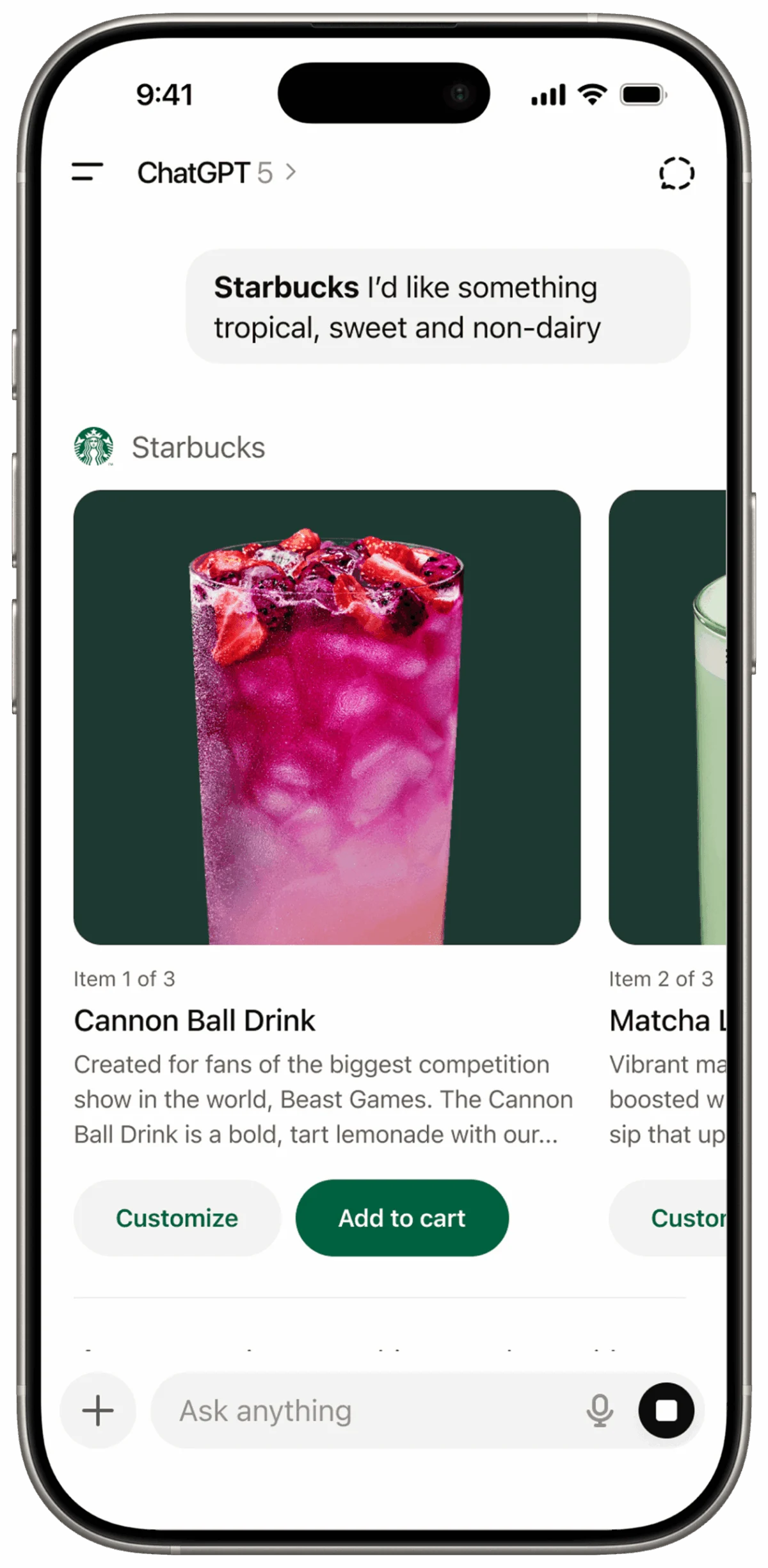
Starbucks has launched a beta app in ChatGPT to provide inspiration for customers’ drink orders, the company said Wednesday, marking a significant milestone in the intersection of generative artificial intelligence and retail commerce. This strategic integration represents a shift in how the coffee giant envisions the customer journey, moving away from static digital menus toward a more fluid, conversational interface that mirrors the personalized experience of interacting with a skilled barista. To utilize the beta app, customers must first enable the Starbucks integration through ChatGPT’s official app directory. Once activated, users can enter prompts into the chatbot that include the handle "@Starbucks," triggering a specialized interface designed to translate vague cravings and specific dietary needs into concrete beverage recommendations. While the tool allows for deep customization—including the selection of specific store locations and the adjustment of milk types, syrups, and temperatures—the company has maintained a critical boundary: consumers must complete their final transaction on the official Starbucks mobile app or website. This distinction is vital for a corporation that manages one of the most successful loyalty programs in the world, ensuring that the high-value data and direct customer relationship remain within the proprietary Starbucks ecosystem.
The launch is not merely a technological experiment but a calculated response to shifting consumer behaviors in the post-pandemic era. Paul Riedel, Starbucks’ senior vice president of digital and loyalty, emphasized that the modern consumer often lacks a specific product in mind when they begin their purchasing journey. "Over the past year, one thing has become clear: Customers aren’t always starting with a menu," Riedel said in a statement accompanying the launch. "They’re starting with a feeling. We wanted to meet customers right in that moment of inspiration and make it easier than ever to find a drink that fits." This "feeling-first" approach acknowledges the complexity of the Starbucks menu, which, through various modifiers, offers millions of potential combinations. For many, the sheer volume of choice can lead to decision fatigue; AI serves as a concierge, narrowing these infinite possibilities into a curated selection based on the user’s mood, the time of day, or even the local weather.
This move is a cornerstone of the broader "Back to Starbucks" turnaround strategy, an initiative aimed at reclaiming the brand’s identity as a premier "third place" while simultaneously modernizing its digital infrastructure. Under this revitalization plan, the company has taken aggressive steps to improve the physical and digital experience. This includes reintroducing comfortable seating to cafes that had moved toward a "to-go" only model, trimming overly complex menus to improve operational speed, and reintroducing tiers to its loyalty program to provide more granular rewards for frequent visitors. The ChatGPT integration fits perfectly into this framework by bridging the gap between the convenience of mobile ordering and the discovery-driven experience of browsing a physical store. By leveraging OpenAI’s large language models, Starbucks aims to recapture the "magic" of discovery that sometimes gets lost in the efficiency-focused interface of a standard mobile app.
The emphasis on drink discovery is particularly relevant to winning over Gen Z and younger Millennial consumers. Market research has consistently shown that younger demographics have a higher affinity for unique, highly customized, and "Instagrammable" beverages compared to older generations who may stick to traditional coffee orders. Gen Z consumers are often the drivers of viral "secret menu" trends on platforms like TikTok, where complex recipes are shared and replicated. Starbucks has already attempted to cater to this through its "trending beverage" category and a "secret menu" section under the "offers" tab in its native app. However, a conversational AI provides a more natural environment for this demographic to explore. Instead of scrolling through lists, a user can simply type, "I want something cold, caffeine-free, and purple," and the AI can cross-reference the current inventory to suggest a customized Iced Passion Tango Tea Lemonade with specific inclusions.
Financially, the timing of this AI rollout is auspicious. After two years of fluctuating traffic and occasional declines in customer transactions, Starbucks’ turnaround efforts appear to be yielding tangible results. In its fiscal first quarter ended December 28, the chain reported a significant milestone: rising customer transactions. This uptick suggests that the combination of improved store environments and better digital engagement is resonating with the public. By adding an AI layer to the top of the sales funnel, Starbucks is betting that it can increase the "attach rate" of its products—encouraging a customer who might have only bought a coffee to try a new seasonal beverage or a food pairing suggested by the chatbot.
This is not the first time Starbucks has leaned into the capabilities of artificial intelligence. The company has a long history of utilizing machine learning through its "Deep Brew" initiative, an internal AI engine that powers personalized offers in the Starbucks app and optimizes labor scheduling in stores. More recently, in mid-2025, the company unveiled "Green Dot Assist," a specialized AI assistant developed for baristas. Built on the Microsoft Azure OpenAI platform, Green Dot Assist was designed to help store partners quickly look up complex recipes, troubleshoot equipment, and manage inventory, thereby reducing the cognitive load on staff and speeding up service. The new ChatGPT beta app represents the consumer-facing evolution of these internal efforts, moving AI from the back-of-house operations to the front-of-house customer experience.
The partnership with OpenAI places Starbucks among an elite group of consumer-facing giants exploring the frontier of "conversational commerce." Companies like Walmart, Etsy, and Booking.com have also begun testing shopping and purchasing integrations through the ChatGPT interface. Walmart, for instance, has tested a feature where users can plan a weekly meal and have the necessary ingredients automatically added to their digital cart. Etsy has used AI to help gift-seekers find the perfect artisanal item based on a description of the recipient’s personality. For Starbucks, the goal is similar: to move from being a reactive utility—where a customer knows what they want and buys it—to a proactive partner in the customer’s daily routine.
However, the decision to keep the final checkout process within the Starbucks app is a strategic masterstroke of data sovereignty. The Starbucks Rewards program is frequently cited by analysts as one of the most powerful tools in retail, boasting tens of millions of active members who contribute significantly to the company’s total revenue. By requiring users to jump from ChatGPT to the Starbucks app to pay, the company ensures it maintains direct access to payment information, purchase history, and loyalty point accrual. It also prevents third-party platforms from becoming the primary "owner" of the customer relationship. In the era of big data, the "last mile" of the transaction is where the most valuable insights are gathered, and Starbucks is clearly unwilling to cede that territory to OpenAI or any other tech provider.
Industry analysts suggest that this AI integration could also help solve one of Starbucks’ most persistent operational challenges: the "bottleneck" created by complex custom orders. While the AI encourages customization, it also structures those customizations in a way that the Starbucks POS (Point of Sale) system can interpret clearly. This reduces the likelihood of "unbuildable" drinks or confusing instructions that can slow down baristas during peak hours. Furthermore, by analyzing the types of prompts users enter into the ChatGPT app, Starbucks can gain unprecedented insights into emerging flavor trends and customer desires that haven’t yet been captured by their official menu. This "intent data" could prove invaluable for future product development and seasonal launches.
As Starbucks continues to navigate a competitive landscape filled with both high-end boutique roasters and low-cost fast-food coffee options, its digital edge remains its greatest moat. The ChatGPT beta app is a clear signal that the company views technology not just as a tool for efficiency, but as a medium for brand storytelling and emotional connection. If the beta proves successful, it is likely that these conversational features will eventually be integrated directly into the primary Starbucks app, creating a seamless, AI-powered "digital barista" that knows a customer’s preferences, anticipates their needs based on the time of day, and offers inspiration exactly when they need it most. For now, the beta serves as a high-tech laboratory, testing the limits of how coffee, culture, and code can blend together in a single, personalized cup.
