
 By admin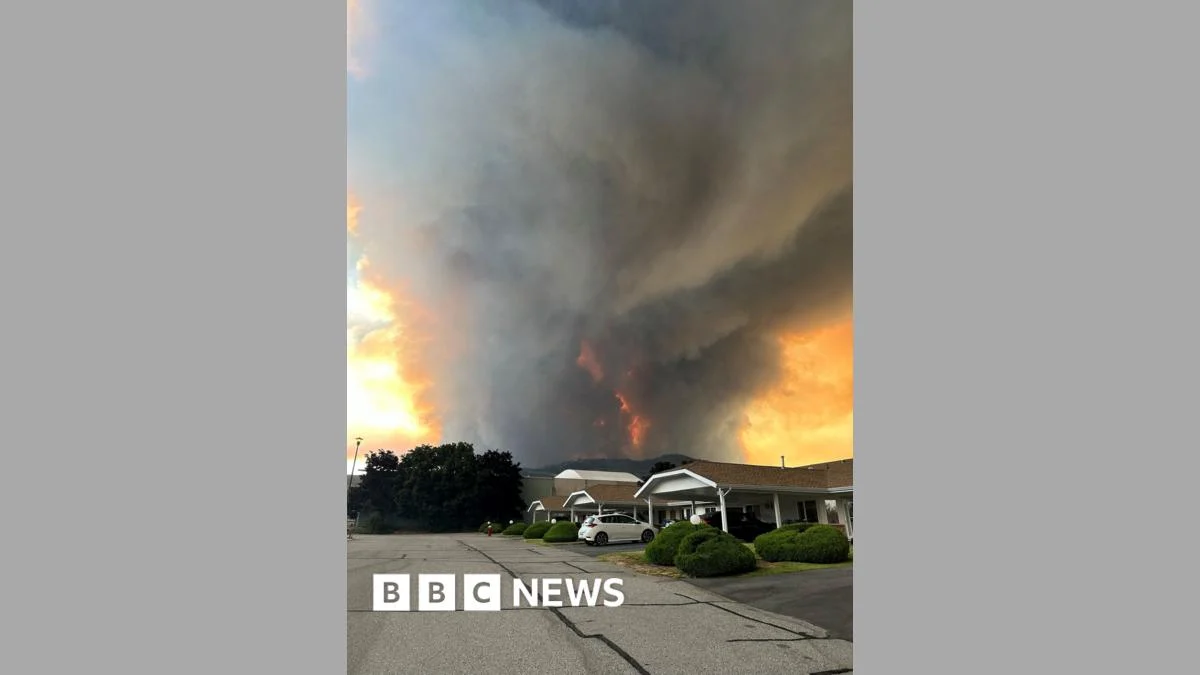
The picturesque district of Summerland, a vibrant community nestled in British Columbia’s Okanagan Valley with a population of approximately 12,000 residents, found itself at the epicenter of a rapidly escalating wildfire crisis. Early Saturday morning, as an ominous orange glow painted the sky, officials issued a mandatory evacuation order for the entire district, a drastic measure underscoring the severity of the threat. The power grid across the affected area succumbed to the encroaching flames, plunging homes and businesses into darkness and adding an unsettling layer of urgency to the unfolding emergency. This widespread power outage not only hampered communication efforts but also served as a stark visual reminder of the uncontrolled fury of the wildfire.
The human toll of the disaster was immediately apparent, particularly for the most vulnerable members of the community. Interior Health, the publicly funded health authority responsible for healthcare services in the Interior of British Columbia, initiated a complex and critical operation to relocate hundreds of residents from Summerland’s care facilities, including dedicated senior housing complexes. These individuals, many with mobility challenges and specific medical needs, were being transported to designated safer areas, a logistical undertaking fraught with challenges and requiring the coordinated efforts of numerous healthcare professionals and emergency personnel. The meticulous planning and execution of these evacuations were paramount to ensuring the well-being and safety of these residents, highlighting the proactive measures being taken by health authorities in the face of an unprecedented threat.
The scale of the collective response was immense, a testament to the resilience and dedication of those on the front lines. BC Premier David Eby, speaking via social media, lauded the tireless efforts of a diverse group of emergency responders. "Throughout the night and into this morning, first responders, BC Wildfire Service crews, [Royal Canadian Mounted Police] officers, emergency management teams, and local communities worked tirelessly to keep people safe and fight the fire near Summerland," Eby stated, his words echoing the gravity of the situation. He further emphasized the ongoing commitment of these individuals, adding, "They continue to do everything possible to protect people and communities." This multi-agency collaboration, spanning provincial and local entities, was crucial in mounting a coordinated defense against the encroaching inferno. The BC Wildfire Service, a specialized branch of the provincial government, deployed its highly trained crews, equipped with specialized gear and knowledge, to combat the blaze. Their efforts were augmented by the presence of RCMP officers, who not only assisted with evacuations and maintaining order but also provided a vital security presence in the affected areas. Emergency management teams, working from sophisticated operations centers, were responsible for coordinating resources, disseminating critical information, and ensuring the seamless execution of emergency plans. The involvement of local communities, through volunteer efforts and mutual aid, further underscored the spirit of unity in the face of adversity.
As the full extent of the fire’s devastation began to emerge, a chilling uncertainty loomed regarding the number of structures that had been consumed by the flames. Officials were unable to provide precise figures, a common occurrence in the immediate aftermath of such a dynamic and destructive event. The heat and intensity of the wildfire often make it impossible for ground crews to conduct thorough damage assessments until the fire is brought under control. The unknown number of destroyed homes and businesses amplified the anxiety of residents who had been forced to flee, leaving behind their livelihoods and cherished possessions. The economic and social impact of such widespread destruction would undoubtedly be felt for years to come, requiring significant rebuilding efforts and long-term support for the affected communities.
The wildfire’s relentless advance did not confine itself to Summerland. The inferno’s reach extended to neighboring districts, prompting further emergency measures. The nearby districts of Okanagan, Peachland, and Okanagan-Similkameen also issued their own evacuation orders, mirroring the urgent directives given in Summerland. In some areas within these broader regions, evacuation alerts were issued, signaling a heightened risk and advising residents to be prepared to leave at a moment’s notice. These alerts, while not mandatory evacuations, served as a crucial early warning system, allowing residents to make necessary preparations, secure their properties, and have their emergency kits readily accessible. The interconnectedness of these communities meant that the wildfire was not an isolated incident but rather a regional threat requiring a unified and comprehensive response.
The personal toll of the crisis was starkly illustrated by the harrowing account of one emergency official. On Friday evening, Thompson, a key figure at the Okanagan-Similkameen emergency operations centre, had been diligently providing updates on the rapidly spreading fire. The very next morning, in a poignant video posted from the confines of his car, he revealed a deeply personal decision: he had been compelled to leave the very operations centre he was helping to lead. "I had to leave the EOC to come and get my family to leave this area. We’re heading south," he stated, his voice heavy with the weight of personal responsibility and the urgency of the situation. This act, though seemingly a deviation from his official duties, underscored the overwhelming nature of the crisis, where even those tasked with managing the emergency found themselves directly impacted and forced to prioritize the safety of their own loved ones. His departure from the EOC, while necessary for his family, also highlighted the challenges of maintaining operational continuity when personnel are personally affected by the disaster.
The unique challenges of the Okanagan region, known for its equestrian culture, became acutely apparent as residents grappled with the evacuation of their beloved animals. The Canadian broadcaster CBC reported on the immense difficulties faced by residents in Okanagan attempting to relocate their horses. For many, the sheer number of animals and the limited time available made traditional evacuation methods impractical. In a heartbreaking testament to their deep bond with their animals, some residents resorted to a desperate measure: leaving their gates open in the hope that the horses would instinctively find their own way to safety, away from the encroaching flames. This act, born out of love and desperation, spoke volumes about the emotional connection between the people and the animals that share their land.
Further complicating efforts to identify and account for evacuated animals, some owners took the initiative to paint distinctive markings on their horses. This simple yet effective strategy, as reported by the CBC, was intended to make the animals easier to identify and potentially reunite with their owners once the immediate danger had passed. Such measures, while not a solution to the broader crisis, offered a glimmer of hope and a practical approach to mitigating the personal losses that many faced. The challenges of evacuating livestock are often overlooked in broader disaster narratives, yet they represent a significant emotional and practical burden for those involved.
The wildfires engulfing British Columbia were not isolated incidents but part of a larger, alarming trend of intensified wildfire activity across Canada. Hundreds of wildfires had raged across the country throughout the summer, painting a grim picture of the escalating climate crisis. In July alone, nearly 200 wildfires were burning in Ontario, a province not typically associated with such widespread and severe fire events. The smoke plumes from these infernos were so dense and pervasive that they cast a pall over major urban centers, leading to air quality levels in Toronto being declared among the worst in the world for several consecutive days. This phenomenon of extreme wildfire seasons has become a recurring and increasingly concerning aspect of Canada’s climate reality.
The far-reaching consequences of these Canadian wildfires extended beyond national borders, impacting air quality in parts of the United States. Smoke from the blazes drifted southward, affecting states such as Minnesota and New York, leading to hazy skies and a decline in air quality for millions of Americans. The cross-border environmental impact of these wildfires even became a point of political contention. In a notable instance, then-US President Donald Trump reportedly threatened to impose new tariffs on Canada, citing the air quality issues caused by the wildfires. This response, while perhaps an oversimplification of the complex causes and effects, underscored the tangible and widespread repercussions of the environmental challenges faced by Canada. The interconnectedness of global ecosystems means that events in one region can have significant and far-reaching consequences for others, both environmentally and politically. The Summerland wildfire, therefore, was not just a local tragedy but a symptom of a much larger, global environmental challenge that demands sustained attention and collaborative action.
