
 By admin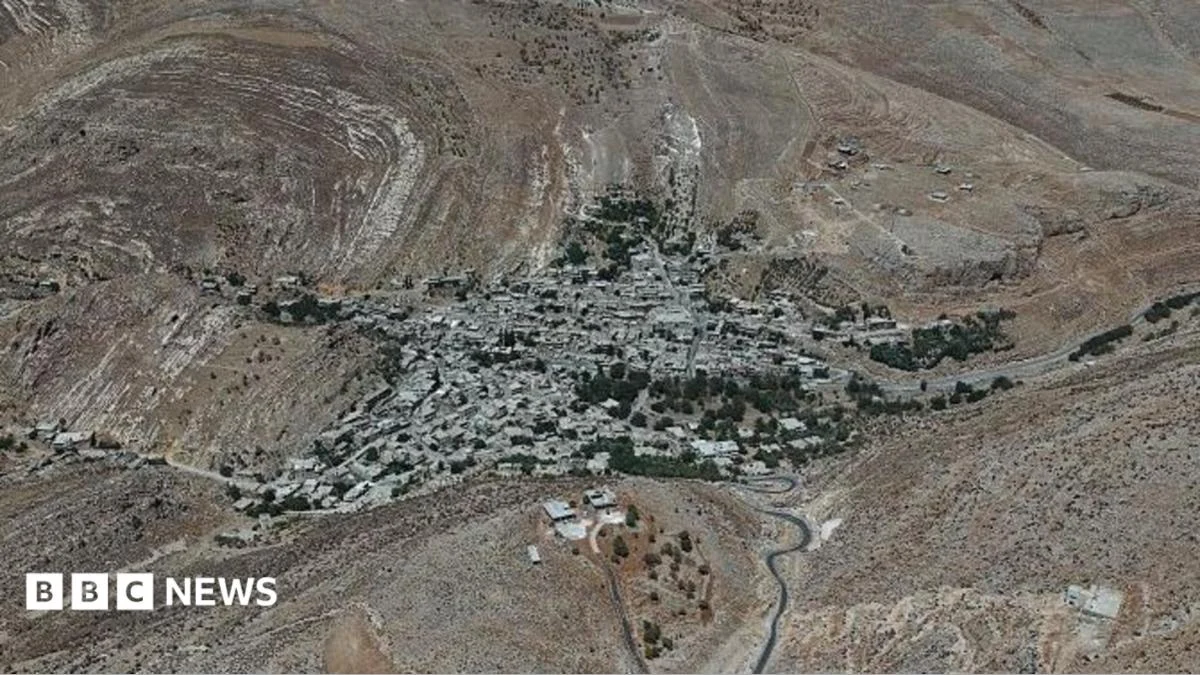
Syria has vehemently condemned an Israeli airstrike that targeted the village of Beit Jinn, located southwest of the capital Damascus, alleging that the attack struck a civilian vehicle and resulted in multiple injuries. This latest incident marks the second known Israeli military action within Syrian territory in a single week, prompting Damascus to label the strikes as a blatant "violation" of its sovereignty and a breach of international law. The Syrian Ministry of Foreign Affairs and Expatriates issued a strong statement denouncing the Israeli aggression, emphasizing the indiscriminate nature of the attack and the potential for further destabilization in an already volatile region.
The Israeli military, in a post on the social media platform X, asserted that its forces had targeted a "terrorist" individual described as being in the "final stages" of preparing attacks that posed an "immediate threat" to Israeli soldiers. This justification, however, was met with skepticism and outright rejection by Syrian authorities, who maintain that Israel is using unsubstantiated claims of imminent threats as a pretext for its aggressive actions. The Syrian government has consistently accused Israel of using its military might to undermine regional stability and support insurgent groups operating within Syria’s borders, allegations that Israel routinely denies.
The timing of these strikes is particularly noteworthy, occurring just days after reports surfaced of an earlier Israeli attack on a military airbase near the Turkish border. Syria stated that this prior strike also threatened to escalate tensions across the region, highlighting a pattern of Israeli military activity that Damascus views as increasingly provocative. The Syrian Air Force, a key component of its defense capabilities, has been a frequent target of Israeli strikes, which Jerusalem claims are aimed at disrupting the transfer of advanced weaponry to Iran-backed groups like Hezbollah.
Following the initial attack on the airbase, the United States issued a rare public rebuke of Israel, characterizing the strike as an "unnecessary escalation that does not advance regional stability." This statement from Washington was significant, given the generally close security and political ties between the US and Israel. The US ambassador to Turkey, Tom Barrack, further fueled speculation surrounding Israel’s motives in an interview on Friday. Barrack suggested that the Israeli strike could be a deliberate act of provocation, an attempt by "the Israelis baiting the Turks" in a strategic maneuver to draw Turkey into a wider conflict ahead of upcoming Israeli elections.
Barrack’s candid remarks did not go unnoticed by Israel’s political establishment. The country’s far-right defense minister, Israel Katz, swiftly responded to the ambassador’s assertions, describing his account as "full of inaccuracies." Writing on X, Katz defended the Israeli military’s actions, stating that Israeli forces were acting "in light of clear intelligence information about Turkey’s intentions." This exchange underscores the complex geopolitical dynamics at play, with different regional and international actors offering conflicting interpretations of Israeli military operations and their potential consequences.
The Israeli Prime Minister’s office, in a statement released after the alleged strikes on the Abu al-Duhur airbase, articulated Israel’s rationale more explicitly. The statement claimed that "Israel and Syria agreed to a status quo in security matters, which Syria was on the verge of breaching by permitting Turkish troops to deploy at an airbase near Aleppo." This declaration suggests that Israel perceived the potential deployment of Turkish forces at the airbase as a significant shift in the regional security landscape, one that it felt compelled to counter preemptively. The mention of a "status quo" agreement between Israel and Syria in security matters is particularly intriguing, hinting at a clandestine understanding that appears to have been fractured.
The village of Beit Jinn, the site of the most recent alleged Israeli attack, is strategically located in the Golan Heights region, an area that Israel has occupied since the 1967 Six-Day War and subsequently annexed. While the international community largely does not recognize Israel’s annexation of the Golan Heights, Israel considers it a vital security buffer. The presence of Iranian-backed militias and Hezbollah fighters in southern Syria, in close proximity to the Golan Heights, has been a persistent concern for Israeli security planners. Israel has conducted hundreds of airstrikes in Syria since the outbreak of the Syrian civil war in 2011, primarily targeting what it describes as Iranian and Hezbollah-linked sites.
The Syrian government, under President Bashar al-Assad, has consistently framed these Israeli strikes as acts of aggression aimed at weakening its military and prolonging the conflict. Damascus argues that these attacks violate Syrian sovereignty and international law, and that Israel is using the ongoing conflict as cover for its expansionist ambitions. The Syrian narrative often portrays the strikes as attempts to bolster rebel groups that have been supported by external powers, including Israel, in its efforts to destabilize the Assad regime.
The regional context surrounding these attacks is crucial for understanding their implications. The broader Middle East is currently grappling with heightened tensions, particularly between Iran and its proxies on one side, and Israel and its allies on the other. The conflict in Gaza, which erupted in October 2023 following Hamas’s attack on Israel, has further exacerbated these regional fault lines, leading to increased military activity across multiple fronts. Syria, situated in a geostrategically important location, has become a theater for proxy conflicts and a point of friction between regional powers.
The alleged targeting of a civilian vehicle in Beit Jinn raises serious questions about adherence to international humanitarian law. While Israel claims to target individuals posing an immediate threat, reports of civilian casualties, even if incidental, are deeply concerning and underscore the potential for unintended consequences in such operations. International law mandates the protection of civilians and civilian infrastructure, and any attacks that result in civilian harm must be thoroughly investigated.
The role of Turkey in this unfolding scenario is also a point of contention. Turkey, a NATO member, has had a complex relationship with both Syria and Israel. While Turkey has supported some opposition groups in Syria, it has also engaged in diplomatic overtures with Damascus and has expressed concerns about Israeli actions in the region. The accusation by Israel that Syria was allowing Turkish troops to deploy near Aleppo suggests a potential shift in regional alliances or security arrangements that Israel views as detrimental to its interests.
The response from the United States, particularly the ambassador to Turkey’s comments, highlights the differing perspectives on regional security and the potential for miscalculation. The US, while generally a staunch ally of Israel, has also expressed concerns about the broader implications of escalating conflicts in the Middle East. Ambassador Barrack’s suggestion of a deliberate Israeli provocation aimed at drawing Turkey into a conflict could be interpreted as a warning to Israel against actions that could destabilize the region further.
The interplay of intelligence, political motivations, and military objectives in these strikes is multifaceted. Israel’s defense minister, Israel Katz, claims to have "clear intelligence information about Turkey’s intentions," which suggests that Israel believes Turkey is pursuing actions that could undermine its security. However, without independent verification of this intelligence, it remains difficult to assess the validity of Israel’s claims.
The broader implications of these ongoing Israeli strikes on Syria extend beyond the immediate military engagements. They contribute to a climate of fear and uncertainty, potentially leading to further displacement of populations and exacerbating the humanitarian crisis in Syria. Furthermore, they risk drawing other regional powers into direct confrontation, thereby widening the scope of existing conflicts.
The international community’s role in de-escalating these tensions is critical. Diplomatic channels need to be actively engaged to prevent further escalation and to ensure adherence to international law. A comprehensive and sustained effort to address the root causes of the conflict in Syria, alongside a commitment to de-escalation by all parties involved, is essential for restoring stability to the region. The condemnation by Syria of these recent attacks serves as a stark reminder of the ongoing challenges to sovereignty and international law in the Middle East, and the urgent need for a peaceful resolution to the myriad conflicts plaguing the region. The future trajectory of these events will undoubtedly be shaped by the complex interplay of national interests, regional rivalries, and the ever-present threat of wider conflict.
