
 By Titik Puspa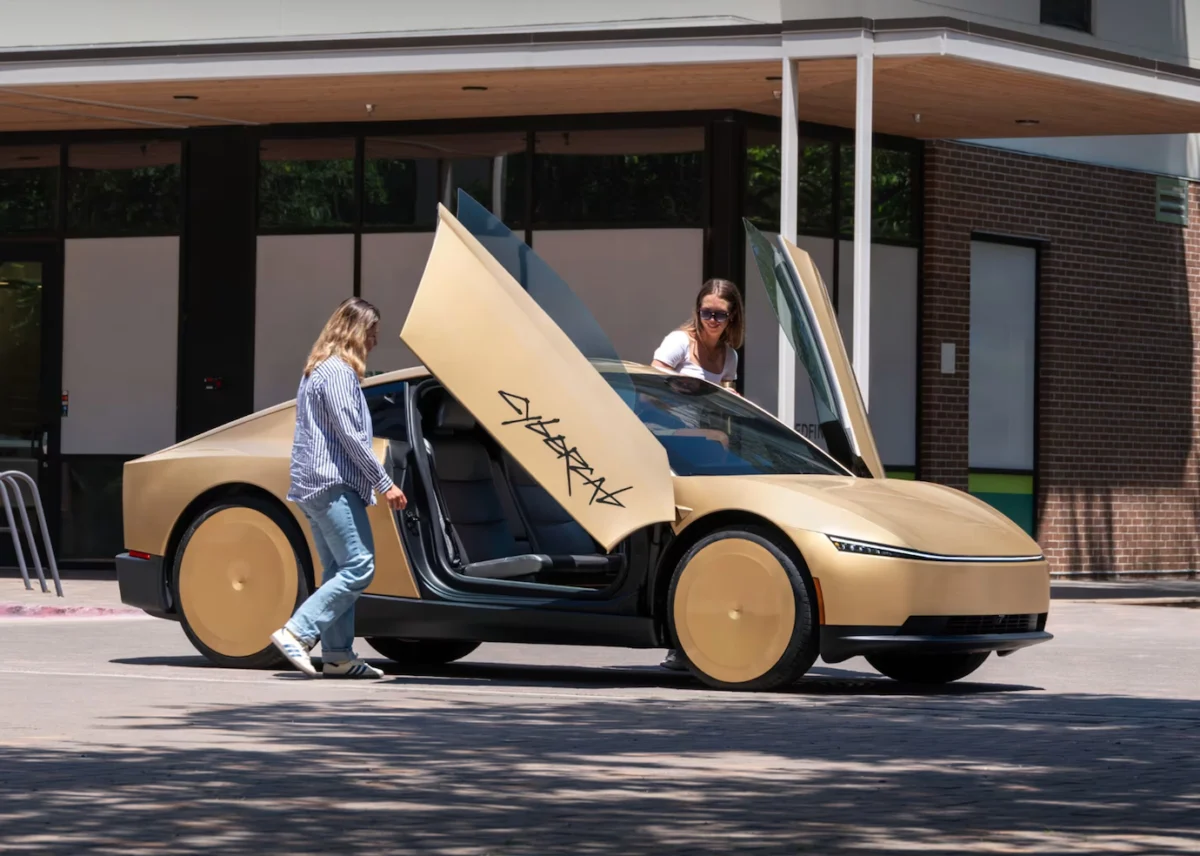
Tesla’s highly anticipated private Cybercab event has concluded, marking a stark departure from the company’s characteristic grand, publicly broadcasted product launches. This subdued approach to unveiling a vehicle CEO Elon Musk has championed for years raises eyebrows, particularly given the product’s revolutionary ambitions. The event itself was notably brief, with initial reports suggesting Musk himself did not deliver a keynote, and the primary presentation lasted a mere 15 minutes. This quiet rollout is particularly intriguing for a product promising to redefine urban transportation.
The Cybercab’s core promise is indeed monumental: a fully autonomous vehicle engineered to navigate solely through cameras and artificial intelligence, all while aiming for a significantly lower cost than competitors like Waymo. However, Tesla has been selective in its dissemination of details. While some critical information has been released via PDFs and updates to the "Robotaxi" app’s terms of service, a substantial amount of the minutiae appears to have been left to a dedicated cadre of enthusiasts to share online. This fragmented approach to communication comes at a critical juncture, as Tesla faces the immediate challenge of proving the Cybercab’s safety to the public, regulatory bodies, and local governments. Adding to this pressure, the National Highway Traffic Safety Administration (NHTSA) has already launched an investigation into Tesla’s Cybercab deployment, underscoring the intense scrutiny the company is under.
Despite the piecemeal release of information, several notable details have emerged from the Cybercab’s debut, offering a glimpse into Tesla’s approach to this groundbreaking technology.
No Cybercab for Kiddos: A Parental Quandary
One of the more surprising stipulations embedded within the Cybercab’s operational guidelines is a restriction prohibiting minors under the age of 13 from riding in the vehicle "at this time." This policy stands in contrast to Tesla’s "Robotaxi" Model Y SUVs, which do permit children aged 8 to 17 to ride, albeit with specific guidelines for child seat usage. While Tesla has provided instructions for installing child seats in both vehicle types, a peculiar omission for the Cybercab is the absence of standard LATCH (Lower Anchors and Tethers for Children) anchors. Instead, child seats can only be secured using the vehicle’s seat belt. This decision is particularly noteworthy considering Tesla’s stated emphasis on cost reduction through the elimination of unnecessary components. While removing complexity is a stated goal, foregoing child seat anchors is an unexpected move, especially given Musk’s public pronouncements on encouraging population growth. Regardless of the rationale, all passengers under 18 are still required to be accompanied by an adult in both the Cybercab and the Model Y Robotaxi. The specific reasons for Tesla’s hesitation in allowing younger children in the Cybercab remain unclear, hinting at potential safety considerations or developmental stage limitations that the company has yet to fully articulate.
What Happens in a Crash? A Detailed Protocol
The fundamental aspiration of any autonomous vehicle is to operate without incident. However, the reality is that even the most advanced systems can be involved in collisions. Tesla has outlined a comprehensive emergency protocol for the Cybercab in the event of a crash. Upon impact, the vehicle’s airbags will deploy, and the doors will automatically unlock. Hazard warning lights and interior illumination will activate to enhance visibility. Critically, the high-voltage battery will be disabled to prevent electrical hazards. The windows will be set to the "vent" position, allowing for air circulation. The Cybercab will then engage its brakes to bring the vehicle to a controlled stop and park itself. Simultaneously, the infotainment system will initiate a two-way communication link with Tesla’s rider support team, facilitating immediate assistance.
The automatic door unlocking feature is particularly significant, given Tesla’s recent history of facing criticism for its reliance on electronic door latches. Both domestically and in its largest international market, China, Tesla has encountered scrutiny over these systems. Just last month, the company agreed to a recall of three million vehicles in China, alongside other automakers, stemming from an investigation into electronic door latches that posed a risk of trapping occupants after a crash. The Cybercab’s immediate unlocking in an accident scenario appears to be a direct response to these prior concerns, aiming to ensure occupant egress.
Manual Door Releases: A Lesson Learned
The topic of doors continues to be a focal point, as Tesla has faced recent criticism regarding the accessibility of manual door releases within its vehicles during emergencies. The primary method of egress in Tesla vehicles is through electronic door latches, activated via a button or a smartphone application. This reliance on electronic systems necessitates easily discoverable manual overrides. The Cybercab, while utilizing electronic door latches for automatic opening at the commencement and conclusion of a ride, and featuring an exterior button for rider access, appears to have addressed this concern. The internal manual door release mechanism is reportedly located in a highly visible and accessible position on the armrest of each door, a design choice that suggests a conscious effort to mitigate past criticisms and prioritize occupant safety.
Brake-by-Wire: A Shift in Automotive Engineering
Tesla’s commitment to innovation and cost efficiency is further exemplified by its adoption of a brake-by-wire system in the Cybercab. This technology replaces the traditional hydraulic system, which relies on fluid pressure routed through intricate plumbing, with electronic actuators that directly control the brake calipers. Elon Musk has previously elaborated on the advantages of this approach, stating that "Having electric brakes avoids the complexity of a hydraulic system: no need to rout [sic] plumbing all around the car." This move aligns with Tesla’s pioneering use of steer-by-wire technology in the Cybertruck, which severs the physical connection between the steering wheel and the front wheels, further reducing mechanical complexity and potentially enhancing responsiveness. The adoption of brake-by-wire in the Cybercab signifies a significant technological leap in automotive braking systems, aiming for improved efficiency and a simplified design.
A Little Fresh Air: A Curious Limitation
A peculiar detail that has emerged from the Cybercab’s documentation is the limitation on its windows: they "cannot be fully opened at this time." The reasons behind this restriction are not elucidated in the information released by Tesla, leaving room for speculation. This inability to fully open the windows might be related to the vehicle’s advanced climate control systems, its aerodynamic design, or perhaps even safety protocols designed to prevent objects from entering the vehicle during autonomous operation. Without further clarification from Tesla, this remains an intriguing, albeit minor, mystery surrounding the Cybercab’s features.
USB-C Power: High-Speed Charging for the Modern Traveler
In terms of in-cabin amenities, the Cybercab is reportedly equipped with USB-C outlets that deliver an impressive 90W of power. This output is significantly higher than what is typically found in most passenger vehicles, which often provide around 10-15W. As noted by influencer Jeremy Judkins, this substantial power delivery capability means that passengers can expect to charge their devices, including laptops and other power-hungry electronics, at speeds comparable to using a wall adapter. This feature underscores Tesla’s focus on providing a seamless and convenient experience for occupants, recognizing the increasing reliance on personal electronic devices during travel.
The overall rollout of the Cybercab, characterized by its subdued nature and the gradual release of information, suggests a strategic shift for Tesla. While the company has historically thrived on generating buzz through elaborate reveals, this more measured approach might reflect a growing maturity in its product development cycle and a greater emphasis on regulatory compliance and public trust. The investigations and scrutiny from bodies like the NHTSA highlight the significant hurdles Tesla must overcome to achieve widespread adoption of its autonomous technology. The coming months will be crucial in determining whether the Cybercab lives up to its revolutionary promise and navigates the complex landscape of autonomous vehicle deployment successfully. The world will be watching closely to see if Tesla can translate its innovative vision into a safe, reliable, and widely accepted mode of transportation.
