
 By admin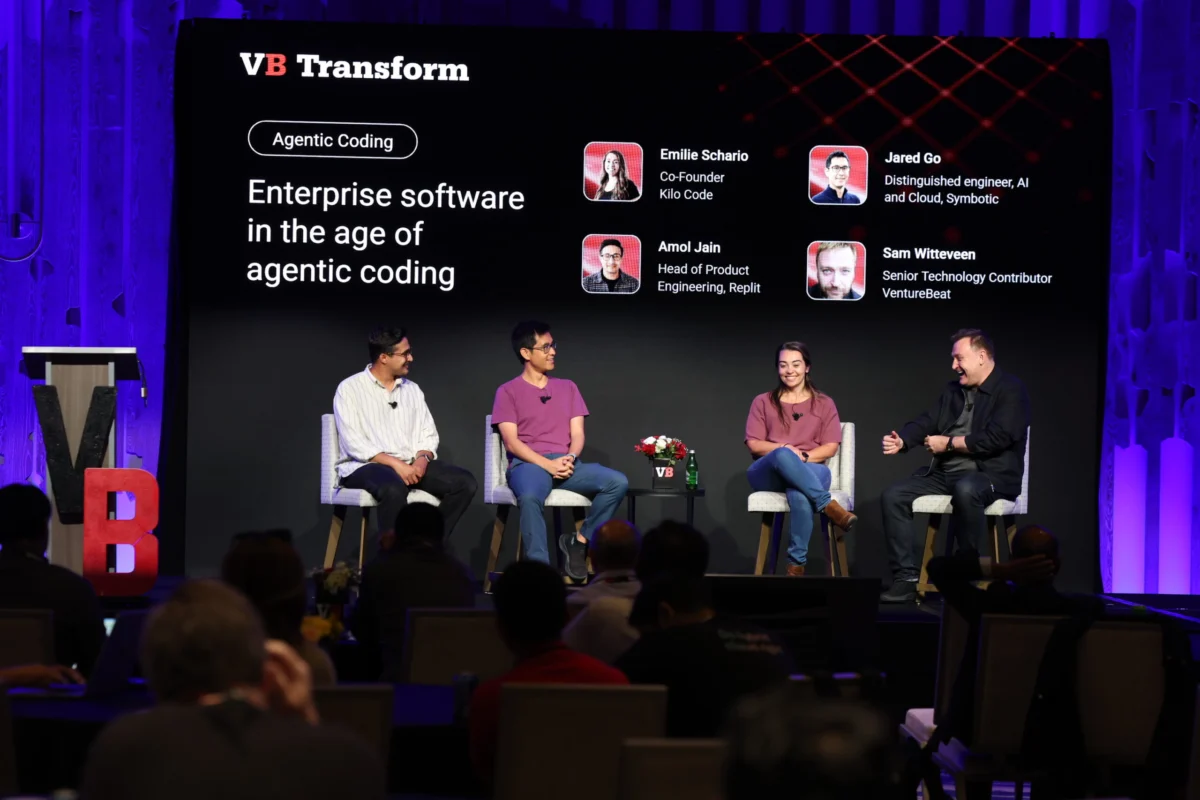
The landscape of software development is undergoing a seismic shift, with artificial intelligence agents now performing the vast majority of coding tasks, according to industry leaders. At Kilo Code, co-founder Emilie Schario revealed that engineers are now directly reading or writing code only about 1% of the time, with the remaining 99% handled by AI agents. This dramatic transformation is prompting a cascade of new and complex questions for development teams, including: which systems are secure enough to delegate entirely to AI, who bears the responsibility when AI models make errors, how to effectively manage and support multi-model architectures, and whether the apparent surge in token consumption signifies genuine progress or merely an inflated IT budget.
Tech leads from prominent companies like Replit, Kilo Code, and Symbotic view this evolution as a natural and indeed welcome progression as agentic AI becomes increasingly integrated into enterprise workflows. "Unless something’s really broken or debugging, 99% of the time engineers are not reading or writing code anymore," Schario stated during a recent presentation at VB Transform 2026, underscoring the profound change in daily developer routines. This sentiment was echoed by Jared Go, distinguished engineer for AI and cloud at warehouse automation firm Symbotic, who emphasized the importance of directing AI’s capabilities. Go articulated his approach by setting clear criteria for AI-generated code, focusing on "security, elegance, clean, concise code, water tightness." This strategic direction allows AI to handle the bulk of the development work, thereby diminishing the critical reliance on extensive human code review.
However, human oversight remains indispensable further down the development lifecycle, particularly when it comes to strategic product decisions. Go highlighted a key distinction: "Greenfield [building brand new codebases] is so easy for agents. Brownfield [writing, updating, or maintaining existing code] we all know is where the actual challenge lies." This distinction is crucial because current AI agents, while adept at generating new code, struggle with the complexities inherent in modifying and maintaining legacy systems. The nuanced understanding of existing architecture, business logic, and potential downstream impacts often requires human judgment.
Replit, while embracing agentic AI, has adopted a more cautious approach to AI-driven coding. Amol Jain, head of product engineering at Replit, explained their strategy: "The idea was human on the loop, not human in the loop." In their workflow, an AI agent reviews each pull request (PR) and assigns it a risk score. Low-risk PRs are automatically merged by their author, while those with higher risk scores are routed to human reviewers for thorough examination and feedback. Replit’s internal tool functions as a self-driving system for software engineers. Developers delegate tasks to agents, which then undertake end-to-end planning, implementation, and testing. Jain elaborated on the architecture: "It’s a fleet of agents that run in their own cloud virtual machines (VMs) with access controls behind token proxies so they’re secure."
One compelling example shared by Jain illustrated the power of this agentic system. An engineer was unable to reproduce or resolve a particularly challenging bug embedded deep within the company’s systems. The issue was escalated to an AI manager agent, which initially instructed itself to "go to sleep." Subsequently, the manager agent orchestrated a swarm of underlying agents that successfully pinpointed the bug. Further, it deployed an additional cohort of agents to devise and implement a fix. Within six hours, a PR was generated by the AI, resolving a bug that had eluded human engineers. This anecdote underscores the potential of AI agents to tackle complex problems through distributed and coordinated problem-solving.
The burgeoning field of AI is also witnessing a significant evolution beyond the confines of vendor lock-in, driven by a growing customer demand for multi-model flexibility. Kilo Code, for instance, has built a gateway that supports over 500 different AI models. "Your software that you’re using to do agentic engineering should be decoupled from the model that you’re using to do it," Schario emphasized. This approach allows companies to strategically leverage different models for different tasks. For example, businesses might utilize expensive, cutting-edge "frontier-tier" models for architecting a project’s foundational structure and then switch to more cost-effective open-weight models for the bulk of the development work. This strategic model selection not only optimizes performance but also manages costs effectively.
Furthermore, respecting the limitations and specific requirements of various AI model providers is becoming paramount. This includes considerations for models that must operate within closed or isolated environments, or those that are region-specific. Schario noted the complexity of these decisions: "It’s factoring in what’s important to you, what limitations you’ve set, what data retention policies you’ve established, what keys you’ve brought in, what commits you might have… into that routing decision." Replit, too, is adept at navigating the cost-versus-capability spectrum, often making these decisions on behalf of their users. Jain explained, "We are essentially making the decisions on users’ behalf of what model to use when, in what capacity, to minimize cost and maximize capability." This intelligent model routing ensures that the most appropriate and cost-effective model is employed for each specific task.
A critical concern accompanying the widespread adoption of AI is the potential for runaway costs, leading some enterprises to implement strategies like "tokenmaxxing" to track and cap AI usage. Schario observes these concerns from both internal teams and external customers. Clients have expressed anxieties such as, "I accidentally spent my whole AI budget for the year… so what do I do now?" Kilo Code addresses this by guiding customers toward the same cost-optimization workflow: utilizing premium models for initial planning and then transitioning to more affordable open-weight models for subsequent tasks. Additionally, fostering enhanced model capabilities through skill sharing, robust guidance, and protocols like the Model Context Protocol (MCP) will be instrumental. "Realizing where you can really uplevel your team to help them get the most out of the models they’re using is going to make a big difference," Schario remarked.
Internally, Schario has observed individual engineers with particularly high usage patterns. She notes the necessity of proactive engagement: "I regularly have to nudge, ‘What are you doing there?’" While a $600 daily bill might seem alarming, a closer examination of the completed work can often justify the expenditure. Schario emphasizes, "Cost per pull request is the metric that I’m paying attention to right now. It feels like the closest proximity for how I can measure value." Ultimately, AI is fundamentally altering how enterprises perceive Return on Investment (ROI). The issue is not the spend itself, but rather "the spend with no return on that spend."
Symbotic has implemented monthly cost tiers for its employees and developed a tool that provides managers with visibility into PRs and usage trends. This allows for dynamic adjustment of user tiers based on observed activity and efficiency. Go stated, "Having a cap and seeing how many people went up in cap this month makes a big difference when you’re trying to corral these costs and make things efficient." A significant catalyst for a company-wide reevaluation of efficiency at Symbotic occurred when Cursor, a tool they heavily utilize, ended a legacy discount that had grandfathered them into a flat per-request rate, even for advanced models. This transition to full pricing prompted a renewed focus on optimal model selection and utilization, with employees actively recommending alternative models based on their performance and cost-effectiveness for specific coding tasks.
The challenge of AI costs is increasingly extending beyond traditional IT departments. Replit has broadened the application of agents beyond engineering, and in one instance, a user in the support department inadvertently incurred substantial costs. Jain explained that this was due to running an automation process on a high-end model, GPT 5.5 Pro Max. "At least till that point, the ROI was rather clear. We could see engineering productivity 3X, so no one had questioned it yet." Jain stresses the criticality of providing "anti-productive" visibility, effective model routing, and sensible default settings. He concludes, "Most tasks do not need the frontier." This highlights the ongoing need for intelligent resource management and strategic deployment of AI capabilities to ensure both innovation and fiscal responsibility. The agentic revolution in software development is not merely about automation; it’s about redefining productivity, optimizing resource allocation, and fundamentally rethinking the relationship between human ingenuity and artificial intelligence.
