
 By admin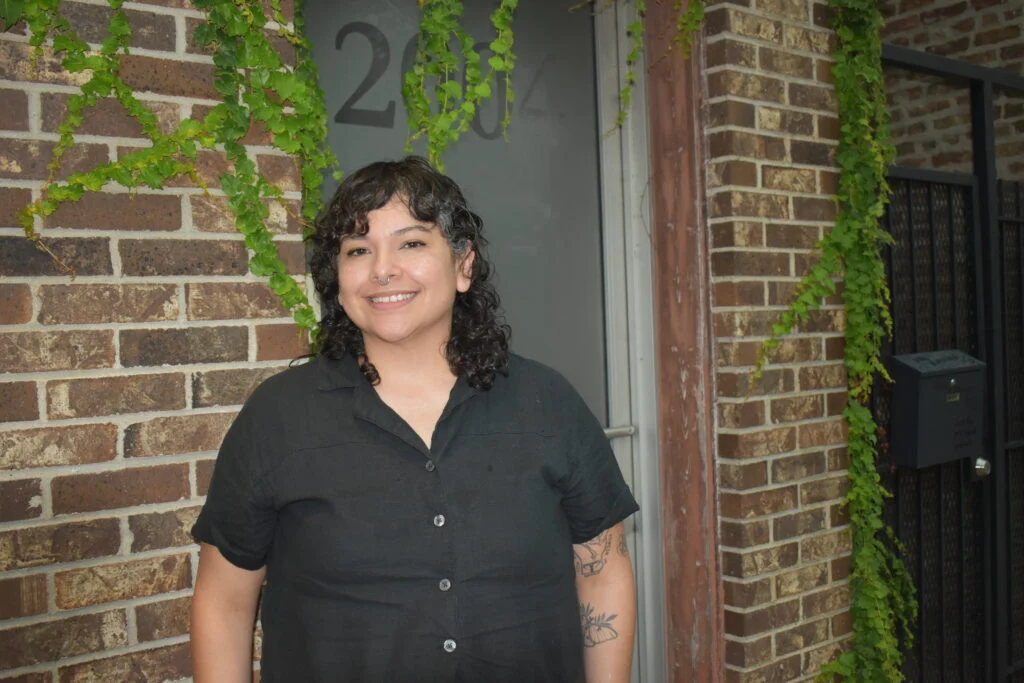
In the heart of Chicago, midway through an intensive graduate nursing program, Yesenia Raithel Vargas found herself in a position no student expects: making a desperate plea to a Facebook group for local mothers. Her request was unconventional, bordering on the fringe of professional norms in the mental health field. She was searching for a licensed therapist willing to allow her to sit in on private sessions and work with clients under direct supervision. For Raithel Vargas, a 45-year-old mother of four studying to become a psychiatric-mental health nurse practitioner, this was not a shortcut; it was a last resort born of systemic failure.
“I must have sent 50 emails, or made phone calls, just trying to figure this out,” recalled Raithel Vargas, who balances her studies at the University of Cincinnati’s online program with the demands of family life. “I was so overwhelmed.” Her experience is far from unique. Across the United States, thousands of advanced practice nursing students are hitting a "clinical bottleneck" that threatens to derail their careers and exacerbate a national healthcare crisis.
To graduate and earn their licenses, nurse practitioner (NP) students must complete a minimum of 500 clinical hours—though many programs require upwards of 700—working directly with patients under the guidance of a supervisor known as a preceptor. These preceptors are the bridge between classroom theory and the high-stakes reality of medical practice. They train students in diagnostic reasoning, medication management, and patient communication, ultimately serving as the final gatekeepers who evaluate whether a student is safe to practice independently. However, a severe and worsening shortage of these mentors is creating a barrier that many students simply cannot climb without extraordinary personal and financial sacrifice.
The timing of this shortage could not be worse. The United States is currently grappling with a profound deficit in primary care providers. According to data from the Association of American Medical Colleges (AAMC), the U.S. could see a shortage of up to 124,000 physicians by 2034. In response, more than half of U.S. states have granted "Full Practice Authority" to nurse practitioners, allowing them to evaluate patients, diagnose illnesses, and prescribe medications without the supervision of a physician. This shift has made NPs the fastest-growing segment of the primary care workforce. Research from the Columbia University School of Nursing indicates that the NP workforce grew by approximately 10 percent annually between 2016 and 2023, vastly outstripping the 1.1 percent growth rate seen among physicians.
Despite this explosive growth, the infrastructure to train these professionals has remained stagnant. While medical schools traditionally coordinate every aspect of a student’s clinical residency through established partnerships with teaching hospitals, nursing schools often operate on a "find-your-own" model. Although the two major accrediting bodies for nursing programs—the Commission on Collegiate Nursing Education (CCNE) and the Accreditation Commission for Education in Nursing (ACEN)—technically require schools to provide or assist with clinical placements, the reality on the ground is often a different story.
Many institutions fulfill their obligations by providing students with nothing more than a "legacy list"—a spreadsheet of doctors and nurses who have supervised students in the past. Elaina McAdams, a healthcare executive with a doctorate in nursing and the creator of the AI-enabled matching platform CAUHEC Connect, notes that these methods are often woefully inadequate. “Many schools have a spreadsheet and they call around, but they aren’t always successful,” McAdams said. “There are schools that’ll say, ‘Hey, we found someone. They’re 100 miles away, if you can make it.’ So technically, they find the preceptors, but is that reasonable for a student who’s paying tuition?”
This disconnect is rooted in a massive disparity in federal funding. The U.S. government invests roughly $20 billion annually into the training of medical residents, primarily through Medicare. In contrast, the entirety of federal funding for nursing workforce development programs generally hovers around $300 million—a fraction of which is dedicated to clinical training. Without the financial cushion of federal subsidies, nursing schools lack the leverage to secure guaranteed spots in busy hospitals and clinics.
Furthermore, the "preceptor burnout" crisis is hollowing out the pool of available mentors. Traditionally, precepting was viewed as a professional "pay-it-forward" obligation. Clinicians taught students for free because they had been taught for free. But in a post-pandemic healthcare environment characterized by crushing workloads and high turnover, few providers have the bandwidth to add teaching duties to their already packed schedules. When clinicians do agree to take on students, they are increasingly demanding payment for their time—a cost that is almost invariably passed down to the student.

For Raithel Vargas, the financial pressure eventually broke her resolve to find a free placement. While she eventually found a therapist via Facebook who would supervise her for free, she had already faced significant delays. In a subsequent rotation, she felt forced to pay a nurse practitioner $10 an hour for 168 hours of supervision. This "pay-to-play" model has birthed a controversial secondary market. For-profit companies like NPHub and Clinical Match Me have emerged to bridge the gap, charging students thousands of dollars to secure a placement.
Krish Chopra, the founder of NPHub, launched his company in 2017 after realizing that universities lacked the "sales infrastructure" to secure clinical sites. While he initially hoped schools would partner with him to cover the costs, most students still pay out of pocket. The average cost per rotation on NPHub is approximately $2,500, with more than half of that going directly to the preceptor. For a student requiring multiple rotations, these fees can quickly exceed $10,000, on top of their already high tuition.
The financial burden can be staggering. Kim Orta, a family nurse practitioner in rural Crescent City, California, is currently pursuing a post-master’s certificate in mental health and psychiatry through Purdue Global. To complete her required rotations, she had to take out a $16,000 loan—nearly equal to her tuition—to pay preceptors and cover travel and hotel costs for sites hours away from her home. “I’ve considered dropping out,” Orta admitted. However, the desperate need in her community keeps her going. She is currently one of the few providers in her county treating depression, anxiety, and bipolar disorder, and there is only one other psychiatric NP in the entire region.
Beyond the financial strain, the practice of students paying their own evaluators raises serious ethical and safety concerns. Nursing educators worry that a financial transaction creates a conflict of interest. If a student is paying a preceptor’s mortgage, is that preceptor less likely to fail a student who is performing poorly? McAdams warns of the "worst-case scenario" where a student who is "not really safe to practice" buys their way through a rotation.
The lack of standardization further complicates the issue. Because there is no national standard for what qualifies a clinician to be a preceptor, each nursing school sets its own criteria. Shani DeShield, a registered nurse from Alberta, Canada, moved to Chicago to pursue her degree, only to have her progress wiped out when her original university, Oak Point, abruptly closed in 2024. When she transferred to Lewis University, she found that her previously secured preceptors no longer met the new school’s specific requirements. “It was almost a full-time job trying to find a preceptor,” she said.
The solution, according to experts like Tim Porter-O’Grady, a clinical professor at Emory University and a veteran healthcare consultant, requires a total reimagining of the nursing education pipeline. He argues that nursing must adopt the "teaching hospital" model used by other elite professions. “Nursing is the single largest profession within health care, and it has paid little or no attention, as a discipline, to standardizing our transition to practice,” Porter-O’Grady said. He advocates for formal partnerships where health systems protect the time of preceptors and treat clinical instruction as a vital investment in their own future workforce rather than an unpaid burden.
Progress is slow, but there are signs of movement. The Society of Clinical Placement Professionals, formed in 2022, is working to improve communication between schools and health systems. Their inaugural summit drew ten times the expected attendance, signaling a desperate hunger for reform.
For Yesenia Raithel Vargas, the light at the end of the tunnel is finally visible. After a year-long delay caused by the placement struggle, she is on track to graduate and begin her work as a licensed psychiatric-mental health nurse practitioner by the end of the year. Her final rotation was secured only after a paid preceptor backed out at the last minute and referred her to a colleague who agreed to help for free.
“Every drop of blood, sweat, and tears is definitely worth it because I feel good about what I’m going to be able to do,” Raithel Vargas said. “But when I was desperately trying to find a preceptor, I was so ready to give up.” As the nation looks to nurse practitioners to fill the widening gaps in the American healthcare system, her story serves as a warning: the pipeline is only as strong as the mentors who support it, and right now, that pipeline is dangerously close to breaking.
