
 By Rifan Muazin
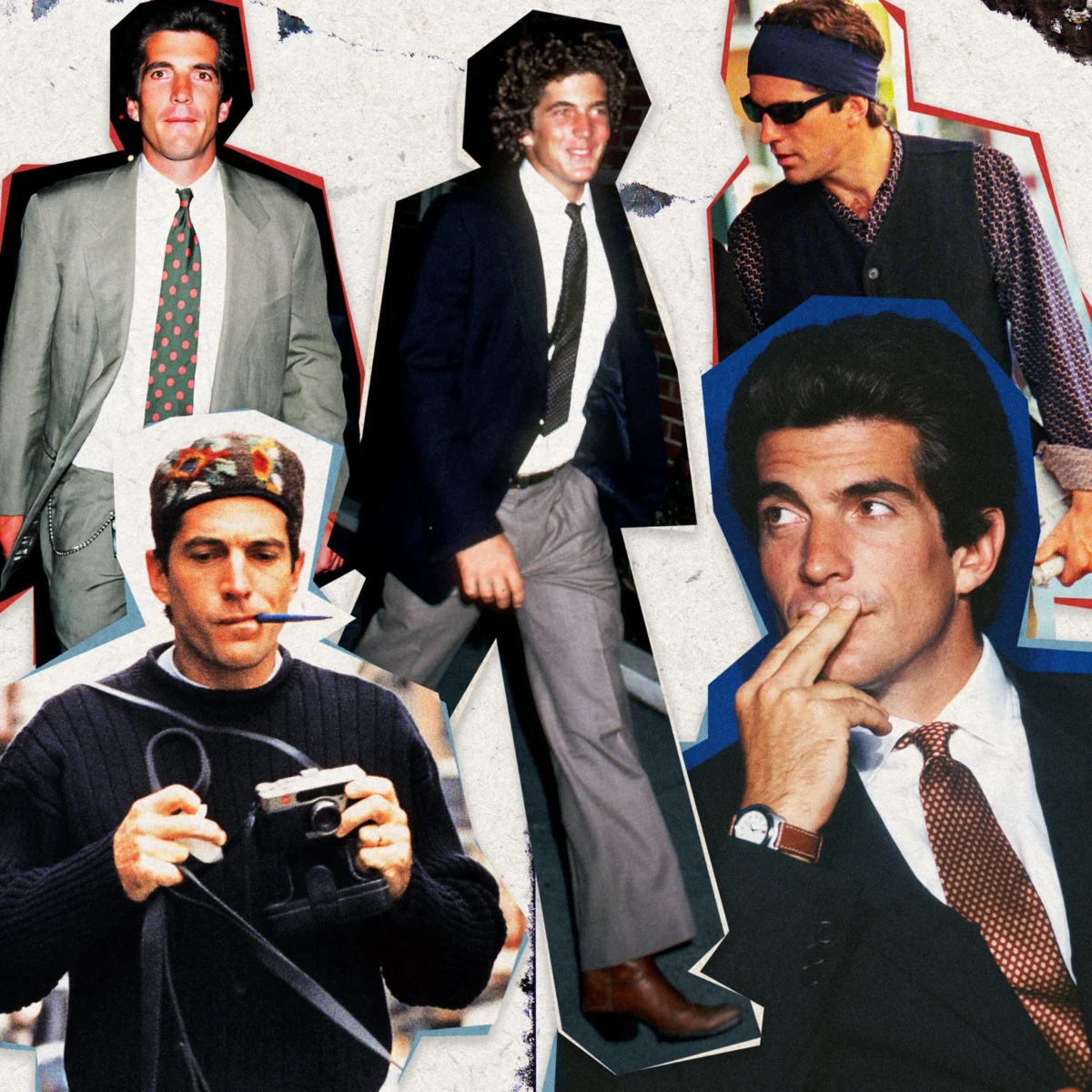
John F. Kennedy Jr. was not the first man to navigate the bustling streets of Manhattan on a bicycle while clad in a sharp, tailored suit, but he was undoubtedly the one who did it with the most effortless grace. As the son of a President and the 1988 recipient of People magazine’s "Sexiest Man Alive" title, John-John—as the tabloids affectionately called him—occupied a unique space in the American consciousness. He did not invent the backward Kangol cap, the pinstriped power suit, or the unconventional pairing of a waistcoat with rugged denim; rather, he inhabited these garments with a natural charisma that made them feel like an extension of his own athletic, adventurous personality. This inherent magnetism is precisely why, nearly three decades after his tragic death in a 1999 plane crash, he remains the ultimate reference point for menswear designers, stylists, and fashion enthusiasts globally. His aesthetic was not a manufactured brand but a lived-in reality, a "moodboard staple" that continues to influence how modern men approach the concept of "high-low" dressing.
To understand the enduring appeal of JFK Jr.’s style, one must first understand the man himself within the context of 1990s New York City. For those who lived in Manhattan during that decade, sightings of Kennedy were common yet always electrifying. Whether he was rollerblading through Tribeca, walking his dog Friday, or emerging from the subway, he possessed a physical presence that many claimed surpassed the quality of his photographs. Jeremy Freed, author of the recent book American Style, spent a year deconstructing this phenomenon. Through extensive research, including interviews with those who moved in Kennedy’s inner circle and an exhaustive analysis of thousands of paparazzi shots, Freed concluded that Kennedy’s style was a masterclass in authenticity. It was a rejection of the rigid, stuffy expectations of the "Camelot" legacy in favor of a modern, metropolitan identity that felt both regal and accessible.
One of the most significant lessons to be gleaned from the Kennedy playbook is the art of mixing genres. His wardrobe was built upon four distinct pillars: traditional tailoring, preppy Ivy League basics, rugged American workwear, and functional sportswear. However, his genius lay in the "idiosyncratic" way he blurred the lines between these categories. He was known to pair a formal navy blazer with a polo neck sweater or hike up his tailored trousers to reveal heavy-duty hiking boots. This "mix-and-match" philosophy created a sense of visual tension that felt fresh and rebellious. Interestingly, while the combination of straight-leg jeans, a button-down shirt, and a blazer is often attributed to him, historical evidence suggests he rarely wore denim. Some fashion historians speculate that his mother, Jacqueline Kennedy Onassis, viewed jeans as "shabby," while others suggest that denim simply didn’t provide the range of motion required for his hyper-active lifestyle. Instead, he opted for chinos or technical trousers, proving that one can achieve a casual look without relying on the standard denim uniform popularized by contemporaries like Jerry Seinfeld or Ralph Lauren.
Beyond the core garments, Kennedy was a master of the "wildcard accessory." He had a penchant for discordant items that shouldn’t have worked on paper but became iconic when draped over his frame. His collection of flat caps, his ever-present wallet chain, and his wrap-around Oakley Eye Jacket sunglasses were staples of his daily life. The wallet chain, in particular, was a marriage of form and function; Kennedy was notoriously forgetful, frequently losing his keys and wallet, so the chain served as a practical tether. His choice of eyewear, specifically the Oakleys, represented a sharp departure from the classic Wayfarers favored by his father. It signaled a shift toward the "techno-optimism" of the 1990s and highlighted his passion for outdoor pursuits like skiing and sailing. He also frequently integrated souvenirs from his travels into his wardrobe, such as unique knit caps from India or Thailand, adding a layer of personal narrative to his outfits. The lesson here for the modern man is simple: a single, standout accessory with a personal story can elevate an otherwise standard outfit from mundane to memorable.
Kennedy’s approach to winter wear also deserves a dedicated analysis, particularly his use of the scarf as a primary sartorial tool. While most men treat a scarf as an afterthought, Kennedy utilized it as a central piece of outerwear. He was rarely seen without one during the New York winters, pairing it with everything from gym clothes to black-tie attire. He favored the "Parisian knot" or a formal overhand tie, which provided a structured, polished look even when he was wearing casual joggers. On milder days, he would often forgo a heavy coat entirely, instead layering a thick, oversized wool scarf over a sweatshirt. This technique not only showcased his ability to layer effectively but also reinforced his preference for comfort and mobility. He avoided "matchy-matchy" color schemes, often choosing a scarf that provided a subtle contrast to the rest of his ensemble, thereby avoiding the appearance of a curated "costume."
The watch world, too, holds a fascination with JFK Jr.’s collection, which was surprisingly democratic. Unlike many of his social standing who strictly adhered to high-end horology, Kennedy was a "watch omnivore." His collection ranged from a rugged Victorinox Swiss Army field watch—perfect for his active lifestyle—to a fun, plastic Swatch chronograph. Of course, he also owned luxury pieces, including a vintage Rolex Oyster Perpetual. There is also the enduring mystery of the Rolex Daytona purportedly gifted to him by his stepfather, Aristotle Onassis. If that watch were ever to surface at auction, experts believe it would command a price rivaling the legendary Paul Newman Daytona, which sold for $17.8 million. Kennedy’s willingness to wear a cheap quartz watch alongside a bespoke suit underscored his confidence; he didn’t need a luxury brand to validate his status. He understood that a watch, like any other accessory, should fit the occasion and the wearer’s mood, rather than just their tax bracket.
Ultimately, the core of JFK Jr.’s style was his refusal to be a one-dimensional figure. He was a product of the Upper East Side, educated at Brown and NYU, yet he felt most at home in the grit of downtown Manhattan. His closet reflected this duality. He owned impeccably cut tuxedos for the White House Correspondents’ Dinner and the high-society galas he attended as the editor of George magazine, but he also cherished his collection of graphic t-shirts. These shirts were not mere fashion statements; they were badges of his New York identity. He wore tees from the Russian & Turkish Baths in the East Village—a local institution—and shirts commemorating the 1984 NYC Fresh Festival, a landmark event in early hip-hop history. These choices revealed a man who was deeply engaged with the culture around him, regardless of whether it was considered "appropriate" for a Kennedy.
For those looking to emulate his look today, the goal should not be "Kennedy cosplay." Attempting to replicate his exact outfits often results in a hollow imitation because his style was so deeply rooted in his own physicality and life experiences. Instead, the focus should be on adopting his philosophy: the "Be Interesting" principle. Kennedy’s wardrobe was an authentic reflection of who he was—a gym rat, a lawyer, a magazine mogul, an adventurer, and a New Yorker. He wore clothes that facilitated his life rather than clothes that dictated it. Great personal style is less about the brand name on the label and more about the way a person carries themselves within the fabric. It is about the confidence to wear rollerblades with a suit, the practicality of a wallet chain, and the soul of a well-worn graphic tee. In an era of fast fashion and fleeting trends, JFK Jr.’s legacy serves as a reminder that true style is timeless because it is personal, functional, and, above all, fearless. As we look back at those grainy paparazzi photos from the 90s, we don’t just see a well-dressed man; we see a man who was entirely comfortable in his own skin, which is the most stylish thing anyone can be.
