
 By admin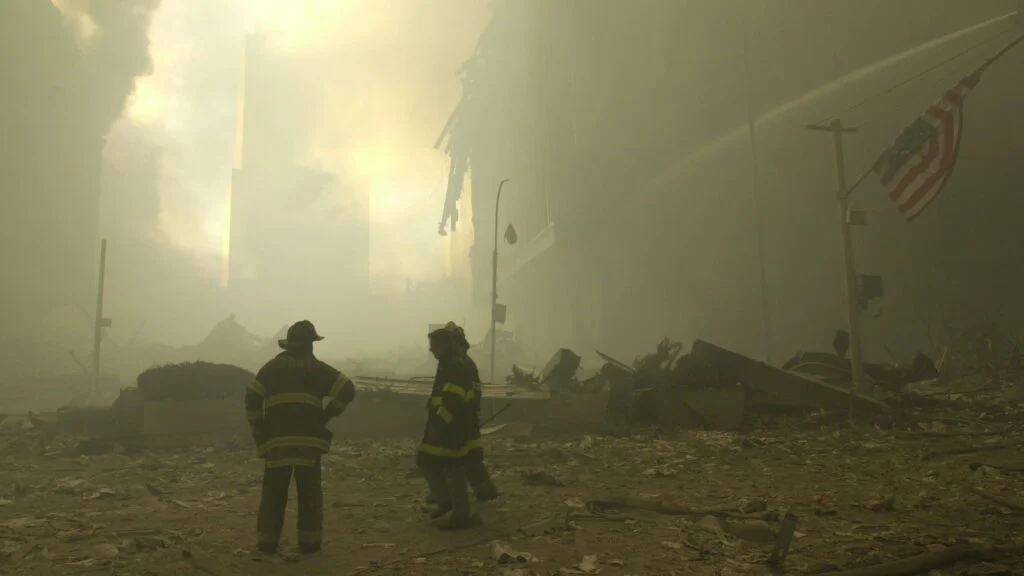
Retired New York City police officer John Aris sat in my office recently, his posture stiff with a tension that has become a recurring ritual over the last seven years. He was waiting for the results of his latest CT scan, a diagnostic window into his chest that determines whether his life remains in a state of reprieve or descends back into the chaos of oncology wards. Seven years ago, I performed a lobectomy on John, removing a significant portion of his right lung to excise a malignant tumor. Since that day, every follow-up appointment has been colored by the same visceral anxiety—a phenomenon often referred to in the survivor community as "scanxiety." Before I had even fully closed the examination room door, I made sure to offer the three words he had been holding his breath for: “No cancer found.”
The transformation in the room was immediate. John let out a long, shuddering breath, the kind that carries years of accumulated weight, and settled back into his chair as his shoulders finally dropped. As has become our custom, we did not immediately rush to the next clinical task. Instead, we lingered, discussing the intricacies of life, the shifting tides of politics, and the milestones of his family. However, on this particular day, the conversation took a more somber turn as I asked him for his thoughts on a significant change coming to the 25th-anniversary commemorations at the World Trade Center.
This year, organizers have announced the addition of a new, poignant moment of silence. It is a gesture intended to honor a group of victims whose names are not etched into the bronze parapets of the memorial pools but whose lives were nonetheless claimed by the events of September 11, 2001. These are the men and women who died in the decades following the attacks from a litany of illnesses directly linked to their exposure to the toxic environment of Ground Zero. As I mentioned this, John’s smile, previously bright with the news of his clear scan, began to fade. He stared into the middle distance, his eyes reflecting a mental roll call of the fallen. When he finally spoke, his voice cracked with the weight of cumulative grief. He wasn’t talking about the nearly 3,000 people who perished on the morning the towers fell; he was talking about the slow-motion massacre that has unfolded in the twenty-five years since.
John’s memories are populated by the faces of construction workers, firefighters, and fellow police officers—men and women who stood shoulder to shoulder with him for months on end. They worked in a landscape defined by choking gray dust, subterranean fires that burned for months, and the jagged, rusted skeletons of twisted steel. He spoke vividly of the smell—a pungent, chemical metallic odor that permeated their clothes and skin, a scent that lingered long after the workday ended. While many of his friends initially went home and attempted to return to a sense of normalcy, the reprieve was short-lived. Years later, the funerals began, and they haven’t stopped. One friend was taken by aggressive esophageal cancer; another was decimated by leukemia; yet another succumbed to a chronic, debilitating respiratory illness that stole his ability to breathe long before it took his life. Beside John sat Kathleen, his wife of 44 years, who has been the silent witness to this secondary tragedy, living through every diagnosis and every wake by his side.
As a thoracic surgeon at Mount Sinai School of Medicine, I have seen this narrative play out thousands of times. My visit with John reminded me that we often spend more time discussing the health of his peers than his own. His own lung cancer may very well have been a result of his time at Ground Zero, though in the world of medicine, individual certainty is often elusive. Later that same afternoon, I saw William Corrar, a retired firefighter whom I had treated for esophageal cancer. Like John, William spent months in the "Pile." For years, he had dismissed a worsening, burning sensation in his chest as the simple byproduct of aging or a poor diet. By the time he sought help, the reflux had transitioned into a malignant threat.
For me, the tragedy of September 11 is not merely a professional focus; it is deeply personal. On the morning of the attacks, I was already established as a thoracic surgeon at Memorial Sloan Kettering in New York. I remember the eerie juxtaposition of that morning: I was in the middle of an operation on a patient suffering from cancer caused by asbestos exposure—a grim foreshadowing of what was to come—when news of the first plane hit. As the scale of the catastrophe became clear, all elective surgeries were canceled. Driven by a desperate need to help, I got on my bike and pedaled toward Lower Manhattan.
The scene I encountered was one of profound, haunting stillness. Expecting a surge of trauma patients requiring emergency surgery, I found instead that there was little for a surgeon to do. Those who could escape the towers had largely walked away with minor injuries or psychological trauma; those who could not were simply gone. There was no middle ground, no massive influx of the wounded to the city’s operating rooms. Like millions of other New Yorkers, I was left to wander through a landscape of ash, trying to process the erasure of a landmark that had defined my life.
My connection to the Twin Towers stretched back to my childhood. As a native New Yorker, I had spent my youth skateboarding through the vast, wind-swept plaza between the buildings. Later, while working my way through college, I carried heavy packages through those very halls as a delivery driver for UPS. The towers were more than buildings; they were the bedrock of my personal geography. I could never have imagined that, decades later, the remnants of those buildings would reappear in my life in the form of tumors and scarred lung tissue.
In the years following the cleanup, the medical fallout began to manifest. It started as a trickle and grew into a flood. First responders, volunteers, and local residents began appearing in clinics with "the WTC cough," which soon evolved into more sinister diagnoses. What had begun as a singular day of catastrophe was transforming into a chronic health crisis. The cloud that engulfed Lower Manhattan was a toxic soup of unprecedented complexity. When the towers collapsed, they pulverized 250,000 tons of concrete, 12,000 miles of electrical cable, and 100,000 tons of office furniture and equipment. The air was thick with glass fibers, lead, mercury, benzene, dioxins, and approximately 400 tons of asbestos.
Today, the scale of the crisis is documented by the World Trade Center Health Program, which currently has more than 140,000 responders and survivors enrolled. The statistics are staggering: tens of thousands have been diagnosed with certified WTC-related cancers, including non-Hodgkin lymphoma, thyroid cancer, and prostate cancer. Furthermore, chronic obstructive pulmonary disease (COPD), asthma, and gastrointestinal disorders like GERD have become ubiquitous among the survivor population. Perhaps most tragic is the fact that more than 8,000 enrolled members have died from their conditions—a number that now far exceeds the initial death toll of the attacks themselves.
The scientific community faces a unique challenge in these cases. We often speak of "association" rather than "absolute certainty." I cannot look at a single cell under a microscope and prove, beyond a shadow of a doubt, that a specific molecule of pulverized concrete caused a specific patient’s cancer. Medicine establishes environmental risk through population studies. We look at the "WTC cohort" and ask: Does this group have higher rates of disease than the general public? Does the timing of the disease align with biological latency periods? The answer, consistently, is yes. The firefighters who worked the Pile have a significantly higher risk of developing cancer than their colleagues who were not exposed.
This health crisis was exacerbated by early, erroneous assurances from officials that the air was safe to breathe. This led many to work without adequate respiratory protection, a mistake that would prove fatal years later. The tragedy also extends to "non-traditional" survivors—the students who were in nearby schools, the office workers who returned to dust-filled cubicles, and the residents of Battery Park City. They, too, are now facing the consequences of that exposure.
As we approach the 25th anniversary, the new moment of silence serves as a vital acknowledgment of a painful truth: the attacks of September 11 did not end when the fires were finally extinguished in May 2002. For people like John Aris and William Corrar, the attack simply changed its form, moving from the skyline into their very DNA. Disease rarely captures the national imagination with the same intensity as a collapsing building, as it unfolds in the quiet privacy of a doctor’s office or the somber atmosphere of a suburban funeral home. But for the thousands of families still battling these illnesses, the war is ongoing. When the crowd falls silent this September, we must remember that for the survivors, 9/11 is not a date in a history book. It is a living, breathing reality that they carry with them every single day. The dust may have settled on the streets of Manhattan, but in the lungs and lives of those who were there, it is still swirling. It has been 25 years, and for the victims of the toxic aftermath, the tragedy is still not over.
