
 By admin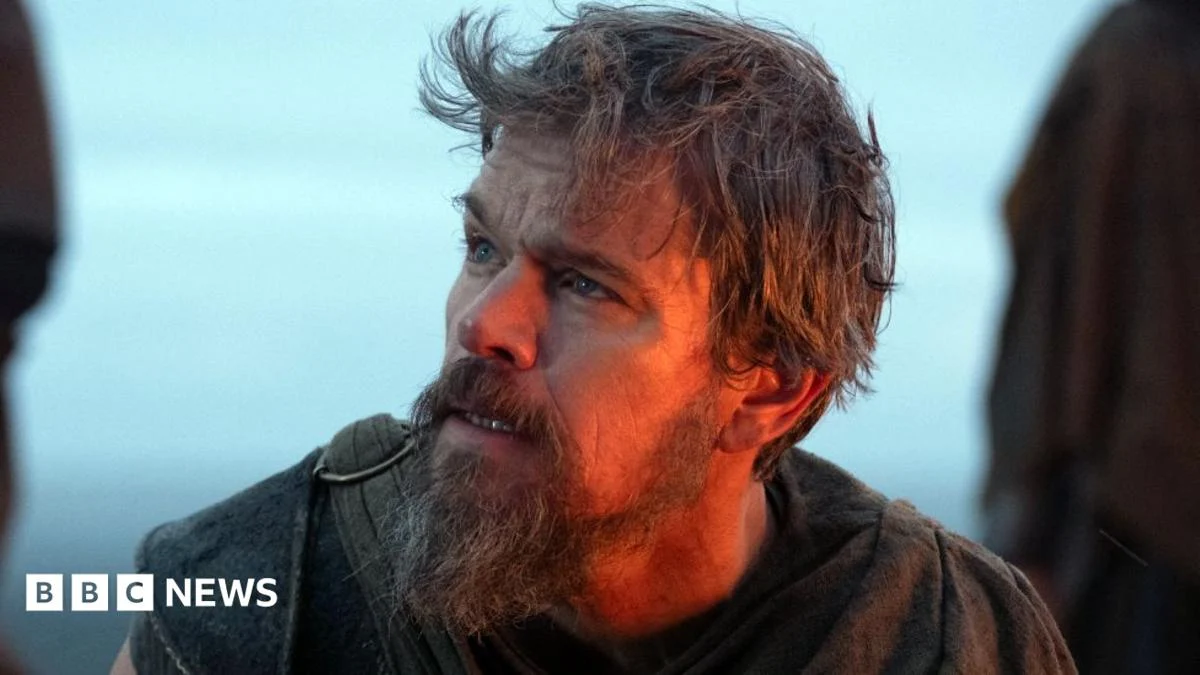
The cinematic adaptation of Homer’s epic poem, The Odyssey, has ignited a firestorm of discussion, with audiences flocking to theaters to experience Christopher Nolan’s ambitious take on the ancient tale. While the film has garnered near-universal acclaim from film critics, hailed as a potential "film of the year" and a transformative cinematic achievement, a prominent translator of the epic, Dr. Emily Wilson, has voiced significant disappointment, finding the blockbuster lacking in the depth and character development she believes the source material deserves.
Wilson, whose own translation of The Odyssey has seen a surge in sales following the film’s release, acknowledged the cultural significance of bringing such an enduring work to a wider audience. "The release of The Odyssey is still an event to celebrate," she noted, recognizing the film’s power to draw audiences back into cinemas and, perhaps, to reignite a broader appreciation for classical literature. She expressed optimism that the film’s popularity might even influence academic institutions, stating, "[the film] perhaps will persuade a few college administrators not to cut their literature, language and history departments." Wilson extended her gratitude to Nolan, suggesting, "Nolan… is doing his best to get the general public reading again, and I am grateful."
However, this initial appreciation quickly gave way to critical reservations. Despite the film’s grand scale and critical adulation, Wilson found herself "largely disappointed by the three-hour epic." Her hopes for Nolan, known for his intricate and often intellectually stimulating films, were that his "affinity with these Homeric themes might push him to new creative heights, and enable him to conjure more believable characters." Instead, she perceived a familiar pattern in Nolan’s work: "But The Odyssey features his usual combination of grandiosity and superficiality." Wilson elaborated on this critique, stating, "the film’s vision is too confused, its characters too underdeveloped, to deliver what it half-promises in terms of big ideas – although it is very good at conveying big bangs and big giants."
The experience for Wilson’s own family offered a contrasting perspective. She shared that her teenagers "had a good time" watching the blockbuster. Describing the film’s appeal to a younger demographic, she characterized it as "a family-friendly audiovisual spectacle, like an elaborate Fourth of July fireworks display – and with about the same level of narrative and emotional depth." While acknowledging a relative improvement in female representation compared to some of Nolan’s previous films, directly attributed to the "source material," Wilson still found the execution lacking. "There are more female characters than in most Nolan movies, thanks to the source material. But none of them has much to say, in contrast to the characterisations in the poem," she observed, highlighting a perceived divergence from the complex female figures present in Homer’s original work.
Intriguingly, Nolan himself revealed a direct connection to Wilson’s translation during his press tour. Speaking to Empire magazine, he shared that he used the opening line of Wilson’s rendition, "Tell me about a complicated man," as a guiding principle for his portrayal of Odysseus, a role brought to life by Matt Damon. This statement underscores Nolan’s engagement with the source material, yet it starkly contrasts with Wilson’s assessment of the film’s ultimate success in capturing the "complicated man" and his journey.
In stark opposition to Wilson’s critical analysis, the film industry has largely embraced Nolan’s The Odyssey with overwhelming enthusiasm. Following the critical success of his 2023 Academy Award-winning film Oppenheimer, Nolan’s latest endeavor has been met with a chorus of praise. The Telegraph boldly declared The Odyssey the "film of the year," a sentiment echoed by Metro, which suggested the movie would "change cinema forever." The Times lauded it as "a masterpiece in every way," and the Standard described it as a "colossal piece of cinema." These glowing reviews position the film as a significant cultural event, a testament to Nolan’s directorial prowess and his ability to translate classic narratives into compelling modern blockbusters.
The star-studded cast of The Odyssey, released earlier this month, includes a veritable who’s who of Hollywood talent. Matt Damon leads the ensemble as the iconic Greek king Odysseus, embarking on his arduous ten-year journey home from the Trojan War. He is joined by Zendaya, Tom Holland, Robert Pattinson, Anne Hathaway, Charlize Theron, and Lupita Nyong’o, among others. The narrative centers on Odysseus’s struggle to return to his wife, Penelope (Hathaway), and son, Telemachus (Holland), a journey fraught with mythological perils, divine intervention, and the enduring power of love and loyalty. The film’s visual spectacle and the performances of its acclaimed cast are undoubtedly contributing factors to its widespread critical success.
The discrepancy between Wilson’s scholarly critique and the broader critical reception highlights a fundamental tension in adapting ancient epics for contemporary audiences. Wilson, as a translator and academic deeply immersed in the nuances of Homer’s text, approaches the film with an expectation of intellectual rigor and nuanced character portrayal that mirrors the original poem. Her focus on "believable characters" and "big ideas" reflects a desire to see the philosophical and psychological complexities of The Odyssey translated faithfully to the screen. Her critique of "grandiosity and superficiality" suggests that the film, in her view, prioritizes spectacle over substance, a common pitfall in large-scale cinematic adaptations. The comparison to a "Fourth of July fireworks display" powerfully conveys her assessment of the film’s fleeting impact and lack of lasting emotional or intellectual resonance.
Conversely, film critics and general audiences are often more receptive to a film’s ability to entertain, to create a visually stunning experience, and to offer a compelling narrative arc that resonates with contemporary sensibilities. Nolan’s reputation as a filmmaker who excels at crafting ambitious, visually arresting films with intricate plotting likely contributes to the positive reviews. His ability to weave together grand themes with a high-octane cinematic experience has consistently drawn large audiences and critical praise, as evidenced by the success of films like Inception, The Dark Knight trilogy, and Interstellar. For these critics, The Odyssey likely represents a successful fusion of classic storytelling with modern filmmaking techniques, delivering an epic cinematic experience that honors the spirit of the original tale while remaining accessible and engaging for a contemporary audience.
The inclusion of more female characters, a point Wilson notes as an improvement, is indeed a significant aspect. Homer’s epic, while featuring powerful female figures like Penelope, Circe, and Calypso, still operates within a patriarchal framework. Nolan’s adaptation, by its very nature, has the opportunity to reimagine these roles and perhaps imbue them with greater agency or complexity than traditionally depicted. However, Wilson’s observation that these characters "none of them has much to say" suggests that the film may have fallen short in fully realizing this potential, perhaps relying on established archetypes rather than forging new, compelling interpretations.
The economic impact of such a major release cannot be understated. The surge in sales of Wilson’s translation and the general public’s renewed interest in The Odyssey underscore the power of cinema to act as a catalyst for broader cultural engagement with literature. The hope that such success might deter academic departments from cutting humanities programs is a poignant reflection of the perceived disconnect between popular culture and academic pursuits. If a blockbuster film can reignite interest in a 2,800-year-old poem, it suggests that the stories themselves hold an enduring power, and that the accessibility of these stories, whether through translation or film, is crucial for their continued relevance.
The debate surrounding Nolan’s The Odyssey thus becomes a microcosm of the ongoing conversation about adaptation, interpretation, and the very purpose of art. Is the goal of an adaptation to remain faithful to the letter and spirit of the original, delving into its intellectual and emotional depths? Or is it to capture the essence of the story and translate it into a form that resonates with a contemporary audience, prioritizing entertainment and visual spectacle? Dr. Emily Wilson’s critique suggests a yearning for the former, while the overwhelming critical acclaim points towards a successful realization of the latter. Ultimately, the enduring legacy of The Odyssey, both in its original form and its modern cinematic guise, will likely be shaped by the ongoing dialogue between scholars, filmmakers, and the audiences who continue to be captivated by Odysseus’s timeless journey. The film’s success at the box office and its ability to provoke such spirited discussion are, in themselves, a testament to the enduring power of Homer’s epic and Christopher Nolan’s ambitious vision.
