
 By Lina Irawan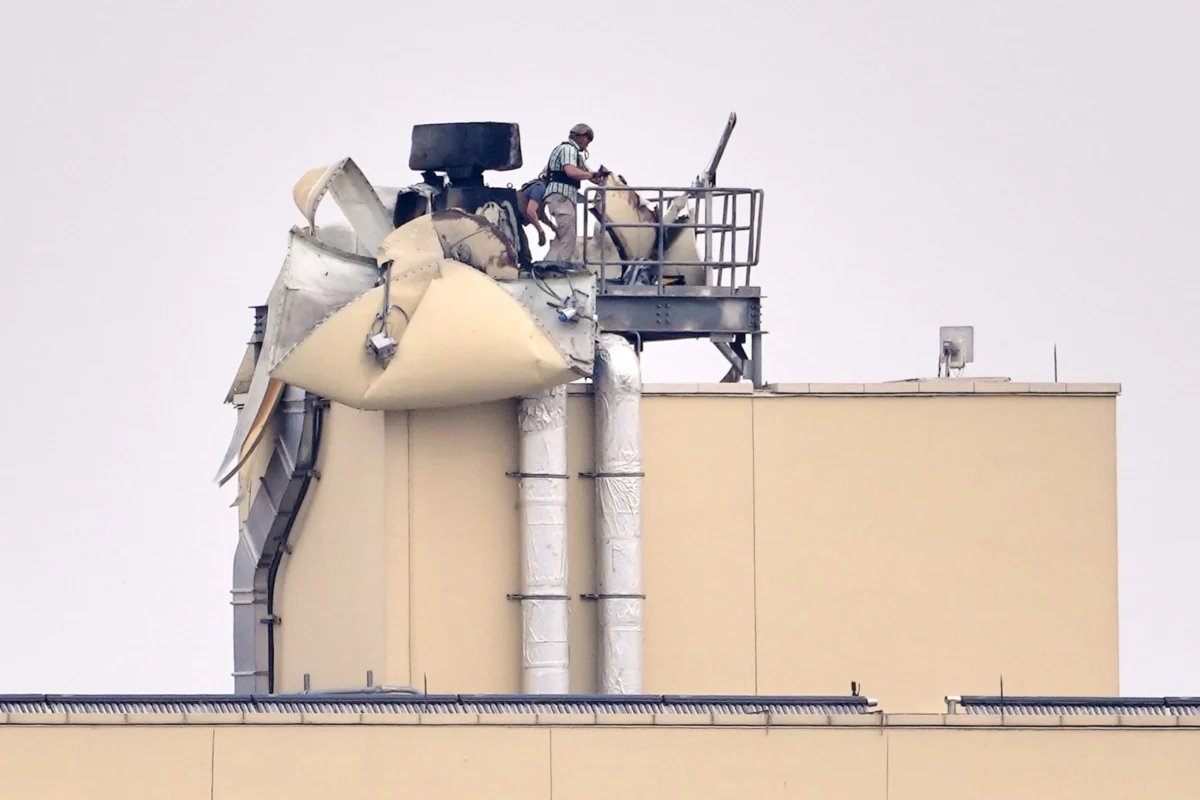
The report, a collaborative effort drawing insights from the watchdogs for the Defense and State departments as well as the U.S. Agency for International Development (USAID), underscores the far-reaching implications of the sustained hostilities with Iran. Its publication, initially revealed by NBC News, marks a critical moment for transparency and accountability, offering policymakers and the public an unprecedented look at the challenges faced by U.S. forces and diplomatic missions. The conflict, which escalated dramatically after a series of initial strikes by the U.S. and Israel against Iranian targets on February 28, has fundamentally tested the resilience of American military infrastructure and supply chains in the region.
One of the most concerning revelations highlighted by the inspector general is the significant strain placed on the U.S. military’s advanced weapons inventory. The report explicitly states that the war with Iran "has resulted in strategic inventory shortfalls and revealed industrial base bottlenecks for munitions resupply." This finding echoes earlier warnings from defense experts and think tanks, such as the Center for Strategic and International Studies (CSIS), which had previously projected a substantial recovery period for these critical assets. According to these analyses, it could take an estimated three years for military contractors to replenish advanced missiles, particularly sophisticated air defense interceptors like Patriot and THAAD systems, to their prewar levels.
The implications of these shortfalls are profound. Modern warfare relies heavily on precision-guided munitions and robust air defense capabilities to counter sophisticated threats. A depleted inventory not only compromises the U.S. military’s ability to sustain prolonged combat operations but also potentially weakens its deterrent posture against future aggressions. Experts suggest that years of focus on counter-insurgency operations, coupled with a "just-in-time" manufacturing philosophy, left the defense industrial base ill-prepared for a high-intensity conflict requiring rapid replenishment of complex weapons systems. The report implicitly calls for a re-evaluation of defense industrial capacity and investment strategies to ensure future readiness.
The physical toll of Iranian retaliatory strikes across the Middle East is also laid bare in the report, covering the period from April 1 to June 30. U.S. bases in eight different countries – Kuwait, Bahrain, Qatar, the United Arab Emirates, Saudi Arabia, Iraq, Oman, and Jordan – suffered extensive damage. Hundreds of buildings and other critical structures were either damaged or completely destroyed. These facilities, ranging from barracks and administrative offices to hangars and sensitive command centers, are vital to U.S. regional operations, supporting everything from intelligence gathering to air superiority missions. The widespread nature of these attacks demonstrates Iran’s reach and its willingness to target nations hosting American forces, escalating regional tensions and complicating U.S. strategic positioning.
Beyond static infrastructure, dozens of American aircraft and drones were also destroyed or rendered inoperable. This loss represents not only a significant financial cost but also a temporary degradation of crucial intelligence, surveillance, and reconnaissance (ISR) capabilities, as well as airpower projection. The report’s explicit acknowledgment of these losses provides a clearer picture of the operational challenges faced by U.S. forces as they navigated a dynamic and dangerous threat environment marked by Iranian ballistic missile and drone attacks.
Financially, the conflict has already exacted a substantial price. Defense Secretary Pete Hegseth informed Congress in late July that the war had cost the U.S. an estimated $37.5 billion so far. This figure encompasses a vast array of expenditures, including increased operational tempo, deployment of additional personnel and assets, heightened security measures, intelligence gathering, fuel consumption, and the repair and replacement of damaged military equipment. It underscores the immense financial burden of modern warfare, even in its initial phases, and suggests that the ultimate economic cost will be far higher as long-term recovery and replenishment efforts continue.
Crucially, the report offers the first public release of the costs incurred by U.S. diplomatic facilities. These outposts, often symbols of American presence and influence, became targets in the conflict. Diplomatic missions in Iraq, Kuwait, Saudi Arabia, and the UAE bore the brunt of the physical damage, with an estimated repair and reconstruction cost of $184 million. This figure highlights the vulnerability of non-military installations in a conflict zone and the significant investment required to maintain diplomatic ties and protect U.S. personnel abroad.
The State Department’s overall costs from the conflict reached $113 million by early June, with nearly $80 million specifically allocated to contingency plans. A significant portion of these contingency funds was dedicated to evacuation expenses for U.S. personnel and their families, as well as other American citizens and eligible third-country nationals. This reflects the immediate priority given to safeguarding human lives amidst escalating threats.
Following the initial U.S. and Israeli strikes against Iran on February 28, the Trump administration initiated a massive evacuation effort. Over the subsequent weeks and months, approximately 9,000 U.S. citizens were evacuated from various countries across the Middle East and parts of Europe. This complex logistical undertaking utilized a combination of private and commercial flights, as well as land and water travel, showcasing the State Department’s crisis response capabilities. The total cost of these evacuation operations exceeded $11 million as of late June.
A notable detail in the report concerns the policy regarding reimbursement for these evacuations. "State determined that consular officers would not be able to fully document travel itineraries required to seek reimbursement from evacuees and therefore it would be impracticable to seek reimbursement from them," the report states. This decision, likely made under the exigencies of a rapidly unfolding crisis, prioritized the swift and safe extraction of citizens over the bureaucratic complexities of financial recovery, reflecting a humanitarian approach during an emergency.
The majority of these evacuations originated from Israel, which experienced significant collateral impact and threats following the initial strikes, with Iraq and Jordan following closely. Interestingly, while only 1,200 Americans were evacuated from the United Arab Emirates, these particular trips – transporting individuals to safe havens in Istanbul, Athens, and Washington – proved to be the most expensive, totaling over $4 million. This higher cost could be attributed to factors such as the longer distances involved, the potential use of specialized or dedicated air transport, or the specific logistical challenges associated with departing from the UAE under duress.
Beyond the direct costs of conflict and evacuations, the report also sheds light on the significant military sales facilitated by the U.S. during this period. Over $44 billion in emergency and non-emergency military sales were processed, with the vast majority directed to Saudi Arabia. These sales included critical assets such as military helicopters, various munitions and their associated support systems, and advanced precision weapons. These transfers highlight the U.S. commitment to bolstering the defense capabilities of its regional allies, particularly against the backdrop of increased Iranian aggression.
Other key regional partners, including Qatar, Kuwait, the UAE, and Israel, also received billions in military sales. This surge in arms transfers underscores the broader U.S. strategy of strengthening its allies’ self-defense capabilities and reinforcing the regional security architecture against Iran. As Iran retaliated against nearly every country in the region that hosted a U.S. military base, these sales became even more critical, allowing partner nations to enhance their air defense, offensive, and deterrent capabilities.
In conclusion, the Pentagon inspector general’s inaugural report on the Iran war offers a sobering and comprehensive assessment of a conflict that has exacted a heavy toll in its initial six months. From the critical shortfalls in advanced weapons systems and the widespread physical damage to U.S. military and diplomatic facilities, to the significant financial costs and the massive logistical effort of evacuating thousands of citizens, the report paints a vivid picture of the multifaceted challenges posed by this regional confrontation. It serves as a stark reminder of the complexities of modern warfare and the profound implications for national security, defense readiness, and international relations, laying the groundwork for future policy debates on military investment, diplomatic strategy, and regional stability.
