
 By Rifan Muazin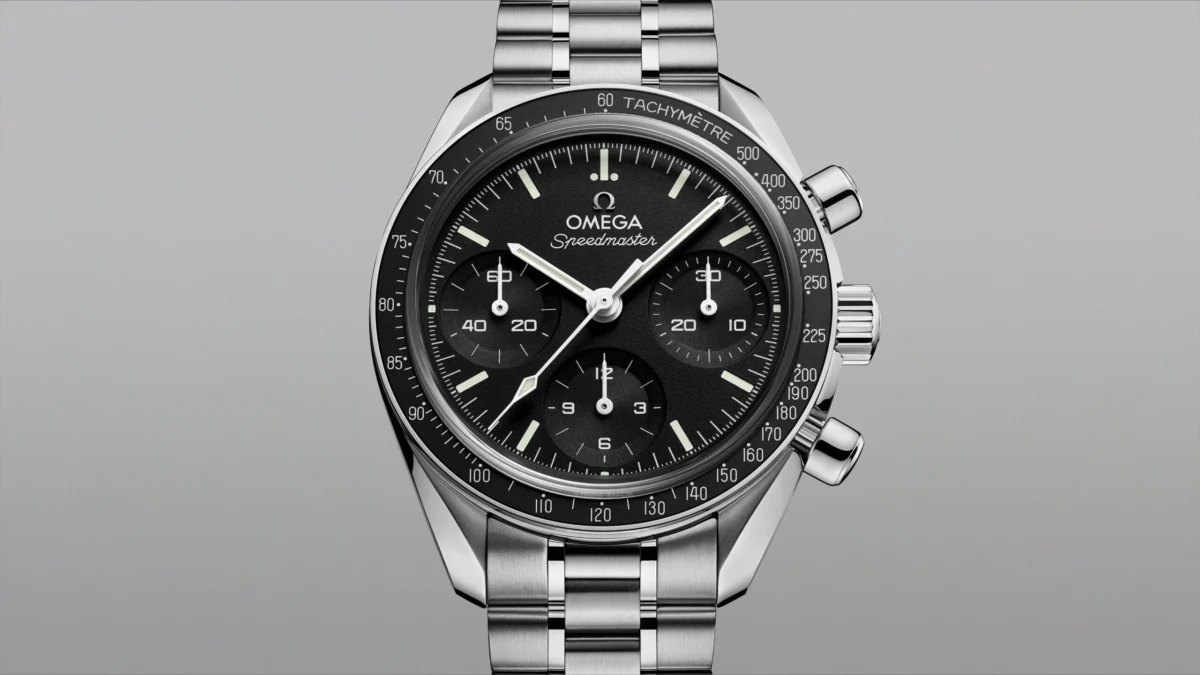
In the meticulously calibrated world of high-end horology, where a fraction of a millimeter can represent the difference between a timeless masterpiece and a dated relic, Omega has just executed a maneuver that is being described as one small step for a watch, but one giant leap for the brand’s enduring legacy. The Speedmaster, an instrument of such historical gravity that it is inextricably linked to the zenith of human exploration, has undergone its most significant proportional evolution in decades. Since its debut in 1957, the Speedmaster Professional "Moonwatch" has largely defined itself through its 42mm presence—a size that became the industry standard for tool watches during the Apollo era. However, in a move that anticipates the aesthetic sensibilities of 2026 and beyond, Omega has officially applied a sophisticated "shrink ray" to its flagship icon, introducing a 38mm collection that maintains the soul of the Moonwatch while embracing the contemporary demand for refined dimensions.

To the uninitiated, the reduction from 42mm to 38mm might appear to be a negligible "rounding error," a minor adjustment intended to fill a niche. But for the global community of watch collectors, this tweak is a seismic event. It is a fundamental acknowledgment of a shifting tide in consumer psychology and ergonomic preference. For years, the watch industry was caught in an "arms race" of case diameters, with brands pushing the limits of wrist real estate to signify ruggedness and luxury. That era is rapidly receding, replaced by a renewed appreciation for vintage proportions and the understated elegance of a watch that fits beneath a shirt cuff as easily as it once strapped over a spacesuit.
The Speedmaster’s journey from a racing chronograph to a lunar icon is well-documented, yet its physical stature has remained a point of contention for many enthusiasts. Buzz Aldrin and Neil Armstrong carried the 42mm Reference 105.012 to the lunar surface during the Apollo 11 mission, establishing a silhouette that would remain largely unchanged for over half a century. While the 42mm Professional remains a bestseller, its bulk has often been a barrier for those with smaller wrists or those who prefer the balanced aesthetics of mid-century design.

“Speedmaster fans have wanted a smaller alternative to the 42mm Professional Moonwatch for a long time, but until now, the 38mm was nothing like the classic Speedy,” explains Chris Hall, a noted horological expert, author of the watch newsletter The Fourth Wheel, and the writer of an upcoming definitive chronology of Omega. Hall notes that previous iterations of the smaller Speedmaster often deviated too far from the "Moonwatch" DNA, featuring oval subdials or bezel styles that felt like a separate product line rather than a true alternative to the icon. “By changing details like the subdial shape and bezel style, Omega has gone some way to fixing that,” Hall adds. This new release represents a homecoming for the 38mm size, finally aligning it with the visual language that made the original Speedmaster a legend.
The data supporting this shift is not merely anecdotal; it is backed by extensive market research and enthusiast sentiment. Mark Cho, the co-founder of the menswear institution The Armoury and a respected figure in the watch collecting world, recently published the results of his third "Ideal Watch Size Survey." This massive undertaking polled over 3,000 dedicated watch enthusiasts to determine the perfect dimensions for a daily-wear timepiece. The consensus was overwhelming: 38 millimeters is the "Goldilocks" zone for the modern collector. This diameter offers enough presence to be recognized as a sports watch while maintaining the proportions necessary for formal or casual versatility. By launching this new Speedmaster, Omega isn’t just following a trend; they are responding to a quantified mandate from their most loyal customers.

Historically, Omega has experimented with various "reduced" versions of the Speedmaster. In the 1980s and 90s, the Speedmaster Reduced offered a 39mm alternative, but it was powered by a modular automatic movement that many purists found inferior to the manual-wind Calibre 1861 or the modern 3861. More recently, the "First Omega in Space" (FOIS) edition garnered a cult following for its 39.7mm case, modeled after the watch worn by Wally Schirra in 1962. However, even the FOIS felt like a tribute piece. The new 38mm collection is different; it is a full-throated integration of the Moonwatch aesthetic into a compact frame, intended for the permanent catalog.
The flagship of this new release is undoubtedly the classic black-on-black dial model. This is the "real deal"—the version that most closely mirrors the aesthetic of the watches worn on the lunar surface. For many, this is the "holy grail" configuration: the high-contrast white hands against a matte black dial, the tachymeter scale on the bezel, and the three-register chronograph layout, all housed in a case that feels light and agile on the wrist. Raynald Aeschlimann, Omega’s CEO and President, emphasized the importance of this alignment in a recent statement: “The Speedmaster 38mm has always taken its cues from the Moonwatch, while keeping size, color, and simplicity in mind. With this latest update, we’ve taken the Moonwatch inspiration even further.”

In the world of luxury watches, the nuance of "taking cues" versus "delivering inspiration" is the difference between a fashion accessory and a piece of horological history. During a recent visit to Omega’s state-of-the-art headquarters in Biel/Bienne, Switzerland, I had the opportunity to handle these new pieces firsthand. As someone who has frequently found the standard 42mm Professional to be slightly too cumbersome for daily wear, the 38mm version felt like a revelation. It sits low on the wrist, the lugs curve gracefully to meet the bracelet, and the overall weight distribution is superb. To the casual observer, it is indistinguishable from the standard Moonwatch, but to the wearer, the comfort level is exponentially higher. It is a watch that invites you to wear it day in and day out, rather than saving it for specific occasions.
Beyond the classic black dial, Omega has expanded the 38mm range to include six additional variants that lean into the "lifestyle" and "luxury" segments of the market. These models demonstrate the Speedmaster’s incredible versatility as a design canvas. One standout is a high-jewelry iteration featuring 52 diamonds set into the bezel and a shimmering mother-of-pearl dial. While purists might scoff at diamonds on a "tool watch," this model reflects the growing trend of "elevated sport" watches—pieces that can be worn by celebrities on the red carpet, like Colman Domingo, who has frequently been seen sporting Omega’s more adventurous designs. This model successfully merges the utilitarian history of the Apollo missions with the glamour of modern high-end horology.

Other new colorways include pale blue, olive green, and silver, providing a refreshing palette for those who already own a classic black chronograph. The "Cappuccino" model is particularly striking, utilizing multiple shades of brown and taupe to create a warm, vintage aesthetic that feels perfectly suited for the 38mm case. In previous years, these colorful 38mm Speedmasters featured oval subdials that felt somewhat feminine or "fashion-forward." By reverting to the standard round subdials in this new release, Omega has "leveled the painting," so to speak. The watches now feel balanced, serious, and fundamentally "Speedmaster."
From a technical perspective, these new 38mm models are as robust as their larger counterparts. While they utilize the Omega Calibre 3330—a self-winding chronograph movement with a Co-Axial escapement and a silicon balance spring—they maintain the "Master Chronometer" spirit of precision and magnetic resistance that Omega has championed. The decision to use an automatic movement in the 38mm line, as opposed to the manual-wind movement in the 42mm Professional, underscores the intended use-case for these watches: they are designed for the convenience of daily life, where the wearer may not want to manually wind their watch every morning.

The broader industry context for this release cannot be overstated. We are currently witnessing a "Great Downsizing" across the luxury watch landscape. Tudor has seen massive success with its 37mm Black Bay 54; Rolex continues to see high demand for its 36mm Explorers and Datejusts; and even traditionally "bold" brands like Breitling and IWC are introducing smaller versions of their pilot watches. This trend is driven by two factors: a nostalgic turn toward mid-century vintage styles and an expanding global market that includes more women and collectors with smaller wrist sizes.
By bringing the Speedmaster—arguably the most famous chronograph in existence—down to 38mm without sacrificing its iconic look, Omega has secured its position at the forefront of this movement. They have managed to shrink the watch without shrinking its soul. Whether you are a space history buff who wants a more wearable version of the Moonwatch, or a style-conscious enthusiast looking for a sophisticated everyday chronograph, the new 38mm Speedmaster represents the perfect intersection of heritage and modern utility. It is proof that sometimes, to move forward, you have to look back at the proportions that made you a legend in the first place. For Omega, this isn’t just a new product launch; it is a masterclass in how to evolve an icon for a new generation of explorers, both on Earth and beyond.
