
 By admin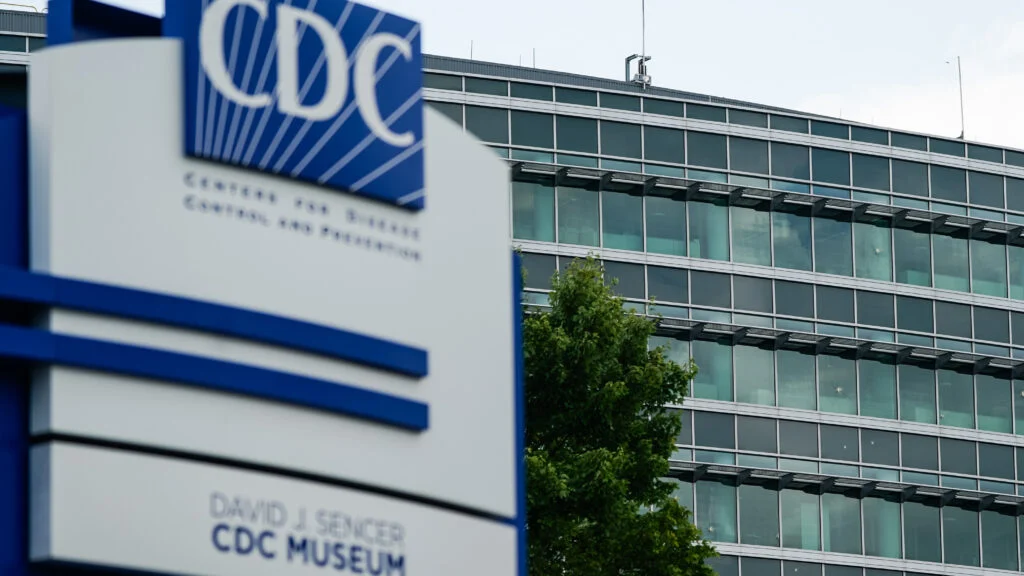
On the humid afternoon of August 8, 2025, the rhythmic, metallic sound of what I initially mistook for construction equipment began to echo through the corridors of the Centers for Disease Control and Prevention (CDC) in Atlanta. I was in my office, finishing the week’s administrative tasks, when a laboratory director appeared in my doorway, her face pale. She reported that her husband, working in the adjacent twelve-story building, had called to say his entire office was shaking. In the high-stakes environment of a federal health agency, unexpected vibrations usually suggest a mechanical failure or a controlled experiment gone wrong, but as the "hammering" continued, a darker reality set in. When she whispered that staff feared an active shooter was on the premises, the mundane Friday routine vanished, replaced by the visceral instinct for survival.
From my window overlooking Clifton Road, the scene transformed into a theater of chaos. Fire trucks and police cruisers careened onto the asphalt, blocking traffic and creating a perimeter around the gunfire. I watched as pedestrians, initially curious enough to raise their phones and record the commotion, suddenly realized the lethality of the situation and fled in a panicked swarm. It was the hour of the "Friday exodus," when thousands of dedicated public servants—epidemiologists, data scientists, and administrative staff—typically head home for the weekend. The confusion was thick; in our collective consciousness, the CDC was a place that fought viruses and bacteria, not a target for ballistic violence. We could not fathom why anyone would open fire on an institution dedicated to saving lives.
As emergency alerts vibrated across thousands of mobile devices on campus, we entered a state of lockdown that would last for hours. We would later learn the terrifying scale of the assault: a lone gunman was discharging high-capacity rounds that traveled the length of two or three football fields, piercing the glass and steel of buildings where some of the world’s most dangerous pathogens are studied. Inside, the scene was harrowing. Laboratory technicians, in the middle of delicate experiments involving lethal biological agents, were forced to abandon their stations and crawl under reinforced benches, remaining motionless for hours. In a nearby wing, a member of my own team stepped into a hallway to investigate the noise just as a bullet shattered her office window, showering her desk with jagged glass. Perhaps most heartbreaking was the account of a young mother in the CDC daycare parking lot; she spent the duration of the siege lying flat on the floorboards of her car, less than a hundred yards from the shooter, waiting for a clearance from the police to reunite with her child inside.
The resolution of the crisis was slow and methodical. SWAT teams and local law enforcement cleared the sprawling campus office by office, a painstaking process that kept us in place until nearly midnight. By the time the smoke cleared, the statistics of the attack were staggering. The gunman had fired approximately 500 rounds, with 180 of them striking or penetrating CDC infrastructure. The human cost was devastating: DeKalb County Officer David Rose, a 33-year-old former Marine and father of three, was killed while shielding staff from the onslaught. The gunman also perished across from the CDC’s main entrance. In the quiet, eerie hours that followed, I walked the floors of our building to check on my staff. These were men and women who had suited up in Level 4 bio-containment gear to handle Ebola in West African jungles and tracked hemorrhagic fevers in remote forests. They were steady, yet the irony was inescapable: for a brief window of time, it had been more dangerous to sit at a stationary desk in suburban Atlanta than to hunt some of the world’s deadliest viruses in the field.
The tragedy took an even more cynical turn when the motive was revealed. The gunman had targeted the agency because he blamed the CDC and COVID-19 vaccines for his declining health. This was not a random act of violence; it was the violent culmination of years of targeted misinformation and the demonization of public health officials. Despite the gravity of an attack on a federal agency, the White House remained conspicuously silent, never publicly addressing the assault on its own scientists. This silence served as a harbinger for the institutional dismantling that would follow.
I have spent over three decades in public health, a tenure long enough to witness the gradual erosion of institutional trust. However, the acceleration of that decay during and after the pandemic was unprecedented. In the months surrounding the shooting, the CDC was subjected to a series of systemic shocks. Senior staff were reassigned or dismissed without clear justification, and the agency’s budget was plunged into a state of perpetual uncertainty. Most alarming was the disregard for rigorous, science-based decision-making at the highest levels of government. The firing of Senate-confirmed CDC Director Susan Monarez—who refused to authorize vaccine recommendations that lacked a grounding in clinical evidence—marked a breaking point. It was this environment of political interference that led me and several other senior leaders to resign just days after the August 8 attack. We realized that we were no longer just fighting pathogens; we were fighting a war of attrition against the very foundations of our profession.
By 2026, the impacts of this institutional instability became quantifiable. Public trust in CDC guidance has plummeted, with recent data from the Kaiser Family Foundation indicating that fewer than half of Americans—only 47%—now hold a "great deal" or "fair amount" of trust in the agency to provide reliable vaccine information. This is a catastrophic decline for an agency whose primary currency is its credibility. My colleagues and I have previously described the CDC as being in "critical condition," noting that anti-vaccine rhetoric now moves through the digital ecosystem as rapidly as any respiratory virus.
Social psychologist Jonathan Haidt has observed that when a society’s institutions lose trust, the very "accounts of the world" they offer are dismissed. This is the precarious terrain the CDC now occupies. The workforce has been hollowed out, losing roughly 25% of its personnel to forced departures, early retirements, and a general exodus of talent. Furthermore, proposed presidential budget cuts for 2027 aim to slash CDC funding by a staggering 40%. While Congress ultimately holds the power of the purse, the mere proposal of such cuts signals a profound shift in national priorities, moving away from proactive health security. Perhaps most damaging is the restructuring of the vaccine advisory process—specifically the Advisory Committee on Immunization Practices (ACIP)—to bypass traditional channels of peer-reviewed evidence. When career scientists are framed as political adversaries rather than public protectors, the entire infrastructure of national safety begins to crumble.
History offers a grim parallel. Following the 1918 influenza pandemic, the wartime handling of the health crisis, characterized by censorship and the prioritization of morale over truth, left a generation of Americans deeply distrustful of authority. Historian John Barry noted that the lack of transparency during that era created a lasting rift between the public and the government. We are seeing a modern iteration of this phenomenon, but with the added volatility of social media and a more polarized political landscape.
Throughout my career, the guiding philosophy of public health has been "Detection to Protection" (D2P). The goal is to find a threat quickly and translate that data into life-saving action. While that process can and should be improved—made more transparent, efficient, and inclusive of the public’s voice—the shooting on August 8 taught me a lesson that the pandemic did not: it is no longer enough to protect the public from outbreaks. We must now protect the process of protection itself.
To "protect protection" requires more than just resilience from individual scientists; it requires structural safeguards. We need statutory protections that guarantee the independence of the CDC director, insulating the role from political whims. We must ensure that advisory bodies remain autonomous and that the agency receives durable, multi-year funding that isn’t used as a bargaining chip in annual budget battles. Rebuilding trust will require a new level of radical honesty—leading with uncertainty when data is thin, explaining the "why" behind every recommendation, and treating the public as partners in health rather than passive recipients of "messaging."
The CDC was built to be the world’s premier shield against biological threats. Today, however, the shield itself is under fire. My former colleagues continue to go to work every day, not because the environment is safe, but because the mission of fighting outbreaks is in their DNA. But we cannot expect individual bravery to compensate for a crumbling institution. The urgency of getting from detection to protection remains, but the more immediate task is defending the science, the people, and the norms that make that protection possible. If we allow the foundations of public health to be dismantled by violence and political expediency, we will all be left defenseless when the next inevitable shadow falls.
