
 By admin
Hilton Honors stands as one of the most expansive and accessible hotel loyalty programs in the global hospitality industry, boasting a massive footprint of over 9,000 participating properties spread across 27 distinct brands. From the ultra-luxury suites of the Waldorf Astoria and the contemporary sophistication of Conrad Hotels & Resorts to the reliable comfort of Hampton by Hilton and the budget-friendly Spark by Hilton, the program caters to every segment of the traveling public. For frequent travelers and casual vacationers alike, the program offers a robust ecosystem for earning points, a suite of highly competitive cobranded credit cards, and some of the most straightforward pathways to elite status in the industry.

While many travelers juggle multiple loyalty accounts, Hilton Honors often secures a spot in the "top three" due to its sheer scale and the ease with which members can maintain status without actually spending 50 nights a year in a hotel room. For instance, many savvy travelers maintain high-level Hilton elite status solely through premium cobranded credit cards. Furthermore, the program’s integration with broader financial products, such as the Business Platinum Card® from American Express, provides unique incentives like the $50 quarterly Hilton statement credit (totaling $200 annually), which effectively subsidizes quarterly stays for business owners. Whether your travel schedule involves weekly corporate trips or a single annual family vacation, understanding the nuances of Hilton Honors is essential for extracting maximum value from your travel spend.
The Architecture of Hilton Honors: Understanding the 27 Brands
The Hilton portfolio has undergone significant expansion recently, diversifying its offerings to compete with Marriott Bonvoy and World of Hyatt in the lifestyle and boutique sectors. The program now encompasses 27 brands, including the "Select by Hilton" collection, which recently debuted with Yotel as its inaugural partner. This partnership signals Hilton’s intent to capture the "micro-hotel" market, appealing to tech-savvy travelers in high-density urban environments.
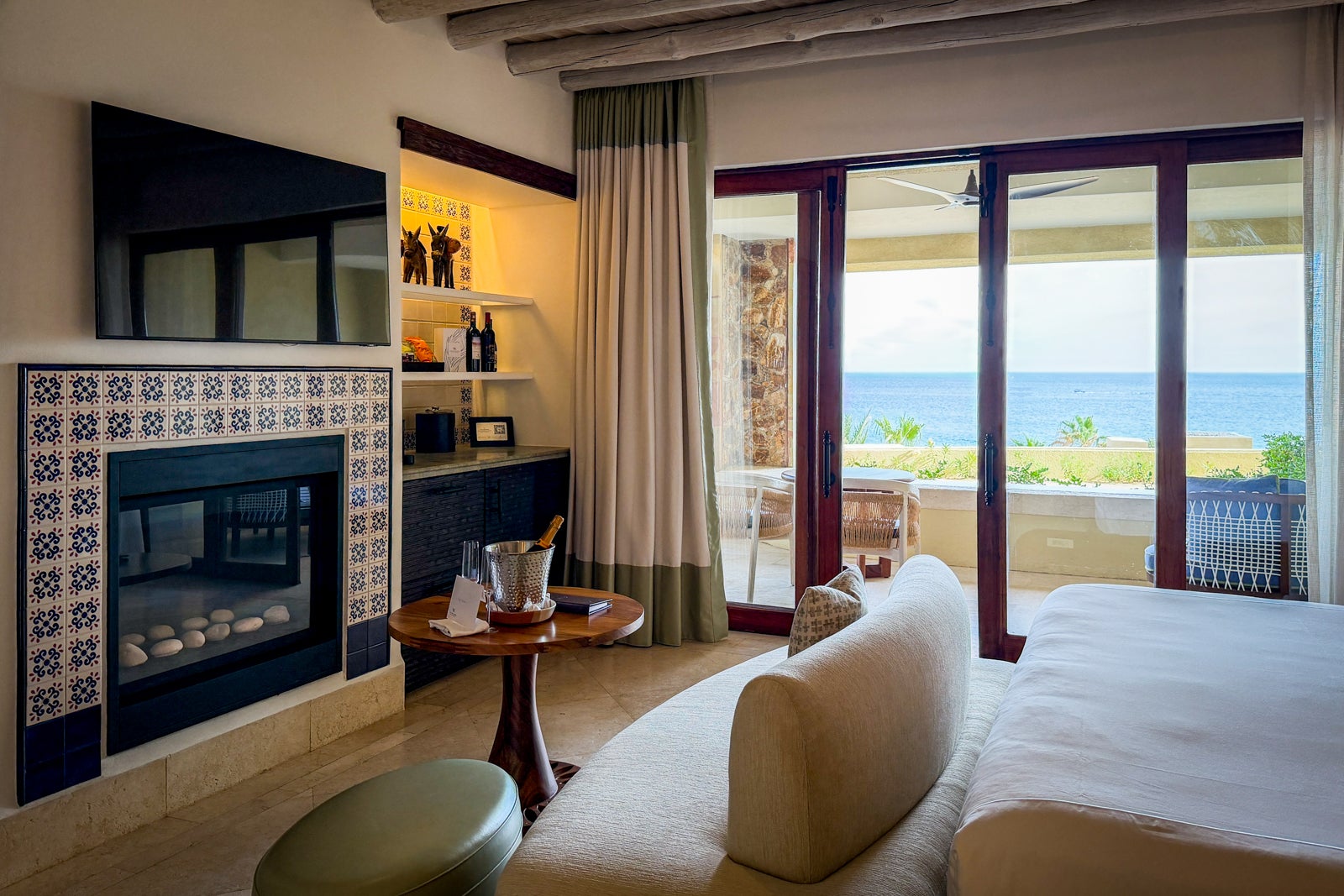
Beyond traditional hotels, Hilton has pioneered "Hilton Honors Adventures," a strategic pivot into experiential travel. Through partnerships with companies like AutoCamp—a luxury glamping brand featuring Airstream trailers and luxury tents—and Explora Journeys, a new luxury ocean travel brand, Hilton is moving beyond the four walls of a hotel room. These partnerships allow members to earn and redeem points for unique outdoor and maritime experiences, effectively broadening the definition of what a "hotel stay" can be.
Navigating the Tiers of Hilton Honors Elite Status
Hilton Honors is unique among its peers for offering several ways to qualify for status: nights, stays, or total eligible spend. This flexibility is a boon for travelers whose patterns don’t fit the traditional "road warrior" mold.

Member Tier
Upon joining the program for free, travelers receive immediate benefits, including discounted member rates, waived resort fees on all-point award stays (a significant value in high-cost markets like Las Vegas or Hawaii), and free Wi-Fi.
Silver Status
Silver status is the first step on the elite ladder, requiring four stays, 10 nights, or $2,500 in annual spend. The most critical benefit here is the "fifth night free" on standard reward stays. This benefit effectively provides a 20% discount on point redemptions for five-night stays, making it a cornerstone of the program’s value proposition. Silver members also receive a 20% bonus on base points earned during stays.

Gold Status
Often cited as the "sweet spot" of hotel loyalty, Hilton Gold status provides outsized value. It requires 15 stays, 25 nights, or $6,000 in annual spend. Gold members receive an 80% point bonus and space-available room upgrades. Perhaps most importantly, Gold members receive a daily food and beverage credit in the U.S. or continental breakfast abroad, a perk that can save a couple $30 to $60 per day.
Diamond Status
The top tier for most members, Diamond status, requires 25 stays, 50 nights, or $11,500 in annual spend. Diamond members enjoy a 100% point bonus, executive lounge access, and premium Wi-Fi. In international markets, Diamond status is particularly potent, often leading to significant suite upgrades and high-end lounge experiences that include complimentary dinner and cocktails.

Diamond Reserve Status
The newly introduced Diamond Reserve tier targets the most loyal Hilton guests, requiring 40 stays, 80 nights, and $18,000 in spend. This ultra-tier addresses long-standing complaints about the lack of guaranteed late checkout in the Hilton ecosystem by offering a 4 p.m. guaranteed late checkout. It also provides "Premium Club" access and a confirmable upgrade reward, bringing Hilton closer to the "Suite Night Award" offerings of its competitors.
The Credit Card Shortcut: A Strategic Advantage
One of the most compelling reasons to participate in Hilton Honors is the ease of obtaining status via American Express credit cards. Unlike many other programs that require significant "butt-in-bed" time to reach top-tier status, Hilton allows members to buy their way into the elite ranks through annual fees.

- Hilton Honors American Express Aspire Card: This card is widely considered one of the best premium travel cards on the market. For a $550 annual fee, cardholders receive automatic Diamond status, an annual free night reward (valid at almost any property in the world), and up to $400 in annual Hilton resort credits.
- Hilton Honors American Express Surpass® Card: At a more modest $150 annual fee, this card grants automatic Gold status and the ability to earn a free night reward after $15,000 in annual spend. It is an ideal choice for mid-tier travelers who want breakfast credits without a high annual fee.
- The Business Platinum Card® from American Express: While not a Hilton-branded card, it offers Gold status as a benefit and a $200 annual statement credit for Hilton stays (split into $50 quarterly increments), making it a powerful tool for business owners who stay at Hilton properties at least once every three months.
Earning Points: Beyond the Hotel Stay
Earning Hilton points is relatively easy compared to other programs because the "earning velocity" is so high. Base members earn 10 points per dollar at most brands. When you add elite bonuses—up to 100% for Diamond members—and the 14 points per dollar earned by using an Aspire card, a Diamond member can effectively earn 34 points per dollar spent. At a valuation of 0.4 cents per point, this represents a 13.6% return on spend.
The program also offers "Milestone Bonuses." Starting at 40 nights, members earn 10,000 bonus points for every 10 nights stayed. At 60 nights, an additional 30,000-point "kicker" is awarded. These bonuses provide a constant incentive for members to consolidate their stays within the Hilton portfolio.
The Art of Redemption: Maximizing the Value of Points
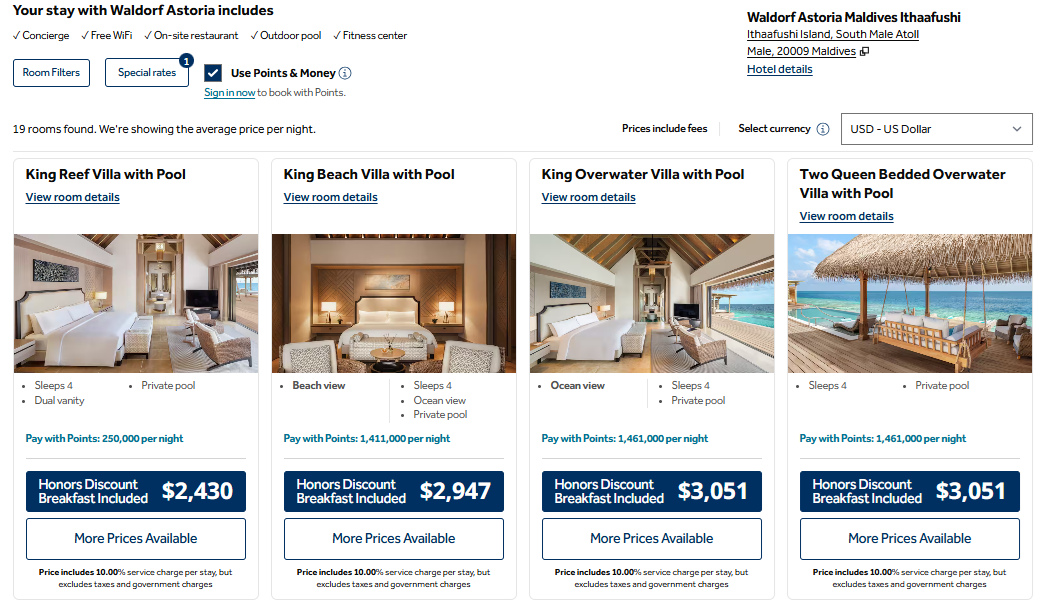
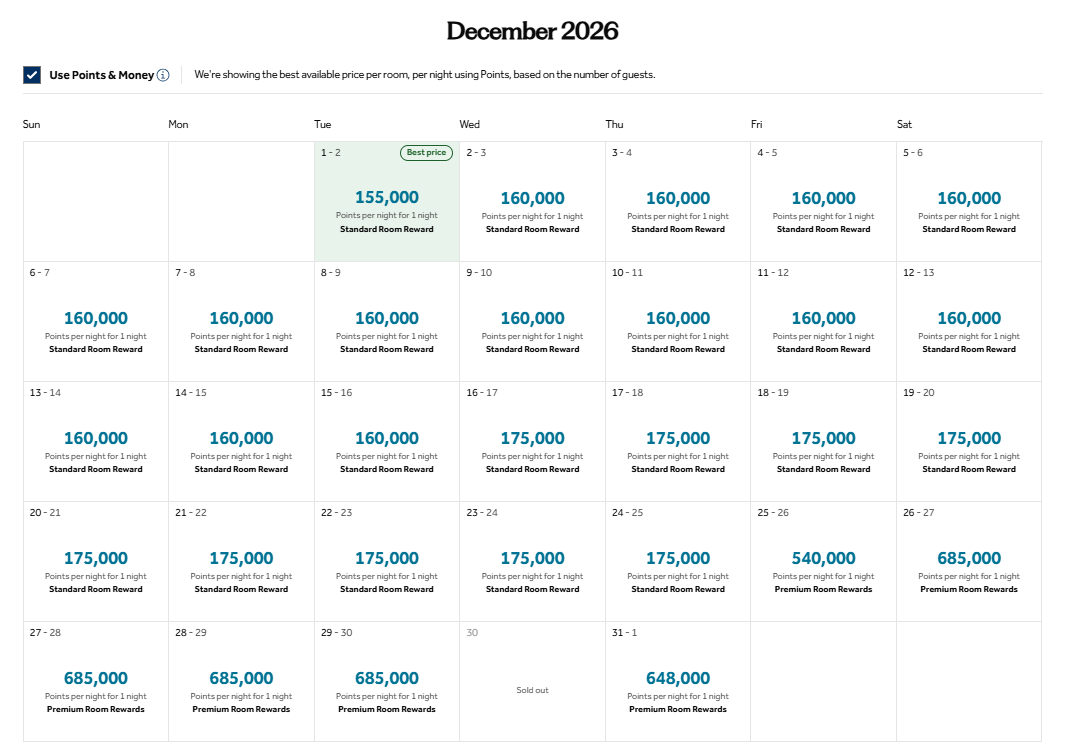
Hilton moved to dynamic pricing years ago, meaning the cost of a room in points generally fluctuates with the cash price. However, the program maintains an "unpublished cap" on standard room rewards. Even when a room at the Waldorf Astoria Maldives Ithaafushi costs $2,500 per night, a standard room reward is capped at 150,000 points (though some top-tier properties have seen caps rise to 250,000).
To maximize value, members should look for:
- Standard Room Rewards at High-End Properties: When cash rates are astronomical, points provide a fixed-value hedge.
- The Fifth Night Free: Always aim for five-night stays to trigger this benefit, which significantly lowers the average nightly cost.
- Small Luxury Hotels of the World (SLH): The recent partnership with SLH has added hundreds of boutique properties to the Hilton ecosystem. These properties often offer higher "cents-per-point" value than standard Hilton-branded hotels.
- Hilton Honors Experiences: From courtside NBA seats to private concerts, redeeming points for experiences can occasionally offer values exceeding 1 cent per point, far higher than the standard 0.4-cent valuation.
Critical Analysis: Is Hilton Honors Right for You?
The primary strength of Hilton Honors is its consistency and global reach. You are never far from a Hilton property, and the elite status benefits are remarkably consistent across the globe. The ability to earn points quickly through credit card spend and "stacking" promotions makes it easy to accumulate enough points for a "dream" vacation.
However, the program is not without its flaws. Dynamic pricing makes it difficult to "save up" for a specific goal, as the goalposts can move based on demand. Additionally, the high number of Diamond members (due to the Aspire card) can lead to "status inflation," where upgrades at popular U.S. hotels become increasingly rare.
Ultimately, Hilton Honors is best suited for two types of travelers: the high-frequency business traveler who can take advantage of milestone bonuses, and the strategic credit card user who wants to "buy" their way into luxury benefits without the grind of 50 nights on the road. By leveraging the program’s massive footprint and generous credit card perks, members can turn routine travel into high-value luxury experiences.
