
 By Lina Irawan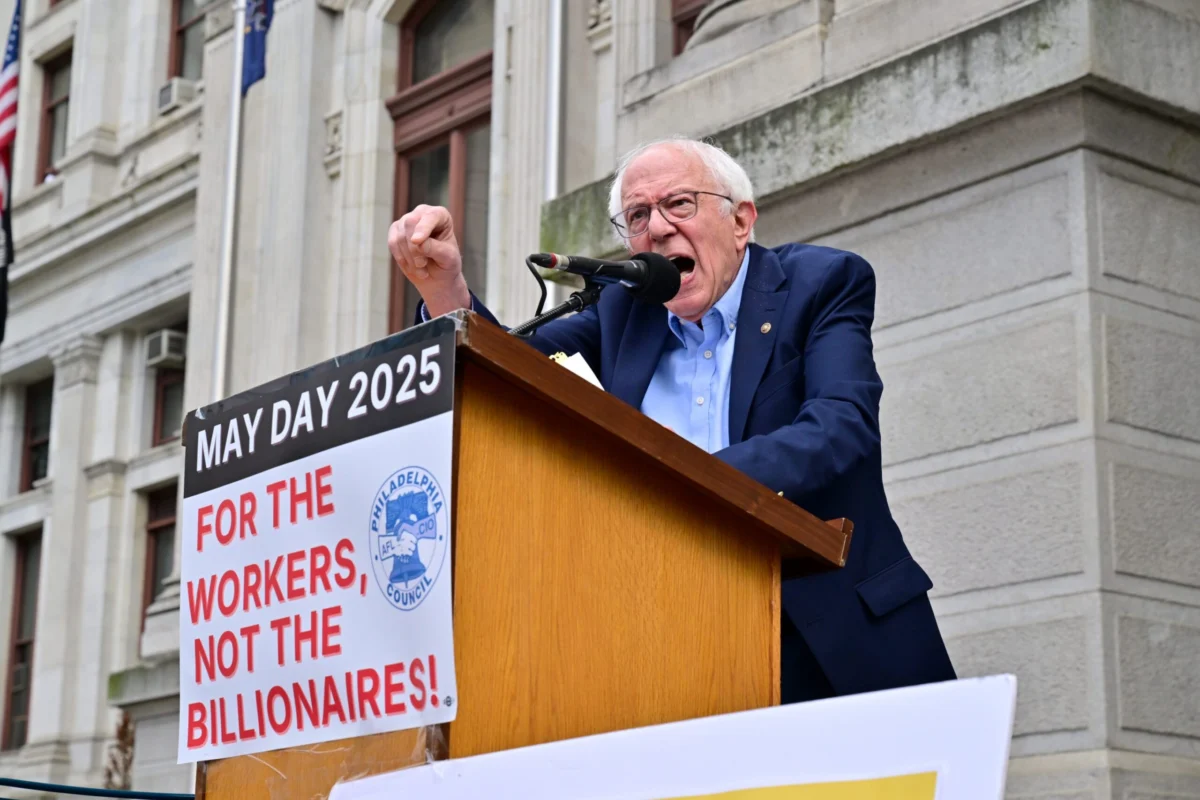
Last week, Senator Bernie Sanders (I-VT) and California Representative Mark Takano (D-CA) reintroduced the groundbreaking Thirty-Two Hour Workweek Act, a legislative proposal poised to fundamentally reshape American labor standards. The bill aims to lower the standard workweek for nonexempt employees from 40 to 32 hours, a move designed to compel employers either to shorten schedules or to pay overtime for the additional hours. For Sanders, a long-time advocate for responsible technological integration and, more recently, a proponent of a pause on unfettered AI development, this initiative is a crucial step towards ensuring that the burgeoning benefits of artificial intelligence translate into tangible improvements in the lives of working Americans, rather than exclusively enriching a privileged few.
"At a time when artificial intelligence and robotics will radically transform our economy, it is imperative that the financial gains from this new technology benefit working families, not just a handful of billionaires and corporate CEOs," Sanders declared in a public announcement accompanying the bill’s reintroduction. His words echo the historical imperative of the labor movement: that technological advancement, while increasing productivity, must not come at the cost of human well-being or exacerbate economic inequality. The rise of generative AI, capable of automating complex tasks and streamlining workflows, presents a unique juncture where society must decide whether this newfound efficiency will liberate workers or merely serve as a tool for corporate profit maximization.
The Thirty-Two Hour Workweek Act, initially championed by Representative Takano in 2021, is not a simple decree for an immediate three-day weekend for every American. Instead, it proposes a carefully phased implementation designed to allow businesses to adapt. Starting at least six months after enactment, the bill would gradually lower the overtime threshold for covered workers. This incremental reduction would continue over four years, culminating in a 32-hour standard workweek. Crucially, the legislation includes provisions to protect workers’ financial stability: employers would still be able to schedule longer weeks, but they would be obligated to pay overtime for hours exceeding the new threshold. Furthermore, the bill explicitly prohibits employers from cutting affected workers’ weekly compensation or benefits as a consequence of this change, underscoring its intent to genuinely improve working conditions and compensation, not just redistribute hours.
Representative Takano articulated a compelling rationale for the bill, arguing that existing labor law, specifically the Fair Labor Standards Act (FLSA), has failed to keep pace with nearly nine decades of profound technological evolution. "Since then, cell phones, the internet, and now AI have increased worker productivity immensely," he stated. "Work has fundamentally changed. It’s time that labor standards caught up." He highlighted that the FLSA, signed into law in 1938, was a product of the industrial era, designed to regulate work in a context vastly different from today’s digital, knowledge-based economy. The bill also seeks to modernize daily overtime regulations, establishing overtime after eight hours in any single day and double pay after 12 hours. Under current federal law, covered nonexempt employees typically receive time-and-a-half pay only after working more than 40 hours in a week, with no federal mandate for daily overtime, leaving many workers vulnerable to long, irregular shifts without adequate compensation.
This legislative proposal arrives amid an intense corporate drive to leverage generative AI for heightened productivity and, often, reduced human labor. Companies across sectors are investing heavily in AI tools, anticipating significant cost savings through automation and efficiency gains. A landmark 2026 analysis by Boston College sociologist Juliet Schor, conducted for the University of Massachusetts Amherst’s Political Economy Research Institute, provided potent statistical backing for the feasibility of a shorter workweek. Schor’s research estimated that AI-led productivity enhancements could enable a staggering 35 million U.S. workers—representing 28% of the national workforce—to transition to a 32-hour workweek within a decade, without any loss in overall output. This data reinforces the argument that the economy is already generating enough wealth and efficiency to support such a shift, if those gains are equitably distributed. Sanders himself has previously championed this cause, introducing a Senate version of the bill in 2024 and publishing an op-ed asserting that reducing work hours represents the logical next chapter in a labor struggle stretching back more than a century.
A Century-Old Fight Over Workers’ Time: Echoes of Debs and the Eight-Hour Day
The current push for a 32-hour workweek is not a novel concept but a modern iteration of a historical battle for workers’ time and dignity. Eugene V. Debs, the iconic American socialist, labor organizer, and five-time presidential candidate, was one of the country’s most fervent proponents of the shortened workday. Living through the tumultuous Gilded Age and the dawn of industrial capitalism, Debs witnessed firsthand the brutal conditions faced by workers, often toiling 12 to 16 hours a day, six or seven days a week, in factories and mines. In his powerful 1890 essay, "Eight-Hour Day A Righteous Demand," Debs framed shorter hours not merely as an economic demand but as a fundamental matter of human dignity and societal justice. "By making eight hours a lawful day’s work, no man, woman, nor child is wronged," he wrote, articulating a vision where workers had sufficient time for rest, education, family, and civic engagement—elements essential for a flourishing democracy. Debs believed that the relentless pursuit of profit at the expense of human well-being was morally bankrupt, and that a truly civilized society would prioritize the quality of life for its citizens over unchecked corporate accumulation.
Debs and his contemporaries in the burgeoning labor movement fought fiercely against the prevailing industrial norms. Their efforts led to landmark strikes, protests, and the eventual widespread acceptance of the eight-hour day as a standard. It was a monumental shift from the prevailing 12-hour or even 16-hour shifts common in many industries. While Debs championed the standard eight-hour day at a time when six-day workweeks were the norm, his philosophical groundwork for prioritizing workers’ time and well-being laid the foundation for future advancements. A significant milestone arrived in 1926 when Henry Ford, recognizing the benefits of worker satisfaction and productivity, famously became one of the first major U.S. employers to implement a five-day, 40-hour week for his factory workers. This move, initially seen as radical, eventually demonstrated that reduced hours could lead to increased efficiency and consumer demand, solidifying its economic viability. Congress eventually enshrined the 40-hour standard into federal law through the Fair Labor Standards Act (FLSA), signed by President Franklin D. Roosevelt in 1938, which initially set a 44-hour week before phasing it down to 40 hours by 1940. The FLSA was a revolutionary piece of legislation, establishing minimum wage, overtime pay, and child labor standards, fundamentally altering the landscape of American work.
Nearly nine decades later, Sanders argues that this established 40-hour standard has demonstrably outlived the economic and technological realities upon which it was built. A critical piece of evidence underpinning this argument comes from data compiled by the Economic Policy Institute (EPI), which highlights a stark and growing disconnect between productivity growth and worker compensation. Since 1979, net productivity in the U.S. economy has soared by approximately 90%, a testament to technological advancements, automation, and increasingly efficient processes. Yet, during the same period, the hourly pay for typical American workers has risen by only about 33%. This gaping "productivity-pay gap" is a central pillar in the broader case for workweek reform, suggesting that the immense wealth generated by increased efficiency is disproportionately flowing to corporate owners and executives, rather than being shared with the workers who contribute to that productivity. Critics argue that this imbalance contributes to stagnant wages, rising inequality, and a sense of economic precarity for millions of working families, even as the economy as a whole grows richer.
Beyond the economic disparity, there is growing empirical evidence that reducing work hours can significantly benefit workers without compromising, and often enhancing, their perceived performance and overall output. A comprehensive six-country study, co-authored by Boston College sociologists Wen Fan and Juliet Schor in collaboration with the advocacy group 4 Day Week Global, provided compelling data. The study involved nearly 2,900 workers across 141 companies who voluntarily cut their schedules by approximately five hours a week. After six months, participants reported a remarkable array of positive outcomes: significantly less burnout, improved physical and mental health, higher job satisfaction, and enhanced work ability. Companies participating in similar trials across the globe, from Iceland to the UK, have consistently reported benefits such as reduced employee turnover, increased talent attraction, and in many cases, stable or even improved productivity. For Sanders and other proponents, the fundamental question is whether these proven efficiencies, amplified by AI, will lead to mass layoffs and even larger corporate profits, or if they will finally allow employees to reclaim some of their precious time, fostering a more balanced and fulfilling life.
The Path Ahead: Challenges and Counterarguments
Despite the compelling arguments for a shorter workweek, the transition from voluntary company trials to a federal labor standard represents a monumental undertaking fraught with significant challenges and strong opposition. During a 2024 hearing specifically convened to consider Sanders’ earlier 32-hour-workweek bill, Senator Bill Cassidy (R-LA), a prominent voice on labor issues, articulated key concerns that reflect widespread apprehension among businesses and conservative lawmakers. Cassidy argued that the added labor costs incurred by mandating overtime after 32 hours could substantially raise prices for consumers, contributing to inflation. He also warned that such a measure could severely threaten businesses, particularly small and medium-sized enterprises (SMEs) operating on thin margins, potentially forcing them to cut jobs, reduce services, or even close down. These concerns are particularly potent in sectors like retail, hospitality, and manufacturing, which often rely on flexible staffing and operate with tight budgetary constraints. Senator Cassidy, who now chairs the influential Senate Health, Education, Labor, and Pensions (HELP) Committee, would play a pivotal role in considering any Senate version of this legislation, highlighting the uphill battle it faces in a divided Congress.
Opponents also argue that a federal mandate might stifle innovation and competitiveness, particularly for businesses that rely on extended operating hours or face global competition where labor costs are lower. They contend that the "one-size-fits-all" approach of a federal standard might not be suitable for the diverse array of industries and business models that characterize the American economy. While advocates point to productivity gains, critics caution that these gains may not be universal across all job types or industries, and that forcing a reduction in hours without a commensurate increase in efficiency could simply lead to a decrease in overall output.
Moreover, the implementation logistics are complex. Businesses would need to overhaul scheduling systems, potentially hire more staff to cover reduced hours, and navigate the nuances of maintaining service levels. The impact on workers themselves, while intended to be positive, could also be uneven. For instance, some workers might prefer the option of working more hours for higher pay, especially those in low-wage sectors who might struggle to make ends meet with a reduced standard week, even if their hourly rate increases. The bill’s prohibition on cutting benefits and compensation is crucial here, but ensuring compliance across millions of businesses would be a significant enforcement challenge.
Despite these formidable hurdles, Sanders remains resolute, framing the proposal not as a radical departure but as a necessary adaptation to modern realities. "A 32-hour workweek is not a radical idea," Sanders asserted, reflecting on the historical trajectory of labor reform. "It’s time to reduce the stress level in our country." His statement underscores a broader vision for a society where technological progress genuinely serves human flourishing, where the relentless pace of modern work is tempered by opportunities for rest, personal development, and community engagement.
The debate over the Thirty-Two Hour Workweek Act transcends mere economic policy; it is a profound societal discussion about the future of work, the distribution of wealth, and the very definition of a meaningful life in an age of artificial intelligence. As AI continues its inexorable march into every facet of the economy, the choice before policymakers and the public is clear: will this transformative technology exacerbate existing inequalities, or will it be harnessed to create a more equitable, less stressful, and ultimately more humane working world, fulfilling a dream that labor pioneers like Eugene V. Debs began advocating over a century ago? The Thirty-Two Hour Workweek Act represents a bold attempt to ensure that the answer leans firmly towards liberation, not further exploitation.
