
 By Lina Irawan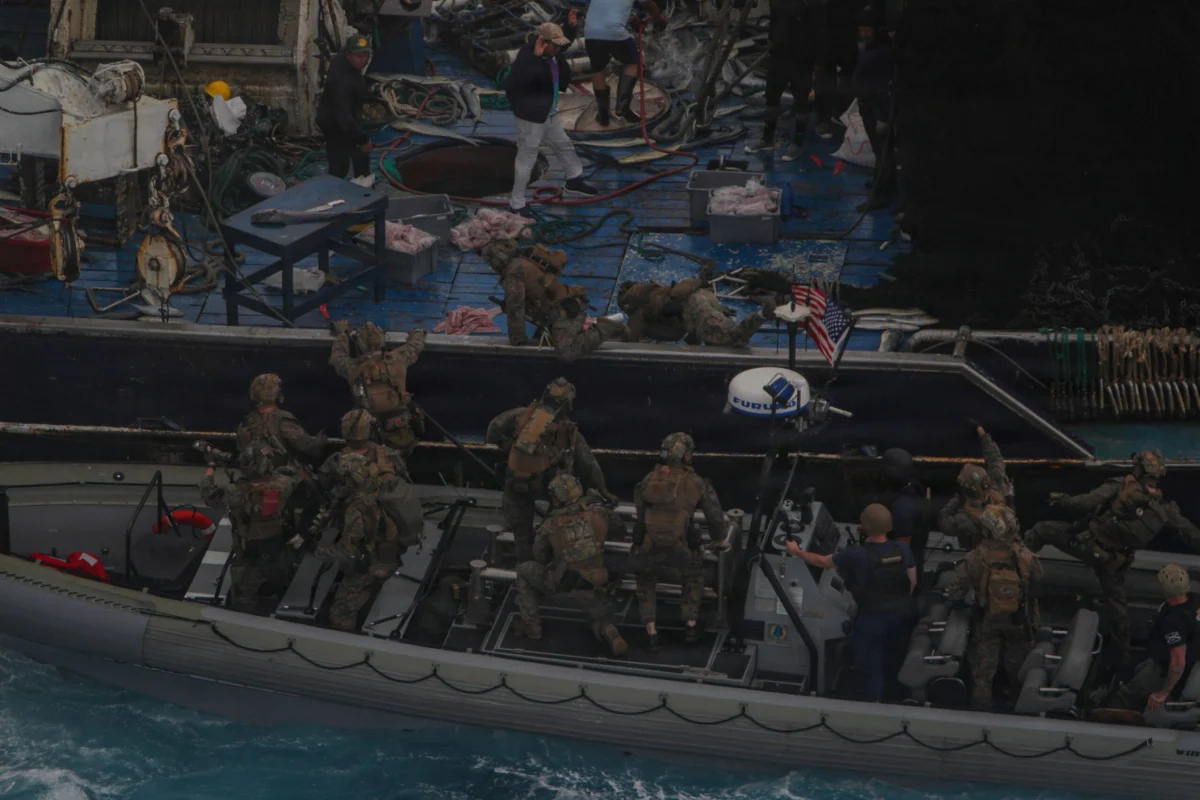
A high-stakes geopolitical drama is unfolding on the high seas as three oil tankers, demonstrably linked to Iran, are slowly but steadily making their way across the Atlantic Ocean towards the United States. These vessels, intercepted and seized by U.S. naval forces during the Trump administration’s "maximum pressure" campaign against Tehran, represent not only a significant economic blow to the Iranian regime but also a remarkable revival of a centuries-old legal doctrine: prize law. Their arrival promises to ignite a complex legal battle and further escalate tensions in the volatile relationship between Washington and Tehran.
The tankers in question, the Tifani, the Majestic X, and a third vessel known interchangeably as the Lenore or the Davina, are colossal Very Large Crude Carriers (VLCCs), each designed to transport approximately 2 million barrels of crude oil. Their combined cargo amounts to nearly six million barrels, a quantity valued at close to $600 million based on current Brent futures trading at around $106 per barrel. This staggering sum underscores the economic leverage the U.S. seeks to exert through these seizures.
The Tifani and Majestic X were interdicted in the Indian Ocean in April, reportedly as part of the initial phase of a naval blockade imposed by then-President Donald Trump. Following their seizure, they have been painstakingly navigated across vast stretches of ocean and are currently reported to be off the coast of Brazil, according to tracking data cited by Bloomberg. The third tanker, the Lenore (or Davina), faced a similar fate in the Indian Ocean in June. It has since successfully rounded the formidable Cape of Good Hope at the southern tip of Africa and is now heading west into the expanse of the Atlantic, mirroring the trajectory of its counterparts.
The arduous, multi-month journey of these massive ships across thousands of miles of open water is a testament to the logistical complexities and strategic intent behind their capture. The U.S. government has not disclosed specifics regarding the naval assets involved in the seizures or the current crewing arrangements for these vessels, but such operations typically involve a combination of U.S. Navy warships, potentially supported by Coast Guard detachments, skilled maritime interdiction teams, and specialized logistics personnel to ensure the safe, albeit slow, transit of the prize ships.
The genesis of these seizures lies in the Trump administration’s aggressive posture towards Iran, particularly following the U.S. withdrawal from the Joint Comprehensive Plan of Action (JCPOA), commonly known as the Iran nuclear deal, in 2018. This withdrawal marked the beginning of a "maximum pressure" campaign designed to cripple Iran’s economy and force it to renegotiate a new, more stringent nuclear agreement, as well as curb its regional destabilizing activities. Central to this strategy was the imposition of sweeping economic sanctions, particularly targeting Iran’s vital oil exports, which are a primary source of revenue for the regime.
In April, President Trump initiated a naval blockade specifically targeting ships attempting to enter or leave Iranian ports. Crucially, this blockade was expanded to encompass Iran-linked vessels anywhere in the world, extending its reach into distant waters such as the Indian and Pacific Oceans. This broader interpretation allowed for the interception of ships like the Tifani, Majestic X, and Lenore far from Iranian territorial waters. While there was a brief "ceasefire" that saw the blockade lifted over the summer, Trump swiftly reimposed it weeks later, signaling a steadfast pivot towards economic warfare as a preferred tool over direct military confrontation.
The "Iran-linked" designation for these tankers is critical. To evade international sanctions, Iranian entities frequently employ sophisticated methods, including the use of flags of convenience, shell companies, complex ownership structures, and ship-to-ship transfers of crude to obscure the origin of their oil. U.S. intelligence and naval forces have invested heavily in identifying and tracking these illicit networks, making these seizures a direct strike against Iran’s clandestine oil export infrastructure.
The legal framework underpinning these extraordinary seizures is perhaps the most fascinating and historically resonant aspect of this saga: prize law. Unlike standard civil seizure laws, which typically require law enforcement authorities (like the U.S. Coast Guard) to identify a specific statutory violation, establish jurisdiction, and often obtain a warrant, prize law operates under a different set of principles rooted in centuries of maritime warfare.
Prize law has its origins in the Middle Ages, evolving from practices of privateers operating under "letters of marque" to the formal rules governing naval warfare between sovereign states. It essentially grants a belligerent power the right to capture and confiscate enemy vessels and cargo during times of war. Under this ancient doctrine, the Defense Department, rather than civilian law enforcement, can seize an enemy vessel without needing to tie the act directly to a violation of an existing statute in the conventional sense. The act of seizure itself, in a state of conflict, provides the basis.
In the United States, prize law is explicitly enshrined in the Constitution. Article I, Section 8, Clause 11, known as the "Captures Clause," grants Congress the power to "declare War, grant Letters of Marque and Reprisal, and make Rules concerning Captures on Land and Water." This constitutional mandate was operationalized by the Prize Act of 1812, a statute that established the legal procedures for condemning and adjudicating captured enemy property during wartime.
Historically, prize law has been invoked during periods of declared hostilities. President Abraham Lincoln famously utilized the Prize Act of 1812 to establish and enforce the Union blockade of Confederate seaports during the Civil War, a crucial strategy that ultimately suffocated the Confederacy’s economy. Its last significant invocation prior to the current situation was during the Spanish-American War in the late 19th century. The revival of prize law in the 21st century, particularly in a context that falls short of a declared war, raises profound questions about its modern applicability, the definition of "war" in an era of economic warfare, and its implications for international maritime law.
Critics might argue that using prize law outside of a formally declared war could be seen as an act of piracy or an overreach of national jurisdiction, potentially setting dangerous precedents. However, proponents within the U.S. administration likely view the "maximum pressure" campaign and the ongoing tensions with Iran as constituting a state of conflict sufficient to invoke this powerful legal tool, especially given Iran’s alleged state sponsorship of terrorism and pursuit of nuclear capabilities.
Should these tankers successfully reach a U.S. port, the most probable destination would be along the Texas Gulf Coast. This region is home to some of the world’s largest oil refineries and boasts the necessary infrastructure to handle VLCCs and their massive crude cargoes. Furthermore, the Houston-based U.S. Attorney for the Southern District of Texas has signaled its readiness to engage with this unprecedented legal challenge.
Aaron Reitz, who heads the U.S. Attorney’s office for the Southern District of Texas, has confirmed his office’s preparedness "in adjudicating prizes" brought to Texas through federal courts. In a statement provided to Fortune‘s Sasha Rogelberg last month, Reitz did not specify whether the Justice Department would invoke the Prize Act of 1812, the Captures Clause directly, or another legal statute. However, his remarks underscored the strategic intent behind this legal maneuver.
"Our national security interests may require the United States military to seize vessels or cargo supporting the enemy during military conflict. If that happens, our federal courts must be ready to adjudicate the disposition of these captured vessels and cargo," Reitz stated. He further elaborated, "Prize law is an ancient body of maritime law—already codified in statute but which we are now reviving—that sets the rules for how seized maritime property is condemned, returned, or disposed of."
The process of "adjudicating prizes" involves a federal court determining the legality of the capture and the subsequent disposition of the seized property. If the U.S. government successfully argues its case, the oil could be sold, with the proceeds typically directed to the U.S. Treasury. This would not only deny Iran critical revenue but also provide a financial gain to the U.S., effectively turning an act of enforcement into an economic victory.
The arrival of these tankers and the ensuing legal proceedings will undoubtedly send a strong message to Iran and other nations contemplating circumventing U.S. sanctions. It demonstrates a willingness by the U.S. to employ unconventional and historically deep-rooted legal mechanisms to enforce its foreign policy objectives. It also sets a potentially significant precedent for future confrontations, raising questions about how other global powers might react to such assertive applications of maritime law outside of traditional declared warfare. The unfolding saga of the Tifani, Majestic X, and Lenore is far more than just a story of seized oil; it is a live demonstration of geopolitical power, legal innovation, and the enduring echoes of history on the modern stage.
