
 By Lina Irawan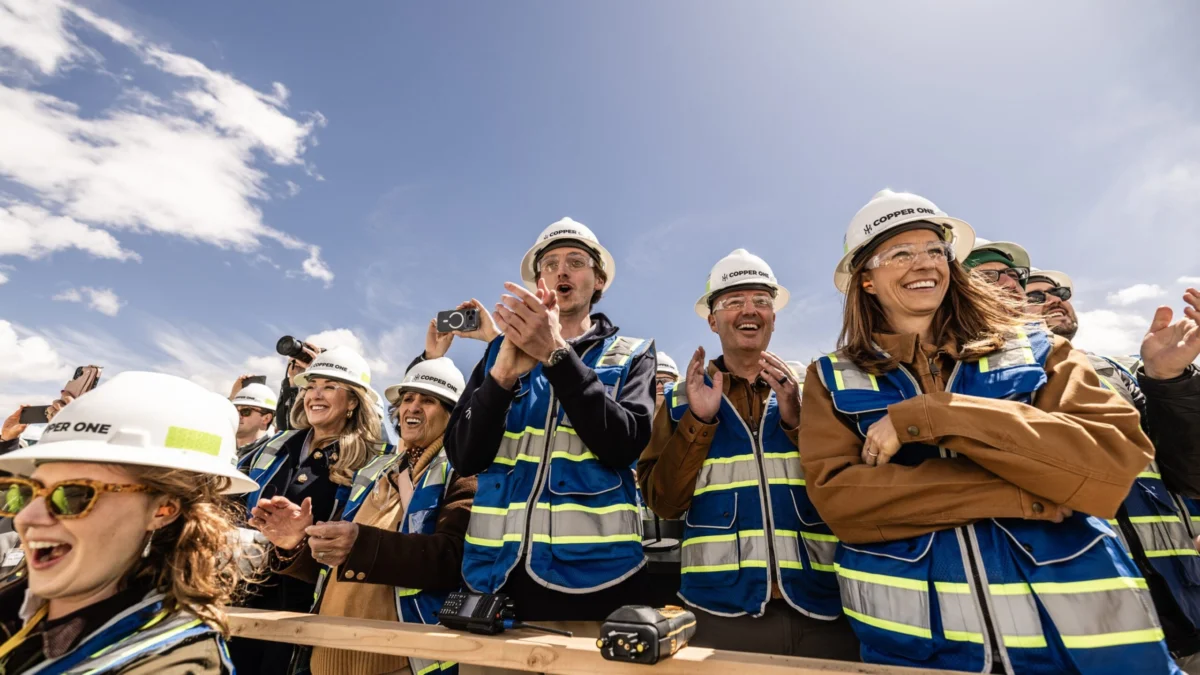
Caldwell’s assertion is not merely speculative; it reflects a profound understanding of the tectonic shifts occurring in global industry and geopolitics. While lithium and copper are widely recognized as indispensable for electric vehicles (EVs) and modern power grids, Caldwell emphasizes a broader mandate for Mariana Minerals. "Lithium and copper are going to be core, but our mandate needs to be broader than that," he stated. The company is strategically expanding its focus to include aluminum, crucial for lightweight alloys and a cornerstone of electrification infrastructure, alongside magnesium, nickel, cobalt, manganese, uranium, and rare earths. This comprehensive approach underscores the intricate web of materials required to power the coming decades. The "beauty of the software backbone we’re building," Caldwell explains, "is that we’re architecting it to be as generalizable as possible for all the metals the modern economy depends on." This highlights Mariana’s core differentiator: leveraging advanced software to optimize and scale mining operations across a diverse portfolio of critical minerals.
The importance of metals, though often overlooked, cannot be overstated. They form the unseen yet ubiquitous foundation of our modern world. Copper, with its unparalleled conductivity, is the lifeblood of power grids, electric motors, and, increasingly, the vast data centers powering artificial intelligence. Without lithium, the energy density required for EV batteries and grid-scale storage remains a distant dream. Aluminum, lightweight and robust, is essential for everything from power lines and aircraft to the chassis of electric vehicles. Beyond these headline materials, the list extends to steel, the skeletal structure of virtually every building and infrastructure project, and even esoteric elements like germanium, which is irreplaceable in the sophisticated chips found in our smartphones and advanced computing devices. The sheer volume and diversity of these materials underpin every facet of our technological civilization, from communication to transportation and energy.
However, this indispensable supply chain is under severe strain, primarily due to geopolitical concentration and decades of strategic missteps. China has meticulously cultivated a dominant position in the global mining and processing of critical minerals. It controls as much as 90% of critical mineral processing worldwide, a staggering figure that rises to an alarming 92% for rare earth magnets—components vital for smartphones, wind turbines, and advanced defense systems. This concentration has led to what many analysts describe as a "critical minerals chokehold" on the United States and other Western nations. This predicament is the result of decades of aggressive, price-cutting Chinese industrial policy, often supported by state subsidies and less stringent environmental regulations, coupled with a parallel decline in American industrial capacity and investment in domestic mining. The consequences are stark: a high-risk supply chain vulnerable to disruptions, where even high-volume essential minerals like copper and lithium can experience extreme price volatility, threatening economic stability and national security.
Mariana Minerals aims to directly confront this challenge. "Our goal is to reduce the cost of these core inputs to the modern economy over time," Caldwell articulated. This objective extends beyond mere profit; it’s about enabling a faster, more resilient global transition. By making these essential materials more affordable and accessible, Mariana seeks to "ensure that everything downstream can move as fast as humanly possible, so we can unlock all the industries [like AI] that everyone is super excited about." This vision positions Mariana not just as a mining company, but as a crucial enabler of future technological progress.
Founded in 2024 by Caldwell, alongside Baker Tilney and Juan Lozano, Mariana Minerals draws significant experience from Caldwell’s nine-year tenure at Tesla, where he was deeply involved in factory design and construction. This background, steeped in efficiency, automation, and rapid scaling, offers a unique lens through which to revolutionize the centuries-old mining sector. The company, based in San Francisco, has quickly garnered attention as one of a select few startups poised to make significant waves in a pivotal geopolitical moment. This market confidence was recently validated by a substantial funding round. Mariana Minerals has secured $310 million in its Series B, led by the renowned venture capital firm Khosla Ventures, a development exclusively reported by Fortune. This round saw strong participation from existing backer Andreessen Horowitz, along with Breakthrough Energy Ventures (an initiative founded by Bill Gates focused on climate change solutions), Greenoaks, Halo Fund, Pax Ventures, StepStone Group, BHP Ventures (the venture arm of one of the world’s largest mining companies), Washington Harbour Partners, Greycroft, Mitsubishi Corporation, and other strategic investors. With this latest injection of capital, Mariana has now raised a total of $400 million and boasts a valuation of $1.5 billion, underscoring significant investor belief in its innovative approach and market potential.
A substantial portion of this $400 million in capital is directly earmarked for the development and operation of Mariana’s mining assets. The company currently operates two key sites: Copper One in Utah and Lithium One in Texas. These descriptively named projects are central to Mariana’s strategy. Copper One, a previously idled copper mine, was acquired by Mariana in 2025. Demonstrating the power of its software-centric model, Mariana successfully restarted the mine in a remarkable four months, largely through the deployment of autonomous software. The company projects that Copper One is rapidly moving towards producing 50,000 metric tons of refined copper annually. Lithium One, breaking ground in 2025, is on track to enter commercial production by 2027, positioning Mariana to address the burgeoning demand for battery-grade lithium.
Mariana Minerals is not merely entering an existing market; it aims to disrupt it. While it will compete with established mining behemoths like Standard Lithium and BHP Group, Mariana’s core differentiator is its integrated software and automation platform. The startup is betting that the surging demand for metals, particularly catalyzed by the artificial intelligence boom, makes an efficient, software-based mining operation not just advantageous, but "existential and essential." This perspective is echoed by industry leaders. Travis Kalanick, the founder of Uber and now heading Atoms, a company focused on physical AI and robotics, stated via email, "The AI revolution, physically speaking, depends on the mining of a huge amount of minerals and metals." He emphasized the broad dependency: "Data centers, chips, the grid, robots, EVs, defense systems: it all starts with copper and other critical minerals. So how existential is it? You cannot lead in the AI century without a domestic supply chain."
Kalanick’s point resonates deeply when considering copper, which has emerged as a critical chokepoint for global electrification. The relentless expansion of AI-driven data centers, demanding unprecedented amounts of power, is placing immense strain on already aging electrical grids, particularly in the United States. These data centers are not only energy-hungry but also material-intensive, requiring vast quantities of copper for wiring, cooling systems, and power distribution. The International Energy Agency (IEA) has warned that copper demand could nearly double by 2040, driven by clean energy technologies, yet new supply is struggling to keep pace. This looming deficit, combined with geopolitical risks and underinvestment in new mines, creates a volatile market.
Caldwell further elaborated on this interconnectedness: "If you look at the modern economy, it’s basically an electrification story." This narrative encompasses a wide array of transformative sectors: "That’s true whether it’s AI infrastructure, renewables and energy storage applications, the reindustrialization initiative, or the electrification of transport—land, air, and sea. All of that is going to be tied to how much electricity we can generate as a country and as the human race." And electricity, at its fundamental level, demands copper.
The fragility of this system is evident in market fluctuations. "If copper prices start to get crazy—and we’ve already seen them increase—all the downstream customers of those metals are going to face cost pressures," Caldwell cautioned. These cost pressures, in turn, "will slow the rate at which we modernize the global economy." The implications are far-reaching: delays in renewable energy projects, increased costs for EV manufacturing, and slower deployment of essential AI infrastructure. A stable, cost-effective supply of copper is not merely an economic desideratum but a prerequisite for achieving global climate goals and maintaining technological leadership.
Yet, copper is but one critical thread in a vast tapestry of essential materials. The modern economy relies on dozens of distinct metals, each with unique properties and applications, from the rare earths that enable powerful magnets to the cobalt necessary for high-performance batteries and the uranium required for nuclear energy. Mariana Minerals’ holistic strategy, driven by a versatile software backbone, seeks to address this multi-faceted challenge, aiming to build a more resilient, efficient, and cost-effective supply chain for the metals that will define our collective, complicated future. By reimagining mining through a technological lens, Turner Caldwell and Mariana Minerals are not just extracting resources; they are forging the very foundations of the next century.
